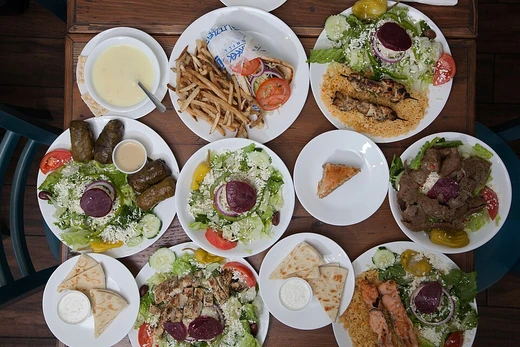
Bougatsa
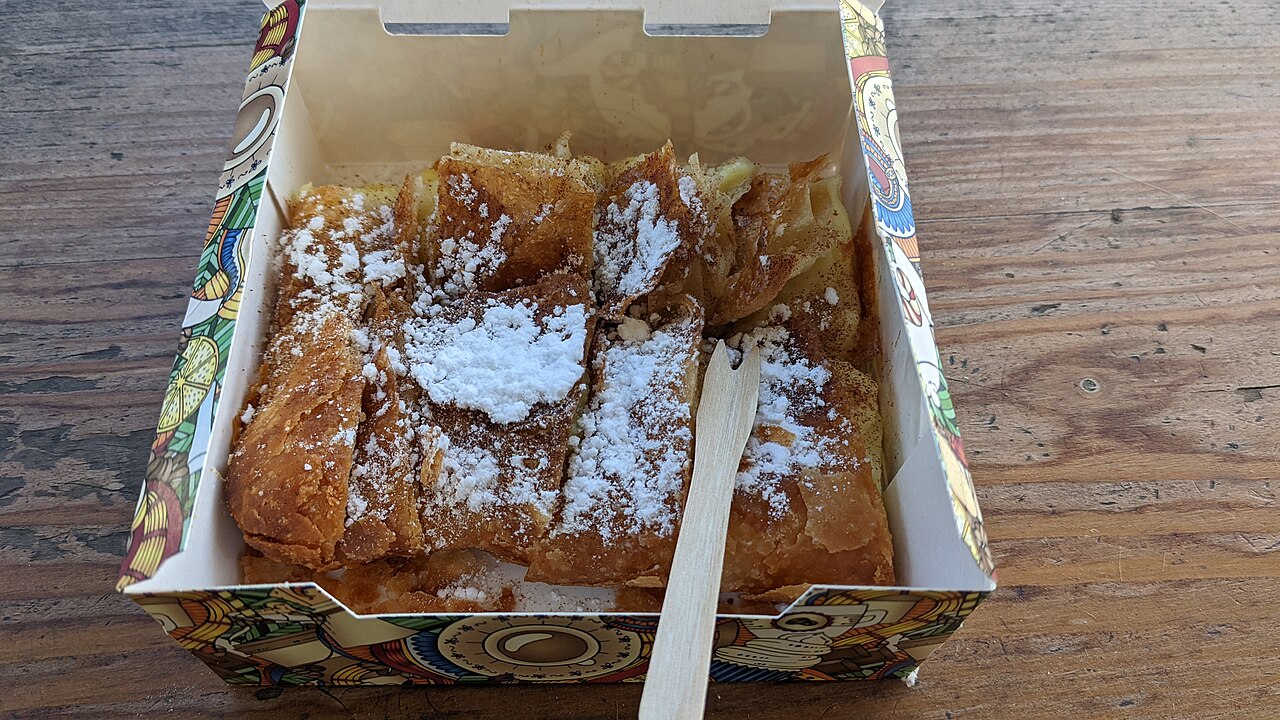
Greek phyllo pastry filled with sweet or savory fillings.

Andy Li · CC0
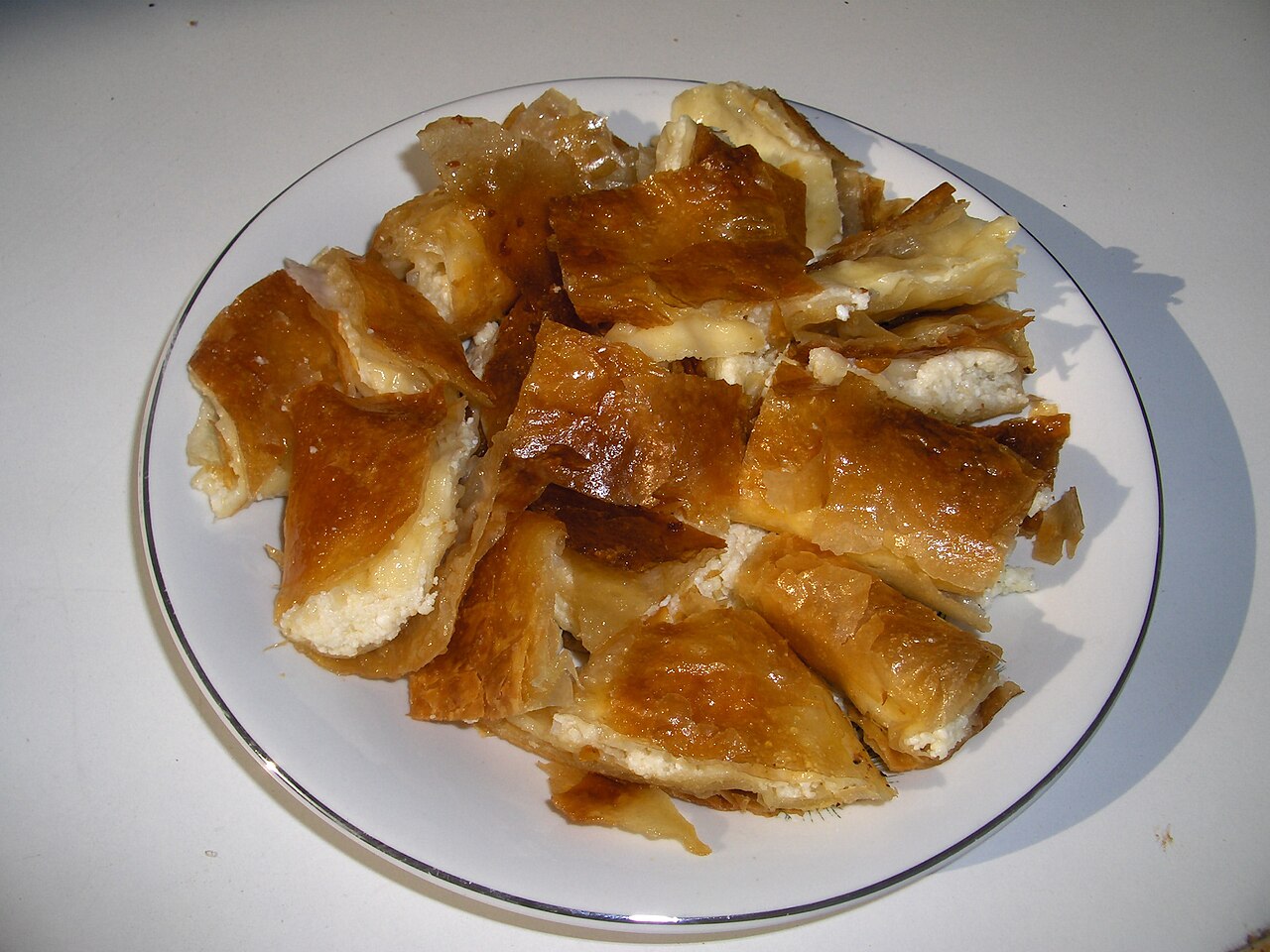
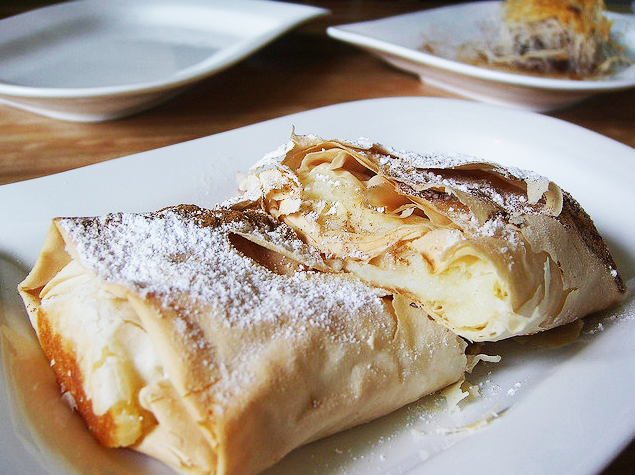
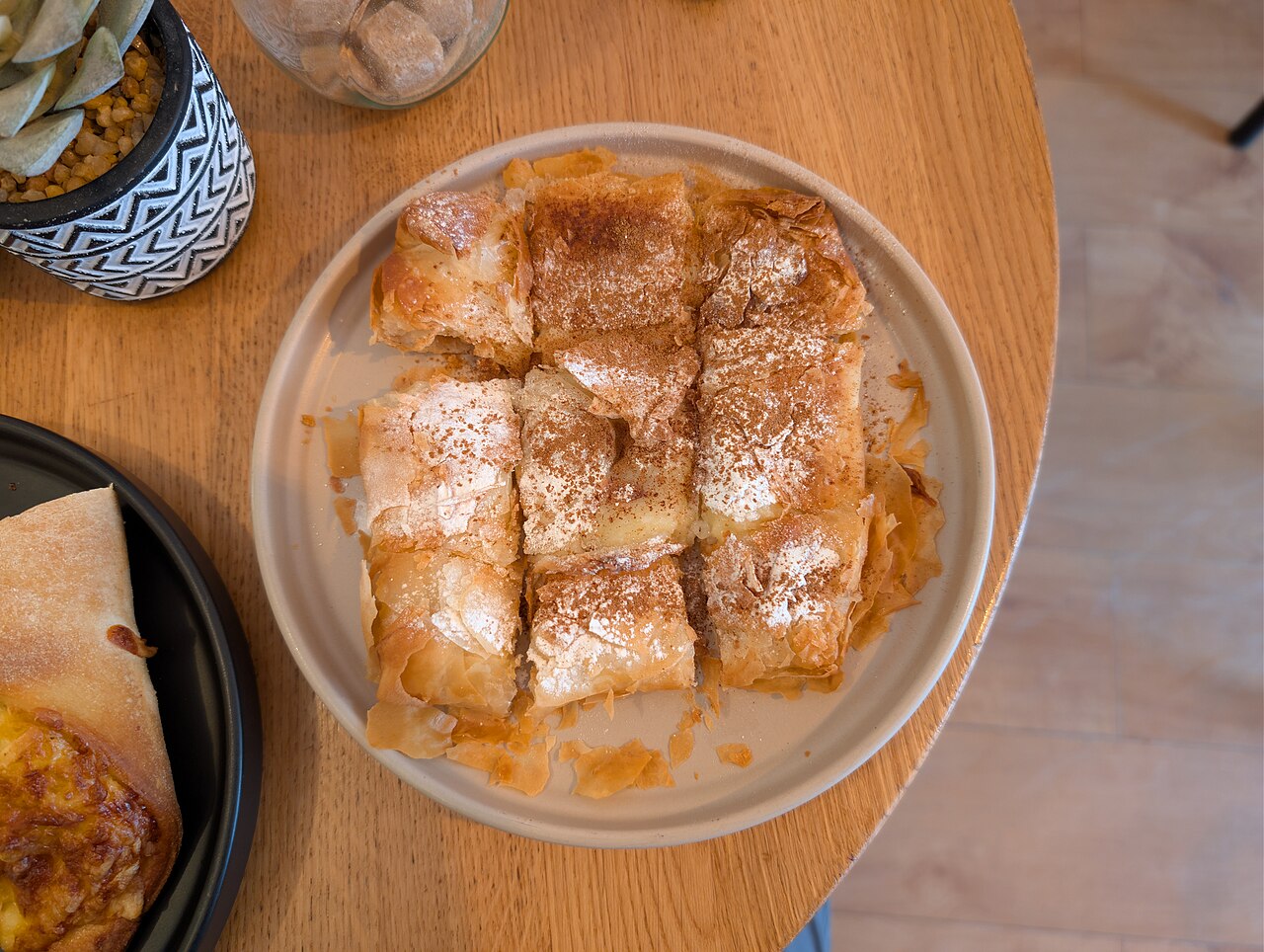
Bougatsa (Greek: μπουγάτσα) is a Greek breakfast food or snack, available in sweet and savory versions. Its most popular form is bougatsa cream, a semolina custard-filled pastry served as a dessert. The name derives from the Byzantine Greek πογάτσα, itself from the ancient Roman pānis focācius, meaning 'hearth bread,' and is related to Italian focaccia.
Quick Facts
- Country
- Greece
- Main Ingredient
- Phyllo; filling of semolina custard, cheese or something else
Facts from the source article.
Lore & Background
Bougatsa's modern version originated in Northern Greece, particularly in the cities of Serres and Thessaloniki. Today, bougatsa is sold in specialty shops called bougatsadika or bougatsopolia. The taste varies by region: in Veria and Athens, the cream version is very sweet and full of cream; in Thessaloniki, it is crunchy and less sweet; in Chania, Crete, the cheese version uses local mizithra cheese and is served savory, without sugar or cinnamon. Bougatsa is also a popular breakfast dish among Greek Jews.
Reader's Guide
Bougatsa is a significant element of Greek culinary tradition, bridging ancient and modern practices. Its name traces back to Roman hearth bread, and its possible ancestor, the placenta cake, links it to classical antiquity. The dish was preserved by Cappadocian Greeks and later refined in Northern Greece, where it became a regional specialty. Today, bougatsa is a versatile food, with fillings ranging from semolina custard to feta cheese, spinach, or minced meat. Regional variations reflect local tastes, from the sweet, creamy bougatsa of Veria to the crunchy, less sweet version of Thessaloniki. The process of making hand-made phyllo for bougatsa was featured on an episode of Anthony Bourdain: No Reservations, highlighting its cultural importance. Bougatsa remains a popular breakfast and snack, sold in dedicated shops across Greece, and continues to evolve while maintaining its traditional roots.
Did You Know?
- The name bougatsa comes from the Byzantine Greek πογάτσα, derived from the ancient Roman pānis focācius, meaning 'hearth bread.'
- The modern version of bougatsa originated in Northern Greece, especially in the cities of Serres and Thessaloniki.
Etymology & Historical Lineage
The name bougatsa traces a long linguistic path stretching back to ancient Rome. Its roots lie in the Latin term pānis focācius, a phrase that literally translates to 'hearth bread,' a concept closely mirrored in the Italian word focaccia. Through the Byzantine Greek form pogátsa, this Roman baking tradition evolved into what Greeks now call bougatsa (also spelled bugatsa, bogatsa, or boogatsa). A possible classical connection also exists to the Ancient Greek and Roman placenta cake, a layered dough dessert still prepared on the island of Lesbos today. That traditional placenta consists of two dough layers filled with cottage cheese—occasionally chocolate or apples—and is brushed with honey before going into the oven. During the Byzantine era, bougatsa became a dietary staple among the Cappadocian Greeks. The form most Greeks recognize today took shape in Northern Greece, particularly in the cities of Serres and Thessaloniki, where it transitioned from a historical food into a beloved everyday treat.
A Tapestry of Regional Flavors
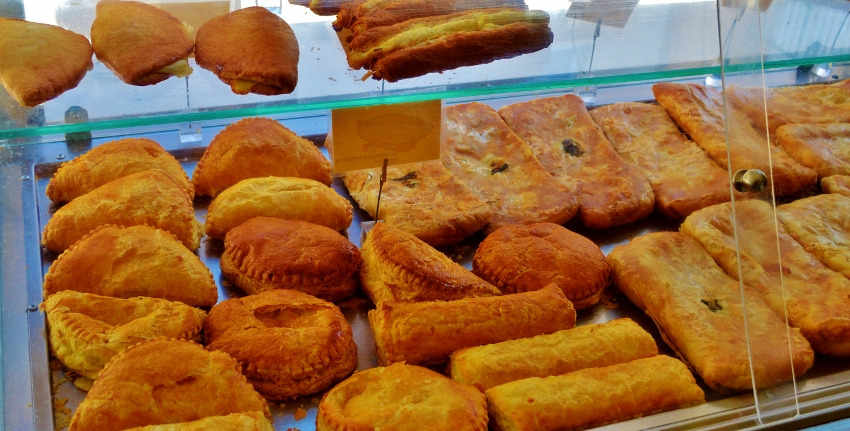
One of bougatsa's most striking qualities is how its character shifts from one Greek city to the next. In Veria and Athens, the beloved cream version leans heavily into sweetness, delivering a rich, custard-heavy experience. Thessaloniki takes a different approach, favoring a crunchier texture with a more restrained sugar profile. On Crete, specifically in Chania, the savory cheese variant is crafted from the island's own mizithra rather than feta, and while the filling itself remains unsweetened, a dusting of sugar and cinnamon on top adds a contrasting finish. Beyond these regional signatures, the pastry comes in a remarkable range of fillings: semolina custard, feta, mizithra, chocolate cream, apple, potato purée, spinach, a spinach-and-feta combination, and even a savory minced meat blend of beef with either pork or lamb. Dedicated shops called bougatsadika or bougatsopolia exist across the country, offering nothing but bougatsa in all its variations, while the dish also holds a cherished place in the breakfast routines of Greek Jewish communities.
The Art of the Phyllo
Traditional bougatsa begins with hand-rolled phyllo dough, the thinnest of pastry sheets, carefully wrapped around a chosen filling. The assembly process follows a deliberate sequence: first, the custard or savory filling is prepared; next, roughly five sheets of buttered phyllo are laid into a baking dish; the filling is added and the layers are sealed. The oven is preheated to the proper temperature, and the pastry bakes for approximately thirty to thirty-five minutes until the phyllo achieves a deep golden-brown crispness. Crucially, the bougatsa must be cut into small, bite-sized portions while still steaming hot, then plated on a small dish. The sweet cream variety is finished with a light dusting of powdered icing sugar and, in many cases, a sprinkle of cinnamon. While the majority of bougatsa produced today relies on machine-made phyllo for efficiency, a number of cafés and bakeries—particularly in smaller Greek towns and villages—continue to prepare the pastry entirely by hand, preserving a craft that connects modern eaters to centuries-old techniques.
Bougatsa in the Broader Culinary World
Bougatsa occupies a flexible slot in the Greek daily rhythm, serving as a breakfast item, a mid-morning snack, or a light midday meal, in either sweet or savory form. Its presence extends well beyond the Greek mainland; the dish is a recognized favorite among Greek Jewish communities, and its handcrafted preparation has even captured international attention. An episode of the television series Anthony Bourdain: No Reservations, filmed in Chania on Crete, showcased the labor-intensive process of making bougatsa with hand-rolled filo, introducing global audiences to the craft. In the wider Mediterranean and European pastry landscape, bougatsa shares structural and conceptual kinship with several well-known dishes: Bulgaria's banitsa, the Austrian Cremeschnitte, the Greek galaktoboureko, the Middle Eastern knafeh, the Croatian pogača, and the ubiquitous spanakopita and tyropita. These parallels underscore how a simple concept—layers of thin dough enclosing a filling—has been independently refined across cultures, yet bougatsa retains a distinctly Greek identity shaped by its regional variations and its dedicated specialty shops.
Gallery
More in Greek cuisine 1-24
Spotted an error? Know more?
Reader corrections go straight into our review queue. Suggest an edit · How this site is sourced