Byzantine cuisine
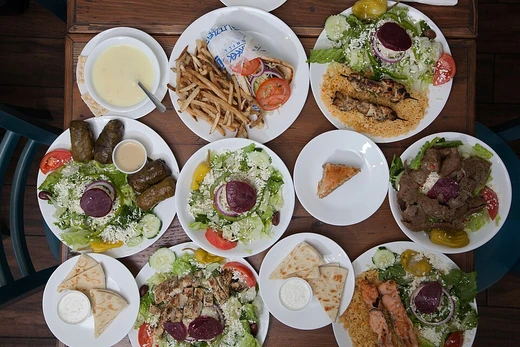
Byzantine cuisine blended ancient traditions with trade-borne ingredients.

Wizard85 · CC BY-SA 4.0
Byzantine cuisine grew out of earlier ancient Greek, Roman, and broader Mediterranean cooking traditions. Through trade with foreign regions, the Byzantines gained access to grains, sugar, livestock, fruits, vegetables, and spices that would otherwise have been hard to get outside certain climates. Cooks experimented freely with new ingredient combinations, which led to two distinct culinary styles: an eastern version found in Asia Minor and the eastern Aegean, enriched by traded goods, and a simpler style rooted more directly in local Greek food culture.
What people ate depended heavily on their social class, where they lived, and the era. The Imperial Palace was a hub of exotic spices and elaborate recipes, where guests were treated to fruits, honey-cakes, and syrupy sweets. Ordinary people ate more simply. Because Constantinople sat at the crossroads of major trade routes, its cuisine absorbed influences from places like Lombard Italy, the Sassanid Empire, and the early Muslim caliphate. This blend persisted into Ottoman times, which is why modern Turkish, Greek, and Balkan cuisines share many ingredients and dishes.
The Byzantines made several cheeses, including anthotiro and kefalotyri. They also enjoyed shellfish and both freshwater and saltwater fish. Eggs were used to prepare famous omelettes called sphoungata—meaning "spongy"—mentioned by Theodore Prodromos. Poultry was kept in most households. A Florentine chronicler noted that when Emperor John VIII Palaiologos visited Florence in 1439, he was served various preparations of chicken, pigeons, salad, and eggs. During the Middle Byzantine period, people seem to have eaten more meat and less bread.
Other meats came from hunting, a favored male activity. Men hunted deer and wild boar, usually with dogs and hawks, though they also used traps, nets, and bird-lime. Larger game was rarer and more expensive. Pigs were slaughtered at the start of winter to provide sausages, salt pork, and lard for the year. Only upper-middle and wealthier Byzantines could afford lamb. Beef was seldom eaten because cattle were needed for plowing fields.
In cities like Constantinople and Thessaloniki, middle- and lower-class citizens ate at tavernas.
- Field
- Culinary history
- Known for
- Melting pot of Mediterranean, Greek, Roman, and trade-influenced cuisines; ancestor of modern Turkish, Greek, and Balkan cuisines
Lore & Background
Byzantine food consumption varied by class, location, and time period. The Imperial Palace was a metropolis of spices and exotic recipes; guests were entertained with fruits, honey-cakes, and syrupy sweetmeats. Ordinary people ate more conservatively. Thanks to the location of Constantinople between popular trade routes, Byzantine cuisine was augmented by cultural influences from several locales—such as Lombard Italy, the Sassanid Empire, and an emerging Muslim caliphate. The resulting melting pot continued during Ottoman times and therefore modern Turkish cuisine, Greek cuisine, and Balkan cuisine have many similarities and use a very wide range of ingredients.
The Byzantines produced various cheeses, including anthotiro and kefalotyri. They also relished shellfish and fish, both fresh and salt-water.
Reader's Guide
Byzantine cuisine is significant as a historical bridge between ancient Mediterranean foodways and modern regional cuisines. Its legacy is evident in the shared ingredients and dishes of modern Turkish, Greek, and Balkan cuisines, which stem from the cultural melting pot centered on Constantinople. The cuisine's two styles—a richer, trade-influenced eastern style and a leaner local Greek style—illustrate how geography and commerce shaped dietary habits. The use of garos (fermented fish sauce) and murri (fermented barley sauce) as condiments, the prevalence of bread and grains, and the variety of meats, seafood, and dairy products reflect a sophisticated and adaptive food culture. The introduction of cane sugar during the Middle Byzantine period, though initially a luxury, and the widespread use of honey for sweetening, along with dishes like koptoplakous and plakountas tetyromenous considered ancestors of modern baklava, highlight the cuisine's enduring influence on dessert traditions.
Did You Know?
- The Byzantines produced cheeses including anthotiro, kefalotyri, and Feta.
- Garos, a fermented fish sauce, was a favored condiment, described by Liutprand of Cremona as an 'exceedingly bad fish liquor'.
- The Prodromic poems mention a dish of fish stew with cheeses and another with fish seasoned with cloves and cinnamon.
- Many scholars state that Byzantine koptoplakous and plakountas tetyromenous are the ancestors of modern baklava.
Continuity and Innovation on the Byzantine Table
Byzantine cuisine maintained a strong thread of continuity with the ancient Greek culinary tradition while introducing distinctive new elements. The foundational framework—the Mediterranean triad of wheat, olive oil, and wine—remained intact, and fish continued to serve as a dietary staple for those living along the coast. However, the Byzantine period brought additions that expanded the flavor palette: caviar, nutmeg, and basil entered the kitchen, broadening the range of aromatics available to cooks. Lemons, which had arrived as early as the second century, were initially valued for their medicinal properties before gradually finding their way into everyday cooking. The ancient Greek medical framework of humoral theory, first articulated by the physician Claudius Aelius Galenus, continued to shape dietary recommendations and culinary advice throughout the Byzantine era, linking the act of eating to broader questions of health and balance.
Constantinople and the Spice Trade
The strategic position of Constantinople as a global hub of the spice trade profoundly enriched Byzantine cooking. This commercial crossroads exposed the imperial kitchen to a wider array of aromatics and flavoring agents than had been available in earlier Greek culinary periods. The result was a cuisine that retained its ancient foundations—wheat, olive oil, wine, and the frugal emphasis on fish over meat—while incorporating exotic additions like caviar, nutmeg, and basil. The ancient Greek practice of spreading grapevines and olive trees across the Mediterranean through colonization had laid the groundwork for the triad, but the Byzantine era elevated the table through trade connections that brought in ingredients from far beyond the Aegean. This blending of local tradition with imported luxury created a distinctive culinary identity that would echo in later Greek cooking, where spices like cinnamon, allspice, and cloves still appear in meat stews, particularly in the northern regions.
Byzantine Dishes That Endured and Those That Vanished
Several dishes trace their direct origins to the Byzantine period and remain staples of the modern Greek table. Feta cheese, now perhaps the most internationally recognized Greek dairy product, is one such survivor. Avgotaraho, a preparation of cured fish roe, carries forward the Byzantine tradition of preserving fish, which had long been central to coastal diets. Moustalevria, a thick soup, and paximadi—a traditional hard bread baked from a combination of wheat, barley, and rye—also belong to this Byzantine lineage. Conversely, some Byzantine-era foods have vanished entirely from the diet: porridge (known in Greek as hilós) once served as a primary staple, fish sauce called garos was a common condiment, and the practice of mixing salt water into wine has disappeared. These lost dishes remind us that the Byzantine table was broader and stranger than the surviving repertoire suggests.
The Mediterranean Triad and Dietary Philosophy
The philosophical and practical backbone of Byzantine cooking was the Mediterranean triad: wheat, olive oil, and wine. This tripartite foundation, inherited from ancient Greek cuisine, shaped a diet marked by frugality, in which meat was consumed sparingly and fish occupied a more prominent role, especially among coastal communities. The ancient spread of grapevines and olive trees across the Mediterranean, tied to Greek colonization, established the agricultural basis for this system. Within this framework, the theory of humors—first put forward by the ancient Greek physician Claudius Aelius Galenus—provided the intellectual justification for dietary choices, guiding which foods were appropriate and how they should be prepared. Bread made from wheat was ubiquitous, while barley found its place in products like paximathia. The overall effect was a cuisine that prized simplicity, seasonal ingredients, and the interplay of grain, oil, and fermented grape juice as the essential pillars of daily sustenance.
Gallery
More in Greek cuisine 1-24
Spotted an error? Know more?
Reader corrections go straight into our review queue. Suggest an edit · How this site is sourced