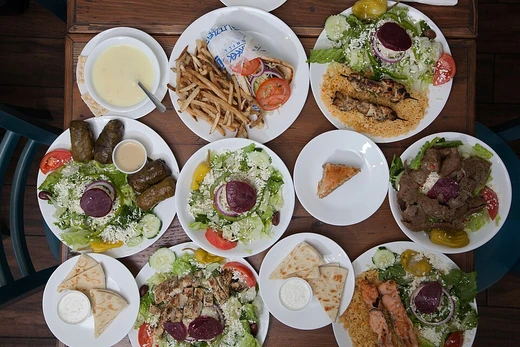
Ancient Greek cuisine
Ancient Greek cuisine balanced frugality with diverse ingredients and social dining.

Van Der Meulen Christofle · CC0
For most people in ancient Greece, daily meals were simple and frugal, a reflection of the challenges of farming. However, a wide range of ingredients was available, and the wealthy could afford elaborate feasts. The foundation of the diet was the "Mediterranean triad"—cereals, olives, and grapes—which were versatile and valuable for trade. Yet legumes were even more crucial to the average person's diet; research indicates that Greek agriculture could not have thrived without them. Our understanding of ancient Greek food and eating habits comes from written records, archaeological finds, and artwork.
Meals changed over time. In the Homeric epics, three meals are named: *ariston* (an early meal), *dorpon* (a late meal), and *deipnon* (the evening meal). Later, the Greeks had *acratisma* (the early meal, like Homeric *ariston*), *ariston* (the midday meal), and *deipnon* (the evening meal, like Homeric *dorpon*). A *prochoos* was a jug used for serving wine, while hand-washing vessels were called *cheirnibon* or *louterion*.
Breakfast, called *acratisma*, often consisted of barley bread dipped in wine, sometimes with figs, dates, or olives. Another breakfast food was a pancake called *tagenites* (or *tagēnias*), made from wheat flour, olive oil, honey, and sometimes wine or milk. Another type, *staititēs*, was made from spelt flour and could be topped with honey, sesame, and cheese. Lunch, or *ariston*, was a quick meal taken around noon or early afternoon. Dinner, *deipnon*, was the main meal, usually eaten at nightfall. A light late-afternoon meal called *hespérisma* was sometimes added, and *aristódeipnon* was a combined lunch-dinner served in the late afternoon. An *epideipnis* was a second course at dinner.
Men and women ate separately. In small homes, men ate first, then women. Respect for the father as breadwinner was clear, and slaves served at meals. Aristotle noted that the poor, lacking slaves, would ask their wives or children to serve. Furniture miniatures found in children's graves reveal dining styles: Greeks normally sat on chairs, while benches were used for banquets. Tables were high for everyday meals and low for banquets, initially rectangular but by the 4th century BCE mostly round, often with animal-shaped legs. Flatbread loaves sometimes served as plates, but terracotta bowls were more common.
- Field
- Cuisine and dining customs
- Known for
- Frugal diet based on cereals, olives, grapes, and legumes; elaborate feasts for the wealthy; symposium and syssitia social dining
Lore & Background
In the Homeric epics of the Iliad and Odyssey, three meals are mentioned: ariston, dorpon, and deipnon. Ariston was the early meal, while dorpon was the late meal. Deipnon was the evening meal. In the later age, Greeks had the meals acratisma, ariston, and deipnon. Acratisma was the early meal, ariston was the middle meal, and deipnon was the evening meal. A prochoos or prochous was a jug or ewer used for serving wine; hand-washing vessels were called cheirnibon or louterion.
Breakfast consisted of barley bread dipped in wine, sometimes complemented by figs, dates or olives. They also ate a sort of pancake called tagenites, made with wheat flour, olive oil, honey, and sometimes wine or milk. Another kind of pancake was staitites, topped with honey, sesame and cheese. Lunch was taken around noon or early afternoon.
Reader's Guide
Ancient Greek cuisine is significant for its reflection of agricultural hardship and social stratification, as well as its foundational role in Mediterranean dietary traditions. The cuisine's reliance on the 'Mediterranean triad' of cereals, olives, and grapes, along with legumes, shaped both daily life and commerce. The meals and dining customs, from the simple breakfast of barley bread dipped in wine to the elaborate symposium and syssitia, reveal the social structures and values of ancient Greek society. The symposium, a gathering of drinkers, was a preferred pastime for Greek men, involving food, wine, conversation, and entertainment, and it became the setting for important literary works. The syssitia were mandatory meals shared by social or religious groups, hallmarked by simplicity and temperance. The legacy of ancient Greek cuisine is preserved through textual, archeological, and artistic evidence, offering insights into the daily lives, religious practices, and social hierarchies of the time. The use of bread as plates, the absence of forks, and the separate dining of men and women are among the customs that distinguish this cuisine and inform our understanding of ancient Greek culture.
Did You Know?
- Research suggests that the agricultural system of ancient Greece could not have succeeded without the cultivation of legumes.
- The ancient Greek custom of placing terracotta miniatures of furniture in children's graves gives a good idea of its style and design.
- The symposium was strictly reserved for men, with the exception of courtesans.
The Agricultural Backbone of the Greek Table
The cuisine of ancient Greece rested upon what scholars call the Mediterranean triad—cereals, olives, and grapes—ingredients that carried enormous commercial weight and found countless uses across daily life. Yet for the ordinary Greek household, these staples were only half the story. Legumes proved so essential to the agricultural system that modern research indicates the whole farming structure could not have functioned without them. For most Greeks, the table reflected a life shaped by agricultural hardship, and meals were marked by frugality rather than abundance. This was not a cuisine of scarcity in terms of variety, however; a wide range of ingredients was known and available. The gap between the modest daily plate and the lavish feasts of the wealthy was stark. While the average citizen subsisted on simple preparations, the affluent could celebrate with elaborate banquets that showcased the full breadth of what the land and trade could provide. Knowledge of all this survives not through surviving recipes but through textual records, archaeological finds, and artistic depictions.
The Architecture of the Day's Meals
The structure of eating in ancient Greece evolved over time. In the world of Homer's Iliad and Odyssey, three meals are named: ariston, the early meal; dorpon, the late meal; and deipnon, which could refer to either without a fixed time. By the later period, the schedule shifted to acratisma as the early meal, ariston as the midday meal, and deipnon as the evening meal. Breakfast, or acratisma, was characteristically simple: barley bread dipped in undiluted wine, sometimes accompanied by figs, dates, or olives. Pancakes entered the picture as well—tagenites, made from wheat flour, olive oil, honey, and curdled milk, appear in the works of fifth-century poets Cratinus and Magnes. Another variety, staitites, was prepared from spelt flour and, according to Athenaeus, topped with honey, sesame, and cheese. Lunch, the ariston, was a quick affair taken around noon or early afternoon. Dinner, the deipnon, held the greatest importance and was generally served at nightfall, sometimes preceded by a light hesperisma or an aristodeipnon in the late afternoon.
Rituals, Hierarchy, and the Physical Setting of a Meal
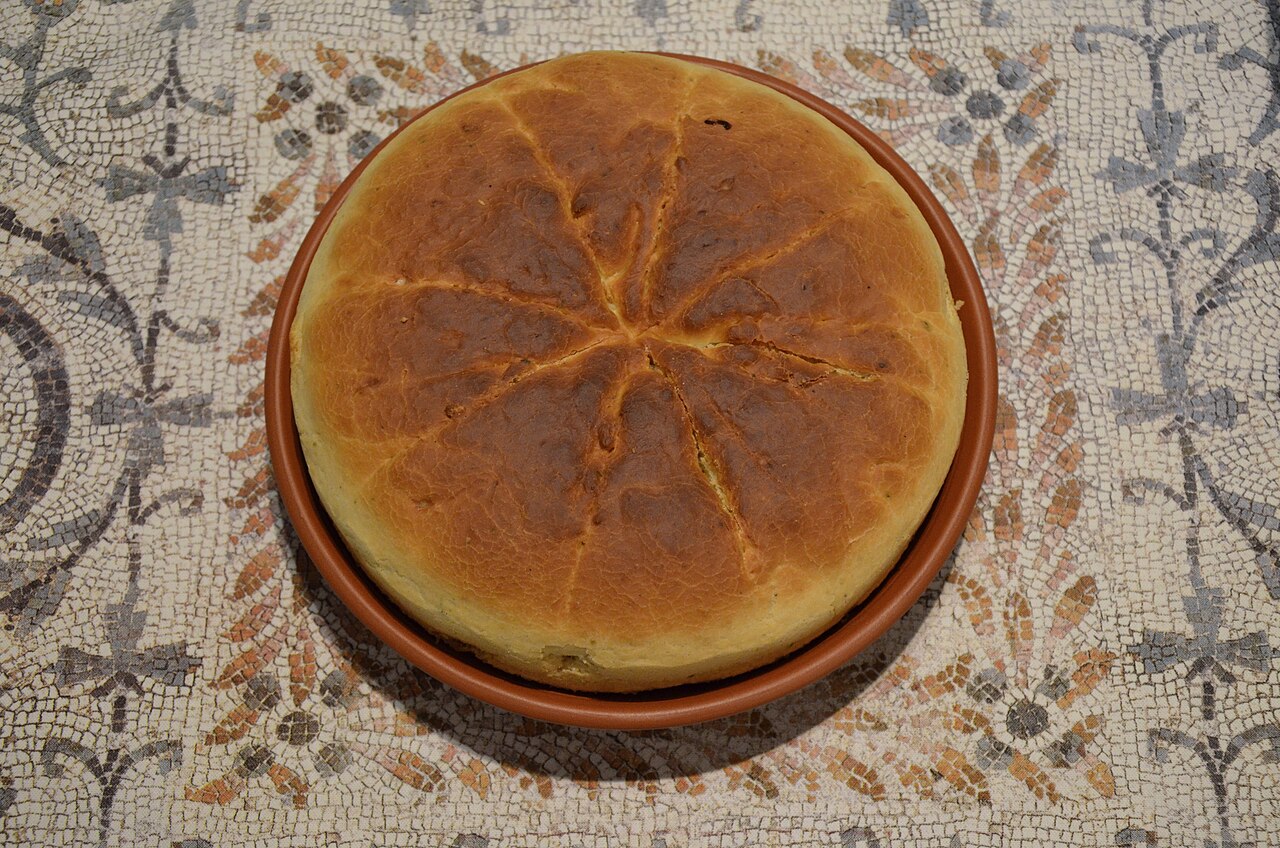
Greek dining was governed by a web of social and practical customs. Men and women ate separately; in smaller households, men took their meal first and women followed afterward, a practice that underscored the father's role as breadwinner. Slaves attended the table, and Aristotle observed that the poor, lacking servants, would call upon their wives or children to serve. The Greeks typically ate while seated on chairs, reserving benches for banquets. Tables were high for everyday meals and low for feasts, initially rectangular but largely round by the fourth century BCE, sometimes supported by animal-shaped legs such as lion's paws. Flat, circular loaves of bread, indented into four or more sections, occasionally doubled as plates, though terracotta bowls were more common. Cutlery was minimal: forks were unknown, fingers did the eating, knives handled meat, and spoons served soups. Bread pieces called apomagdaliai could scoop food or serve as napkins. Hand-washing before and after meals was standard, with slaves carrying a basin to catch water poured from a jug called a prochoos, while another offered a linen cloth for drying.
The Symposium and the Syssitia: Dining as Social Institution
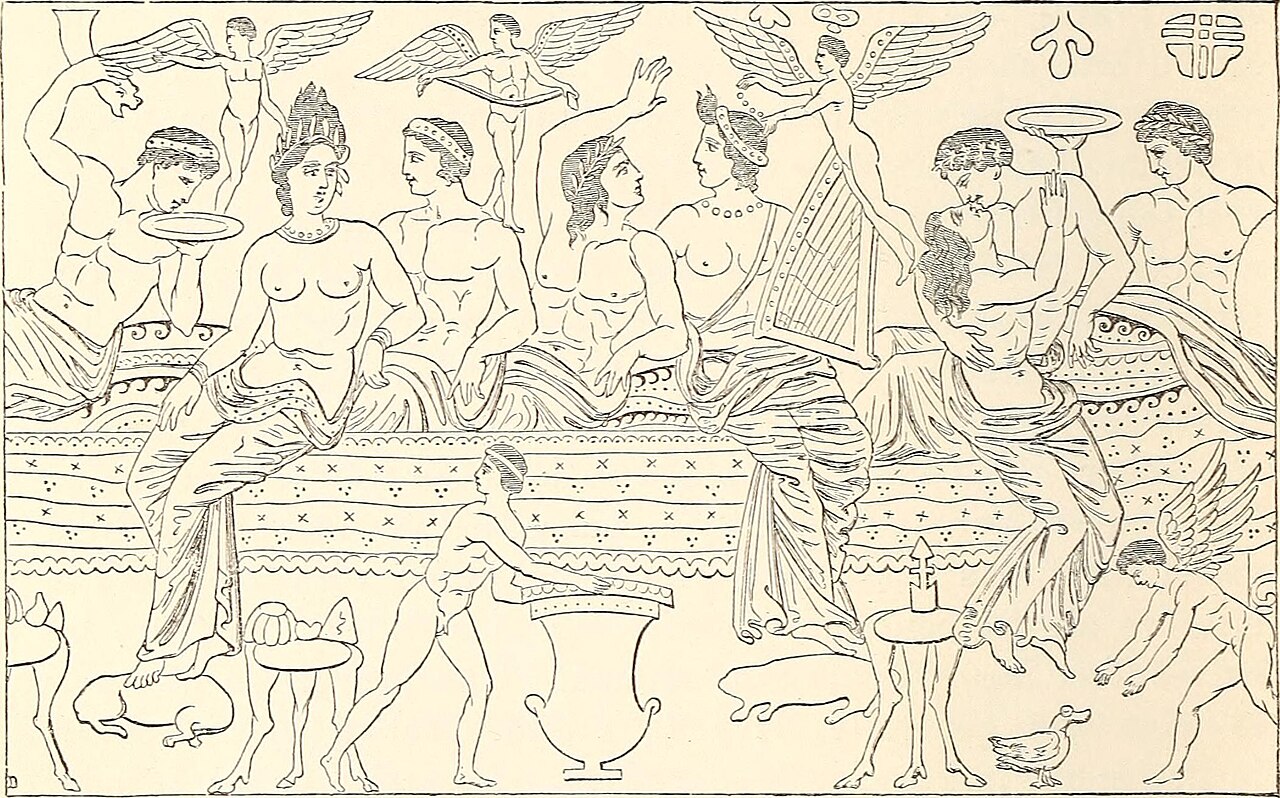
Beyond the private household, ancient Greek social life revolved around two distinctive forms of communal dining. The symposium, literally a gathering of drinkers, was a strictly male institution—courtesans being the sole exception—and a cornerstone of Greek culture. It unfolded in two phases: a first part devoted to relatively simple food, and a second dedicated to drinking. Wine was mixed to a strength dictated by a king of the banquet chosen by lot, and guests reclined on couches while low tables held food, game boards, and snacks like chestnuts, beans, toasted wheat, or honey cakes designed to absorb alcohol. The evening was inaugurated by a libation, usually to Dionysus, followed by conversation, table games such as kottabos, and performances by dancers, acrobats, and musicians. The symposium also became a literary setting, inspiring Plato's and Xenophon's works of the same name, Plutarch's Table Talk, and Athenaeus's Deipnosophists. In Crete and Sparta, a separate institution called the syssitia required men and youths to share mandatory meals, functioning simultaneously as an aristocratic club and a military mess.
Gallery
More in Greek cuisine 1-24
Spotted an error? Know more?
Reader corrections go straight into our review queue. Suggest an edit · How this site is sourced