Low surface brightness galaxy
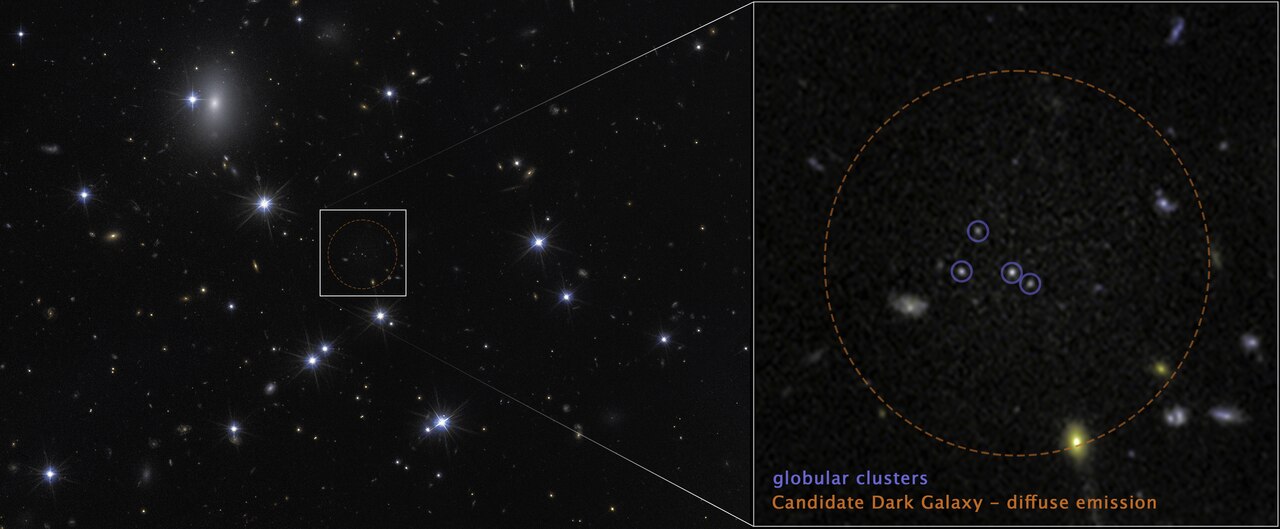
Diffuse galaxies dominated by dark matter, with faint stellar disks.

ESA/Hubble & NASA, C. Kilpatrick · CC BY 4.0
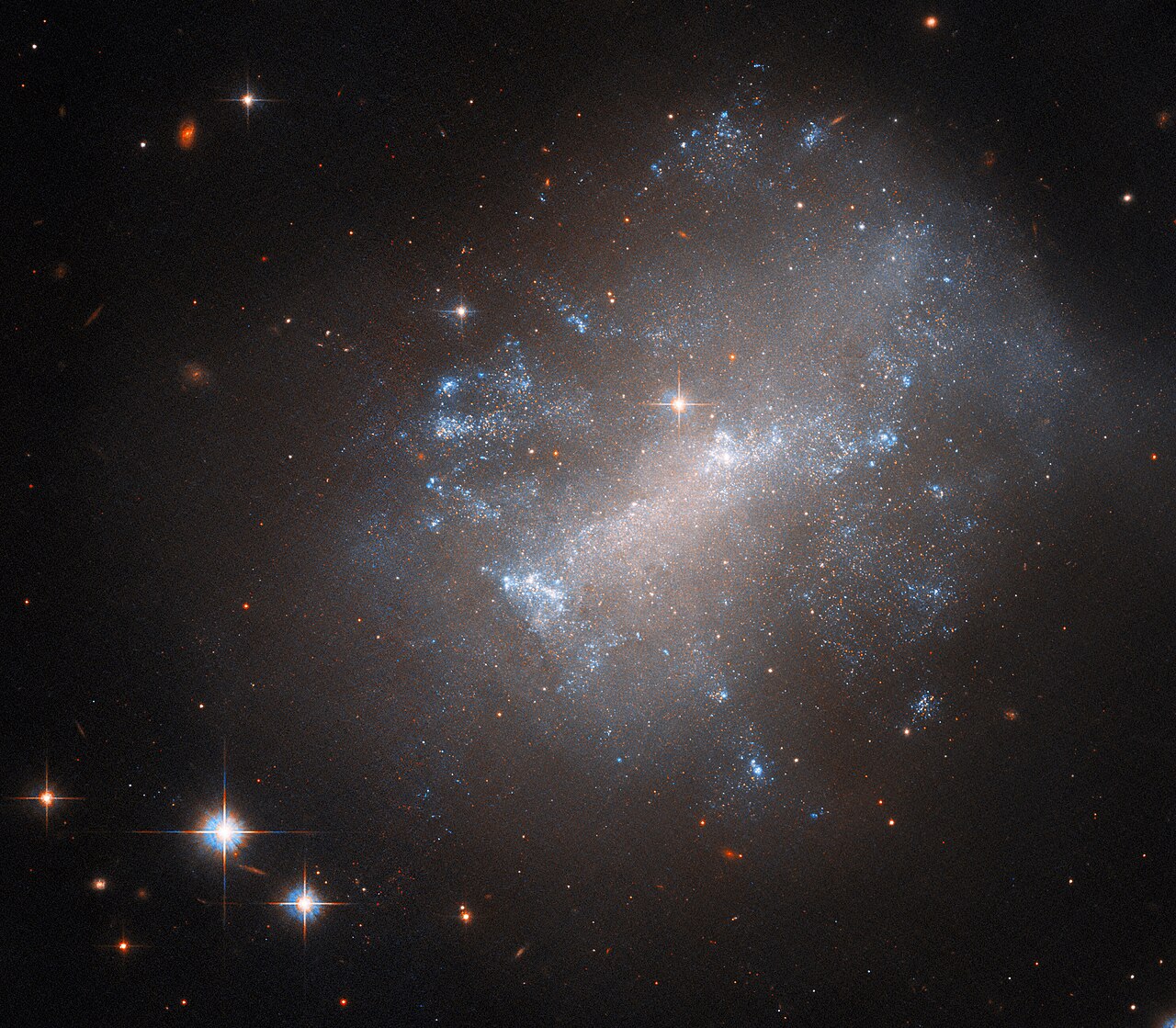
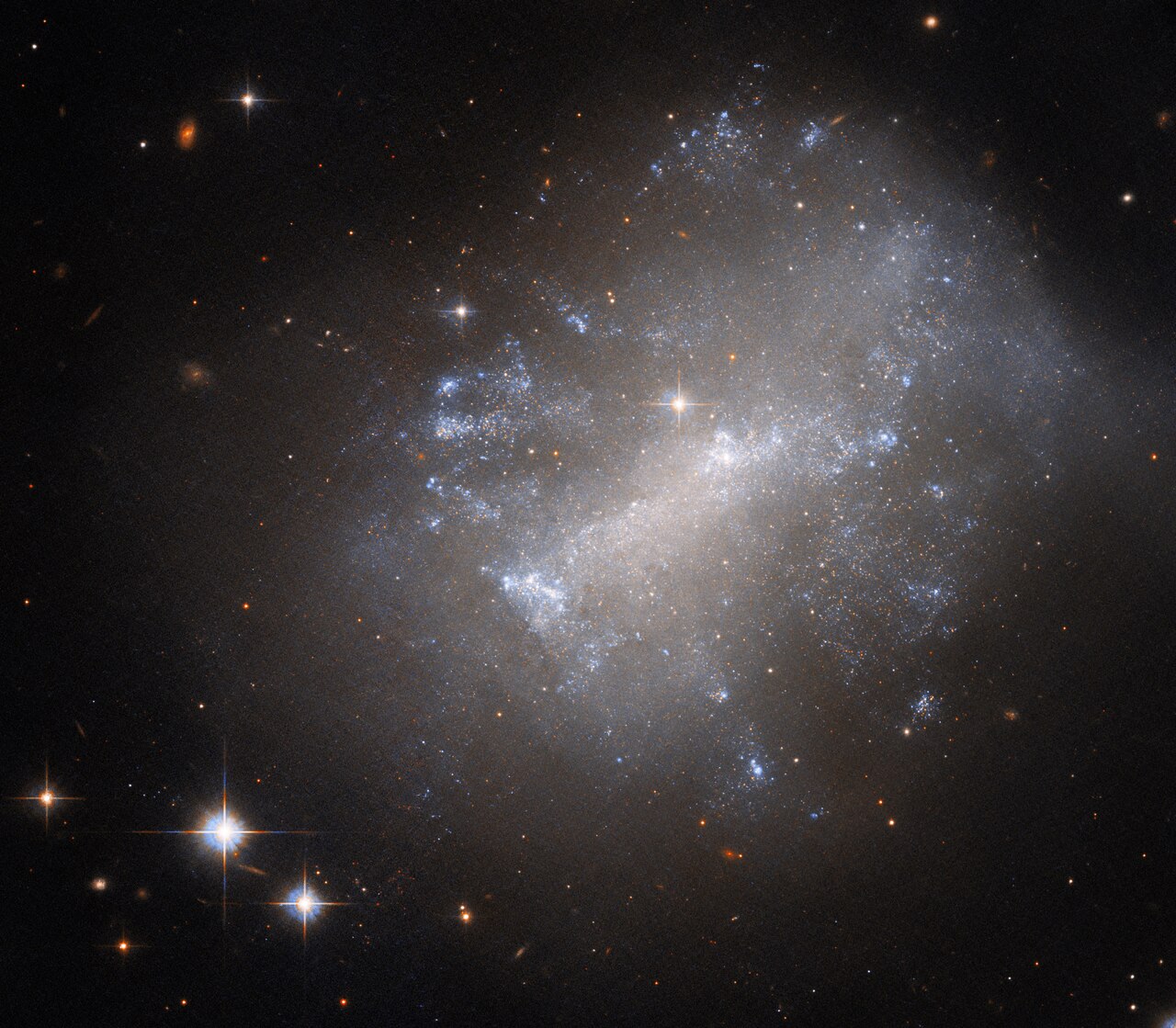
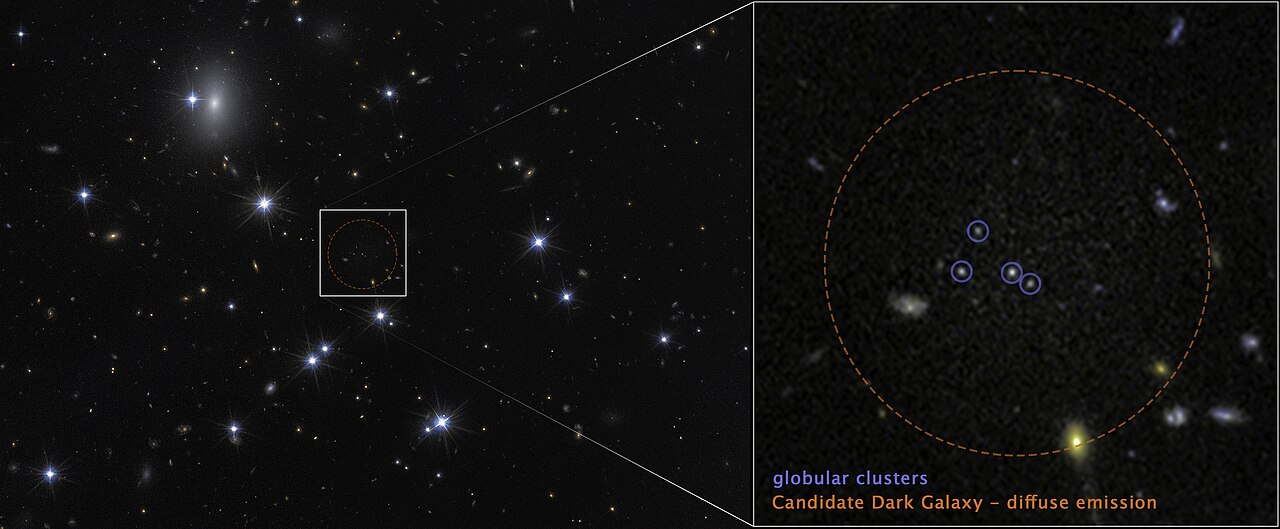
A low-surface-brightness (LSB) galaxy is a diffuse galaxy whose surface brightness, as seen from Earth, is at least one magnitude lower than the ambient night sky. Most LSBs are dwarf galaxies, with a very high fraction of their mass in the form of non-baryonic dark matter, and their baryonic matter is primarily neutral gaseous hydrogen rather than stars. They are important for studying dark matter because they are dark-matter-dominated even in their centers, unlike normal spiral galaxies.
- field
- Astronomy
- known_for
- Diffuse galaxies with surface brightness lower than the night sky, dominated by dark matter
- first_theorized
- 1976 by Mike Disney
- first_verified
- Earlier LSB galaxies were known before 1986; the first giant low-surface-brightness galaxy (GLSB) identified was Malin 1 in 1986
Lore & Background
LSB galaxies were theorized to exist in 1976 by Mike Disney. The first giant low-surface-brightness galaxy (GLSB) verified was Malin 1, discovered in 1986, which was also the first GLSB galaxy identified. At the time, it was the largest spiral galaxy known by scale-length measurement. Another example, UGC 1382, was previously thought to be an elliptical galaxy before low-brightness spiral arms were detected; it is much closer to Earth than Malin 1.
Most LSBs are dwarf galaxies, and they appear to have little supernova activity. Rotation curve measurements indicate an extremely high mass-to-light ratio, meaning stars and luminous gas contribute very little to the overall mass balance. Their centers show no large overdensities in stars, unlike the bulges of normal spiral galaxies, making them excellent laboratories for the study of dark matter.
Compared to high-surface-brightness galaxies, LSBs are mainly isolated field galaxies found in regions devoid of other galaxies. They have had fewer tidal interactions or mergers, which could have triggered enhanced star formation, explaining their small stellar content. Giant LSB galaxies are among the most massive known spiral galaxies, with faint stellar disks rich in neutral hydrogen but low in star formation, and often host bright bulges that can contain low-luminosity active galactic nuclei.
Reader's Guide
Low-surface-brightness galaxies are significant primarily because they are dominated by dark matter even in their central regions, offering a unique laboratory for studying dark matter properties. Their extremely high mass-to-light ratios, derived from rotation curve measurements, indicate that stars and luminous gas contribute only minimally to the overall mass. This makes them distinct from normal spiral galaxies, which have stellar bulges and higher surface brightness. The fact that most LSBs are dwarf galaxies and are found in isolated environments, with few tidal interactions or mergers, helps explain their low star formation rates and small stellar content. The discovery of Malin 1 in 1986 as the first verified LSB galaxy, and the later identification of UGC 1382, expanded understanding of galaxy types. The theoretical prediction by Mike Disney in 1976 preceded observational confirmation. Their legacy lies in advancing the study of dark matter and galaxy formation, as they provide a clean environment to test dark matter models without the confounding effects of significant stellar populations or recent interactions. The existence of giant LSB galaxies, among the most massive spirals known, further challenges conventional views of galaxy evolution.
Did You Know?
- LSB galaxies have a surface brightness at least one magnitude lower than the ambient night sky.
- Many LSB galaxies have a very high fraction of non-baryonic dark matter, though the exact percentage varies.
- The first giant low-surface-brightness galaxy verified was Malin 1, discovered in 1986; earlier LSB galaxies were known before that.
Discovery and the Long Road to a Catalogue Number
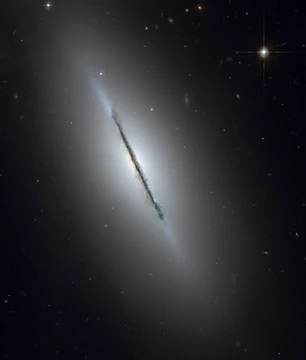
The Sombrero Galaxy first entered the astronomical record on May 11, 1781, when Pierre Méchain observed the object and later described it in a letter addressed to J. Bernoulli, which appeared in the Berliner Astronomisches Jahrbuch in 1783. Three years later, William Herschel independently located the same galaxy and became the first observer to note a "dark stratum" sweeping across its disc — the feature we now recognize as the famous dust lane. For nearly four decades, the object existed only as a handwritten annotation in Charles Messier's personal list, grouped with five other entries (M104 through M109). It was not until 1921 that Camille Flammarion uncovered Messier's handwritten notes, matched the galaxy to entry 4594 in the New General Catalogue, and formally declared it a legitimate member of the Messier Catalogue. Only then did the galaxy earn its enduring designation as M104, a name it has carried ever since.
The Dust Ring: A Cradle of New Stars
The most visually arresting feature of the Sombrero Galaxy is the dark band that sweeps across its bright central bulge, lending the galaxy its hat-like silhouette. Yet this is far more than a decorative stripe. Observations reveal that the dust lane is actually a symmetrical ring fully encircling the bulge, and within this ring reside most of the galaxy's cold atomic hydrogen and dust. Infrared spectroscopy has identified the ring as the primary region where new stars are being born, making it the engine of the galaxy's ongoing stellar evolution. Whether the ring also confines the majority of the galaxy's cold molecular gas remains an open question; current evidence rests on low-resolution observations and weak detections, so further study is needed to confirm that molecular material is truly restricted to this annular structure. The concentration of star-forming material in a single ring, rather than spread throughout the outer disk, makes the Sombrero Galaxy a compelling natural laboratory for understanding how gas dynamics and gravitational structure govern where stars can form.
A Layered Nucleus and Its Enigmatic Black Hole
The heart of the Sombrero Galaxy presents a layered puzzle. Its nucleus is classified as a LINER, a region where ionized gas glows but the atoms have lost only a few electrons, indicating relatively weak ionization. The energy source behind this glow has been debated: some LINERs are powered by hot young stars in nearby star-forming regions, while others are driven by active galactic nuclei harboring supermassive black holes. Infrared spectroscopy has shown that the Sombrero's nucleus lacks significant star formation, pointing instead to an active galactic nucleus as the ionization source. In the 1990s, John Kormendy's team used spectroscopy from the CFHT and Hubble to demonstrate that stellar orbital speeds near the center required a mass of roughly one billion solar masses, making it the nearest billion-solar-mass black hole known at the time. A 2016 study later revised this downward to approximately 640 million solar masses. The nucleus also emits synchrotron radiation at radio and X-ray wavelengths, with radio luminosity varying only ten to twenty percent. In 2006, two groups detected terahertz emission at 850 micrometers that could not be attributed to dust, synchrotron, bremsstrahlung, or molecular gas, leaving its origin unidentified.
Classification, Scale, and Observational Accessibility
The Sombrero Galaxy occupies an awkward taxonomic position. Its classification remains officially unclear, and it sits at the border of the Virgo and Corvus constellations as a member of the Virgo II Groups, a chain of galaxies stretching from the southern edge of the Virgo Supercluster. At roughly 9.55 megaparsecs, or about 31.1 million light-years, from the Milky Way, it is a relatively close neighbor. Its isophotal diameter spans approximately 29 to 32 kiloparsecs, making it slightly larger than our own galaxy. Early astronomers, seeing a small and faint halo, assumed it was a spiral. The Spitzer Space Telescope later revealed the halo to be far more extended and massive, suggesting the galaxy is better understood as a giant elliptical. Despite its peculiar status, the galaxy is remarkably accessible to observers: with an apparent magnitude of +8.0, it is easily visible through amateur telescopes. Some authors even consider it the brightest galaxy by absolute magnitude within ten megaparsecs of the Milky Way, a distinction that, combined with its prominent bulge, central black hole, and dust lane, ensures it remains a magnet for professional research.
Gallery
Frequently Asked Questions
What exactly is a low surface brightness galaxy?
An LSB galaxy is a diffuse system whose apparent brightness, as seen from Earth, falls at least one magnitude below the glow of the surrounding night sky. Most are dwarf-sized, and their visible matter consists mainly of neutral hydrogen gas rather than stars.
Who first theorized and confirmed low surface brightness galaxies?
Mike Disney proposed the concept in 1976, even though faint diffuse systems had been glimpsed before that date. The first confirmed giant LSB galaxy, Malin 1, was identified in 1986.
What makes LSB galaxies different from a typical spiral galaxy?
Unlike ordinary spirals where baryonic matter dominates the core, LSB galaxies are dark-matter-dominated all the way to their centers. Their stellar disks are extremely faint, and a very high fraction of their total mass is non-baryonic dark matter.
Why do astronomers care so much about low surface brightness galaxies?
Because they are dark-matter-dominated even in their inner regions, they serve as a natural laboratory for probing dark matter properties. Their faint, gas-rich disks let researchers study how gravity behaves when the invisible component overwhelms everything else.
What is the first giant low surface brightness galaxy ever identified?
Malin 1 holds that title, confirmed in 1986 as the first GLSB. Its discovery demonstrated that LSB systems could be far larger than the dwarf-sized examples catalogued before it.
More in Galaxies And Their Properties 1-21
Spotted an error? Know more?
This is a living reference — every entry is fact-audited, and reader corrections feed straight into our audit queue. Suggest an edit · See this site's audit record