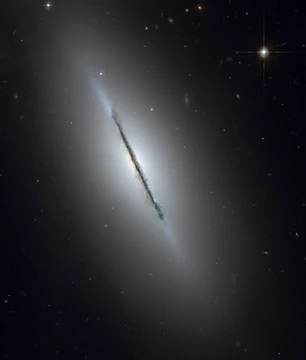
Brightest cluster galaxy
The most massive galaxies, found at cluster centers.

ESO/J. Emerson/VISTA. Acknowledgment: Cambridge Astronomical Survey Unit · CC BY 4.0
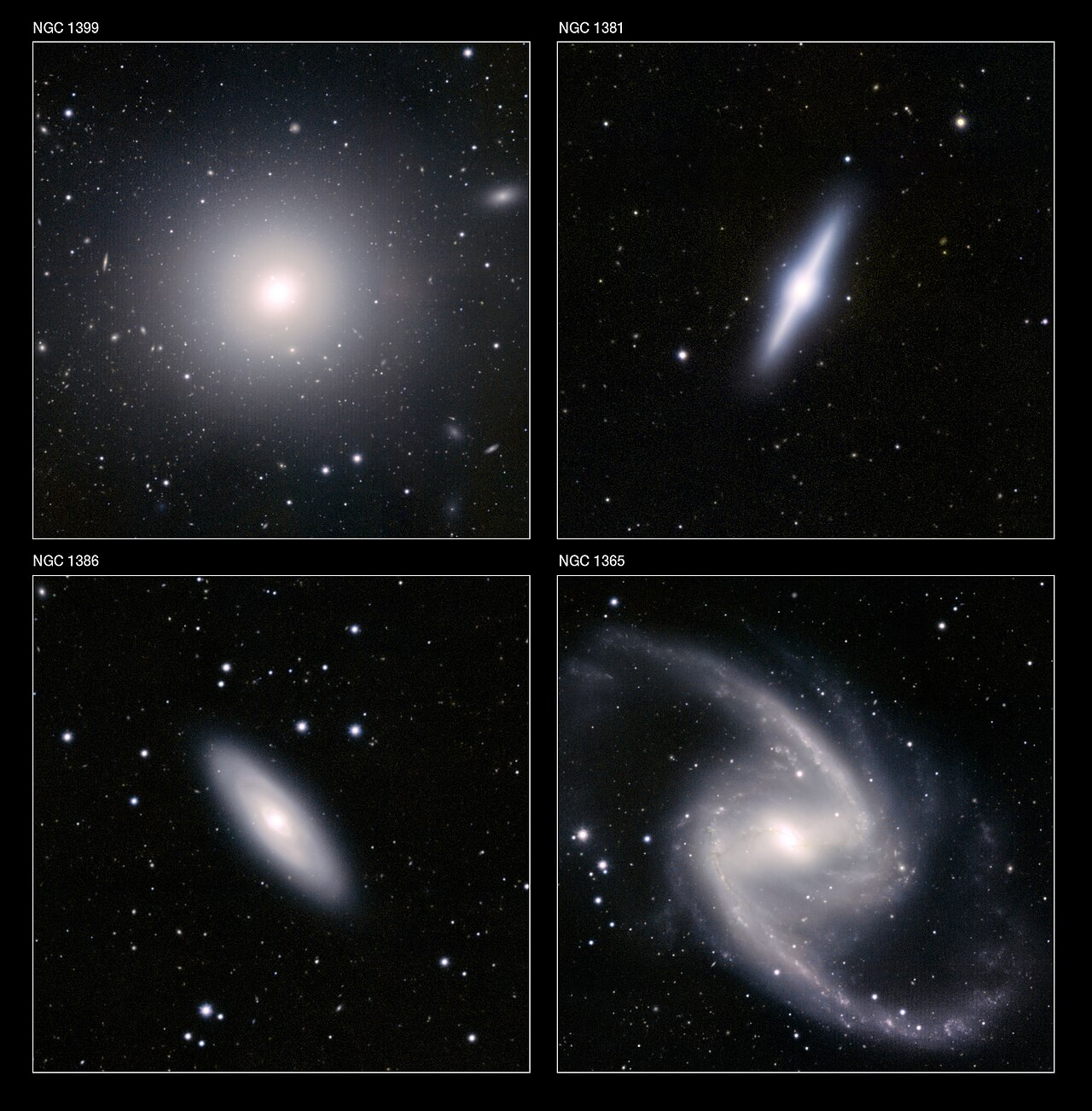
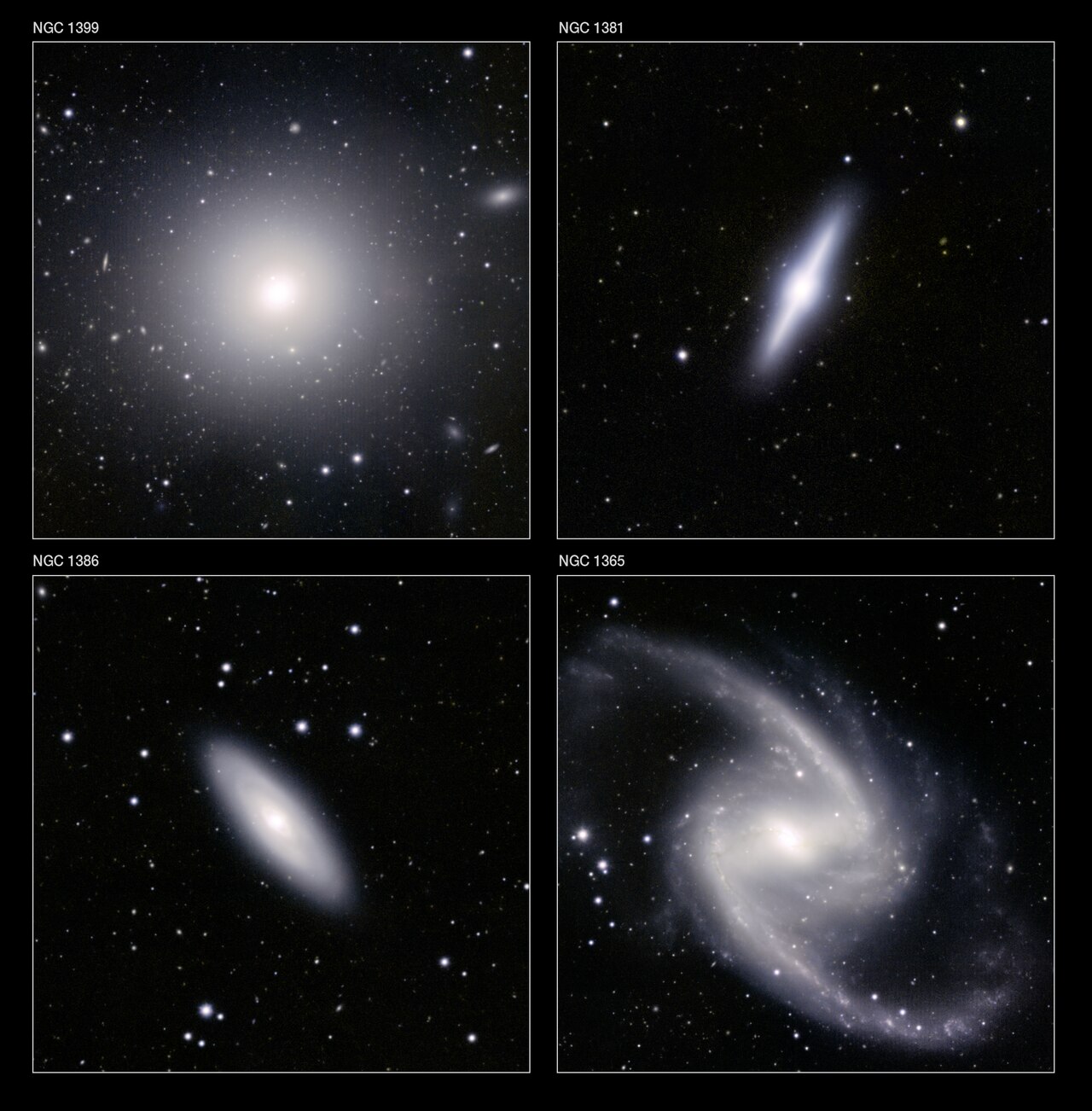
In a galaxy cluster, the brightest cluster galaxy (BCG) is simply the most luminous member. These are among the most massive galaxies known, typically elliptical in shape, and located near the cluster’s geometric and kinematic center—sitting at the bottom of the cluster’s gravitational well. They also usually coincide with the peak of the cluster’s X-ray emission.
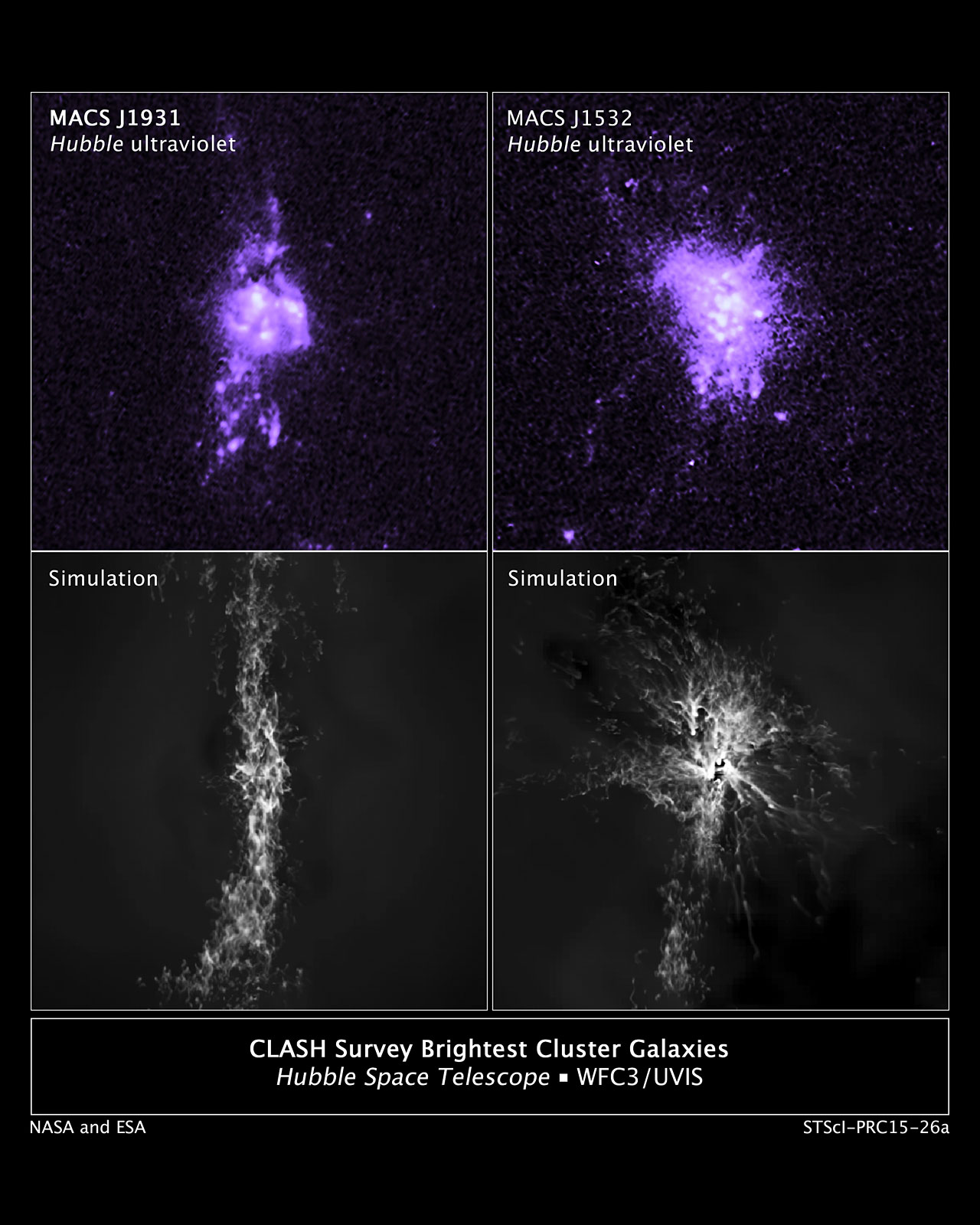
Several formation scenarios have been proposed. The cooling flow model suggests star formation arises from a central cooling flow in dense X-ray halo centers, triggered when entropy drops below a threshold. However, studies of accretion populations in BCGs have cast doubt on this idea, as no evidence of cooling flows has been observed in radiative cooling clusters. The two remaining theories are more promising.
In galactic cannibalism, galaxies sink to the cluster center through dynamical friction and tidal stripping. In the galactic merger model, rapid mergers between galaxies occur during cluster collapse. These models can be distinguished by the timing of BCG formation: cannibalism predicts many small galaxies in the evolved cluster, while merging expects a hierarchical collapse. Orbital decay of cluster galaxies has proven too slow to account for BCG growth, so the merging model is now generally favored. Yet recent observations conflict with some predictions—for instance, BCG stellar mass appears to have assembled much earlier than the merging model suggests. There is little evolution in size, luminosity, or structure across a range of redshifts, indicating most BCGs were assembled by redshift z~1.5–2.0, ruling out late hierarchical assembly and emphasizing passive evolution. Growth after assembly comes mainly from minor mergers and gas accretion. These discrepancies between observations and hierarchical simulations highlight the need for model revisions to account for early mass assembly.
BCGs are classified into giant ellipticals (gE), D galaxies, and cD galaxies. Both cD and D galaxies have an extended diffuse envelope around an elliptical-like nucleus. Their light profiles are often described by a Sersic law, a double Sersic profile, or a de Vaucouleurs law. Different parametrizations and the faintness of the diffuse envelope cause discrepancies in reported sizes.
X-ray observations of high-redshift cluster galaxies (0.81 < z < 1.17) found that nine out of ten in the sample are dynamica
- definition
- Brightest galaxy in a galaxy cluster
- type
- Elliptical galaxies (giant ellipticals, D galaxies, cD galaxies)
- location
- Geometric and kinematical center of host cluster
- characteristic
- Coincident with peak of cluster X-ray emission
- formation_scenarios
- Cooling flow, galactic cannibalism, galactic merger
- accepted_model
- Galactic merger (with discrepancies noted)
Lore & Background
BCGs are divided into various classes of galaxies: giant ellipticals (gE), D galaxies and cD galaxies. cD and D galaxies both exhibit an extended diffuse envelope surrounding an elliptical-like nucleus akin to regular elliptical galaxies. The light profiles of BCGs are often described by a Sersic surface brightness law, a double Sersic profile or a de Vaucouleurs law. The different parametrizations of the light profile of BCGs, as well as the faintness of the diffuse envelope lead to discrepancies in the reported values of the sizes of these objects.
Formation scenarios for BCGs include cooling flow, galactic cannibalism, and galactic merger. The cooling flow theory involves star formation from the central cooling flow in high density cooling centers of X-ray cluster halos, but the study of accretion populations in BCGs has cast doubt over this theory and astronomers have seen no evidence of cooling flows in radiative cooling clusters. Galactic cannibalism involves galaxies sinking to the center of the cluster due to dynamical friction and tidal stripping, while galactic merger involves rapid galactic mergers between several galaxies during cluster collapse. It has been shown that the orbit decay of cluster galaxies is not effective enough to account for the growth of BCGs, and the merging model is now generally accepted as the most likely one, but recent observations are at odds with some of its predictions.
An examination of x-ray observational results for high red-shift cluster galaxies (0.81< z < 1.17) found that nine of the ten high red-shift cluster galaxies in the sample are dynamically disturbed. Based on a comparison of earlier work cited on lower red-shift galaxies (0.14< z <0.75), the higher red-shift galaxies are younger and there was likely a higher galaxy cluster merger rate in the early universe. Precursors to brightest cluster galaxies may involve very large early universe galaxies in regions of relatively high density with supermassive black holes (SMBH) and active galactic nuclei (AGN).
Reader's Guide
Brightest cluster galaxies are significant because they represent the most massive galaxies in the universe and serve as key probes of galaxy formation and cluster evolution. Their location at the center of galaxy clusters, coincident with X-ray emission peaks, makes them important for understanding the dynamics and thermodynamics of the intracluster medium. The study of BCGs has highlighted the tension between hierarchical merging models and observations, as it has been found that the stellar mass of BCGs was assembled much earlier than the merging model predicts, by redshift z~1.5−2.0, with growth primarily from minor mergers and gas accretion after assembly. Discrepancies between observations and hierarchical simulations underscore the need for model revisions to better account for early mass assembly. Additionally, the presence of AGN and dual SMBH systems in BCG precursors suggests complex feedback processes that influence galaxy and cluster evolution. The observed higher AGN power fractions and merger rates at higher redshifts indicate that BCGs and their environments evolve significantly over cosmic time, providing a laboratory for studying galaxy formation in dense environments.
Did You Know?
- BCGs are generally coincident with the peak of the cluster X-ray emission.
- The cooling flow theory for BCG formation has been cast into doubt due to lack of evidence in radiative cooling clusters.
- It has been shown that the orbit decay of cluster galaxies is not effective enough to account for the growth of BCGs.
- Nine of ten high red-shift cluster galaxies in one sample were found to be dynamically disturbed.
Defining Characteristics and Classification
BCGs are the most luminous galaxies within any given cluster and tend to rank among the most massive galaxies known. They are typically elliptical in shape and occupy a position near the geometric and kinematic center of their host cluster, effectively sitting at the bottom of the gravitational potential well. Their placement is not random: they generally coincide with the peak of the cluster's X-ray emission, making them natural anchors for mapping cluster structure. Taxonomically, BCGs are sorted into several classes—giant ellipticals (gE), D galaxies, and cD galaxies. The D and cD types share a distinctive trait: a broad, diffuse halo of light surrounding a central elliptical-like core. Describing their brightness distribution has proven difficult. Astronomers have applied Sersic surface brightness laws, double Sersic profiles, and de Vaucouleurs laws, yet the faintness of the outer envelope combined with the choice of parametrization produces inconsistent reported sizes. This ambiguity in pinning down their true extent remains a practical challenge in cluster studies.
Formation Scenarios and the Cooling-Flow Setback
Several mechanisms have been proposed to explain how BCGs grow to their extraordinary sizes. One early candidate was the cooling-flow model, in which gas in the dense central regions of X-ray-bright clusters cools rapidly, triggering sustained star formation once the entropy of the central galaxy drops below a critical threshold. However, detailed studies of accretion populations within BCGs have undermined this picture, and astronomers have found no supporting evidence for cooling flows in radiative cooling clusters. Two alternatives have fared considerably better. In the galactic cannibalism picture, smaller galaxies sink toward the cluster center through dynamical friction and tidal stripping, gradually feeding the central giant. In the merger scenario, rapid collisions among several galaxies occur during the overall collapse of the cluster. Distinguishing between these two has been attempted by examining the expected formation timeline and the residual population of small galaxies in evolved clusters, though orbit-decay calculations suggest cannibalism alone cannot account for the full growth of BCGs.
The Early Assembly Puzzle
The merging model is now broadly regarded as the most plausible explanation for BCG formation, yet recent observations create tension with its predictions. In a standard hierarchical cosmological framework, one would expect BCGs to grow gradually over cosmic time through successive mergers. Instead, data show that the stellar mass of BCGs was largely in place far earlier than the model anticipates. Across a wide range of redshifts, BCGs display little significant evolution in size, luminosity, or internal structure, pointing to assembly by redshift z ≈ 1.5–2.0. This finding effectively rules out a late, slow hierarchical build-up and instead emphasizes a period of passive evolution after the main growth phase. Subsequent growth appears to come primarily from minor mergers and gas accretion rather than major collisions. The mismatch between what hierarchical simulations predict and what telescopes actually observe underscores the need to revise existing models so they can properly capture the surprisingly early mass assembly of these colossal galaxies.
High-Redshift Clusters and BCG Precursors
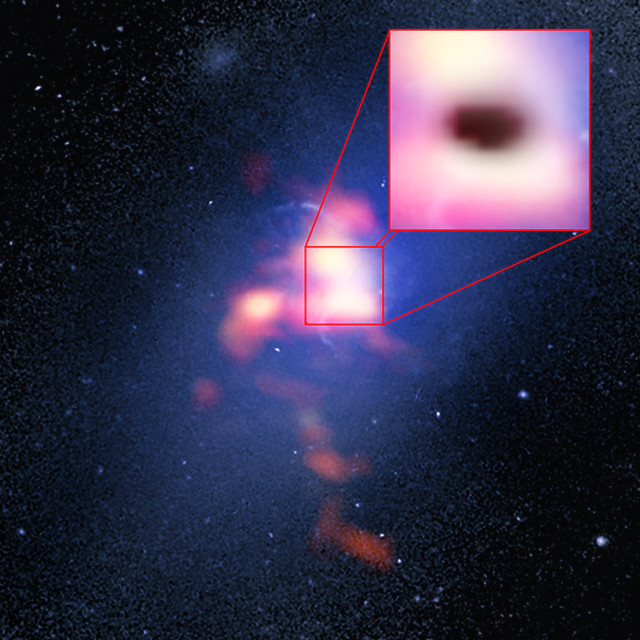
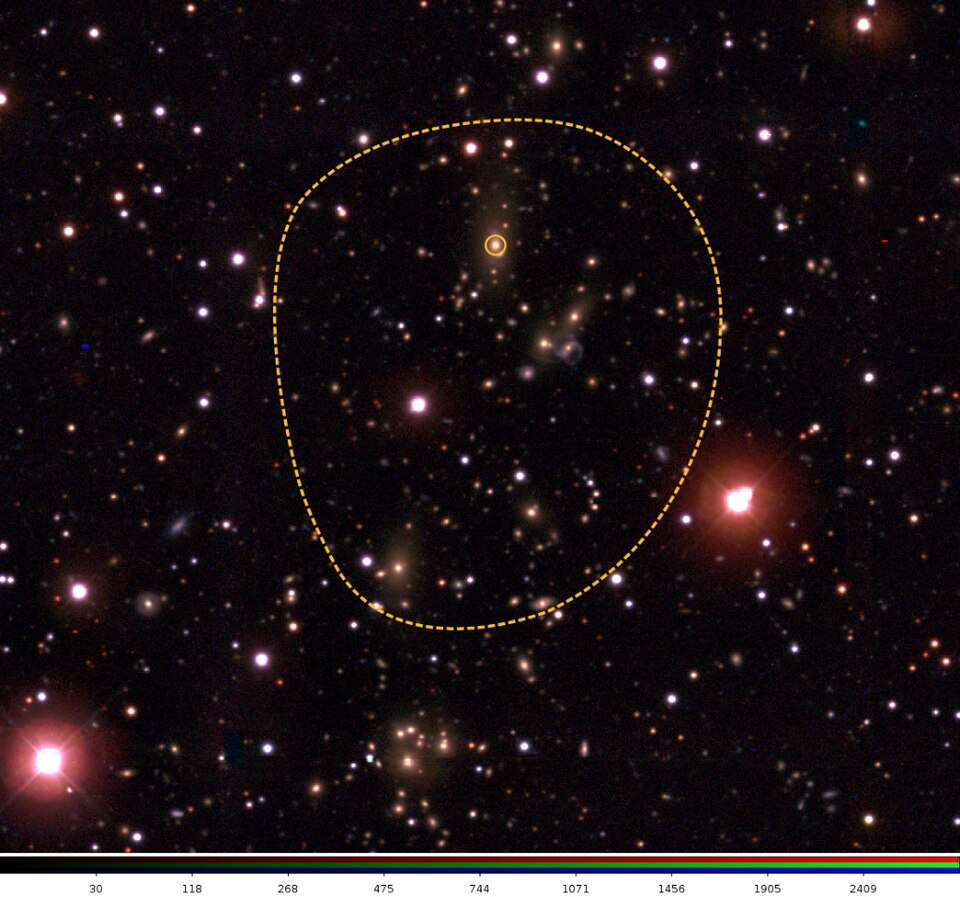
Observations of cluster galaxies at redshifts between 0.81 and 1.17 reveal a picture of considerable dynamical turbulence. In one sample of ten such high-redshift cluster galaxies, nine showed signs of being dynamically disturbed, inferred from offsets between the BCG's mass center and the X-ray centroid or peak. Comparing these results with earlier work on lower-redshift clusters (0.14 < z < 0.75) suggests the higher-redshift systems were younger and experienced a greater rate of cluster mergers in the early universe. Moreover, the fraction of AGN power rises with redshift, and substantial AGN activity is detected in the outer regions of clusters. Looking even further back, precursors to BCGs may have been very large early-universe galaxies residing in high-density regions, hosting supermassive black holes and active nuclei. These configurations could accumulate mass through the merger of smaller systems, while radio-jet turbulence, radiation feedback from the interstellar medium, and possible dual supermassive black hole pairs in neighboring galaxies may all have accelerated the merging of material around the brightest, most massive cluster member.
Gallery
Frequently Asked Questions
What is a Brightest Cluster Galaxy (BCG)?
A BCG is simply the single most luminous galaxy within a given galaxy cluster. It is not a distinct species of object but rather the top-ranked member by brightness among all cluster residents.
What shape and classification do BCGs have?
They are almost always elliptical in morphology, often catalogued as giant ellipticals, D galaxies, or cD galaxies. Their smooth, round appearance reflects their status as among the most massive galaxies known.
Where exactly is a BCG located within its cluster?
It sits at both the geometric center and the kinematic center of the host cluster, resting at the deepest point of the cluster's gravitational potential well. This same spot coincides with the peak of the cluster's X-ray emission.
How did BCGs form?
The currently favored explanation is a long history of galactic mergers and cannibalism that progressively built up the central galaxy's mass. An alternative cooling-flow model proposed that star formation was triggered when dense central gas lost enough entropy, but the merger picture is preferred despite some unresolved discrepancies.
Why are BCGs important to astrophysics?
As the most massive galaxies in the universe, they act as natural laboratories for probing how extreme gravitational environments shape stellar populations and gas dynamics. Their central placement and intense X-ray signature make them key tracers of a cluster's overall structure.
More in Galaxies And Their Properties 1-21
Spotted an error? Know more?
This is a living reference — every entry is fact-audited, and reader corrections feed straight into our audit queue. Suggest an edit · See this site's audit record