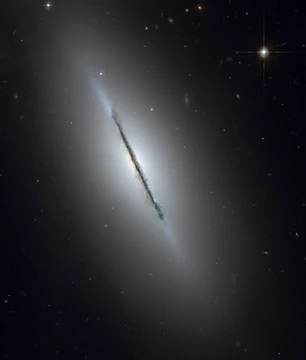
Field galaxy
A galaxy gravitationally alone, not in a group or cluster.

NASA, ESA, and J. Lotz, M. Mountain, A. Koekemoer, kkjudùjhhjlkjjlkj Jjjpkhhjnpu · CC BY 4.0
A field galaxy is a galaxy that exists in gravitational isolation, not part of any larger group or cluster. Within about 5 megaparsecs (16 million light-years) of the Milky Way, roughly 80% of all galaxies belong to groups or clusters. The majority of low-surface-brightness galaxies are field galaxies, and the most common type among them, by median Hubble classification, is Sb—a kind of spiral galaxy.
- definition
- Galaxy not in a group or cluster
- proportion near Milky Way
- Roughly 80% of galaxies within 5 Mpc are in groups or clusters
- common type
- Sb spiral galaxy
- typical location
- Field (gravitationally isolated)
- associated with
- Low-surface-brightness galaxies
Lore & Background
Field galaxies are defined by their isolation: they do not belong to any larger galaxy group or cluster. According to the source, roughly 80% of all galaxies located within 5 Mpc (16 Mly) of the Milky Way are in groups or clusters, implying that the remaining fraction are field galaxies. Most low-surface-brightness galaxies are field galaxies, and the median Hubble-type among field galaxies is Sb, a type of spiral galaxy.
Reader's Guide
Field galaxies are significant because they represent a population of galaxies that have evolved in relative isolation, without the gravitational interactions and environmental effects common in groups or clusters. This isolation makes them valuable for studying galaxy formation and evolution in a simpler context. The source notes that most low-surface-brightness galaxies are field galaxies, suggesting that such galaxies are more common in low-density environments. The median Hubble-type of Sb indicates that spiral galaxies are typical among field galaxies. Understanding field galaxies helps astronomers distinguish between intrinsic galaxy properties and those shaped by environment.
Did You Know?
- Roughly 80% of galaxies within 5 Mpc of the Milky Way are in groups or clusters, not field galaxies.
- Most low-surface-brightness galaxies are field galaxies.
- The median Hubble-type of field galaxies is Sb, a type of spiral galaxy.
Anatomy of a Stellar Metropolis
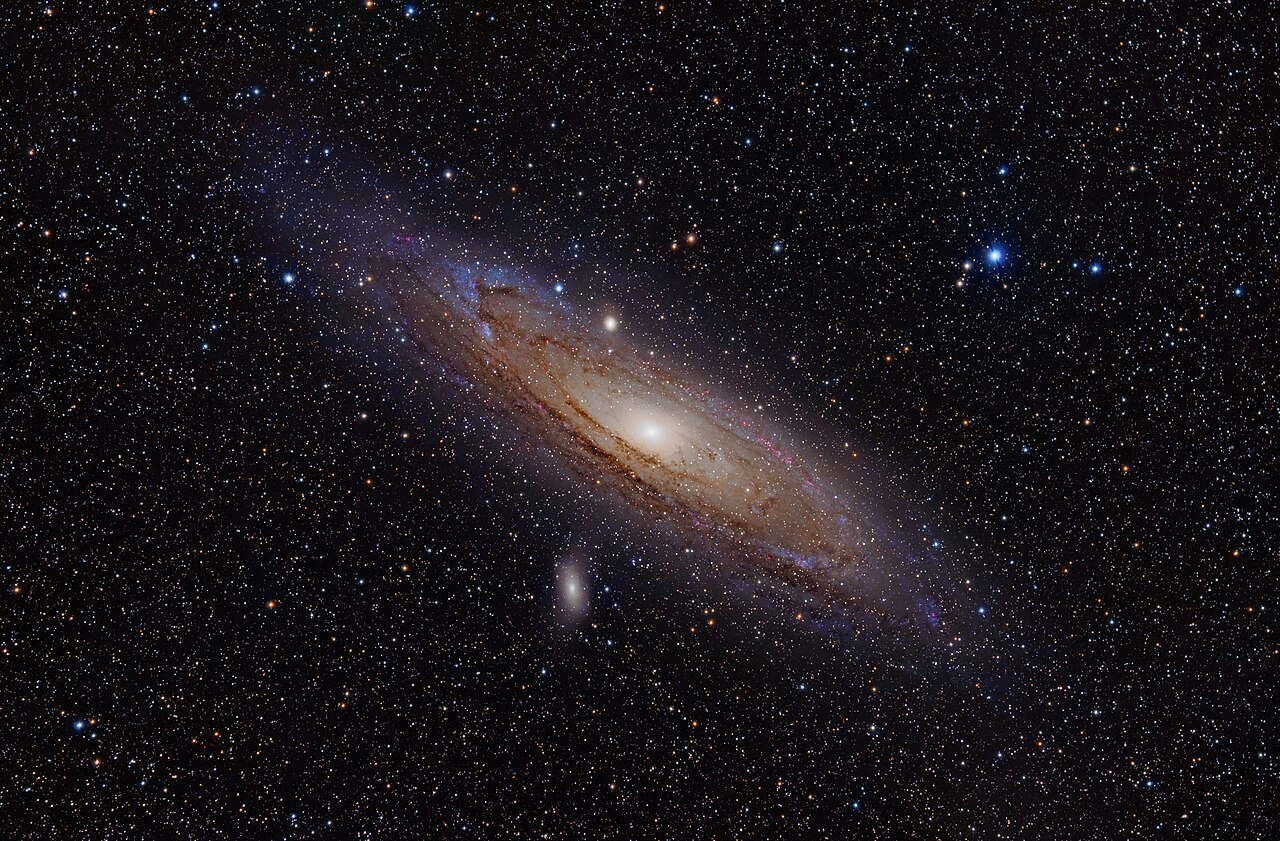
A galaxy is, at its core, a vast gravitational assembly. Within its boundaries orbit countless stars, planetary systems, the corpses of dead stars, substellar objects, clouds of interstellar gas, fine dust, and—most enigmatically—dark matter. The visible fraction, comprising stars and nebulae, accounts for only a few percent of the total mass; the overwhelming majority is locked in that invisible dark component. In size, these systems span an extraordinary range. Dwarf galaxies may hold fewer than a thousand stars, while the most massive supergiants known contain roughly one hundred trillion. The typical galaxy houses around one hundred million stars, and diameters generally fall between one thousand and one hundred thousand parsecs, or roughly three thousand to three hundred thousand light years. At the heart of many of these structures sits a supermassive black hole, a common and defining feature. For perspective, our own Milky Way stretches to at least twenty-six thousand eight hundred parsecs across, and its nearest large companion, Andromeda, lies just over seven hundred fifty thousand parsecs distant.
Naming the Unnamed: Classification and Cataloguing
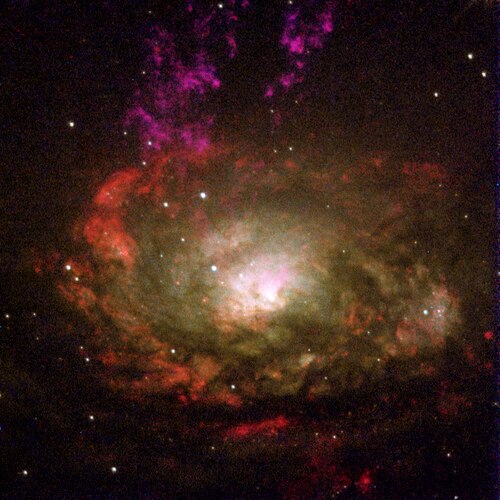
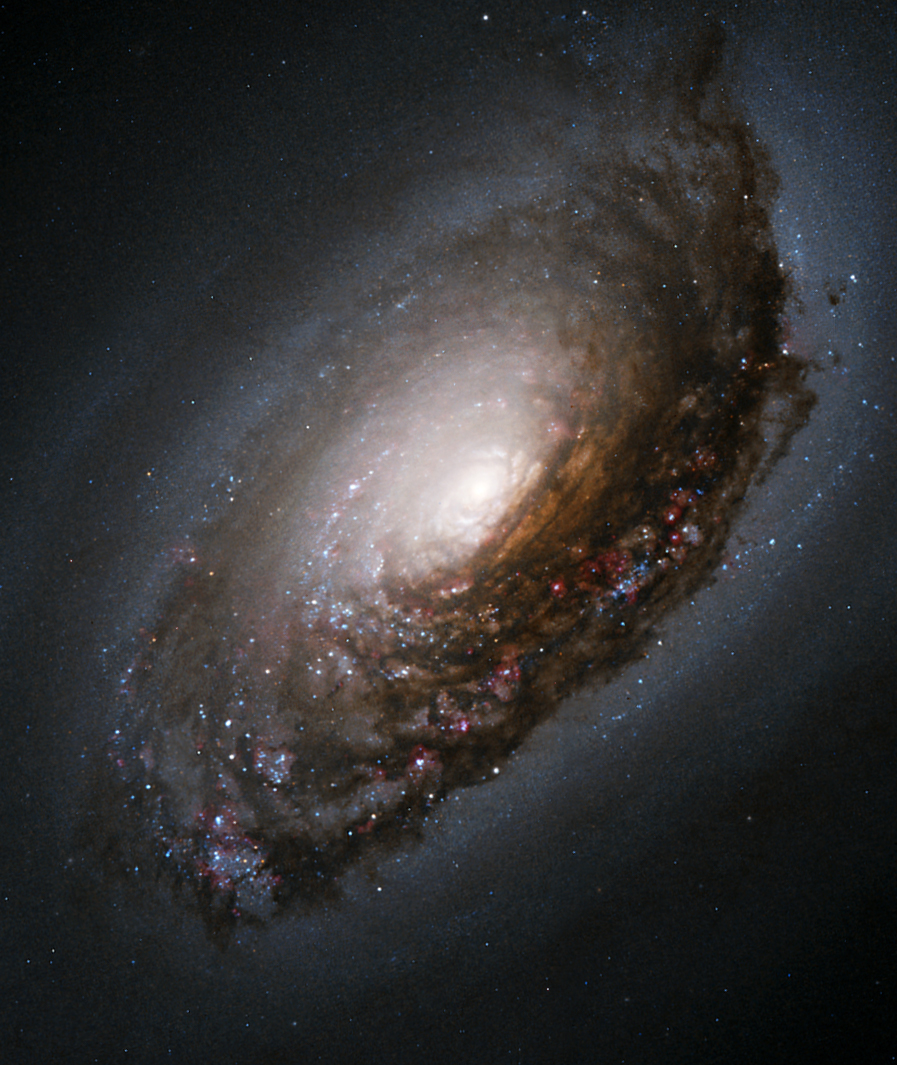
Galaxies are sorted primarily by their visual morphology into three broad families: elliptical, spiral, and irregular. Our own Milky Way belongs to the spiral class. Beyond shape, individual systems may stand out for special behaviors—interacting with a neighboring galaxy, forging stars at an abnormally high rate, or harboring an active galactic nucleus at their core. Despite millions of galaxies having been catalogued, only a handful carry widely recognized names: Andromeda, the Magellanic Clouds, the Whirlpool, and the Sombrero. The rest are identified through numerical designations drawn from multiple catalogues—Messier, the New General Catalogue, the Index Catalogue, the CGCG, the MCG, the Uppsala General Catalogue, and the Principal Galaxies catalogue (also called LEDA). A single object like Messier 109, a spiral galaxy, simultaneously holds the numbers NGC 3992, UGC 6937, CGCG 269-023, MCG +09-20-044, and PGC 37617. Fainter, more distant systems are typically tracked only by their identifiers in large sky surveys such as the Sloan Digital Sky Survey.
From Myth to Measurement: A History of Discovery
For millennia, the faint band of light we call the Milky Way defied explanation. Democritus, writing around the fifth century BCE, speculated it was made of distant stars, while Aristotle countered that it resulted from fiery exhalations igniting in the upper atmosphere. Centuries later, Olympiodorus the Younger challenged Aristotle's sublunary model by noting the absence of parallax. In the medieval Islamic world, Ibn al-Haytham attempted to measure that parallax and concluded the band must lie far beyond Earth's atmosphere. Al-Biruni described it as countless nebulous fragments, and Avempace argued it was many stars so densely packed they appeared continuous. Ibn Qayyim al-Jawziyya, in the fourteenth century, called it a myriad of tiny stars packed into the sphere of fixed stars. Definitive proof arrived in 1610 when Galileo pointed his telescope at the band and resolved it into a vast population of faint stars. By the eighteenth and nineteenth centuries, other galaxies were spotted telescopically and labeled spiral nebulae, their true extragalactic nature still debated. Harlow Shapley championed the term 'galaxy,' but the influential Edwin Hubble persisted in calling them nebulae; the nomenclature only settled after Hubble's death in 1953.
The Grand Architecture: Groups, Clusters, and the Cosmic Web
No galaxy exists in true isolation. Gravitationally, they are woven into hierarchical structures: small groups, larger clusters, and even more vast superclusters. The Milky Way shares its Local Group with Andromeda, the two together dominating the assembly, and that group in turn is a constituent of the Virgo Supercluster. At the largest observable scales, these associations arrange themselves into luminous sheets and filaments, separated by enormous cosmic voids. Current estimates place the total number of galaxies in the observable universe between two hundred billion and two trillion, with typical separations measured in millions of parsecs. While the physics of star formation—gravitational condensation of dense gas clouds—is reasonably well modeled, the broader process of galaxy formation remains far less understood, unfolding over timescales of roughly a billion years. And in their long lives, galaxies are not static; they occasionally collide with one another, reshaping their structures in the process.
Gallery
Frequently Asked Questions
What is a field galaxy?
A field galaxy is any galaxy that sits in gravitational isolation, meaning it does not belong to a larger group or cluster of galaxies. It drifts through intergalactic space without being bound to a nearby galactic neighborhood.
How common are field galaxies near the Milky Way?
They are actually the minority in our cosmic neighborhood. Within roughly 5 megaparsecs (about 16 million light-years) of the Milky Way, around 80% of all galaxies are locked into groups or clusters, leaving only about 20% as true field galaxies.
What type of galaxy is most often a field galaxy?
By median Hubble classification, the Sb spiral galaxy is the most frequently encountered type among field galaxies. These are intermediate spirals with a modest central bulge and well-defined arms.
What is the link between field galaxies and low-surface-brightness galaxies?
The majority of low-surface-brightness galaxies are field galaxies, meaning they tend to exist in gravitational isolation rather than within dense clusters. Their diffuse, faint structure is thought to be easier to preserve when no strong cluster tidal forces are acting on them.
Why do astronomers care about field galaxies?
Because gravitational isolation means a field galaxy evolves largely on its own, without the mergers, tidal stripping, and environmental effects that shape cluster members. Studying them gives a cleaner picture of how a galaxy's structure and star formation develop in a relatively undisturbed setting.
More in Galaxies And Their Properties 1-21
Spotted an error? Know more?
This is a living reference — every entry is fact-audited, and reader corrections feed straight into our audit queue. Suggest an edit · See this site's audit record