Hanseniaspora occidentalis
A yeast with potential for malic acid reduction in wine.

Hanseniaspora occidentalis is a yeast species belonging to the Saccharomycetaceae family. Its anamorph (asexual form) was previously known as *Kloeckera javanica*. The yeast has been found in wild environments such as soil and vineyards, and a variant has been isolated from orange juice and rotten oranges. It shows promise for reducing malic acid in winemaking.
The yeast was first isolated in its anamorphic state by Albert Klöcker in 1912, who named it *Pseudosaccharomyces occidentalis*. However, the genus name *Pseudosaccharomyces* was already in use for a different organism since 1906, so Alexander Janke proposed the name *Klöckeria* in 1923, correcting it to *Kloeckera* in 1928. In 1934, Jacomina Lodder determined that this yeast was identical to *Kloeckera jensenii*, also isolated by Klöcker in 1912, and merged them. A similar consolidation occurred with *Pseudosaccharomyces indicus*, *P. antillarum*, and *P. willi*, which Janke moved to *Kloeckera indica*, *K. antillarum*, and *K. willi*, and Lodder later recognized as three strains of a single species, *Kloeckera antillarum*. In 1958, Miller and Phaff concluded that *Kloeckera jensenii*, *K. javanica* (originally *Pseudosaccharomyces javanicus*), *K. lafarii*, and *K. antillarum* were so similar they should be combined into one species, *Kloeckera javanica*. In 1974, Maudy Th. Smith observed a teleomorphic (sexual) stage in the type strain of the original *Kloeckera occidentalis*. Following the convention of placing teleomorphic *Kloeckera* forms in the genus *Hanseniaspora*, it was named *Hanseniaspora occidentalis*. DNA testing by S.A. Meyer in 1978 confirmed that the anamorphic *Kloeckera* yeasts were synonyms of their teleomorphic *Hanseniaspora* counterparts, making *Kloeckera javanica* a synonym of *Hanseniaspora occidentalis*.
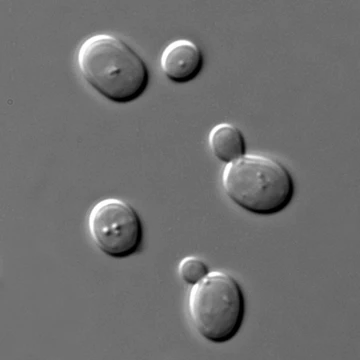
Under microscopic examination after 48 hours in YM liquid medium at 25°C, cells measure 1.8 to 6.2 μm by 3 to 11 μm, are apiculate, ovoid, or sometimes spherical, and appear singly or in pairs. Reproduction occurs by budding at both poles. In broth culture, sediment forms, and after one month a thin ring develops. On malt agar after one month at 25°C, colonies are white to cream-colored, glossy, and smooth, with flat edges and a slightly raised center.
Quick Facts
- Taxon
- Hanseniaspora occidentalis
Facts from the source article.
Lore & Background
The yeast was originally isolated by Albert Klöcker in 1912 in its anamorphic form and classified as Pseudosaccharomyces occidentalis. Because the name Pseudosaccharomyces was already in use, Alexander Janke proposed the genus name Klöckeria in 1923, corrected to Kloeckera in 1928. Jacomina Lodder in 1934 found it identical to Kloeckera jensenii and reclassified it as a synonym. Further study by Miller and Phaff in 1958 consolidated several Kloeckera species into Kloeckera javanica. In 1974, Maudy Th. Smith observed a teleomorphic stage, leading to its designation as Hanseniaspora occidentalis. DNA testing by S.A. Meyer in 1978 conclusively synonymized Kloeckera javanica with Hanseniaspora occidentalis.
Microscopically, cells are apiculate, ovoid or spherical, 1.8 to 6.2 μm by 3 to 11 μm, reproducing by bipolar budding. Colonies on malt agar are white to cream, glossy, smooth, flat at edges and slightly raised at center. It forms one or two spherical ascospores with an equatorial ledge. The yeast ferments glucose and sucrose but not galactose, maltose, lactose, raffinose, or trehalose. It assimilates glucose, sucrose, cellobiose, and salicin, with variable assimilation of glycerol. It grows at 30°C but not at 37°C, and cannot grow on media containing 0.1% cycloheximide.
The type strain was isolated from soil in Saint Croix, with additional isolates from Java, Saint Thomas, and Drosophila species in Brazil. A variant proposed as var. citrica was collected from orange juice in Italy and rotten oranges in Argentina. It is commonly found in vineyards and fruit flies that populate vineyards.
Reader's Guide
Hanseniaspora occidentalis holds significance primarily for its role in wine production, as a 2022 study demonstrated that aerobic inoculation of Muscaris wine must with this yeast for three days, followed by addition of commercial wine yeast, resulted in almost complete elimination of malic acid and a three-fold increase in ethyl acetate. This suggests potential for reducing wine acidity and enhancing aroma compounds. The species has a complex taxonomic history, involving multiple reclassifications and synonymizations over decades, reflecting the challenges of distinguishing anamorphic and teleomorphic forms. Its isolation from diverse environments—soil, vineyards, Drosophila, and citrus products—indicates ecological versatility. The yeast's inability to grow at 37°C and its sensitivity to cycloheximide are notable physiological traits. Its legacy lies in its contribution to understanding yeast taxonomy and its practical application in winemaking, though further research may clarify its full potential.
Did You Know?
- The yeast was originally classified as Pseudosaccharomyces occidentalis by Albert Klöcker in 1912.
- A 2022 study found that Hanseniaspora occidentalis can almost completely eliminate malic acid in wine must.
- The type strain was isolated from a soil sample in Saint Croix.
- The yeast does not grow at 37°C and cannot utilize 2-keto-d-gluconate as a sole carbon source.
More in Yeasts 1-24
Spotted an error? Know more?
Reader corrections go straight into our review queue. Suggest an edit · How this site is sourced