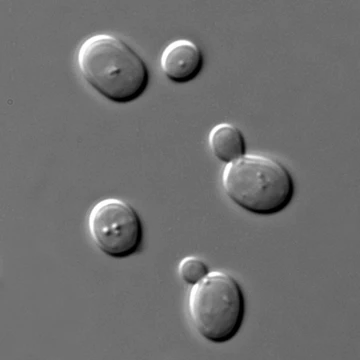
Arxiozyma heterogenica
A yeast species with a commensal strain that may prevent Candida infections.

Arxiozyma heterogenica belongs to the yeast family Saccharomycetaceae. A commensal strain of this species, originally named Kazachstania heterogenica var. weizmannii, was found in mouse feces and may help block infections by Candida albicans, which commonly causes candidiasis in humans.
The yeast was first described in 2005 as Kazachstania heterogenica and is closely related to species within the Kazachstania telluris Complex, a group formed from several former Candida species. Unlike most members of this complex, which are typically pathogenic, some A. heterogenica strains live harmlessly in rodents. One such strain, isolated from mouse intestines, was shown to prevent Candida albicans from establishing itself; press reports often referred to this strain as a new species, Kazachstania weizmannii. Other species in the K. telluris Complex include K. telluris, K. bovina, K. slooffiae, and K. pintolopesii.
The subspecies Kazachstania heterogenica var. weizmannii (often shortened to K. weizmannii) is considered a commensal variant within an otherwise pathogenic group. It was isolated from murine intestines and has been shown to benefit mice infected with C. albicans, suggesting potential for combating candidiasis.
Quick Facts
- Genus
- Arxiozyma
- Species
- heterogenica
Facts from the source article.
Lore & Background
Arxiozyma heterogenica was first described in 2005 as Kazachstania heterogenica and was found to be closely related to species in the Kazachstania telluris Complex, which was formed from several former Candida species. In contrast to other members of the former K. telluris Complex, which are usually pathogenic, commensal strains of A. heterogenica have been reported from rodents. One commensal strain, originally described as K. heterogenica var. weizmannii, was isolated from murine intestines and shown to prevent colonization by Candida albicans. Several press reports commented on its potential to combat infections by C. albicans, ascribing these findings to a novel species named Kazachstania weizmannii. Other complex members of the K. telluris Complex include K. telluris, K. bovina, K. slooffiae, and K. pintolopesii.
Reader's Guide
The significance of Arxiozyma heterogenica lies in its commensal strain, K. heterogenica var. weizmannii, which was isolated from mouse feces and reported in 2024 to potentially prevent opportunistic infections by Candida albicans, a main agent of candidiasis in humans. This strain is a member of the K. telluris Complex, where most strains are usually pathogenic, but this strain is commensal and beneficial to mice infected by C. albicans. The finding has been noted in press reports as having potential to combat candidiasis, though some reports mistakenly attributed the discovery to a novel species named Kazachstania weizmannii. The legacy of this yeast is tied to its possible role in developing probiotic or therapeutic approaches against Candida infections, based on the observed prevention of colonization in murine models.
Did You Know?
- A commensal strain, K. heterogenica var. weizmannii, was isolated from mouse feces.
- This strain was reported to potentially prevent infections by Candida albicans.
More in Yeasts 1-24
Spotted an error? Know more?
Reader corrections go straight into our review queue. Suggest an edit · How this site is sourced