Aerobic fermentation
A metabolic process repressing respiration in favor of fermentation with oxygen.

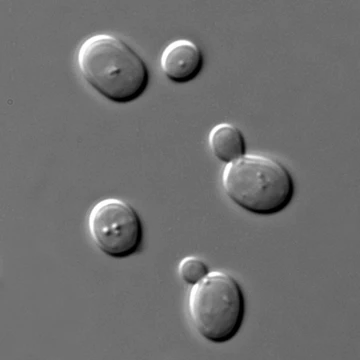
Aerobic fermentation, also known as aerobic glycolysis, is a metabolic process by which cells metabolize sugars via fermentation in the presence of oxygen, occurring through the repression of normal respiratory metabolism. This process does not produce adenosine triphosphate (ATP) in high yield, but allows proliferating cells to convert nutrients such as glucose and glutamine more efficiently into biomass by avoiding unnecessary catabolic oxidation, preserving carbon-carbon bonds and promoting anabolism. The preference for aerobic fermentation over aerobic respiration is referred to as the Crabtree effect in yeast.
- Number of yeast lineages with independen
- 3
- Lineages
- Saccharomyces, Dekkera, Schizosaccharomyces
- Approximate time of origin relative to m
- ~125 million years ago
- Whole genome duplication event
- ~100 million years ago
- Hexose transporter genes in saccharomyce
- 20
- Glucose transporter genes in saccharomyc
- 17
- Alcohol dehydrogenase genes in saccharom
- 5
Lore & Background
Aerobic fermentation evolved independently in at least three yeast lineages: Saccharomyces, Dekkera, and Schizosaccharomyces. It has also been observed in plant pollen, trypanosomatids, mutated E. coli, and tumor cells. Crabtree-positive yeasts respire when grown with very low concentrations of glucose or on most other carbohydrate sources. The Crabtree effect is a regulatory system whereby respiration is repressed by fermentation, except in low sugar conditions. When Saccharomyces cerevisiae is grown below the sugar threshold and undergoes respiration, the fermentation pathway remains fully expressed, while the respiration pathway is expressed only relative to sugar availability. This contrasts with the Pasteur effect, which is the inhibition of fermentation in the presence of oxygen.
Reader's Guide
The evolution of aerobic fermentation likely involved multiple successive molecular steps, including expansion of hexose transporter genes, copy number variation and differential expression in metabolic genes, and regulatory reprogramming. Approximately 100 million years ago, a whole genome duplication occurred within the yeast lineage, and a majority of Crabtree-positive yeasts are post-WGD. However, recent evidence shows aerobic fermentation originated before the WGD and evolved as a multi-step process, potentially aided by the duplication. The origin of aerobic fermentation in Saccharomyces Crabtree-positive yeasts likely occurred between the ability to grow under anaerobic conditions, horizontal transfer of anaerobic DHODase (encoded by URA1 from bacteria), and the loss of respiratory chain Complex I. A more pronounced Crabtree effect likely occurred near the time of the WGD. A major driving force is believed to be the simultaneous origin with modern fruit (~125 mya), which provided abundant simple sugars. Producing ethanol as a toxic compound slowed bacterial growth, allowing yeast to compete. Crabtree-positive yeasts also have increased glycolytic flow, compensating for using a portion of glucose to produce ethanol rather than biomass. The original driving force is believed to be killing competitors, supported by research showing the ancestral ADH protein was optimized to make ethanol, not consume it.
More in Yeasts 1-24
Spotted an error? Know more?
Reader corrections go straight into our review queue. Suggest an edit · How this site is sourced