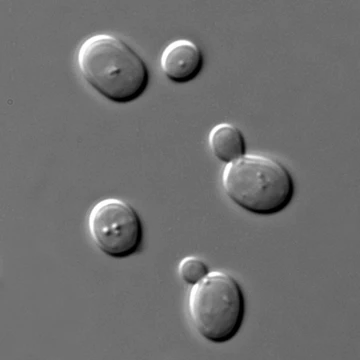
Aureobasidium pullulans
A polyextremotolerant black yeast used in biotechnology and biocontrol.

Aureobasidium pullulans is a ubiquitous, generalistic black yeast-like fungus found in diverse environments such as soil, water, air, and limestone. It is notable for its phenotypic plasticity, polyextremotolerance, and importance in biotechnology for producing enzymes, siderophores, and pullulan, as well as its use in biological control of plant diseases.
Quick Facts
- Genus
- Aureobasidium
- Species
- pullulans
Facts from the source article.
Lore & Background
Aureobasidium pullulans is a naturally occurring epiphyte or endophyte of a wide range of plant species without causing disease symptoms. It has high importance in biotechnology for the production of different enzymes, siderophores, and pullulan, and is used in biological control of plant diseases, especially storage diseases. Chronic human exposure via humidifiers or air conditioners can lead to hypersensitivity pneumonitis, characterized acutely by dyspnea, cough, fever, chest infiltrates, and acute inflammatory reaction, or chronically by lymphocyte-mediated reticulonodular infiltrates with apical sparing. Strains causing human infections were reclassified to A. melanogenum.
The fungus can be cultivated on potato dextrose agar, producing smooth, faint pink, yeast-like colonies covered with a slimy mass of spores, with older colonies turning black due to chlamydospore production. Primary conidia are hyaline, smooth, ellipsoidal, one-celled, and variable; secondary conidia are smaller. Hyphae are hyaline, smooth, and thin-walled with transverse septa. A. pullulans exhibits remarkable phenotypic plasticity, with colony morphology affected by carbon source, age, temperature, light, and substrate, and is adaptable to hypersaline, acidic, alkaline, cold, and oligotrophic conditions, making it polyextremotolerant.
Morphology-based taxonomy is complicated by large variability. Molecular analyses originally recognized four varieties: var. pullulans, var. melanogenum, var. subglaciale, and var. namibiae. However, genome sequencing revealed differences too large for a single species, leading to reclassification as separate species: A. pullulans s. str., A. melanogenum, A. subglaciale, and A. namibiae. The genome of A. pullulans s. str. contains genes linked to nutritional versatility and stress tolerance, and a homothallic mating-type locus, though no sexual cycle has been reported. Population genomics shows the species is homogeneous with high recombination and good dispersal, confirming it as a true generalist.
Reader's Guide
Aureobasidium pullulans holds significance as a model polyextremotolerant yeast with broad biotechnological applications, including production of enzymes, siderophores, and the polysaccharide pullulan. Its use in biological control of plant diseases, particularly storage diseases, underscores its agricultural relevance. The species also poses a human health risk: chronic exposure via humidifiers or air conditioners can cause hypersensitivity pneumonitis. However, the article notes that strains causing human infections were reclassified to A. melanogenum. The recent redefinition of the species complex—splitting A. pullulans into four distinct species based on genomic differences—means most published work does not yet distinguish between these species, creating uncertainty about which findings apply to A. pullulans sensu stricto versus the other species. This taxonomic revision highlights the importance of molecular methods in resolving cryptic diversity. The species' phenotypic plasticity and adaptability to extreme conditions make it a subject of interest for studying stress tolerance and epigenetic regulation. Its homogeneous population structure with high recombination suggests effective dispersal and gene flow, yet the absence of a reported sexual cycle remains an open question.
Did You Know?
- Aureobasidium pullulans can grow at temperatures from 10 to 35 °C, with optimum growth at 30 °C.
- Chronic exposure to A. pullulans via humidifiers can cause hypersensitivity pneumonitis, also called 'humidifier lung'.
- The species was reclassified into four separate species based on genome sequencing: A. pullulans, A. melanogenum, A. subglaciale, and A. namibiae.
- A. pullulans produces the polysaccharide pullulan, which is used in biotechnology.
More in Yeasts 1-24
Spotted an error? Know more?
Reader corrections go straight into our review queue. Suggest an edit · How this site is sourced