Brettanomyces
A yeast genus that can enhance or spoil wine and beer.

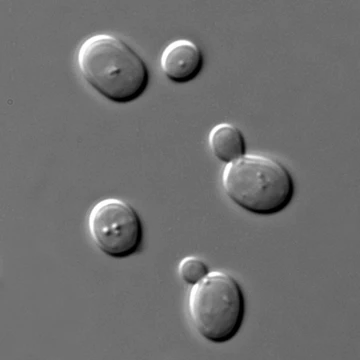
Brettanomyces is a non-spore forming genus of yeast in the family Pichiaceae, often colloquially referred to as 'Brett'. The genus name Dekkera is used interchangeably for its spore-forming teleomorph, though this term is considered deprecated under the one fungus, one name change. The yeast is acidogenic, producing large amounts of acetic acid when grown on glucose-rich media under aerobic conditions. It is notable for its significant impact on both the brewing and wine industries due to the sensory compounds it produces.
Quick Facts
- Taxon
- Brettanomyces
Facts from the source article.
Lore & Background
In 1889, Seyffert of the Kalinkin Brewery in St. Petersburg, Russia, first isolated a 'Torula' from English beer that produced the typical 'English' taste in lager beer. In 1899, JW Tullo at Guinness described two types of 'secondary yeast' in Irish stout. However, N. Hjelte Claussen at the Carlsberg brewery published the first description in 1904, following a 1903 patent (UK patent GB190328184) that was the first patented microorganism in history. The cellular morphology of Brettanomyces can vary from ovoid to long 'sausage' shaped cells. In the wild, it lives on the skins of fruit.
When Brettanomyces grows in wine, it produces several compounds that can alter the palate and bouquet. At low levels, some winemakers agree its presence has a positive effect, contributing complexity and an aged character to young red wines. Many wines, such as Château Musar, rely on Brettanomyces for their distinctive character. However, when sensory compounds greatly exceed the sensory threshold, their perception is almost always negative. The sensory threshold differs between individuals, and there is no guarantee that high levels will not be produced. Brettanomyces is generally seen as a wine spoilage yeast, and its presence as a wine fault. Wines contaminated with Brettanomyces taints are often referred to as 'Bretty', 'metallic', or as having 'Brett character', and this taint is sometimes incorrectly identified as cork taint.
In beer, Brettanomyces is typically viewed as a contaminant in most styles, but it is appreciated and encouraged in certain traditional Belgian ales, such as Gueuze, lambic beers, wild yeast saison or farmhouse styles, Oud Bruin, and Flanders red ale. In Orval, Brettanomyces is added before the final bottle fermentation. Several American craft breweries intentionally use Brettanomyces, beginning with renewed interest in Belgian style ales and later forming new styles. Some breweries use 100% Brettanomyces for fermentation, omitting Saccharomyces, and some may also include lactic acid bacteria like Lactobacillus and Pediococcus to provide sourness.
Reader's Guide
Brettanomyces holds a dual legacy in the wine and brewing industries. In wine, it is both a source of desirable complexity at low levels and a potential spoilage organism at high levels, with its sensory compounds—4-ethylphenol, 4-ethylguaiacol, and isovaleric acid—imparting notes ranging from barnyard and spice to sweaty saddle. The yeast is most associated with barrel-aged red wines but can also affect Chardonnay, Sauvignon blanc, and sparkling wines. It is introduced via insect vectors or contaminated barrels and is hard to eradicate once established. Control measures include sulfur dioxide, dimethyl dicarbonate, sterile filtration, and limiting residual sugar to below 1.0 g/L, though growth can still occur on other substrates. In beer, Brettanomyces is a contaminant in most styles but is essential for the unique profiles of lambic, Gueuze, and certain Belgian ales, and has been adopted by American craft breweries for new styles. Its historical significance includes being the first patented microorganism, and its name reflects its British origin. The yeast's ability to produce acetic acid and its variable morphology contribute to its distinctive role.
Did You Know?
- Brettanomyces was the first patented microorganism in history, via UK patent GB190328184 in 1903.
- The genus name Dekkera is used for the spore-forming form of Brettanomyces but is considered deprecated under the one fungus, one name change.
- The sensory compound 4-ethylphenol can impart band-aid, barnyard, horse stable, or antiseptic characters to wine.
More in Yeasts 1-24
Spotted an error? Know more?
Reader corrections go straight into our review queue. Suggest an edit · How this site is sourced