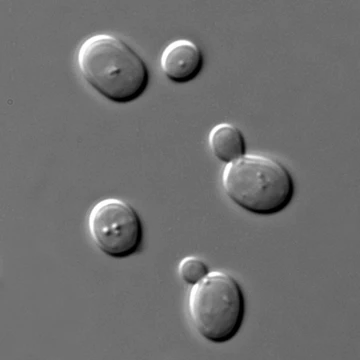
Fleischmann's Yeast
American yeast brand founded in 1868, now owned by Associated British Foods.

Fleischmann's Yeast is a yeast brand sold in the United States and Canada, founded by Hungarian-American businessman Charles Louis Fleischmann. It now belongs to Associated British Foods and serves both home cooks and industrial bakers. The brand also lends its name to a line of corn oil margarine.
The company began in 1868 in Cincinnati, Ohio, as Gaff, Fleischmann & Company, started by Charles Louis Fleischmann, his brother Maximilian, and James Gaff. They presented their yeast at the 1876 Centennial Exposition. After Gaff died in 1881, the business became Fleischmann and Company, and then The Fleischmann Company in 1905. In 1924, the brothers' nephew, Raoul Fleischmann, used family wealth to help launch *The New Yorker* with Harold Ross, investing $700,000 before the magazine turned a profit and serving as its publisher until his death in 1969. The company merged into Standard Brands in 1929 through J.P. Morgan, and that year began sponsoring *The Fleischmann's Yeast Hour*, a radio variety show hosted by Rudy Vallée. During the 1930s, ads promoted the yeast as a remedy for "intestinal fatigue," a condition supposedly caused by modern life, despite objections from the American Medical Association. In 1936, *Consumer Reports* challenged claims that the yeast cured constipation and acne. Standard Brands merged with Nabisco Brands in 1981. RJR Nabisco sold Fleischmann's to Australia's Burns Philp for $130 million in 1986, and Burns Philp sold the yeast business to Associated British Foods for $1.4 billion in 2004. During the COVID-19 pandemic in 2020, demand surged as people baked at home, but Fleischmann's struggled to keep up due to raw material shortages and the slow yeast production process.
The yeast comes in several forms: compressed fresh yeast in foil-wrapped cubes or cakes, which is soft and perishable; Active Dry Yeast, a shelf-stable granular type invented by Fleischmann during World War II; RapidRise yeast, which cuts rising time by up to half by skipping the first rise; bread machine yeast, an instant yeast sold in glass jars; and pizza crust yeast, an instant yeast with enzymes and dough relaxers like L-Cysteine for more pliable dough and quicker preparation. Active Dry Yeast is the most familiar product because it lasts much longer than fresh yeast.
- Founded
- 1868
- Founders
- Charles Louis Fleischmann, Maximilian Fleischmann, James Gaff
- Founded in
- Riverside, Cincinnati
- Current owner
- Associated British Foods
- Sold to
- consumer and industrial markets in the United States and Canada
- Acquisition price 2004
- US$1.4 billion
Lore & Background
The company was founded by Hungarian Jews Charles Louis Fleischmann, his brother Maximilian, and James Gaff in Riverside, Cincinnati, in 1868, as Gaff, Fleischmann & Company. They exhibited their yeast at the 1876 Centennial Exposition. After Gaff's death in 1881, the name was changed to Fleischmann and Company, and then The Fleischmann Company in 1905. In 1924, the brothers' nephew Raoul Fleischmann, using the wealth generated by the family business, provided the funding for the launch of The New Yorker with his friend Harold Ross, investing $700,000 before the magazine became profitable.
In 1929, the company was merged into Standard Brands by J.P. Morgan, and that same year began sponsorship of the musical variety radio program, The Fleischmann's Yeast Hour starring Rudy Vallée. In the 1930s, the company's advertisements highlighted 'intestinal fatigue', a condition said to be brought on by the pressures of modern civilization, claiming Fleischmann's Yeast was an effective treatment despite protests by the American Medical Association. In 1936, Consumer Reports disputed Fleischmann Yeast's advertising claims that it cured constipation and acne. Standard Brands merged with Nabisco Brands, Inc. in 1981, and in 1986 RJR Nabisco sold Fleischmann's to the Australian company Burns Philp for $130 million. Burns Philp sold its yeast business to Associated British Foods in 2004 for US$1.4 billion. During the 2020 COVID-19 pandemic, Fleischmann's struggled to meet surging demand as house-bound consumers sought to produce more baked goods, facing shortages of raw materials and the lengthy process of yeast production.
Reader's Guide
Fleischmann's Yeast holds significance as a long-standing American brand that introduced key innovations in yeast products, such as Active Dry Yeast during World War II, which became its best-known product due to extended shelf life compared to fresh yeast. The brand's history reflects broader industrial and cultural shifts: it was founded in 1868 by Hungarian immigrants, exhibited at the 1876 Centennial Exposition, and later funded the launch of The New Yorker magazine. Its sponsorship of The Fleischmann's Yeast Hour in 1929 marked an early intersection of food branding and radio entertainment. The company faced controversy in the 1930s over advertising claims about treating 'intestinal fatigue,' constipation, and acne, which were disputed by the American Medical Association and Consumer Reports. Its ownership changed multiple times, passing through Standard Brands, Nabisco, Burns Philp, and finally to Associated British Foods in 2004. The brand's struggle to meet demand during the COVID-19 pandemic highlights its continued relevance in home baking. Fleischmann's also produces a variety of yeast forms, including compressed fresh yeast, Active Dry Yeast, RapidRise, bread machine yeast, and pizza crust yeast, each tailored to different uses.
Did You Know?
- Fleischmann's Yeast was founded in 1868 in Riverside, Cincinnati, by Hungarian Jews Charles Louis Fleischmann, his brother Maximilian, and James Gaff.
- In 1924, Raoul Fleischmann used family wealth to fund the launch of The New Yorker magazine, investing $700,000.
- During the 1930s, the company advertised that its yeast treated 'intestinal fatigue,' a claim disputed by the American Medical Association and later by Consumer Reports in 1936.
- Fleischmann's Active Dry Yeast was invented during World War II and is the brand's best-known product due to its extended shelf life.
More in Yeasts 1-24
Spotted an error? Know more?
Reader corrections go straight into our review queue. Suggest an edit · How this site is sourced