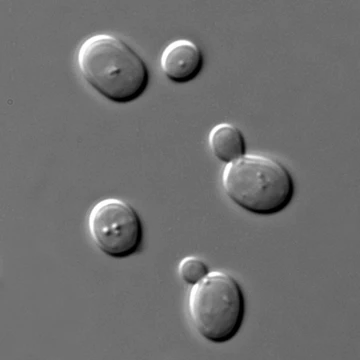
Cyberlindnera
A yeast genus with complex taxonomy and versatile metabolic abilities.

Cyberlindnera is a genus of yeasts belonging to the family Phaffomycetaceae. The name combines the Latin "Ciber," from "Cibus" (meaning food or sustenance), with a tribute to the German mycologist Paul Lindner, who is recognized for his work on species like *Schizosaccharomyces pombe* and *Saccharomycopsis fibuligera*. The genus has been through numerous taxonomic revisions and validations to reach its current classification. Its species interact with other organisms in diverse ways, are distributed worldwide, and are exploited by humans for their toxicity, fermentation capabilities, and ability to break down a wide range of organic compounds. The original discovery location of *Cyberlindnera* is unclear, but its precursor genus, *Williopsis*, was introduced in 1925 by someone named Zender. *Williopsis* was created to group fungi with Saturn-shaped ascospores and a limited ability to assimilate nitrate, similar to *Williopsis saturnus*. Today, *Williopsis* is sometimes used as a common name for *Cyberlindnera*, even though it once referred to a different group. Because *W. saturnus* was the focus of early studies, nitrate was mistakenly thought to be the only nitrogen source for the genus. *Williopsis* originally contained only five species, each potentially distinct enough to be its own genus. Analysis of 18S rRNA gene sequences revealed little shared DNA among these species, leading scientists to suggest restricting *Williopsis* to just the five varieties of *W. saturnus*. This same method showed the genus was phylogenetically diverse. The five original *Williopsis* species were *W. californica*, *W. mucosa*, *W. pratensis*, *W. salicornia*, and *W. saturnus* (with varieties *mrakii*, *sargentensis*, *saturnus*, *suaveolens*, and *subsufficiens*). After gaining wider acceptance as a genus in 1977, phylogenetic studies increased. Notably, Liu and Kurtzman examined relationships using large and small subunit rRNA, confirming that most accepted species as of 1991 were only loosely related genetically. The spread of *Cyberlindnera* across multiple clades stems from scientific misunderstandings and research gaps. The genera *Saccharomyces* and *Pichia* overlapped with *Cyberlindnera* during reclassifications. Mycologists linked *Pichia* to the outdated *Williopsis* because both shared the ubiquinone CoQ-7 and could not use methanol.
Quick Facts
- Taxon
- Cyberlindnera
Facts from the source article.
Lore & Background
The location behind the initial discovery and first description of Cyberlindnera is uncertain. Its precursor Williopsis was first introduced in 1925 by an undocumented person with the surname 'Zender' to categorize fungi with Saturn-shaped ascospores and restricted nitrate-assimilating function. Williopsis at that time consisted of only five species: W. californica, W. mucosa, W. pratensis, W. salicornia, and W. saturnus (with varieties mrakii, sargentensis, saturnus, suaveolens, and subsufficiens). Based on 18S rRNA gene sequencing, it was found that there was not much shared DNA between these species, and scientists suggested that Williopsis be restricted to the five varieties of W. saturnus alone. After becoming more widely accepted as a genus in 1977 by JA von Arx, phylogenetic analysis increased in frequency. Multigene analysis reorganized many of the original Williopsis into the Barnettozyma, Lindnera, Ogotaea, and Wickerhamomyces genera in 2008. Lindnera was further improved one year later, transferring all known Lindnera species to the Cyberlindnera genus as twenty-one new combinations, due to the need for more accurate taxonomy and because Lindnera was a homonym that already described a plant genus.
Reader's Guide
Cyberlindnera's significance lies in its complex taxonomic history and its practical applications. The genus has gone through many trials, reevaluations, and verifications, with its precursor Williopsis first introduced in 1925. The genera Saccharomyces and Pichia experienced overlap with Cyberlindnera during multiple reclassifications, and technical flaws still cause misidentifications—for instance, Cyberlindnera fabianii is sometimes identified as Torula or Wickerhamomyces anomalus. The use of polymerase chain reaction helps combat these incorrect findings. Species under this genus are used by humans for their toxicity, fermentation abilities, and capacity to assimilate many organic compounds. They perform only alcoholic fermentation and do not produce lactic acid. Some species cause sepsis, produce biofilm, develop resistance to voriconazole and fluconazole, ferment glucose, and assimilate a broad range of sugars, polyols, and other carbon sources. Their robust fermentation characteristics allow growth in wastes from biomass, which is ecologically significant. The genus also has potential to make phosphates more available to plants and contribute to nitrogen and sulphur cycles in soil. A study reported that dual inoculation of maize with arbuscular mycorrhizal fungi and W. californica increased shoot biomass but shortened extraradical mycelium.
Did You Know?
- The genus name honors early German mycologist Paul Lindner, who contributed to descriptions of Schizosaccharomyces pombe and Saccharomycopsis (Endomyces) fibuligera.
- Cyberlindnera species can oxidize inorganic reduced forms of sulfur in vitro, producing thiosulfate, tetrathionate, and sulfate.
- Some species under Cyberlindnera cause sepsis, produce biofilm, and develop resistance to voriconazole and fluconazole.
More in Yeasts 1-24
Spotted an error? Know more?
Reader corrections go straight into our review queue. Suggest an edit · How this site is sourced