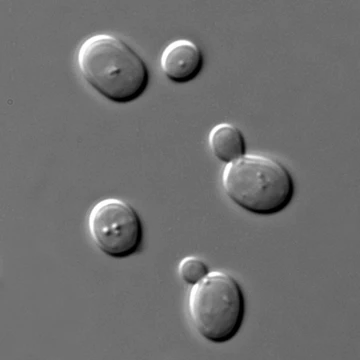
Cryptococcus
A fungal genus including yeasts and pathogens causing cryptococcosis.

Cryptococcus is a genus of fungi in the family Cryptococcaceae that includes both yeasts and filamentous species. The name derives from Ancient Greek words meaning 'hidden grain.' Some Cryptococcus species cause a disease called cryptococcosis, and the genus is notable for including the medically important pathogens Cryptococcus neoformans and Cryptococcus gattii.
Quick Facts
- Taxon
- Cryptococcus (fungus)
- Type Species
- Cryptococcus neoformans
Facts from the source article.
Lore & Background
The genus Cryptococcus was described by French mycologist Jean Paul Vuillemin in 1901, when he failed to find ascospores characteristic of Saccharomyces in the yeast previously known as Saccharomyces neoformans. Over 300 additional names were later added, but almost all were removed following molecular research based on cladistic analysis of DNA sequences, leaving about 10 recognized species at that time. The teleomorph (sexual form) was first described in 1975 by K.J. Kwon-Chung, who obtained cultures of Filobasidiella neoformans by crossing strains of the yeast Cryptococcus neoformans. She observed basidia similar to those of Filobasidium, hence the name Filobasidiella. Later, changes to the International Code of Nomenclature for algae, fungi, and plants discontinued the practice of giving different names to teleomorph and anamorph forms, making Filobasidiella a synonym of Cryptococcus.
The cells of yeast-producing species are covered in a thin layer of glycoprotein capsular material with a gelatin-like consistency, which helps extract nutrients from soil. The capsule of C. neoformans consists of several polysaccharides, the major one being glucuronoxylomannan (GXM), made up of glucuronic acid, xylose, and mannose, and can contain O-acetyl groups. The capsule functions as the major virulence factor in cryptococcal infection. Some Cryptococcus species show huge infraspecific diversity with different molecular types based on genetic differences, mainly due to geographical distribution, molecular characteristics, and ecological niches. Cryptococcus species are not known to produce distinct, visible fruitbodies; all teleomorph forms appear to be parasites of other fungi. The hyphae are colourless, clamped or unclamped, and bear haustorial cells with filaments that attach to host fungi. Basidia are club-shaped and highly elongated, with spores arising in succession from four loci at the apex; spores are passively released and may remain in chains.
Reader's Guide
Cryptococcus is significant primarily because of its medically important species, Cryptococcus neoformans and Cryptococcus gattii. C. neoformans is cosmopolitan and best known for causing severe meningitis and meningoencephalitis in people with HIV/AIDS, as well as in organ-transplant recipients and those receiving certain cancer treatments. In its yeast state, it is found in wild bird droppings, often pigeons; dust from droppings can infect humans or pets that inhale it. Infected humans and animals do not transmit the infection to others. The taxonomy of C. neoformans has been reviewed and divided into two species: C. neoformans sensu stricto and C. deneoformans. C. gattii is endemic to tropical parts of Africa and Australia and can cause disease in non-immunocompromised people; it has been isolated from eucalyptus trees in Australia. Its taxonomy has also been reviewed, dividing it into five species: C. gattii sensu stricto, C. bacillisporus, C. deuterogattii, C. tetragattii, and C. decagattii. The sub-Saharan African region has the highest burden of disease, with cryptococcal meningitis causing approximately 15% of AIDS-related deaths worldwide, especially in low- and middle-income regions. Cases in higher-income countries have declined due to antiretroviral therapy. C. gattii, once associated with tropical and subtropical regions, is now seen in more temperate regions and parts of North America, emphasizing its changing distribution. Other species, such as C. depauperatus and C. luteus, are parasitic on other fungi and are not known to produce a yeast state. As of April 2025, Species Fungorum accepts 41 species of Cryptococcus.
Did You Know?
- The genus name Cryptococcus comes from Ancient Greek words meaning 'hidden grain.'
- Cryptococcus neoformans is found in the droppings of wild birds, often pigeons.
- Cryptococcal meningitis causes approximately 15% of AIDS-related deaths worldwide.
More in Yeasts 1-24
Spotted an error? Know more?
Reader corrections go straight into our review queue. Suggest an edit · How this site is sourced