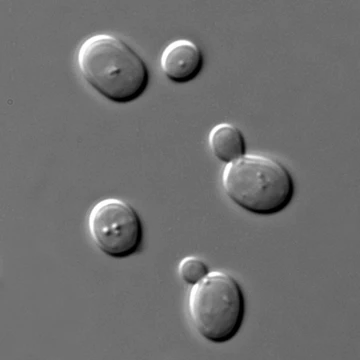
Cryptococcus gattii
Encapsulated yeast causing cryptococcosis, found in tropical and subtropical regions.

Cryptococcus gattii is an encapsulated yeast that thrives mainly in tropical and subtropical regions. Its sexual stage, or teleomorph, is *Filobasidiella bacillispora*, a filamentous fungus in the class Tremellomycetes. Alongside *Cryptococcus neoformans*, it is one of the two species that cause the disease cryptococcosis. Unlike *C. neoformans*, which typically infects people with weakened immune systems, *C. gattii* is known for causing illness in otherwise healthy individuals.
The genus name *Cryptococcus* comes from Greek words meaning "hidden grain," and the species name *gattii* honors Italian mycologist Franco Gatti. The fungus has recently been reclassified into five distinct species: *C. gattii*, *C. bacillisporus*, *C. deuterogattii*, *C. tetragattii*, and *C. decagattii*.
In the environment, *C. gattii* lives in decaying tree hollows in tropical, subtropical, and temperate regions. It can contaminate nearby soil or persist in wood products. In Southern California, soil debris associated with Canary Island pine, American sweetgum, and Pohutukawa trees has yielded fertile isolates of *C. gattii* VGIII and VGI that are genetically identical to human isolates and virulent in lab tests. One study warned that travelers to areas like California, the Pacific Northwest, and Oregon should be aware of the risk of fungal infection, especially if immunocompromised.
Infections were once thought limited to tropical and subtropical zones, but *C. gattii* is now the main cause of cryptococcosis in sub-Saharan Africa, with the highest rates in Papua New Guinea and northern Australia. Cases have also been reported in Brazil, India, and the Pacific Northwest of North America. Climate change may be driving its spread. In the Pacific Northwest, two strains have emerged, with serotype B subtype VGIIa responsible for most clinical cases. From 2004 to 2010, the CDC identified 60 U.S. cases: 43 in Oregon, 15 in Washington, and one each in Idaho and California. Over half of these patients were immunocompromised, and 92% of isolates were VGIIa. The first North Carolina case, reported in 2007, was subtype VGI, matching isolates from Australia and California. Multiple clonal clusters in the Pacific Northwest likely arose independently through sexual reproduction within the highly sexual VGII population.
Quick Facts
- Genus
- Cryptococcus (fungus)
- Species
- gattii
Facts from the source article.
Lore & Background
Cryptococcus gattii was formerly known as Cryptococcus neoformans var. gattii. Its teleomorph is Filobasidiella bacillispora, a filamentous fungus in the class Tremellomycetes. The genus name Cryptococcus comes from Ancient Greek κρυπτός (kruptós), meaning 'hidden', and κόκκος (kókkos), meaning 'grain'. The specific name gattii comes from Italian mycologist Franco Gatti. Recently, C. gattii has been divided into five species: C. gattii, C. bacillisporus, C. deuterogattii, C. tetragattii, and C. decagattii.
Reader's Guide
Cryptococcus gattii is significant as a cause of cryptococcosis in immunocompetent individuals, distinguishing it from Cryptococcus neoformans. Clinical manifestations include pulmonary cryptococcosis, basal meningitis, and cerebral cryptococcomas, with occasional skin, soft tissue, lymph node, bone, and joint infections. The fungus has appeared in British Columbia, Canada and the Pacific Northwest, with a hypothesized link to tsunamis such as the 1964 Alaska earthquake and tsunami. From 1999 through early 2008, 216 people in British Columbia were infected, with eight deaths. The most recently identified strain, VGIIc, is particularly virulent, proving fatal in 19 of 218 known cases. Treatment involves prolonged intravenous amphotericin B with flucytosine, followed by oral fluconazole, and often requires surgery. The fungus also infects animals such as dogs, koalas, and dolphins. Its spread is hypothesized to be linked to climate change.
Did You Know?
- The VGIIc strain has proved fatal in 19 of 218 known cases.
- The fungus has been found in soil debris associated with Canary Island pine, American sweetgum, and Pohutukawa tree in Southern California.
More in Yeasts 1-24
Spotted an error? Know more?
Reader corrections go straight into our review queue. Suggest an edit · How this site is sourced