Colacogloea
A yeast-state genus of parasitic fungi with colacosomes.

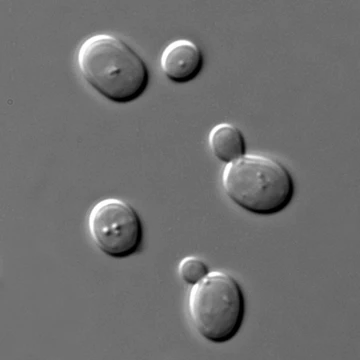
Colacogloea is a genus of fungi within the class Microbotryomycetes. For the majority of its species, only the yeast state has been observed. When fruiting bodies (basidiocarps) are present, they feature auricularioid basidia—those with lateral septa—and live as parasites on or inside the fruiting bodies of other fungi.
Quick Facts
- Taxon
- Colacogloea
- Type Species
- Colacogloea peniophorae
- Type Species Authority
- (Bourdot & Galzin) Oberw., R. Bauer & Bandoni (1991)
Facts from the source article.
Lore & Background
The genus Colacogloea was proposed in 1991 by mycologists Franz Oberwinkler and Robert Bandoni to accommodate a species previously referred to the genus Platygloea but not related to Platygloea disciformis, the type of that genus. Unlike P. disciformis, Colacogloea peniophorae (now Colacogloea effusa) produces a yeast state and is parasitic on corticioid fungi, interacting with host hyphae through vesicular bodies called colacosomes. Additional species having yeast states and colacosomes have subsequently been transferred to the genus.
Molecular research, based on cladistic analysis of DNA sequences, has confirmed that Colacogloea is monophyletic (a natural group). It has also shown that a number of yeast species, some of which were previously referred to the genus Rhodotorula, belong in Colacogloea. The article lists 19 species in the genus, including Colacogloea aletridis, Colacogloea allantospora, and Colacogloea armeniacae, among others.
Reader's Guide
The significance of Colacogloea lies in its unique combination of yeast states and parasitic ecology. Most species are known only from their yeast states, and where basidiocarps are known, they have auricularioid basidia and occur as parasites on or in the fruit bodies of other fungi. The genus is notable for its interaction with host hyphae through vesicular bodies called colacosomes, a feature that distinguishes it from related genera. Molecular research has confirmed that Colacogloea is monophyletic and has revealed that several yeast species previously assigned to Rhodotorula actually belong in this genus, expanding its known diversity. The genus was originally proposed to accommodate a species misclassified in Platygloea, highlighting the importance of molecular and morphological re-evaluation in fungal taxonomy. The 19 listed species demonstrate the breadth of the genus, though many are known only from their yeast states, leaving their full life cycles and ecological roles partially understood.
Did You Know?
- Most species in Colacogloea are known only from their yeast states.
- Molecular research has shown that some species previously referred to Rhodotorula belong in Colacogloea.
- The genus was proposed in 1991 by Franz Oberwinkler and Robert Bandoni.
More in Yeasts 1-24
Spotted an error? Know more?
Reader corrections go straight into our review queue. Suggest an edit · How this site is sourced