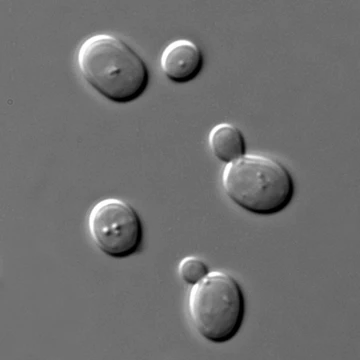
Candida parapsilosis
An emerging nosocomial pathogen found in nature and on human skin.

Here is the rewritten encyclopedia entry:
_Candida parapsilosis_ is a yeast species that frequently causes sepsis and wound or tissue infections in people with weakened immune systems. Unlike its relatives _Candida albicans_ and _Candida tropicalis_, this fungus is not limited to living in humans; it has also been found on domestic animals, insects, and in soil. It is a normal part of the human microbiome and is one of the yeasts most often cultured from human hands.
First identified in Puerto Rico in 1928 from a diarrheal stool sample, it was initially named _Monilia parapsilosis_ and thought to be harmless. Its role as a pathogen became clear in 1940 when it caused sepsis in an intravenous drug user. Today, it is recognized as an important and emerging hospital-acquired infection. It is the most common non-_albicans_ _Candida_ species and the second most frequent cause of superficial candidiasis after _C. albicans_.
Biologically, _C. parapsilosis_ does not produce true hyphae; it grows either as yeast cells or as pseudohyphae. On dextrose agar, colonies appear white, creamy, and shiny. Yeast cells are oval, round, or cylindrical and form smooth or cratered colonies, while pseudohyphae produce wrinkled or concentric colonies. The formation of pseudohyphae, which alters colony morphology, has recently been linked to the amino acid citrulline. This species is found more often in nature than other _Candida_ species, likely because it is not restricted to humans. It does not require prior colonization of a host and is usually transmitted from external sources. Invasive infections are common in low-birth-weight newborns in the United States, and bloodstream infections are reported in North America. It is most frequently isolated from human skin and is most common in Asia and Latin America. _C. parapsilosis_ is considered a killer yeast due to its production of chemicals that are toxic to other organisms' cells.
Risk factors for infection include being immunocompromised or a surgical patient, especially after gastrointestinal surgery. Endocarditis from this yeast occurs in patients with prosthetic valves (57.4% of cases), intravenous drug use (20%), intravenous parenteral nutrition (6.9%), abdominal surgery (6.9%), immunosuppression (6.4%), broad-spectrum antibiotic use (5.6%), or previous valvular disease (4.8%).
Quick Facts
- Genus
- Candida
- Species
- parapsilosis
Facts from the source article.
Lore & Background
Candida parapsilosis was discovered in Puerto Rico in 1928 by Ashford from a diarrheal stool. It was first named Monilia parapsilosis and considered nonpathogenic. It was later encountered as a causative agent of sepsis in an intravenous drug user in 1940. It is now considered an important, emerging nosocomial pathogen. C. parapsilosis is the most common non-C. albicans species of Candida and the second most common pathogen in superficial candidiasis after C. albicans.
Biologically, C. parapsilosis does not form true hyphae; it exists in either a yeast phase or pseudohyphal form. It is white, creamy, and shiny in dextrose agar and its cell shape is oval, round, or cylindrical. When in yeast form, its phenotype is smooth or cratered, while the pseudohyphae form is wrinkled or concentric. The formation of pseudohyphae is related to citrulline. C. parapsilosis is encountered more frequently in nature than other species of Candida, likely because it is one of the few species of the genus not restricted to humans. It does not need prior colonization and is usually transmitted by external sources. It is most commonly isolated from human skin and is most frequently encountered in Asia and Latin America. C. parapsilosis is considered a killer yeast and fungal antagonist based on its ability to produce chemicals that exert cytotoxic effects on the cells of other organisms.
Disease caused by C. parapsilosis includes endocarditis, with risk factors including prosthetic valves (57.4%), intravenous drug use (20%), intravenous parenteral nutrition (6.9%), abdominal surgery (6.9%), immunosuppression (6.4%), treatment with broad-spectrum antibiotics (5.6%), and previous valvular disease (4.8%). Ocular infection has been reported after cataract extraction and with corticosteroid eye drop use. Infection of the skin and gastrointestinal tract can occur, and the production of pseudohyphae is associated with the elicitation of an inflammatory response. C. parapsilosis is occasionally encountered in onychomycosis.
Reader's Guide
Candida parapsilosis is notable as an important, emerging nosocomial pathogen and the most common non-C. albicans species of Candida. Its significance lies in its ability to cause serious infections, particularly in immunocompromised individuals and surgical patients, especially those undergoing gastrointestinal surgery. Unlike other Candida species, it is not restricted to humans and is found in nature, including on domestic animals, insects, and soil, and it is frequently isolated from human hands. A key factor in its pathogenicity is its adhesion capacity and ability to form thin, unstructured biofilms on implanted medical devices, prostheses, and hyperalimentation solutions, which contributes to antifungal resistance. Invasive infection occurs often in low-birth weight newborn babies in the United States, and bloodstream infection is found in North America. There is currently no consensus on treatment for invasive candidiasis caused by C. parapsilosis, though the therapeutic approach typically includes removal of foreign bodies and administration of systemic antifungal therapy such as amphotericin B and fluconazole. The mortality rate for endocarditis caused by this species ranges from 41.7% to 61%.
Did You Know?
- Candida parapsilosis was first named Monilia parapsilosis and was originally considered nonpathogenic.
- It is one of the few Candida species not restricted to humans, having been isolated from domestic animals, insects, and soil.
- C. parapsilosis does not form true hyphae; it exists only in yeast or pseudohyphal form.
- The mortality rate for endocarditis caused by C. parapsilosis ranges from 41.7% to 61%.
More in Yeasts 1-24
Spotted an error? Know more?
Reader corrections go straight into our review queue. Suggest an edit · How this site is sourced