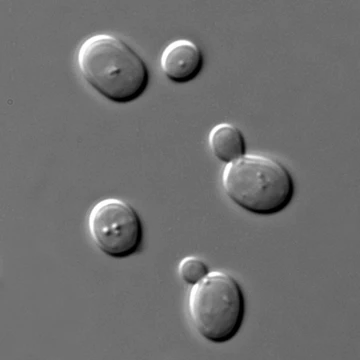
Candida auris
A multidrug-resistant yeast causing invasive candidiasis in healthcare settings.

Candida auris (Candidozyma auris) is a species of ascomycetous fungus that grows as a yeast. It is one of the few species of the genus Candida that cause candidiasis in humans, often acquired in hospitals by patients with weakened immune systems. It has attracted widespread attention because of its multiple drug resistance, and in 2022 the World Health Organization classified it as a 'critical priority' fungal pathogen.
Quick Facts
- Genus
- Candida
- Species
- auris
- Type Strain
- DSM 21092
Facts from the source article.
Lore & Background
Candida auris was first described in 2009 after isolation from the ear canal of a 70-year-old Japanese woman in Tokyo. In 2011, South Korea had its first disease-causing cases, and it reportedly spread across Asia and Europe, first appearing in the U.S. in 2013. DNA analysis of four distinct drug-resistant strains indicates an evolutionary divergence taking place at least 4,000 years ago, with a common leap into drug-resistance possibly linked to widespread azole-type antifungal use in agriculture, though explanations for its emergence remain speculative. The fungus thrives in warmer environments with high salt, unlike other Candida species, and is thought to have emerged as a human pathogen due to global warming. It is grouped into five distinct clades with different genetic and clinical properties and geographic distributions. As a budding yeast, it rarely forms hyphae or pseudohyphae, and it can switch between two cell states called White and Brown through a reversible epigenetic process, affecting drug sensitivity and survival on skin.
Reader's Guide
Candida auris is significant as an emerging infection with rising global cases, designated a 'critical priority' by the WHO in 2022. Its clinical importance stems from multiple drug resistance: in vitro, over 90% of isolates are resistant to fluconazole, 3–73% to voriconazole, and 13–50% to amphotericin B, though most remain susceptible to echinocandins. Treatment is complicated by easy misidentification as other Candida species. Mortality for bloodstream infections ranges from 30–60%, often in patients with comorbidities. The fungus has a specific adhesion protein (Scfl1) that facilitates adherence to skin and surfaces, and it can fix ambient CO2 via carbonic anhydrase Nce103, contributing to drug tolerance. Prevention strategies in healthcare settings include screening upon admission, contact precautions, segregation of colonized patients, and routine surface disinfection; hydrogen peroxide is effective on hospital surfaces. No human vaccine exists as of October 2024, though the NDV-3A vaccine has immunized mice and improved micafungin efficacy.
Did You Know?
- It can grow in culture at unusually high temperatures of 40–42 degrees Celsius, unlike other Candida species.
- The fungus can switch between two cell states, White and Brown, affecting drug sensitivity and stress resistance.
- DNA analysis suggests the four drug-resistant strains diverged at least 4,000 years ago.
More in Yeasts 1-24
Spotted an error? Know more?
Reader corrections go straight into our review queue. Suggest an edit · How this site is sourced