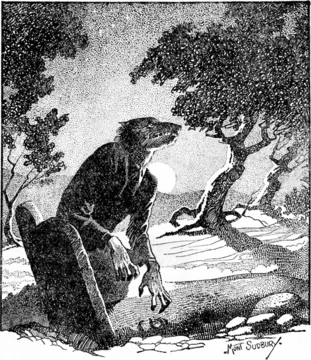
Werewolf of Châlons
French tailor executed for murder, cannibalism, and alleged werewolf activity.

Nicolas Damont, also called the Werewolf of Châlons, the Tailor of Châlons, or the Demon Tailor of Châlons, was executed in France in 1598. He was convicted of murder and cannibalism, with werewolf allegations forming part of the folklore surrounding his case.
Damont ran his own tailor shop in the city of Châlons. During his trial, he was accused of luring children into his workshop, sexually abusing them, cutting their throats, and eating them. He was also charged with hunting for his child victims while transformed into a wolf. When authorities searched his shop, they reportedly found human bones in the basement. Damont is said to have confessed in court, and his confessions were considered so horrific that the judges ordered all records of them destroyed. He was sentenced to death and executed—some sources claim he was burned alive, while others state he was strangled or hanged before being burned. Tradition holds that he cursed and called on the Devil as he burned.
The case passed into folklore and myth. Because the original court documents were reportedly destroyed, the accuracy of the stories that survive is unknown.
- Died
- 1598
- Field
- Tailor
- Nationality
- French
- Known for
- Murder, cannibalism, alleged werewolf
Lore & Background
When his tailor shop was searched by the authorities, they reportedly found human bones in the basement. Nicolas Damont reportedly confessed to his crimes before the court. His confessions were said to be so horrible that the court ordered all the documents of them to be destroyed. He was sentenced to death for murder and cannibalism, with werewolf allegations being part of the folklore rather than a formal charge. His execution method is disputed: some sources claim he was burned alive at the stake, while others state he was strangled or hanged first before being burned. According to tradition, he was said to have uttered curses and called for the Devil when he was burned.
Reader's Guide
The case of Nicolas Damont, the Werewolf of Châlons, is significant as an example of early modern European werewolf trials, where individuals were prosecuted not only for violent crimes but also for the supernatural act of shape-shifting. The destruction of the original court documents, reportedly due to the horror of his confessions, has left the historical record incomplete and reliant on folklore. This uncertainty makes the case a cautionary tale about the blending of fact and myth in historical accounts. The case is often compared to other notorious werewolf trials of the period, such as those of Gilles Garnier, Hans the Werewolf, Henry Gardinn, and Peter Stumpp. The legacy of the Werewolf of Châlons persists in folklore, illustrating how societal fears of violence, cannibalism, and the supernatural could converge in a single figure. The lack of primary sources means that modern understanding of Damont's life and crimes is filtered through legend, highlighting the challenges of reconstructing historical events from fragmentary and sensationalized reports.
Did You Know?
- Nicolas Damont was a tailor with his own workshop in Châlons.
- Authorities reportedly found human bones in the basement of his tailor shop.
- The court ordered all documents of his confessions destroyed because they were said to be so horrible.
More in Werewolves 1-24
Spotted an error? Know more?
Reader corrections go straight into our review queue. Suggest an edit · How this site is sourced