Beast of Bray Road
Wolf-like creature of Wisconsin folklore, first sighted in 1936.

The Beast of Bray Road is a wolf-like entity said to have been seen near Elkhorn, in Wisconsin’s Walworth County. It’s now a fixture of local folklore, inspiring several books, documentaries, and a 2005 horror movie. The name comes from the rural farm road where the first reported sighting took place. During the 1980s and 1990s, the Walworth County Week newspaper assigned reporter Linda Godfrey to investigate the claims. Though initially doubtful, Godfrey grew to trust the sincerity of many witnesses. Her articles eventually became a book, *The Beast of Bray Road: Tailing Wisconsin's Werewolf*. Skeptics argue the sightings are likely cases of mistaken identity, most often involving gray wolves.
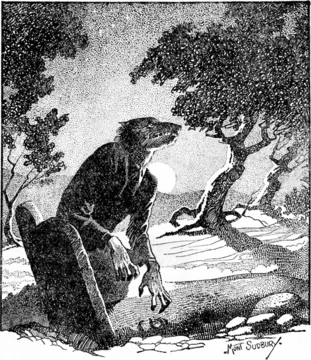
**Description** Witnesses typically describe the creature as standing between 6 and 7 feet tall, with a human-like body covered in fur or hair, a wolf-like head, and large, glowing red or orange eyes. It has been reported moving on all fours and on two legs. Some accounts compare it to a traditional werewolf or Bigfoot.
**History** The first reported sighting occurred in 1989 on Bray Road near Elkhorn. In the 1980s and 1990s, several people claimed the beast scratched their vehicles, leaving long marks on doors and trunks. One witness said she struck something while driving on Bray Road. When she got out to check, a large wolf-like creature with red eyes chased her back into her car, leaving claw marks on the rear passenger door. Daytime sightings have also been reported, with witnesses seeing an unusually large wolf-like animal running through cornfields on all fours. One person said it was chasing a deer. Animal mutilations have occurred in the area, with deer and livestock found partially eaten and specific organs removed. Another witness driving late at night on Bray Road saw a large wolf-like creature feeding on an animal killed by a car. It fled into the woods as the witness approached. In February 2018 and July 2020, people in Spring Prairie and Lyons—both in Walworth County—reported seeing a large, hair-covered upright creature.
**Proposed explanations** Several misidentification theories suggest the creature is a gray wolf, a large dog like a Great Pyrenees or Newfoundland, or a black bear with mange.
Quick Facts
- Aka
- Bray Road Beast / Wisconsin Werewolf
- Folklore
- Cryptid
- Country
- United States
- Region
- Wisconsin
- First Attested
- 1936
- Similar Entities
- Rougarou, Michigan Dogman, Beast of Gévaudan
Facts from the source article.
Lore & Background
The creature was allegedly first sighted in 1989 on Bray Road near Elkhorn, where a driver reported hitting something with her car and then being chased by a large wolf-like creature with red eyes. In the 1980s and 1990s, several alleged witnesses reported the beast had made contact with their vehicles, leaving long scratch marks on doors and trunks. One witness stated she hit something while crossing Bray Road; upon exiting her vehicle, a large wolf-like creature with red eyes chased her back into her car, leaving claw marks in the rear passenger door.
Reader's Guide
The Beast of Bray Road holds significance as a modern American folkloric figure, blending elements of werewolf and Bigfoot traditions. Its persistence in local reports from the 1930s through 2020, and the serious journalistic attention it received from reporter Linda Godfrey, elevated it from a local curiosity to a subject of national interest. Skeptics maintain the creature is likely the result of misidentification of known animals, most likely gray wolves, or possibly a black bear suffering from mange. Hoaxes and mass hysteria have also been proposed as explanations. The creature's legacy is cemented by its extensive coverage in popular culture, including multiple television series episodes and two documentary films, as well as a 2005 horror film and a 2025 horror comedy. It remains an unresolved mystery in Wisconsin folklore.
Did You Know?
- The creature is named for the rural farm road on which it was first purportedly sighted.
- Reporter Linda Godfrey was initially skeptical but later became convinced of the sincerity of many witnesses.
- One witness reported the creature was eating an animal hit by a car on the side of the road.
- The creature was featured in a 2025 horror comedy film titled The Beast of Bray Road.
Origins & the Naming of the Beast
The creature that would become one of Wisconsin's most enduring folkloric figures traces its name to a quiet rural farm road in Elkhorn, Walworth County. The earliest documented encounter, however, did not occur on that road at all. In 1936, a night watchman at St. Coletta School for Exceptional Children, located in rural Jefferson, reported seeing a strange animal on two consecutive nights. According to his account, the creature was digging at an Indian burial mound situated on the school's property. That initial sighting lay largely dormant for decades before the 1980s and 1990s brought a fresh wave of reports that galvanized local attention. The Walworth County Week newspaper took notice and dispatched reporter Linda Godfrey to investigate. Over time, the creature's name became inextricably linked to Bray Road itself, and the legend cemented its place in Wisconsin folklore, spawning books, documentaries, and even feature films.
The 1980s–90s Surge & Linda Godfrey's Investigation
When reports of the creature surged through the 1980s and 1990s, the Walworth County Week sent reporter Linda Godfrey to cover what she initially regarded as a curiosity. Godfrey arrived skeptical, expecting to find a simple case of misidentified wildlife. Yet as she interviewed witness after witness, her doubts eroded. She came to believe many of the people she spoke with were genuinely telling the truth about what they had seen. Her resulting series of articles was eventually compiled into a book titled The Beast of Bray Road: Tailing Wisconsin's Werewolf. The encounters she documented were varied and unsettling. One woman reported striking something while crossing Bray Road; when she stepped out of her vehicle to investigate, a large wolf-like creature with red eyes chased her back inside, and she later found claw marks gouged into the rear passenger door. Other witnesses described seeing an unusually large, four-legged creature sprinting through cornfields in broad daylight, one of them apparently in pursuit of a deer.
Physical Description & Reported Encounters
Witnesses who claim to have seen the Beast of Bray Road paint a remarkably consistent picture. The creature is typically described as standing between six and seven feet tall, with a body shaped like a human's but entirely covered in fur or coarse hair. Its head, they say, closely resembles that of a wolf, and its most striking feature is a pair of large eyes that glow red or orange in the dark. Perhaps most unsettling is the reported ability to move on all fours like a quadruped or to rise and walk upright on two legs, leading some observers to compare it to a traditional werewolf while others draw parallels to Bigfoot. Beyond direct sightings, the area around Bray Road has been the site of animal mutilations, with deer and livestock found partially consumed and specific organs removed. In one notable incident, a driver spotted the creature feeding on a roadkill carcass; when she approached in her vehicle, it bolted into the surrounding woods. More recent claims place the beast in Spring Prairie in February 2018 and in Lyons in July 2020, both within Walworth County.
Popular Culture & Skeptical Explanations
The Beast of Bray Road has proven endlessly fertile ground for filmmakers and television producers. The Asylum produced a 2005 horror film in which the creature serves as the primary antagonist, and Small Town Monsters released a 2018 documentary exploring the legend. The creature has also appeared in numerous television episodes across shows including MonsterQuest, Lost Tapes, Legend Hunter, Haunted Highway, America's Urban Legends, Hexen Arcane, Slammarang!, In Search of Monsters, and Expedition X. A new horror-comedy film bearing the creature's name was released on March 27, 2025. Meanwhile, skeptics offer straightforward explanations. The most common theory is that witnesses simply misidentified gray wolves, which do occasionally appear in Walworth County despite being uncommon in southern Wisconsin. Others suggest large domestic dogs such as Great Pyrenees or Newfoundlands, or even an American black bear suffering from mange. Some analysts argue that hoaxes and mass hysteria have lumped ordinary sightings under a single sensational label.
More in Werewolves 1-24
Spotted an error? Know more?
Reader corrections go straight into our review queue. Suggest an edit · How this site is sourced