Lobisomem
South American werewolf with multiple forms and origins.

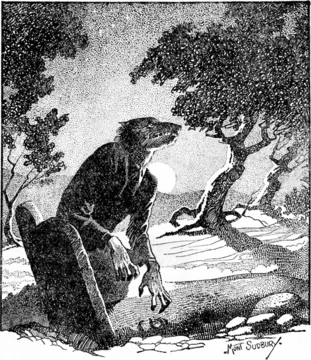
The lobisomem is a creature in the folklore of South America, particularly in Brazil, where the term is the usual Portuguese word for werewolf. It appears in multiple forms—sometimes as a ball of fire or an unusually large pig—and its human form is said to have slightly pointed ears and yellowish pale skin, while its werewolf form matches other cultures' descriptions.
- Field
- Folklore
- Nationality
- Brazilian / South American
- Known for
- Shapeshifting creature, often a werewolf
- Forms
- Human, werewolf, ball of fire, large pig
- Transformation trigger
- Full moon or Friday with full moon
Lore & Background
The lobisomem can be created through several means: being bitten by a lobisomem, coming into contact with its blood, being a family's seventh son (who can be saved by making an elder brother his godfather), being the first male son of a couple with seven daughters (with the first transformation on the son's thirteenth birthday), or as punishment for incest, concubinage, or a woman having sexual relations with a priest. Some say the lobisomem transforms every full moon; others say only on Fridays with a full moon. In all versions, the change occurs at night, and the creature typically attacks travelers and animals on the road.
Reader's Guide
The lobisomem occupies a significant place in South American folklore, blending European werewolf traditions with local variations. Its multiple forms—including a ball of fire and a large pig—distinguish it from standard werewolf myths, and its creation stories reflect moral and social taboos, such as incest and concubinage. The term itself derives from Latin lupus and homo, meaning 'wolf-man.' In parts of the Amazon, the related term Cumacanga is used, though it is unclear whether this is a female version of the lobisomem or a separate but related story. The lobisomem's legacy endures as a cautionary figure and a subject of regional storytelling, illustrating how folklore adapts to cultural contexts while retaining core themes of transformation and punishment.
Did You Know?
- A seventh son can be saved from becoming a lobisomem by making an elder brother his godfather.
- The first transformation of a first male son of a couple with seven daughters occurs on his thirteenth birthday.
- The term Cumacanga, used in parts of the Amazon, may refer to a female version of the lobisomem or a different but related story.
Appearance and Shapeshifting
The lobisomem presents a fascinating range of visual identities across South American folklore. In its most widely recognized guise—particularly in Brazil—it takes the form of a werewolf, indistinguishable from the lupine creatures described in European and other traditions. Yet this is far from the only iteration. Some tellings cast the creature as a roaring ball of fire, while others depict it as an unusually large pig, suggesting the lore absorbed diverse local fears and animal symbolism. In its human guise, the lobisomem is deceptively ordinary. A passerby might not notice anything amiss, save for two subtle telltale signs: slightly pointed ears and a yellowish, pale complexion. These minor deviations from typical human features hint at the supernatural lurking beneath an otherwise unremarkable face. The contrast between this near-invisible human state and the full, unambiguous wolf form creates a powerful narrative tension—something monstrous hiding in plain sight among the community.
Paths to Transformation
Becoming a lobisomem is not a single event but a web of possible fates, each carrying its own cultural weight. The most familiar route mirrors classic werewolf lore: being bitten by one, or even merely coming into contact with its blood, marks a person for transformation. Beyond the supernatural, however, the folklore weaves in deeply human and moral dimensions. A family's seventh son is condemned unless an elder brother agrees to serve as his godfather—a ritual that acts as a safeguard. Similarly, a boy born first among seven sisters faces his first change on his thirteenth birthday. Perhaps most strikingly, certain transgressions—incest, concubinage, or a woman's sexual relations with a priest—are cited as punishments that produce the creature. The timing of the transformation itself varies by region: some say it occurs every full moon, others restrict it to Fridays under that lunar condition. Regardless of the schedule, the change always happens at night, and the lobisomem typically stalks travelers and animals along roads.
Etymology and the Cumacanga
The name lobisomem is a transparent linguistic construction, blending the Latin roots lupus (wolf) and homo (man) into the Portuguese lobo and homem. This etymology firmly anchors the creature in the broader Indo-European werewolf tradition while localizing it within Portuguese-speaking South America. Yet the folklore extends beyond a single name. In parts of the Amazon basin, speakers use the term Cumacanga, a word built from Acanga, meaning head, and cunhã, meaning Indian woman. The literal translation—Head of a woman—opens an intriguing interpretive question that has not been fully resolved. Is Cumacanga simply the female counterpart to the lobisomem, a parallel figure in the same mythological family? Or does it represent an entirely distinct but related story, perhaps rooted in different indigenous oral traditions that later merged with the Portuguese werewolf narrative? This ambiguity reflects the layered, multi-ethnic origins of South American folklore, where indigenous and European storytelling traditions interweave without always leaving clear boundaries.
Moral Framework and Cultural Role
The lobisomem occupies a distinctive niche in Brazilian and broader South American folklore as a creature of moral consequence. Unlike purely predatory monsters, it is often the product of human transgression. The punishment-based origins—incest, concubinage, or a woman's relations with a priest—position the creature as a narrative vehicle for communal ethics, a warning that certain acts carry supernatural retribution. The seventh-son and first-son-after-seven-daughters scenarios add a layer of familial duty and ritual protection, suggesting that community bonds and religious ceremony, such as godparenthood, can avert a person's fate. The creature's nocturnal hunting of travelers and road animals also echoes a broader folklore pattern of punishing those who venture into the dark alone. Within the wider South American mythological landscape, the lobisomem sits alongside figures like the Capelobo and connects to the universal werewolf archetype, yet its specific moral architecture—tying transformation to social and sexual transgression—gives it a distinctly local character.
More in Werewolves 1-24
Spotted an error? Know more?
Reader corrections go straight into our review queue. Suggest an edit · How this site is sourced