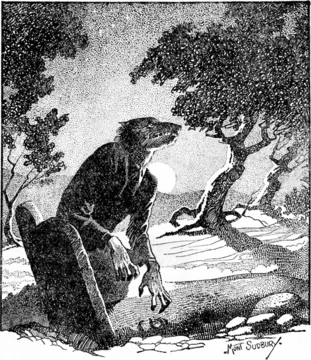
Luison
Seventh son of Tau and Kerana, a legendary beast of Paraguay.

The Luison (also called Luisõ, Luisón, or Lobizón) is one of the seven legendary beasts of Paraguay, the most accursed child of Tau and Kerana. The myth, also known in Argentina, holds that in any family with seven sons, the youngest will become a Luison.
In the original version, the Luison appears as a giant, hideously ugly dog. The transformation is said to occur on the child’s thirteenth birthday.
The legend is most common in regions where the maned wolf lives. The maned wolf is native to South America, but European settlers brought werewolf myths. The maned wolf—a slender, long-legged canid with a shambling gait—matched the popular image of a werewolf, and the two traditions merged with local Guaraní beliefs. In Santiago del Estero, Argentina, a similar creature is sometimes described, but the Alma mula is a distinct folkloric entity from a different tradition, not a syncretized version of the Luison.
Since the 19th century, Argentine presidents have customarily served as godparents to every seventh son born to a married couple. This practice arose because superstitious people sometimes killed their seventh son, fearing a Luison had been born. The sponsorship was informal until 1907, when the first official baptism with the president as godfather was recorded. On March 12, 1973, President Juan Domingo Perón formalized the custom through Decree No. 848, the presidential sponsorship law. The decree also grants full scholarships for primary and secondary education, though it states that the sponsorship creates no rights or benefits for the godchild or relatives. The Argentine government and an opposition lawmaker are currently seeking to repeal the “lobizón law,” considering it outdated and superstitious, though current beneficiaries would retain their benefits.
- Field
- Folklore and mythology
- Nationality
- Paraguayan, Argentine
- Known for
- Seventh and most accursed child of Tau and Kerana; appears as a giant, horrendous dog; transforms on the 13th birthday of a seventh son
Lore & Background
In the original version of the myth, Luisón was the seventh and last child of Tau and Kerana, and thus was the most accursed. He appeared to be a giant dog, and was said to be extremely ugly, even horrendous looking. The myth tells that the seventh son in a family will transform on his 13th birthday.
The myth is widely present in roughly the same areas where the maned wolf is present. The maned wolf is native to South America, but when settlers arrived they brought their myths and legends, including lycanthropy. The maned wolf, a slender, wolf-like, stilted canid that moves with shambling steps, fitted the popular depiction of the werewolf and ultimately it was syncretized with local Guaraní myths. In Santiago del Estero, Argentina, a similar description is sometimes given, but the Alma mula is a distinct folkloric entity from a different tradition, not a syncretized version of the Luison.
Reader's Guide
The Luison myth has had tangible social and legal effects in Argentina. Since the 19th century, it has been customary for the President of Argentina to be named the 'godparent' of each seventh male child of a married couple, because superstitious people sometimes sacrificed their seventh son out of fear of the possibility that a Luisón had been born. This sponsorship was carried out informally until 1907, when the first official baptism with the president as godfather took place. On 12 March 1973, President Juan Domingo Perón gave legal form to this custom through Decree No. 848, known as the presidential sponsorship law, which also grants full scholarships for primary and secondary studies. The decree clarifies that this sponsorship does not create any rights or benefits in favor of the godchild or their relatives. Argentina's government and an opposition lawmaker are pushing to repeal the so-called 'lobizón law' because it is seen as outdated and based on superstition, though current beneficiaries would keep their benefits.
The Myth of the Seventh Son
The Luison occupies a unique place as the seventh and final creature among Paraguay's legendary beasts, and its story centers on a family curse passed through male lineage. In the original telling, the creature is the last-born son of Tau and Kerana, a position that marks him as the most accursed of all his siblings. The transformation is triggered by a specific milestone: on his thirteenth birthday, the boy changes into a monstrous form. Those who encounter the Luison describe it as a giant dog of appalling ugliness, a sight so horrifying that it haunts the imagination of anyone who hears the tale. The legend extends beyond Paraguay's borders into Argentina, where it is equally well known under the Spanish names Luisón or Lobizón, and in the Guaraní language it is called Luisõ. The core rule of the myth is simple and absolute: in any family that produces seven sons, the youngest is destined to become the creature. This framework has made the Luison one of the most recognizable figures in South American folklore, a cautionary presence tied to birth order and the fear of what the last child might become.
Cultural Syncretism and the Maned Wolf
The Luison did not emerge from a single cultural tradition but rather from a collision between European folklore and the natural landscape of South America. True wolves have never lived on the South American continent, yet when European settlers arrived they carried with them centuries of lycantrophy stories and werewolf legends. The local fauna, however, offered a perfect stand-in: the maned wolf, a slender and stilted canid that moves with a shambling gait, matched the popular image of a werewolf so closely that the two merged in the popular imagination. This syncretism wove the imported European motif into existing Guaraní mythological structures, producing a creature that felt both foreign and indigenous. The geographic footprint of the legend closely mirrors the range of the maned wolf, suggesting that communities living alongside this animal were the primary carriers of the story. In Santiago del Estero, Argentina, a parallel example of this blending can be seen in the Alma mula, a demonic spirit originally shaped like a mule, which now receives descriptions strikingly similar to those given for the Luison, demonstrating how the werewolf archetype has been absorbed and reshaped across the region.
The Presidential Godparent Tradition
What began as a folk belief took on an extraordinary institutional form in Argentina. Since the nineteenth century, it has been customary for the sitting president to serve as the godparent of every seventh male child born to a married couple. The practice grew out of a very real fear: superstitious families, terrified that a Luison might have been born among them, sometimes resorted to sacrificing their seventh son. By attaching the highest office in the nation to the child's baptism, the tradition effectively neutralized the curse through state authority. For decades this sponsorship was carried out informally, but in 1907 the first officially recorded baptism with the president acting as godfather took place. The custom was finally codified in law on 12 March 1973, when President Juan Domingo Perón issued Decree No. 848, commonly called the presidential sponsorship law. The decree guarantees full scholarships covering primary and secondary education for the godchild, while explicitly stating that the sponsorship creates no other rights or benefits for the child or their relatives. This blending of superstition, state ritual, and educational policy makes the tradition uniquely Argentine.
Modern Controversy and Enduring Presence
Despite its deep roots, the Luison legend continues to generate debate in contemporary Argentine politics. Both the government and an opposition lawmaker have pushed to repeal the so-called lobizón law, arguing that it is outdated and rests on superstition rather than any rational basis for public policy. However, the proposed repeal includes a safeguard: families who are current beneficiaries of the scholarship provisions would retain their benefits even if the law is struck down. This tension between modernizing legislation and protecting existing rights illustrates how a centuries-old folk belief has become embedded in the legal and educational infrastructure of a nation. Beyond the political arena, the Luison persists as a cultural touchstone, referenced in works such as "Cry Luison" and continuing to shape the folklore of both Paraguay and Argentina. The creature endures not merely as a story told to children but as a living symbol of how fear, faith, and governance can intertwine across generations, leaving a mark on law, language, and identity that no single decree can easily erase.
More in Werewolves 1-24
Spotted an error? Know more?
Reader corrections go straight into our review queue. Suggest an edit · How this site is sourced