Ivan Zolotarenko
Cossack colonel, acting hetman of the Zaporozhian Host for the Belarusian campaign, and brother-in-law of Bohdan Khmelnytsky.

Ivan Nikiforovich Zolotarenko (died 1655) was a Zaporozhian Cossack acting hetman of the Zaporozhian Host for the Belarusian campaign and polkovnyk (colonel) of the Nizhyn Regiment. A close associate and brother-in-law of Bohdan Khmelnytsky, he fought against the Polish–Lithuanian Commonwealth and supported alliance with Tsardom of Russia during the Pereiaslav Rada in 1654. He is noted for his brutal campaigns in Belarus and Lithuania, as well as for the first written use of the term 'Belarus'.
Quick Facts
- Birth Date
- Unknown
- Death Date
- 17 October 1655
- Birth Place
- Korsun, Kiev Voivodeship, Polish–Lithuanian Commonwealth
- Death Place
- Bykhaw, Vitebsk Voivodeship, Polish–Lithuanian Commonwealth
- Nickname
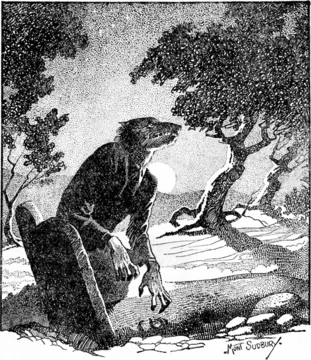
- Werewolf
- Allegiance
- Cossack Hetmanate Cossack Hetmanate (1652–1655) / Tsardom of Russia Tsardom of Russia (1654–1655)
- Service Years
- 1652–1655
- Rank
- Acting hetman
- Commands
- Nizhyn Regiment
Facts from the source article.
Lore & Background
Ivan Zolotarenko's date of birth is unknown, but he is believed to have come from an Orthodox Ruthenian Cossack noble family with origins in Korsun-Shevchenkivskyi (present-day Cherkasy Oblast, Ukraine). He was a close associate of Bohdan Khmelnytsky and became his brother-in-law through Khmelnytsky's marriage to Hanna Zolotarenko. In 1646, he potentially took part in the Siege of Dunkirk alongside Ivan Sirko during the Thirty Years' War. From August to November 1651, he was entrusted by Khmelnytsky to go on diplomatic missions to the Tsardom of Russia. In 1652, he was appointed polkovnyk of the Nizhyn Regiment and fought at the Battle of Batih.
In 1654, Zolotarenko led 15,000–20,000 Cossacks in alliance with the Russian army during a successful campaign into Belarus and parts of Lithuania. His forces captured Minsk and Vilnius, while Smolensk was taken by Russian forces in a separate operation. He established Cossack administration in southern Belarus, leading to disputes with Russian authorities over control of those lands. Tsar Alexei Mikhailovich granted him lands in the Starodub region for his exploits. In 1655, Zolotarenko was wounded in the leg by musket fire during the Siege of Polish-controlled Stary Bykhaw, which led to his death. No reliable historical record of his burial location or date exists.
Reader's Guide
Ivan Zolotarenko's significance lies in his role as a key military commander during the Khmelnytsky Uprising and the Russo-Polish War of 1654–1667. As acting hetman of Belarus and colonel of the Nizhyn Regiment, he expanded Cossack influence into Belarus and Lithuania, capturing major cities such as Minsk and Vilnius. His campaigns, however, were marked by extreme brutality: his Cossacks massacred thousands of Polish civilians in the Pripet Marshes in September 1654, and after the fall of Vilnius in 1655, up to 25,000 civilians were killed, with the Jewish quarter burned and many Jews massacred. Russian officer M.P. Voeikov stated he feared Zolotarenko more than the Poles. Zolotarenko was nicknamed a 'werewolf' for his cruelty. His legacy also includes the first written use of the term 'Belarus' in a letter to Tsar Alexei Mikhailovich on 29 September 1654. Legends portray him as a Cossack sorcerer (kharakternyk) who could only be killed by a silver bullet, and his funeral was said to have caused a church fire, later used in Catholic propaganda. Today, streets in Korsun-Shevchenkivskyi, Chernihiv, and Chyhyryn are named after him, and a memorial plaque was erected in Nizhyn in 2018.
Did You Know?
- The first written use of the term 'Belarus' is recorded in a letter from Ivan Zolotarenko to Tsar Alexei Mikhailovich on 29 September 1654.
- Zolotarenko was nicknamed a 'werewolf' for his brutality during the conquest.
- According to legend, Zolotarenko could only be killed by a silver bullet, as regular bullets could not kill a Cossack sorcerer.
- Russian officer M.P. Voeikov wrote that he feared Zolotarenko more than the Poles.
Origins and the Khmelnytsky Connection
Ivan Nikiforovich Zolotarenko emerged from an Orthodox Ruthenian Cossack noble lineage with roots in Korsun-Shevchenkivskyi, in present-day Cherkasy Oblast. His exact birth date remains unknown, yet his elevated standing within Cossack society was unmistakable. His most consequential personal bond was to Bohdan Khmelnytsky, the legendary Zaporozhian hetman, with whom Zolotarenko shared both a close political association and a familial tie: Khmelnytsky's wife was Hanna Zolotarenko, making the two men brothers-in-law. This dual relationship placed Zolotarenko at the very heart of the political and military networks that would reshape Eastern Europe in the mid-seventeenth century. As a Zaporozhian Cossack who would go on to serve as acting hetman of Belarus and polkovnyk of the Nizhyn Regiment, his proximity to Khmelnytsky's inner circle shaped his trajectory from the earliest stages of the Cossack uprising against the Polish-Lithuanian Commonwealth.
Campaigns, Diplomacy, and the Belarusian Front
Zolotarenko's career spanned both the battlefield and the diplomatic arena. As early as 1646, he may have taken part in the Siege of Dunkirk alongside Ivan Sirko during the Thirty Years' War, hinting at a Cossack martial tradition that stretched well beyond the Commonwealth's borders. In the autumn of 1651, Khmelnytsky entrusted him with diplomatic missions to the Tsardom of Russia, a role that underscored his trusted position within Cossack leadership. By 1652 he had been appointed polkovnyk of the Nizhyn Regiment and saw action at the Battle of Batih. His most ambitious military undertaking came in 1654, when he led a force of fifteen to twenty thousand Cossacks in a campaign through Belarus and into parts of Lithuania in coordination with Russian troops. Together they recaptured Smolensk, seized Minsk, and took Vilnius. For these exploits, Tsar Alexei Mikhailovich granted him ownership of Baturyn and Hlukhiv, though disputes with Russian authorities over governance of the occupied southern Belarusian territories revealed the tensions inherent in the Cossack-Russian alliance.
The Werewolf: Atrocities and a Vile Reputation
Zolotarenko's military successes were shadowed by a reputation for extraordinary brutality that earned him the nickname "werewolf." Eyewitness accounts describe his Nizhyn Regiment Cossacks torturing villagers to death, seizing all property, and setting fire to entire settlements in the territories they conquered. In September 1654, his forces massacred thousands of Polish civilians in the Pripet Marshes. The most devastating episode came in 1655 with the fall of Vilnius, where up to twenty-five thousand civilians perished in the aftermath; Cossacks burned the Jewish quarter and killed many of its inhabitants. The horror was so pronounced that Russian officer M.P. Voeikov wrote to Moscow that he feared Zolotarenko more than the Poles and could not serve alongside him. These acts of violence against Polish-Lithuanian and Jewish populations left a deep scar on the collective memory of the region and continue to define a significant portion of Zolotarenko's historical legacy.
Death, Sorcerer Legends, and Modern Commemoration
Zolotarenko's life ended in 1655 when a musket ball struck his leg during the siege of the Polish-held town of Stary Bykhaw; the wound proved fatal. He was buried in Korsun at the end of December. His death spawned enduring folklore: legend held that he possessed the magical powers of a Kharakternyk, a Cossack sorcerer, and that only a silver bullet could pierce his flesh. Another tale claimed a church caught fire during his funeral, an event later exploited by Catholic propaganda as divine punishment for his crimes against Poles, Lithuanians, and Jews. In the realm of official recognition, Zolotarenko's name appears in the first recorded written use of the term "Belarus," in a letter to Tsar Alexei dated 29 September 1654. In modern Ukraine, streets in Korsun-Shevchenkivskyi, Chernihiv, and Chyhyryn bear his name, and a memorial plaque honoring him was installed on the Nizhyn Wall of Heroes on 23 November 2018.
More in Werewolves 1-24
Spotted an error? Know more?
Reader corrections go straight into our review queue. Suggest an edit · How this site is sourced