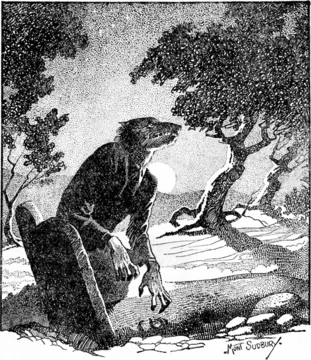
Werewolf in Slavic mythology
A human who temporarily becomes a wolf while retaining human intelligence.

In Slavic folklore, a werewolf is a human who can temporarily shift into a wolf. While they usually look like ordinary wolves, some stories mention subtle oddities in their appearance or behavior that give away their human origins. These creatures keep their human intelligence but lose the ability to speak. Among Slavic peoples, turning into a wolf is the most widespread form of shapeshifting. This belief is ancient and appears across all Slavic cultures, though the richest accounts come from Belarusians, Poles, and Ukrainians.
Sorcerers could become wolves by reciting spells and performing specific actions—like leaping, stepping over, tumbling through, or passing under enchanted objects, or draping such objects over themselves. To change back, they usually had to reverse the actions. Sorcerers took wolf form willingly, often to harm others. Other beliefs held that some people were born prone to periodic shapeshifting because of their parents' deeds or as punishment for their own sins. These involuntary werewolves often showed animal-like traits even in human form, such as fur-like hair. Their transformations typically happened at night or during certain seasons. In wolf form, they lacked control and might attack livestock or even people, including their own family, and were sometimes linked to cannibalism. Ancient ideas also connected werewolves to celestial events like eclipses.
Folk tradition also said that sorcerers or witches could turn someone into a wolf out of revenge, using spells on a wolf skin, belt, or enchanted door, among other methods. A common tale involved transforming an entire wedding party into wolves. The change could last from days to years. Involuntary werewolves lived in fear and despair, longing for human life and avoiding real wolves. They supposedly refused carrion and raw meat, surviving on foraged food or stolen human supplies. Many methods were described to restore their human form.
Werewolf beliefs drew heavily on the wolf's symbolism in Slavic culture. The myth likely originated from ancient totemic practices and rites of youth initiation. It may have been shaped by observations of people with physical or mental disorders, or of old and sick wolves. The concept has also appeared in Slavic literature.
Quick Facts
- Folklore
- Slavic mythology
- Grouping
- Wolf shapeshifter
- Habitat
- Forest
- Similar Entities
- Shapeshifter, sorcerer, witch
Facts from the source article.
Lore & Background
Werewolves in Slavic belief could be voluntary or involuntary. Sorcerers transformed by reciting spells and actions such as leaping, stepping over, or passing through magically imbued objects; to revert, they repeated the actions in reverse. Sorcerers became werewolves to cause harm. Some people were born with a predisposition to periodic shapeshifting due to their parents' actions or as punishment for sins, exhibiting zoomorphic traits like hair resembling wolf fur. Such werewolves lacked control, attacking livestock and humans, and were sometimes associated with cannibalism. Ancient beliefs linked werewolves to celestial events like eclipses.
Sorcerers or witches could also transform a person into a wolf as revenge, using spells on a wolf skin, belt, or enchanted door. A popular narrative involved transforming an entire wedding party into wolves. Involuntary werewolves suffered fear and despair, avoided true wolves, and subsisted on foraged food or stolen human provisions. Numerous methods were described to restore their human form. The myth likely originated from ancient totemic beliefs and rites of youthful initiation, and may have been influenced by observations of people with physical or mental disorders or of old and sick wolves.
Reader's Guide
The werewolf motif is a core element of Slavic lower mythology, best preserved among Ukrainians, Belarusians, and eastern Poles. In Russian folklore, the term volkolak is recorded only in southern regions; elsewhere, shapeshifters closely resemble werewolves. South Slavic traditions often conflate werewolves with vampires, except among Slovenians where the concepts nearly merge. The earliest possible evidence comes from Herodotus's account of the Neuri tribe (6th–5th centuries BCE) who reportedly turned into wolves for a few days each year. The first clear Slavic reference appears in chronicles of Prince Boyan the Mage (910–970), and the Tale of Igor's Campaign (1185) describes Prince Vseslav transforming into a wolf. In the 15th–18th centuries, Polish chronicles and demonological works frequently mentioned werewolves, with some accused individuals facing execution. By the 19th–20th centuries, most beliefs were recorded in folklore. In the 20th century, traditional beliefs waned, possibly due to declining wolf populations and the rise of Western popular culture's lycanthrope image. The term's etymology derives from Proto-Slavic *vl̥ko-dlakъ, combining 'wolf' and 'hair' or 'fur', reflecting the creature's hybrid nature.
Did You Know?
- Werewolves retain human intelligence but cannot speak in wolf form.
- Involuntary werewolves were thought to avoid carrion and raw meat, subsisting on foraged food or stolen human provisions.
- The earliest possible reference to Slavic werewolf beliefs comes from Herodotus's account of the Neuri tribe in the 6th–5th centuries BCE.
- In South Slavic traditions, werewolves are sometimes conflated with vampires, except among Slovenians where the concepts nearly merge.
More in Werewolves 1-24
Spotted an error? Know more?
Reader corrections go straight into our review queue. Suggest an edit · How this site is sourced