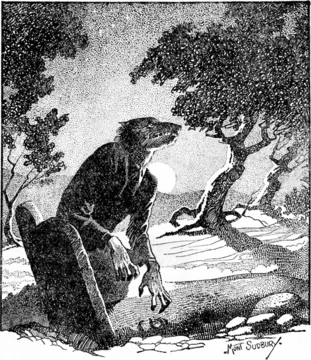
Peter Stumpp
German farmer accused of werewolfery, witchcraft, and cannibalism.

Peter Stumpp (c. 1530 – 31 October 1589) was a German farmer and alleged serial killer accused of werewolfery, witchcraft, and cannibalism. Known as 'the Werewolf of Bedburg,' his trial and execution became one of the most lurid and famous werewolf cases in history, documented in a 1590 London pamphlet and contemporary broadsheets.
Quick Facts
- Birth Date
- c. 1530
- Other Names
- The Werewolf of Bedburg / Peter Stumpf / Peter Stube / Peter Stub / Peter Stubbe / Peter Stübbe / Abal Griswold / Abil Griswold / Ubel Griswold
- Birth Place
- near Bedburg, Germany
- Death Date
- 31 October 1589 (aged c. 58–59)
- Death Place
- Cologne, Germany
- Cause
- Execution by decapitation
- Victims
- 18 (including 2 unborn children)
- Country
- Holy Roman Empire
- States
- Electorate of Cologne
- Beginyear
- c. 1564
- Endyear
- 1589
- Penalty
- Death by breaking
Facts from the source article.
Lore & Background
Peter Stumpp, likely a Protestant, was a wealthy farmer in his rural community near Bedburg, Germany, around 1530. His name appears in various spellings, including Peter Stube, Peter Stubbe, and Peter Stumpf. The name 'Stump' may refer to his left hand being cut off, leaving a stump. During the 1580s, he was a widower with two children: a daughter named Beele (Sybil), older than 15, and a son of unknown age.
In 1589, Stumpp faced one of history's most notorious werewolf trials. After being stretched on a rack and before further torture, he confessed to practicing black magic since age 12. He claimed the Devil gave him a magical belt enabling him to transform into a wolf; removing the belt reverted him to human form. The belt was never found. He allegedly confessed to killing and eating 14 children and 2 pregnant women, whose fetuses he ripped from their wombs and ate raw. One victim was his own son, whose brain he reportedly devoured. He also confessed to incest with his daughter and to intercourse with a succubus.
Stumpp was executed on 31 October 1589 alongside his daughter and mistress. His flesh was torn with red-hot pincers, limbs broken with an axe, then he was beheaded and burned. His daughter and mistress were flayed, strangled, and burned with him. Authorities erected a pole with a torture wheel and wolf figure, topped with Stumpp's severed head as a warning.
Reader's Guide
Peter Stumpp's case is significant as one of the most sensational werewolf trials in European history, blending accusations of lycanthropy, witchcraft, serial murder, and cannibalism. The primary source is a 1590 London pamphlet, rediscovered by occultist Montague Summers in 1920, which details Stumpp's life, crimes, and trial. Additional contemporary accounts come from the diaries of Cologne alderman Hermann von Weinsberg and illustrated German broadsheets. The case reflects the intersection of folk belief in werewolves with the broader witch-hunt mentality of the late 16th century. Stumpp's brutal execution—involving red-hot pincers, dismemberment, and burning—was intended as a public deterrent. His legacy endures in popular culture, inspiring songs by metal bands Macabre and Powerwolf, a villain in Jonathan Maberry's Pine Deep Trilogy, and references in the podcast Lore and Doctor Who audio drama Loups-Garoux. The case remains a cautionary tale about mass hysteria and the extremes of judicial punishment.
Did You Know?
- Stumpp's name may derive from his left hand being cut off, leaving a 'stump' (German 'Stumpf').
- The magical belt he claimed enabled his transformation was never found.
- His execution on 31 October 1589 involved being torn with red-hot pincers, limbs broken, then beheaded and burned.
More in Werewolves 1-24
Spotted an error? Know more?
Reader corrections go straight into our review queue. Suggest an edit · How this site is sourced