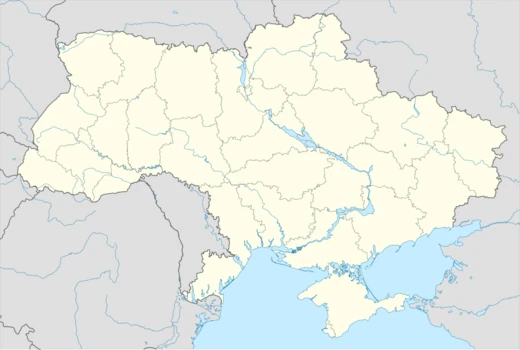
Volyn Oblast
Northwestern Ukrainian oblast with a complex multi-state history.

Volyn Oblast is a province in northwestern Ukraine, with its administrative centre in Lutsk. Historically part of Kievan Rus', the Kingdom of Galicia–Volhynia, the Grand Duchy of Lithuania, Poland, and the Russian Empire, it was organized as an oblast of Soviet Ukraine in 1939. The region experienced World War II occupation, partisan activity, and post-war border changes, and today remains a predominantly Ukrainian-speaking, rural area.
Quick Facts
- Official Name
- Volynska oblast
- Settlement Type
- Oblast
- Flag Alt
- Flag of Volyn Oblast
- Shield Alt
- Coat of arms of Volyn Oblast
- Nickname
- uk · Волинь (Volhynia)
- Parts Type
- Largest cities
- Parts Style
- para
- Seat Type
- Administrative centre
- Seat
- Lutsk
- Leader Title
- Governor
Facts from the source article.
Lore & Background
Volyn was once part of Kievan Rus' before becoming an independent principality and part of the Kingdom of Galicia–Volhynia. In the 15th century it came under the Grand Duchy of Lithuania, passed to Poland in 1569, and to the Russian Empire in 1795 as part of Volynskaya Guberniya. In the interwar period most of its territory, organized as Wołyń Voivodeship, was under Polish control. In 1939, following the Molotov–Ribbentrop pact, Volyn was joined to Soviet Ukraine, and the oblast was organized on December 4, 1939. Many Ukrainians rejoiced at the 'reunification', but the Polish minority suffered deportations to Siberia; a high proportion died in Soviet labour camps.
Reader's Guide
Volyn Oblast's significance lies in its layered history as a borderland contested by multiple states and empires. Its experience under the Grand Duchy of Lithuania, Poland, the Russian Empire, and the Soviet Union reflects broader patterns of Eastern European geopolitics. The oblast was a site of intense World War II violence, including the Holocaust and the Massacres of Poles in Volhynia, which remain a source of historical dispute between Polish and Ukrainian narratives. Post-war, the region was integrated into Soviet Ukraine and underwent industrialization, yet it retained a strong Ukrainian linguistic identity, resisting Russification. Today, Volyn Oblast is notable for its high percentage of Ukrainian speakers and its active promotion of the Ukrainian language, including a 2018 moratorium on Russian-language cultural products and a 2023 comprehensive language development program. Its demographic homogeneity (96.9% Ukrainian) and rural character distinguish it within Ukraine.
Did You Know?
- Ustyluh is the westernmost town in Volyn Oblast, located further west than Kovel.
- The oblast was organized on December 4, 1939, after being joined to Soviet Ukraine following the Molotov–Ribbentrop pact.
- According to the 2001 census, ethnic Ukrainians accounted for 96.9% of the population.
- On 20 December 2018, a moratorium on the public use of Russian-language cultural products was imposed by the Volyn Oblast Council.
More in Ukrainian Oblasts 1-24
Spotted an error? Know more?
Reader corrections go straight into our review queue. Suggest an edit · How this site is sourced