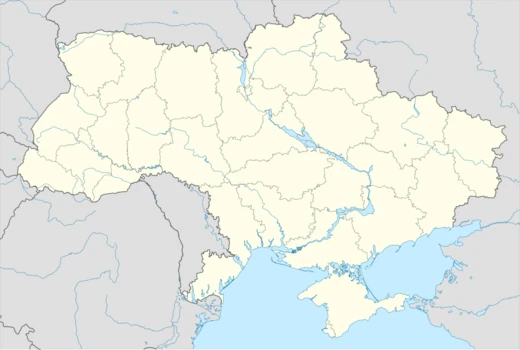
Lviv Oblast
Oblast in western Ukraine, historical crossroads of central Europe.

Lviv Oblast, also referred to as Lvivshchyna, is an oblast in western Ukraine. Its administrative center is the city of Lviv, founded by Daniel of Galicia in the 13th century. The region's strategic position at the heart of central Europe and as a gateway to the Carpathians has caused it to change hands many times over the centuries, being ruled by Poland, Kievan Rus', the Kingdom of Galicia–Volhynia, the Polish–Lithuanian Commonwealth, the Austro-Hungarian Empire, the West Ukrainian People's Republic, Poland, the Soviet Union, and Nazi Germany before becoming part of modern Ukraine.
Quick Facts
- Nickname
- uk · Львівщина (uk · Lvivshchyna)
- Settlement Type
- Oblast
- Flag Alt
- Flag of Lviv Oblast
- Shield Alt
- Coat of arms of Lviv Oblast
- Shield Link
- Ruthenian lion
- Parts Type
- Largest cities
- Parts Style
- para
- Seat Type
- Administrative center
- Seat
- Lviv
- Leader Title
- Governor
- Leader Name
- Maksym Kozytskyy
Facts from the source article.
Lore & Background
The region is named after the city of Lviv, which was founded by Daniel of Galicia, King of Galicia, in the 13th century and named after his son, Leo. During this time, the general region was known as Galicia–Volhynia, one of the strongest and most stable kingdoms in Eastern Europe of that era. In the Early Middle Ages, the territory was inhabited by the Lendians, an old Polish tribe, and was ruled by various powers including Poland, Kievan Rus', and the Kingdom of Galicia–Volhynia, which came under the suzerainty of the Golden Horde in the mid-13th century. From 1340 to 1772 it was ruled by the Kingdom of Poland and the Polish–Lithuanian Commonwealth, during which there were sizeable Scottish and Armenian communities in Lviv and Brody.
Reader's Guide
Lviv Oblast was created as part of the Ukrainian Soviet Socialist Republic on 4 December 1939 following the Soviet invasion of eastern Poland and annexation of Eastern Galicia and Volhynia. It was occupied by Nazi Germany from 1941 to 1944, during which most of the local Jewish population were killed and several prisoner-of-war camps with forced labour subcamps were established. After World War II, the region remained in Soviet hands as arranged at the Tehran and Yalta conferences, and most local Poles were expelled while Ukrainians expelled from Poland arrived. In 1959, Drohobych Oblast was incorporated into Lviv Oblast. Given its historical development, Lviv Oblast is one of the least Russified and Sovietized parts of Ukraine, with much of its Polish and Habsburg heritage still visible today. During the 2014 Euromaidan protests, the region declared independence from the central government led by Viktor Yanukovych, and after 2014 it became the first region of Ukraine to remove all its Soviet-era monuments by January 2024.
Did You Know?
- The oblast's highest point is Pikui at 1408 m.
- The region was inhabited by the Lendians, an old Polish tribe, in the Early Middle Ages.
- Several NKVD prisoner massacres were committed in the area in 1941, including at Lviv, Sambir and Dobromyl.
- Lviv Oblast was among the first regions of Ukraine to remove all its Soviet-era monuments by early 2024.
A Crossroads of Empires
The territory now known as Lviv Oblast has been claimed by a remarkable succession of powers over more than a millennium. In the Early Middle Ages, the Lendians—an old Polish tribe—occupied the land before it fell under the influence of Great Moravia, Poland, and Kievan Rus'. The Kingdom of Galicia–Volhynia, established in the 13th century under King Daniel of Galicia, represented one of Eastern Europe's most stable and powerful states of its era. Daniel founded the city of Lviv after his son Leo, making it the capital of his realm. From 1340 to 1772, the region was governed by the Kingdom of Poland and later the Polish–Lithuanian Commonwealth, during which period sizeable Scottish and Armenian communities took root in Lviv and Brody. The First Partition of Poland in 1772 transferred the area to the Austro-Hungarian Empire, where it remained until 1918. After a brief declaration of independence as the West Ukrainian People's Republic in November 1918, the region was absorbed into the Second Republic of Poland as part of the Lwów Voivodeship, a period marked by significant ethnic tension between Polish and Ukrainian populations.
A Landscape of Contrasts
The physical geography of Lviv Oblast is strikingly diverse, spanning multiple distinct landforms within a single administrative region. In the south, the low Beskids mountain chains of the Eastern Carpathians stretch from northwest to southeast, draped in secondary coniferous forests, with their highest peak at Pikui reaching 1,408 metres. North of the mountains lie the broad upper Dniester river valley and the smaller upper San River valley, both with flat alluvial bottoms prone to flooding. Between these waterways and the Beskids stretches the Precarpathian upland, a deciduous-forest region home to well-known mineral spa resorts such as Truskavets and Morshyn, and once a site of early industrial petroleum and gas extraction—deposits now largely exhausted. The central zone encompasses Roztochchia, Opillia, and part of the Podolia uplands, where rich sulphur deposits were mined during the Soviet era. Further north, the Small Polesia lowland presents flat sandy plains with pine forests, while the far northern Volhynia upland, covered in loess, is the site of coal mining.
Shadows of the Twentieth Century
The twentieth century inflicted profound trauma on the region. Following the Soviet invasion of eastern Poland, the oblast was formally created on 4 December 1939 within the Ukrainian SSR. In 1941, NKVD forces carried out prisoner massacres at Lviv, Sambir, and Dobromyl. Nazi Germany then occupied the territory from 1941 to 1944, during which the majority of the local Jewish population was killed. The Germans also established prisoner-of-war camps and multiple forced-labour subcamps for Soviet, French, and Belgian captives, where beatings, starvation, epidemics, and executions produced a high death rate. After the war, the Tehran and Yalta conferences confirmed Soviet control over the area. Most local Poles were expelled and replaced by Ukrainians arriving from Poland. In 1951, a Polish–Soviet territorial exchange transferred the Belz area into the oblast while Ustrzyki Dolne went to Poland, and in 1959 the separate Drohobych Oblast was merged into Lviv Oblast.
A Region That Remembers
Because of its complex political history—passing through Polish, Habsburg, and interwar Polish rule before Soviet incorporation—Lviv Oblast stands as one of the least Russified and Sovietized parts of modern Ukraine. Traces of its Polish and Habsburg heritage remain visibly embedded in the landscape and built environment. The oblast, along with Ivano-Frankivsk Oblast, was entirely contained within the former Kingdom of Galicia and Lodomeria, and its current raions are almost co-extensive with those of that medieval kingdom, having remained largely unchanged through successive state boundaries. In the modern era, the region has asserted a distinct political identity. During the 2014 Euromaidan protests, when the government of Viktor Yanukovych deployed military force against demonstrators, the oblast declared independence from the central government. In the decommunization process that gained momentum after 2014, Lviv Oblast became the first region in Ukraine to remove all of its Soviet-era monuments, a milestone achieved by January 2024.
More in Ukrainian Oblasts 1-24
Spotted an error? Know more?
Reader corrections go straight into our review queue. Suggest an edit · How this site is sourced