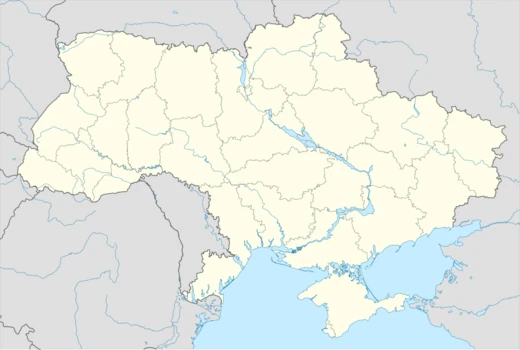
Odesa Oblast
Southwestern Ukrainian province on the Black Sea coast.

Odesa Oblast, also called Odeshchyna, is a province in southwestern Ukraine that stretches along the northern shore of the Black Sea. Its capital is the city of Odesa. The region’s coastline, including both sea coast and estuaries, runs for 300 kilometers, and its state border extends 1,200 kilometers. It contains eight seaports and five of Ukraine’s largest lakes, among them Yalpuh Lake. With more than 80,000 hectares of vineyards, it is the country’s leading wine-growing area.
The earliest signs of human habitation come from Neolithic settlements and burial grounds of the Gumelnița, Cucuteni-Trypillia, and Usatove cultures, as well as from Bronze Age Proto-Indo-European tumuli and hoards. In the first millennium BC, Milesian Greeks founded colonies along the Black Sea coast, including Tyras and Niconium within today’s oblast. They left behind painted pottery, ceramics, sculptures, inscriptions, and crafts that show a thriving civilization. Scythian tribes, who roamed the steppes in the same period, left weapons, bronze cauldrons, utensils, and ornaments in their settlements and graves. By the early first millennium AD, the Sarmatians had displaced the Scythians. In the third and fourth centuries AD, a tribal alliance known as the Chernyakhov culture emerged. From the mid-first millennium, Slavic peoples began to form. In the ninth century, the eastern Slavs united into a state centered on Kyiv. The Khazars, Polovtsy, and Pechenegs were neighbors of the Slavs at various times. Archaeological finds from the ninth to fourteenth centuries come from settlements and cities of Kievan Rus’, such as Belgorod, Caffa-Theodosia, and Berezan Island.
The Mongols took over the Black Sea littoral in the thirteenth century. From around 1290, parts of the region belonged to the Republic of Genoa and became a center of Genoese trade until at least the mid-1300s. The Grand Duchy of Lithuania acquired some of the area at the start of the fifteenth century. In 1593, the Ottoman Empire established its Dnieper Province, also known as the Khanate of Ukraine, in the region. The northern outskirts of the current oblast, part of Podolia, stayed under Lithuania and then passed to the Kingdom of Poland in 1569, where they were in Bracław County of the Bracław Voivodeship in the Lesser Poland Province. Savran, Kodyma, and Józefgród were Polish private towns, the last two founded by the Lubomirski family. Most of the territory of Odesa Oblast came under Russian control in 1791 during Russia’s southward expansion to the Black Sea, while the northern outskirts were annexed by Russia in the Second Partition of Poland in 1793. Russian historians call the area annexed in 1791 the Ochakov Oblast.
After the February Revolution of 1917 in Russia, the area became part of the Ukrainian People’s Republic (1917–1918), but soon fell first to the Russian Volunteer Army (part of the White movement) and then to the Bolshevik Red Army. By 1920, Soviet authorities had secured the territory, making it part of the Ukrainian SSR. The oblast was created on 27 February 1932 from five districts: Odesa Okruha, Pervomaisk Okruha, Kirovohrad Okruha, Mykolaiv Okruha, and Kherson Okruha. It was the scene of Soviet genocidal crimes, including the Holodomor of 1932–1933 and the Polish Operation of the NKVD in 1937. In 1937, the Central Executive Committee of the USSR split off the eastern parts of Odesa Oblast to form Mykolaiv Oblast.
During World War II, after the German and Romanian invasion of the Soviet Union in 1941, the territory of today’s Odesa Oblast fell under Axis control. Most of the area between the Dniester and Southern Bug rivers was placed under Romanian administration as part of the Transnistria Governorate, with Odesa as its capital. The southern Budjak region, part of Bessarabia, was reincorporated into Romania after having been lost in the Soviet occupation of Bessarabia and Northern Bukovina in 1940. Romanian rule lasted until the Soviet advance in 1944. The region was a major site of the Holocaust under Romanian rule. Romanian authorities set up numerous ghettos, camps, and other detention sites for local Jews and for Jews deported from Bessarabia and Bukovina. Ghettos within the wartime oblast included those at Balta, Berezivka, Bobrik, and other settlements, while additional camps and ghettos operated throughout Romanian-controlled Transnistria. Imprisoned Jews were subjected to forced labor, starvation, exposure, disease, and executions. Across the Transnistria Governorate, Romanian authorities and auxiliary forces murdered an estimated 280,000 to 380,000 Jews. In Odesa itself, Romanian and German forces began persecuting the Jewish population immediately after capturing the city on 16 October 1941. Tens of thousands of Jews were killed in the Odesa massacres of October 1941, including mass shootings and the burning alive of prisoners. About 25,000 to 30,000 Jews were then forced to march from Odesa to the Bogdanovka camp, where nearly all were murdered. In January 1942, Romanian authorities ordered the remaining Jews in Odesa into the Slobidka ghetto, which became an assembly and transit point for deportations.
Quick Facts
- Official Name
- Odeska oblast
- Settlement Type
- Oblast
- Flag Alt
- Flag of Odesa Oblast
- Shield Alt
- Coat of arms of Odesa Oblast
- Parts Type
- Largest cities
- Parts Style
- para
- Seat Type
- Administrative center
- Seat
- Odesa
- Leader Title
- Governor
- Leader Name
- Oleh Kiper
Facts from the source article.
Lore & Background
The area of Odesa Oblast has been inhabited since Neolithic times, with evidence from the Gumelnița, Cucuteni-Trypillia and Usatove cultures. In the 1st millennium BC, Milesian Greeks founded colonies such as Tyras and Niconium. Scythian and later Sarmatian tribes occupied the steppes, followed by Slavic peoples. The region was part of Kievan Rus' in the 9th–13th centuries, then came under Mongol control in the 13th century. From about 1290, parts were held by the Republic of Genoa, and in the early 15th century by the Grand Duchy of Lithuania. The Ottoman Empire established its Silistra Eyalet (Ochakiv Sanjak) there in 1593. The northern outskirts were part of Poland from 1569. Most of the territory passed to Russian control in 1792 via the Treaty of Jassy, with the north annexed in 1793.
Reader's Guide
Odesa Oblast was established on 27 February 1932 from five districts. During World War II, it was under Axis control from 1941 to 1944, with most of the region administered by Romania as part of Transnistria Governorate. It was a major site of the Holocaust: Romanian authorities murdered an estimated 280,000 to 380,000 Jews across Transnistria. In Odesa itself, tens of thousands were killed in the October 1941 massacres, and approximately 25,000–30,000 Jews were forced to march to Bogdanovka camp, where nearly all were murdered. By April 1942 only 701 registered Jews remained in Odesa. The Red Army retook the city on 10 April 1944. Post-war, the oblast expanded in 1954 to absorb Izmail Oblast. In the 1991 referendum, 85.38% of votes favored Ukrainian independence. A 2014 survey found 2.3% supported joining Russia. The region is Ukraine's largest oblast by area, with fertile chernozem soils and intensive agriculture.
Did You Know?
- Odesa Oblast has over 80,000 ha of vineyards, making it the largest wine-growing region in Ukraine.
- The oblast was the scene of the Holodomor of 1932–1933 and the Polish Operation of the NKVD of 1937.
- The Historic Centre of Odesa is a UNESCO World Heritage Site.
More in Ukrainian Oblasts 1-24
Spotted an error? Know more?
Reader corrections go straight into our review queue. Suggest an edit · How this site is sourced