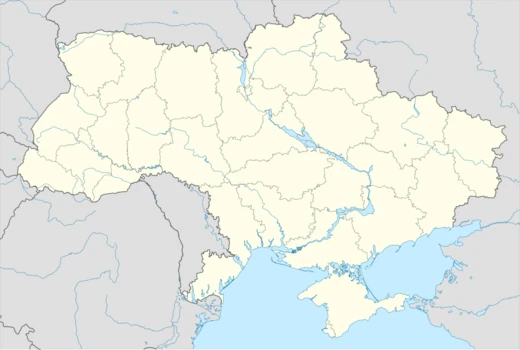
Poltava Oblast
Central Ukrainian oblast, historic Cossack Hetmanate territory.

Poltava Oblast, also called Poltavshchyna, is a province in central Ukraine. Its capital is the city of Poltava. Much of the region was once part of the southern lands of the Cossack Hetmanate. As of a 2022 estimate, the population stood at 1,352,283. After Poltava, the next largest cities are Kremenchuk, Horishni Plavni, and Lubny.
The oblast was created on 22 September 1937 by a decision of the Soviet Union’s Central Executive Committee. It was formed mainly from districts that had belonged to Kharkiv Oblast, with a few taken from Kyiv Oblast. Its borders roughly match those of the earlier Poltava Governorate, which existed from 1802 to 1925. During the Nazi occupation from 1941 to 1943, most of the region was part of the Kiew Generalbezirke, while the rest fell under a German military rear area. After the Germans withdrew, the oblast was restored to nearly the same boundaries. In the 1950s, some territory was given to the newly created Cherkasy Oblast. The construction of the Kremenchuk Reservoir in 1959 submerged other areas. In 2020, as part of a nationwide administrative reform, the number of districts in Poltava Oblast was reduced, and the remaining districts were enlarged. During the Russian invasion of Ukraine, the town of Myrhorod was bombed, but there has been no ground combat, and the province remains fully under Ukrainian control.
Geographically, Poltava Oblast lies in central Ukraine, on the left bank of the Dnieper River. It covers an area of 28,800 square kilometers. The oblast borders Chernihiv, Sumy, Kharkiv, Dnipropetrovsk, Kirovohrad, Cherkasy, and Kyiv oblasts. The land is gently rolling, with no major landforms other than the Dnieper.
According to the 2001 Ukrainian census, ethnic Ukrainians made up 91.4% of the population, and ethnic Russians 7.2%. In 2018, the population was about 1,400,000, with a density of 49 people per square kilometer.
Due to Soviet-era Russification, the share of Ukrainian speakers in the oblast declined over time, while Russian speakers increased. Census data track this shift. Ukrainian is the only official language across the entire oblast.
Quick Facts
- Official Name
- Poltavska oblast
- Nickname
- uk · Полтавщина (uk · Poltavshchyna)
- Settlement Type
- Oblast
- Flag Alt
- Flag of Poltava Oblast
- Shield Alt
- Coat of arms of Poltava Oblast
- Parts Type
- Largest cities
- Parts Style
- para
- Seat Type
- Administrative center
- Seat
- Poltava
- Leader Title
- Governor
Facts from the source article.
Lore & Background
Poltava Oblast was established on 22 September 1937 by a resolution of the Central Executive Committee of the Soviet Union, using districts from Kharkiv and Kyiv oblasts. During the Nazi occupation of 1941–43, most of the region belonged to the Kiew Generalbezirke, with the rest as a German military rear area. After German withdrawal, the region was reinstated to nearly its original borders. In the 1950s it lost some territory to the newly created Cherkasy Oblast, and some areas were submerged with the creation of the Kremenchuk Reservoir in 1959. In 2020, as part of a general Ukrainian administrative reform, the number of raions was reduced to four: Kremenchuk, Lubny, Myrhorod, and Poltava.
Reader's Guide
Poltava Oblast is significant as a central Ukrainian province with deep historical roots in the Cossack Hetmanate. It is a center of Ukraine's oil and natural gas industry, with a major oil refinery in Kremenchuk and important iron ore processing facilities. The oblast's economy also relies on agriculture, producing grains, sugar beets, sunflower seeds, and livestock. Culturally, it hosts several historic sites nominated for the Seven Wonders of Ukraine, including the Gogol Museum-Reserve and the site of the Battle of Poltava. During the Russian invasion of Ukraine, the town of Myrhorod was bombed, but the province has seen no ground fighting and remains under Ukrainian control. The oblast has experienced a gradual Ukrainization since independence, with all pupils in general secondary education studying in Ukrainian as of the 2023–2024 school year.
Did You Know?
- The oblast's three most populous cities after Poltava are Kremenchuk, Horishni Plavni, and Lubny (2022 estimates).
- During the Russian invasion of Ukraine, Myrhorod was bombed, but no ground fighting occurred and the province remains under Ukrainian control.
- In the 2023–2024 school year, all 134,575 pupils in general secondary education in Poltava Oblast studied in Ukrainian-language classes.
More in Ukrainian Oblasts 1-24
Spotted an error? Know more?
Reader corrections go straight into our review queue. Suggest an edit · How this site is sourced