Kherson Oblast
Southern Ukrainian oblast, fruit basket, partially occupied since 2022.

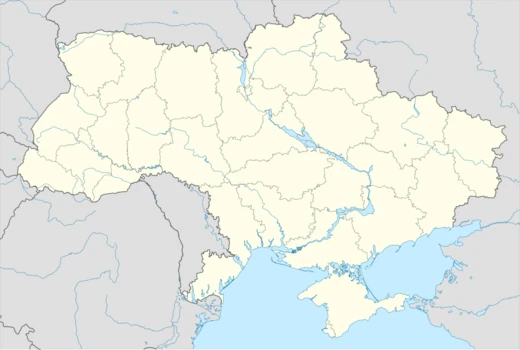
Kherson Oblast is a province in southern Ukraine, located just north of Crimea, with its administrative center in the city of Kherson on the right bank of the Dnieper River. It is known as the 'fruit basket' of Ukraine due to its significant agricultural production, which is distributed throughout the country, peaking in summer. The oblast has been a site of conflict during the Russian invasion of Ukraine, with most of its territory under Russian occupation from early 2022, followed by a disputed annexation and partial recapture by Ukrainian forces by mid-November 2022.
Quick Facts
- Official Name
- Khersonska oblast
- Nickname
- uk · Херсонщина (uk · Khersonshchyna)
- Settlement Type
- OblastPartially annexed by Russia as Kherson Oblast
- Flag Alt
- Flag of Kherson Oblast
- Shield Alt
- Coat of arms of Kherson Oblast
- Parts Type
- Largest cities
- Parts Style
- para
- Established Title
- Established
- Established Date
- 30 March 1944
- Seat Type
- Administrative center
- Seat
- Kherson
Facts from the source article.
Lore & Background
The province was established in 1944 within Soviet Ukraine. In the 1991 Ukrainian independence referendum, 90.13% of votes in Kherson Oblast supported independence. A 2014 survey found that 90.9% of the oblast's population opposed joining Russia. During the 2022 Russian invasion, Russian forces occupied most of the oblast, and a disputed referendum in September 2022 led to Russia's illegal annexation, which is internationally unrecognized. Ukrainian forces recaptured the right bank of the Dnieper, including Kherson city, by 11 November 2022, while the left bank remains under Russian control. In June 2023, the Kakhovka Dam was breached, causing extensive flooding.
Reader's Guide
Kherson Oblast's significance lies in its role as a major agricultural producer for Ukraine, earning it the nickname 'fruit basket.' Its strategic location north of Crimea and along the Dnieper River made it a key battleground in the 2022 Russian invasion. The oblast's history reflects centuries of shifting control among empires and states, and its population is predominantly Ukrainian with a significant Russian minority. The 2022 annexation attempt and subsequent partial recapture highlight ongoing geopolitical tensions. The destruction of the Kakhovka Dam in 2023 caused environmental and humanitarian crises. The oblast's demographic and administrative structures, including its 18 raions and three municipalities, illustrate its regional importance within Ukraine.
Did You Know?
- Kherson Oblast is known as the 'fruit basket' of Ukraine, with agricultural production peaking in summer.
- The oblast includes the northern portion of the Arabat Spit, which was the only part of the Crimean Peninsula under Ukrainian control before the 2022 invasion.
- The Kakhovka Dam was breached on 6 June 2023, causing extensive flooding downstream and draining the Kakhovka Reservoir.
Geography & the Dnieper Divide
Kherson Oblast stretches across 28,461 square kilometers in southern Ukraine, positioned just north of the Crimean Peninsula. The Dnieper River carves through the territory, splitting it into eastern and western halves, with the administrative capital of Kherson sitting on the northern, or right, bank. Before the 2022 conflict, two major bridges linked the banks—the Antonivka Road Bridge at Kherson and the Kakhovka Bridge near Nova Kakhovka—while the Daryivka Bridge crossed the Inhulets River further afield. The oblast touches the Black Sea and Crimea to the south, the Azov Sea to the east, and shares land borders with Dnipropetrovsk, Mykolaiv, and Zaporizhzhia oblasts. A unique geographic quirk lies in Henichesk Raion, which contains the northern stretch of the Arabat Spit, a narrow land bridge between the brackish Syvash lagoon and the Sea of Azov. Because Russia seized Crimea in 2014, this strip was the sole portion of the Crimean Peninsula still under Ukrainian sovereignty before 2022. The region is often called Ukraine's 'fruit basket,' with agricultural output distributed nationwide and harvests peaking in the summer months.
A Mosaic of Empires
The land now known as Kherson Oblast has been claimed by an extraordinary succession of powers over millennia. Scythians, ancient Greeks, the Khazars, Kipchak nomads, the Byzantine Empire, Kyivan Rus', Italian traders, the Mongol hordes, the Grand Duchy of Lithuania, the Crimean Khanate, the Ottoman Empire, Poland, and Russia all left their mark on the territory at various points. In medieval times, Oleshia served as a trading port under Byzantine, Rus', and Genoese control, while Tawan (later Kazikermen, today Beryslav) functioned as a Lithuanian customs post and a Polish-Turkish fortress. The modern city of Kherson grew from the early-modern settlement of Bilchowisce. After a turbulent 1917–1920 period of competing Ukrainian, Bolshevik, and White Russian control, the area settled into Soviet Ukraine in 1920. The twentieth century brought further tragedy: the Holodomor famine of 1932–1933 struck the region, and it was part of the Katyn massacre in 1940. German forces occupied the territory from 1941 until 1944, after which the oblast was formally established within Soviet Ukraine.
Occupation, Annexation, and Liberation
When Russia launched its full-scale invasion on 24 February 2022, Russian forces quickly seized most of Kherson Oblast. A so-called 'Kherson military–civilian administration' governed the occupied zones from late April through late September 2022. On 27 July, Ukrainian forces destroyed the Antonivka Road Bridge, a deliberate move to cut off Russian troops on the right bank. In late September, Russia organized what it called referendums in the occupied areas; the vast majority of the international community rejected these as staged and in violation of international law. On 29 September, Moscow declared the oblast an independent state, and the following day President Putin signed an accession decree formally annexing it—despite Russia not controlling the entire province. The UN General Assembly passed a resolution demanding Russia's immediate and unconditional withdrawal. Ukrainian forces launched a counteroffensive and, by 11 November 2022, had retaken Kherson city and all right-bank territory. The left bank, however, remained under Russian control. On 6 June 2023, the Kakhovka Dam was breached, triggering catastrophic downstream flooding and mass evacuations across the oblast.
Identity, Administration, and the People
With a population of roughly one million (2022 estimate), Kherson Oblast is home to a single city exceeding 100,000 residents—Kherson itself—while Nova Kakhovka, Kakhovka, Oleshky, and Henichesk each hold populations above 30,000. Administratively, the oblast was reorganized in 2020, reducing its previous structure of 18 raions and three directly governed municipalities (Kherson, Nova Kakhovka, and Kakhovka) into a new framework. The region's Ukrainian identity is deeply rooted: in the 1991 independence referendum, 90.13% of voters in the oblast backed Ukraine's Declaration of Independence. A December 2014 survey by the Kyiv International Institute of Sociology found that 90.9% of residents opposed joining Russia, with only 1% in favor. Even under occupation, this identity persisted in defiance. Russian authorities claimed Putin received 88.12% of the vote in the occupied Kherson region during the 2024 Russian presidential election, a result widely described as rigged and fraudulent. The oblast's people, from their agricultural traditions to their democratic expressions, have consistently affirmed their place within Ukraine.
More in Ukrainian Oblasts 1-24
Spotted an error? Know more?
Reader corrections go straight into our review queue. Suggest an edit · How this site is sourced