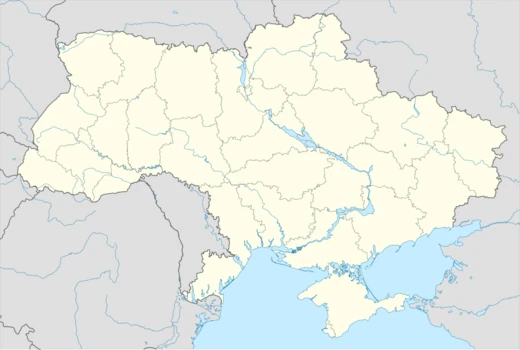
Vinnytsia Oblast
Central Ukrainian oblast with rich mineral resources and wartime tragedy.

Vinnytsia Oblast is an administrative region in central Ukraine, established on 27 February 1932 as part of the Ukrainian Soviet Socialist Republic. Its administrative center is Vinnytsia, and it is located in the historic regions of Podolia and Right-bank Ukraine. The oblast is notable for its significant mineral deposits, including the world's largest raw kaolin deposits, and for its tragic history during World War II, when its territory was divided between German and Romanian occupation regimes, leading to widespread persecution and mass deaths of Jews and Roma.
Quick Facts
- Official Name
- Vinnytska oblast
- Nickname
- uk · Вінниччина (uk · Vinnychchyna)
- Settlement Type
- Oblast
- Flag Alt
- Flag of Vinnytsia Oblast
- Shield Alt
- Coat of arms of Vinnytsia Oblast
- Parts Type
- Largest cities
- Parts Style
- para
- Seat Type
- Administrative center
- Seat
- Vinnytsia
- Leader Title
- Governor
- Leader Name
- Nataliya Zabolotna
Facts from the source article.
Lore & Background
Vinnytsia Oblast was created on 27 February 1932 through an administrative reorganization of the Ukrainian Soviet Socialist Republic, incorporating raions from several abolished okruhas, including Uman, Berdychiv, Vinnytsia, Mohyliv, Tulchyn, Shepetivka, Proskuriv, and Kamianets. In 1935, western border territories were reorganized into border okrugs, and in 1937 they were separated to form Kamianets-Podilskyi Oblast (later Khmelnytskyi Oblast).
During World War II, following the German invasion in June 1941, the oblast was occupied and divided: northern and eastern areas fell under German-administered Reichskommissariat Ukraine, while southern and southwestern parts were incorporated into Romanian-administered Transnistria Governorate. In German-controlled areas, Einsatzgruppen and auxiliaries carried out mass shootings of Jews. In Romanian-controlled areas, authorities established ghettos, camps, and forced-labor sites for local Jews and tens of thousands deported from Bessarabia and Bukovina, causing widespread mortality from hunger, disease, and executions. The Vapniarka concentration camp, established in October 1941, became notorious for deliberately feeding prisoners toxic grass pea, causing paralysis.
The Red Army recaptured the territory in 1944. The oblast borders seven other Ukrainian oblasts and a 202 km section of the state border with Moldova along the Dniester river.
Reader's Guide
Vinnytsia Oblast holds significance as a region that experienced the full brutality of Nazi and Romanian occupation policies during World War II, with numerous communities becoming sites of ghettos and camps. Its history illustrates the division of administrative control between Axis powers and the systematic persecution of Jews and Roma. The oblast is also economically notable for its vast mineral wealth, including the world's largest raw kaolin deposits (800 million tons), significant lignite reserves, granite, and radon mineral springs. Linguistically, the region has undergone a shift from Russification during the Soviet era to a strong reassertion of Ukrainian language use after independence, with 75% of residents supporting Ukrainian as the sole state language in a 2018 poll. By 2024, all pupils in general secondary education were studying in Ukrainian-language classes. The oblast's demographic composition remains overwhelmingly Ukrainian (94.9% in 2001), with a small Russian minority.
Did You Know?
- Vinnytsia Oblast was established on 27 February 1932 as part of an administrative reorganization of the Ukrainian Soviet Socialist Republic.
- During World War II, the oblast was divided between German and Romanian occupation regimes, with the Vapniarka concentration camp becoming known for deliberately feeding prisoners toxic grass pea, causing paralysis.
- The oblast contains the world's largest raw kaolin deposits, estimated at 800 million tons.
- According to a 2018 poll, 75% of residents believed Ukrainian should be the only state language on the entire territory of Ukraine.
More in Ukrainian Oblasts 1-24
Spotted an error? Know more?
Reader corrections go straight into our review queue. Suggest an edit · How this site is sourced