West Virginia
Mountain state admitted as a free state during the Civil War.

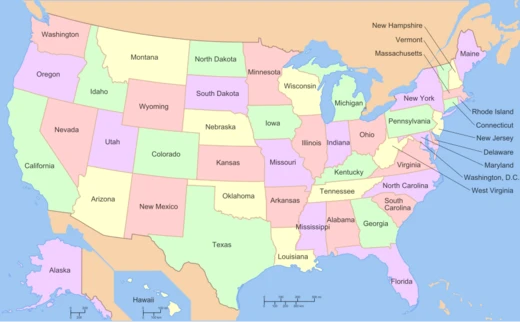
West Virginia is a mountainous, landlocked state in the Southern and Mid-Atlantic regions of the United States. It was admitted into the Union on June 20, 1863, as a free state and was not a border state during the American Civil War, separating from Virginia and becoming one of two states admitted during the war. The state is noted for its mountains, coal mining and logging industries, political and labor history, and outdoor recreation.
Quick Facts
- Flag Link
- Flag of West Virginia
- Seal Link
- Seal of West Virginia
- Nickname
- Mountain State
- Motto
- la · Montani semper liberi / (English: Mountaineers Are Always Free)
- Anthem
- Four songs
- Former
- Part of Virginia
- Seat
- Charleston
- Largestcity
- capital
- Largestcounty
- Kanawha
- Largestmetro
- Charleston–Huntington (combined) / Huntington (metro and urban)
- Governor
- Patrick Morrisey (R)
- Lieutenant Governor
- Randy Smith (R)
Facts from the source article.
Lore & Background
West Virginia was formed from the western part of Virginia during the American Civil War, after residents of western and northern counties set up a separate government under Francis Pierpont in 1861. The new state was admitted to the Union in 1863, and its constitution provided for gradual abolition of slavery; the state legislature abolished slavery and ratified the 13th Amendment on February 3, 1865. The state's northern panhandle forms a tri-state area with Pennsylvania and Ohio, while its eastern panhandle is part of the Washington metropolitan area.
Reader's Guide
West Virginia's significance lies in its unique formation during the Civil War as a breakaway state from Virginia, reflecting deep regional divisions over slavery and representation. The state's mountainous terrain shaped its economy, historically dominated by coal mining and logging, and its political evolution from a Democratic stronghold to a heavily Republican state. West Virginia is the only state entirely within the Appalachian Regional Commission's service area and is known for outdoor recreation. It consistently ranks low in health outcomes and education but ranks first in home ownership and third in affordability and equality. The state's prehistoric mounds and Native American history, including the Monongahela and Fort Ancient cultures, add archaeological importance.
Did You Know?
- West Virginia is the only state entirely within the area served by the Appalachian Regional Commission.
- The state ranks first in the nation in home ownership.
- West Virginia abolished slavery on February 3, 1865, and ratified the 13th Amendment the same day.
- Many ancient earthen mounds from prehistoric mound builder cultures survive in West Virginia.
More in U.S. States 1-24
Spotted an error? Know more?
Reader corrections go straight into our review queue. Suggest an edit · How this site is sourced