Maine
Northeasternmost state in the contiguous United States.

TylerKutschbach · CC BY-SA 4.0
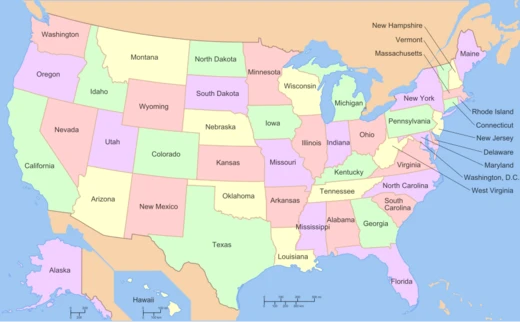
Maine is a state in the New England region of the United States and holds the title of the northeasternmost state in the contiguous U.S. It shares a land border with only one other state, New Hampshire, to the west, while its southeastern edge meets the Gulf of Maine. To the northeast and northwest lie the Canadian provinces of New Brunswick and Quebec, and it also has a maritime border with Nova Scotia. In terms of size, Maine is the largest state in New England, covering an area nearly as large as the other five New England states combined. Despite this, it ranks as the 12th-smallest state overall in the U.S., the 9th-least populous, the 13th-least densely populated, and the most rural. In 2024, its population was estimated by the Census at 1,395,722, the highest ever recorded for the state. Augusta serves as the capital, while Portland is the most populous city.
Indigenous peoples have lived in what is now Maine for roughly 12,000 years, following the retreat of glaciers from the last ice age. By the time Europeans arrived, several Algonquian-speaking nations governed the area, groups now collectively known as the Wabanaki Confederacy. The first confirmed European settlement was French, established in 1604 on Saint Croix Island by Pierre Dugua, Sieur de Mons. The first English attempt was the short-lived Popham Colony, founded by the Plymouth Company in 1607. During the 1620s, Irish and English settlements appeared along the coast, but many failed due to the harsh climate and conflicts with Indigenous peoples and the French. The 17th century was marked by significant warfare in Maine, and by the 18th century, only about half a dozen European settlements remained.
During the American Revolution, both Loyalist and Patriot forces fought for control of Maine’s territory. In the War of 1812, British forces occupied the largely undefended eastern region, aiming to annex it to Canada as the Colony of New Ireland. However, failed British offensives elsewhere led to a peace treaty that restored pre-war boundaries, returning the area to the United States. Maine was originally part of the Commonwealth of Massachusetts until 1820, when it voted to secede and become its own state. It was admitted to the Union as the 23rd state on March 15, 1820, under the terms of the Missouri Compromise.
Quick Facts
- Flag Link
- Flag of Maine
- Anthem
- State of Maine
- Population Demonym
- Mainer
- Motto
- "Dirigo" / (Latin for "I lead", "I guide", or "I direct")
- Former
- Part of Massachusetts (District of Maine)
- Seat
- Augusta
- Largestcity
- Portland
- Largestcounty
- Cumberland
- Governor
- Janet Mills (D)
- Lieutenant Governor
- Mattie Daughtry (D)In the event of a vacancy in the office of governor, the president of the State Senate is first in line to become governor.
- Lieutenant Governor Alt
- Senate President
- Legislature
- State Legislature
Facts from the source article.
Lore & Background
The territory of Maine has been inhabited by Indigenous populations for about 12,000 years after the last ice age. At European arrival, several Algonquian-speaking nations governed the area, now known as the Wabanaki Confederacy. The first European settlement was by the French in 1604 on Saint Croix Island, founded by Pierre Dugua, Sieur de Mons. The first English settlement was the short-lived Popham Colony, established by the Plymouth Company in 1607. European contact may have started around 1000 CE when Vikings are believed to have interacted with the native Penobscot, with the Maine Penny—an 11th-century Norwegian coin—found at a Native American dig site in 1954 as evidence.
Reader's Guide
Maine's significance lies in its unique geography and history. It is the only state bordering just one other state and is the largest in New England by area, yet it is the most rural of the 50 states. Its territory was contested by French, English, and Indigenous peoples for centuries, with warfare during the 17th and 18th centuries shaping its settlement patterns. Maine was part of Massachusetts until 1820, when it voted to secede and was admitted under the Missouri Compromise. Today, Maine is known for its rocky coastline, mountains, forests, and cuisine including wild blueberries and lobster. Coastal and Down East Maine have become centers for the creative economy, especially near Portland, which has experienced gentrification.
Did You Know?
- Maine is the only state to border only one other state (New Hampshire).
- The first European settlement in Maine was by the French in 1604 on Saint Croix Island.
- The Maine Penny, an 11th-century Norwegian coin, was found at a Native American dig site in 1954, suggesting Viking contact.
The Ballot Access Showdown
The 2024 Maine Republican primary became entangled in a legal drama that would ultimately reach the nation's highest court. In late December 2023, Secretary of State Shenna Bellows denied Donald Trump's petition to appear on the ballot, citing insurrection-related concerns in a move that mirrored a parallel ruling in Colorado. Trump quickly challenged the decision in Maine Superior Court, contending that Bellows lacked the legal authority to weigh federal constitutional questions and was personally biased. A Superior Court judge then intervened, instructing Bellows to hold her decision in abeyance until the Colorado matter reached the Supreme Court. Bellows appealed that stay to the Maine Supreme Judicial Court, but her appeal was dismissed in late January. The saga concluded on March 4, 2024, when the U.S. Supreme Court issued its ruling in Trump v. Anderson, determining that state courts could not enforce removal from a primary ballot because the power to legislate such disqualification belongs to Congress, which had never exercised it. Bellows reversed her exclusion order that very same day, clearing the path for Trump's name to appear on Maine's primary ballot.
A State Apart: Maine's Electoral Architecture
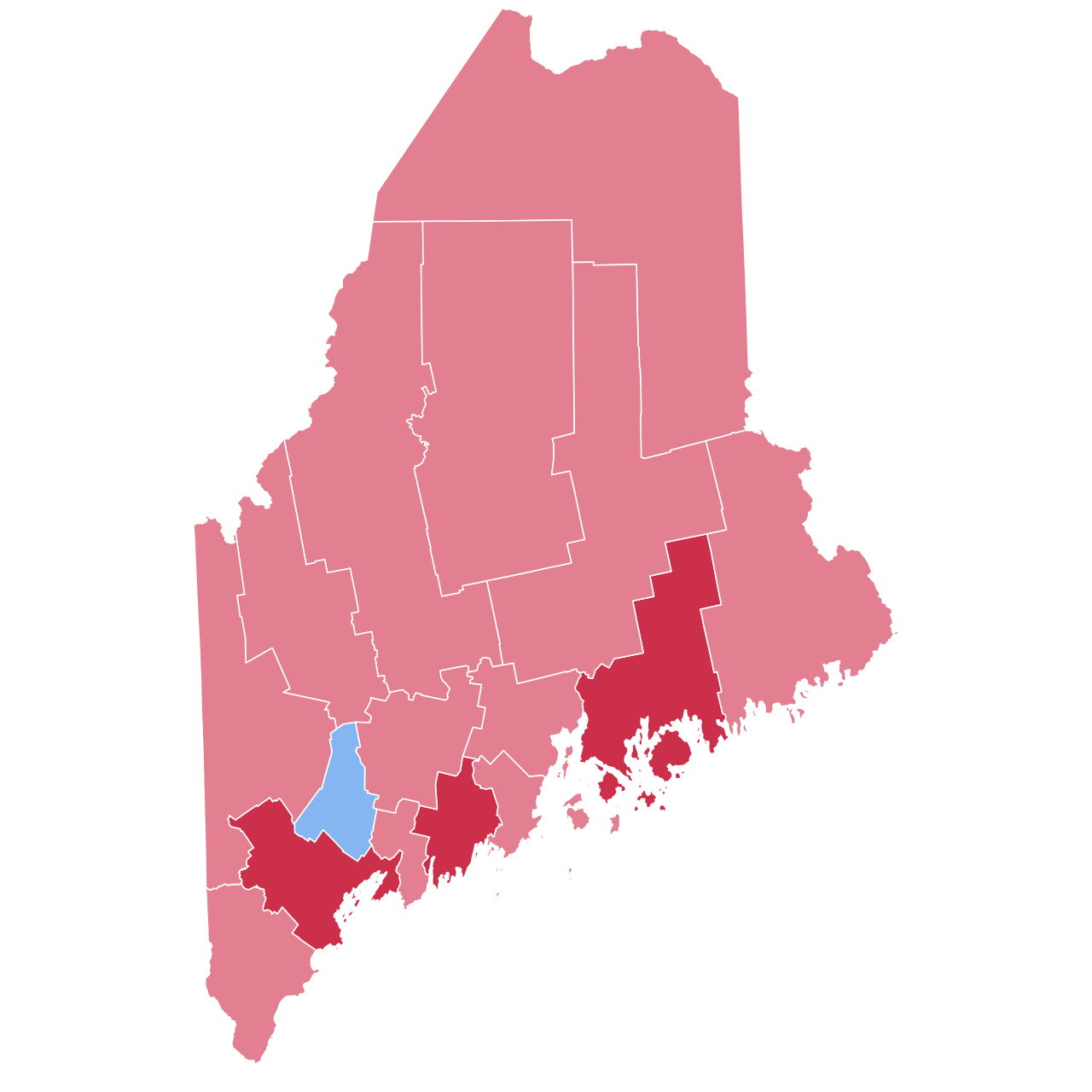
Maine stands apart from the other forty-eight states in how it allocates its four Electoral College votes. Rather than awarding all votes to a single statewide winner, the state splits its tally: two votes follow the statewide popular result, while one vote is assigned to each of its two congressional districts. This system, shared only with Nebraska, means a single election can produce a divided outcome. In 2024, as in 2016 and 2020, that is exactly what happened. Maine also employs ranked-choice voting, a mechanism that allows voters to rank candidates in order of preference. However, the ranked-choice tabulation was never triggered in the 2024 presidential race because both Harris and Trump secured outright majorities in their respective districts and in the statewide at-large count. The state's four electoral votes remained unchanged after the 2020 census reapportionment, as Maine neither gained nor lost a congressional seat. The two primaries—Democratic and Republican—were both held on Super Tuesday, March 5, 2024, setting the stage for the November contest.
Record-Breaking Numbers and a Familiar Split
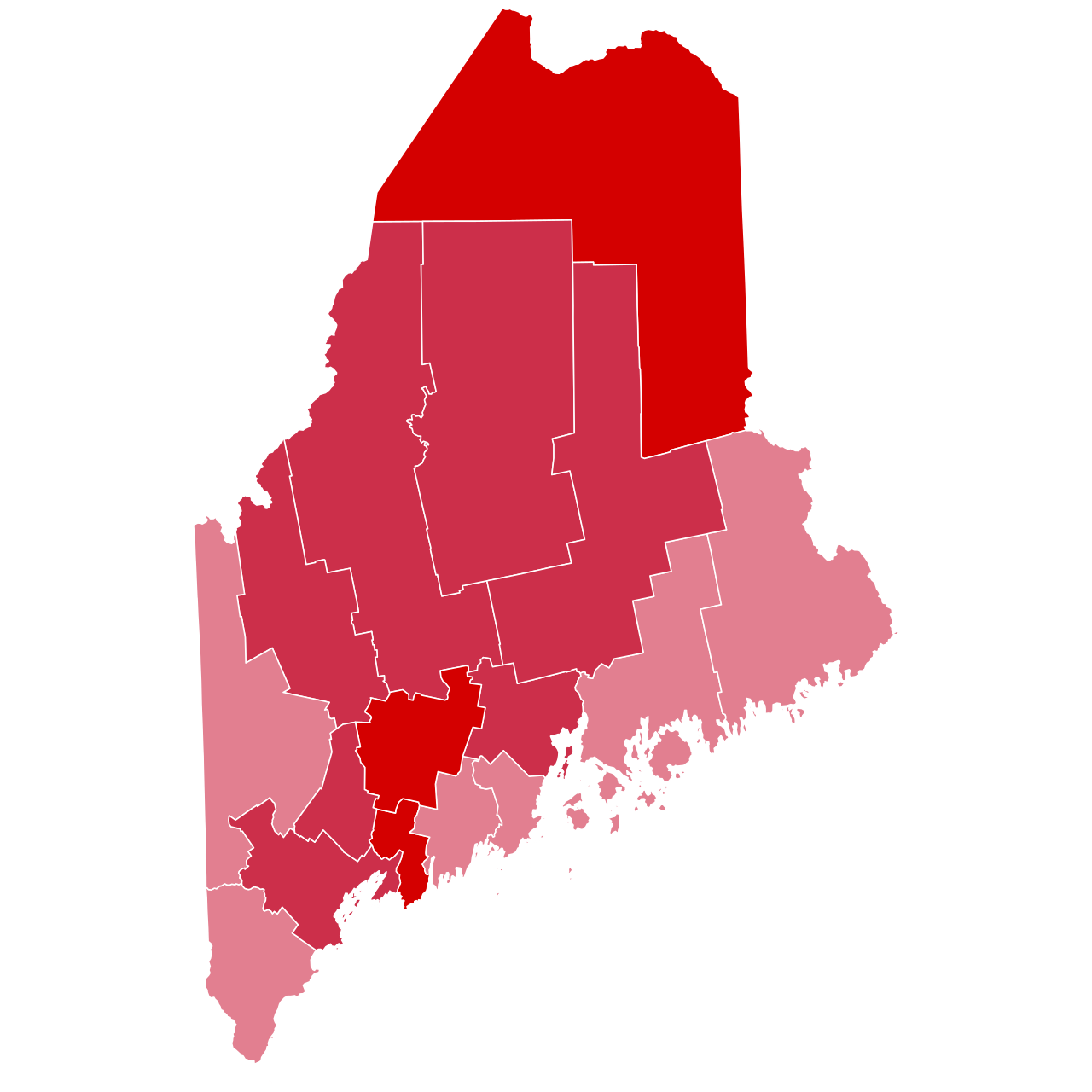
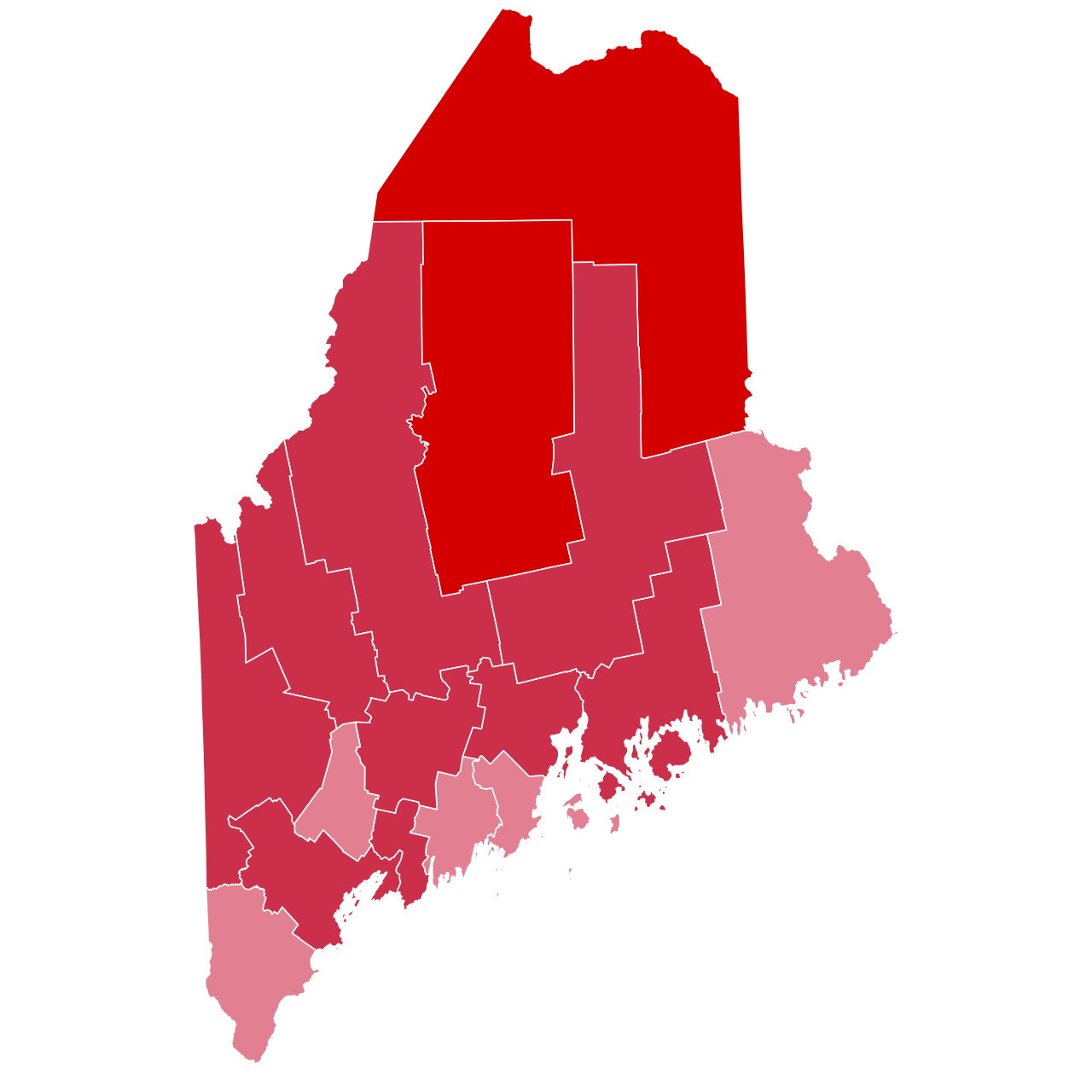
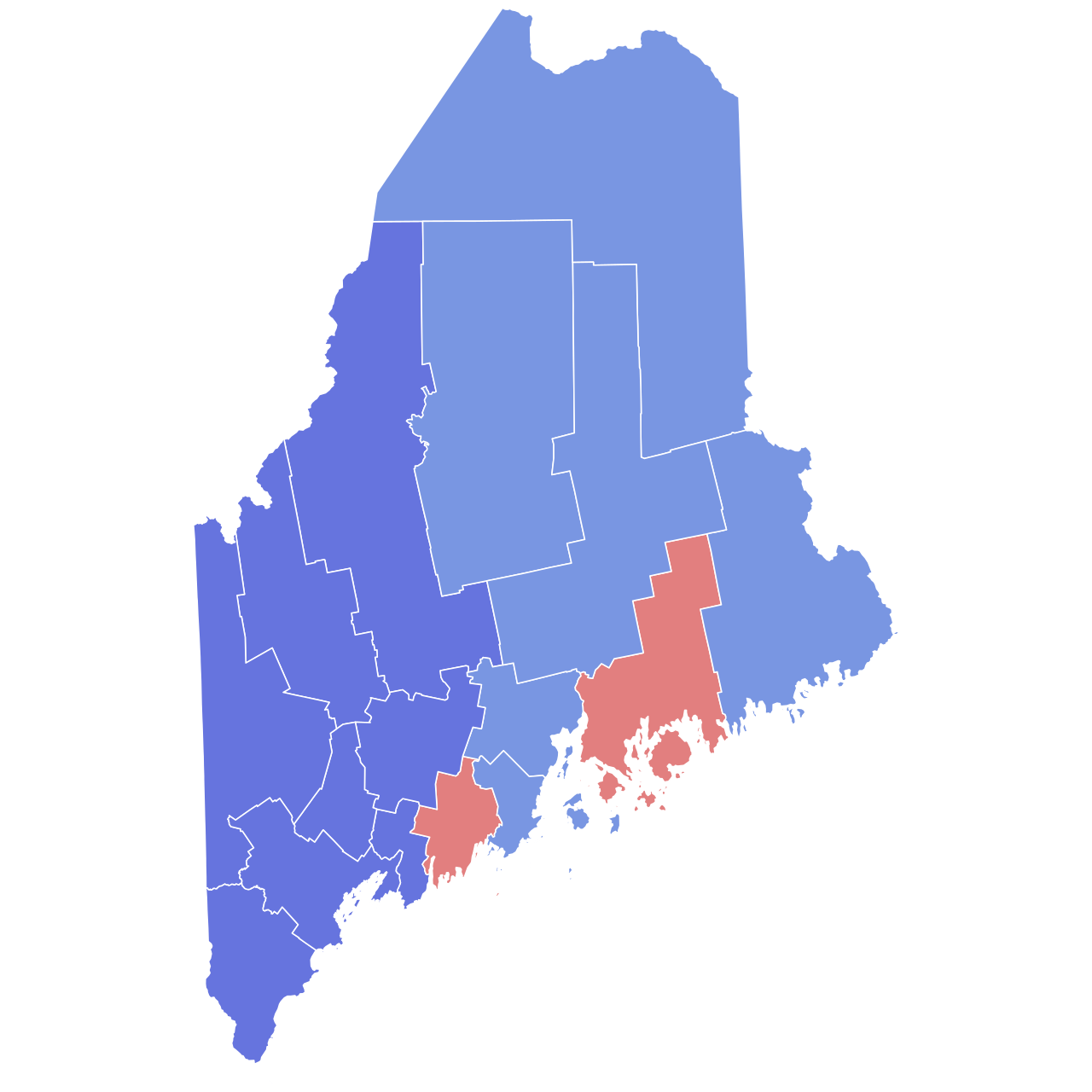
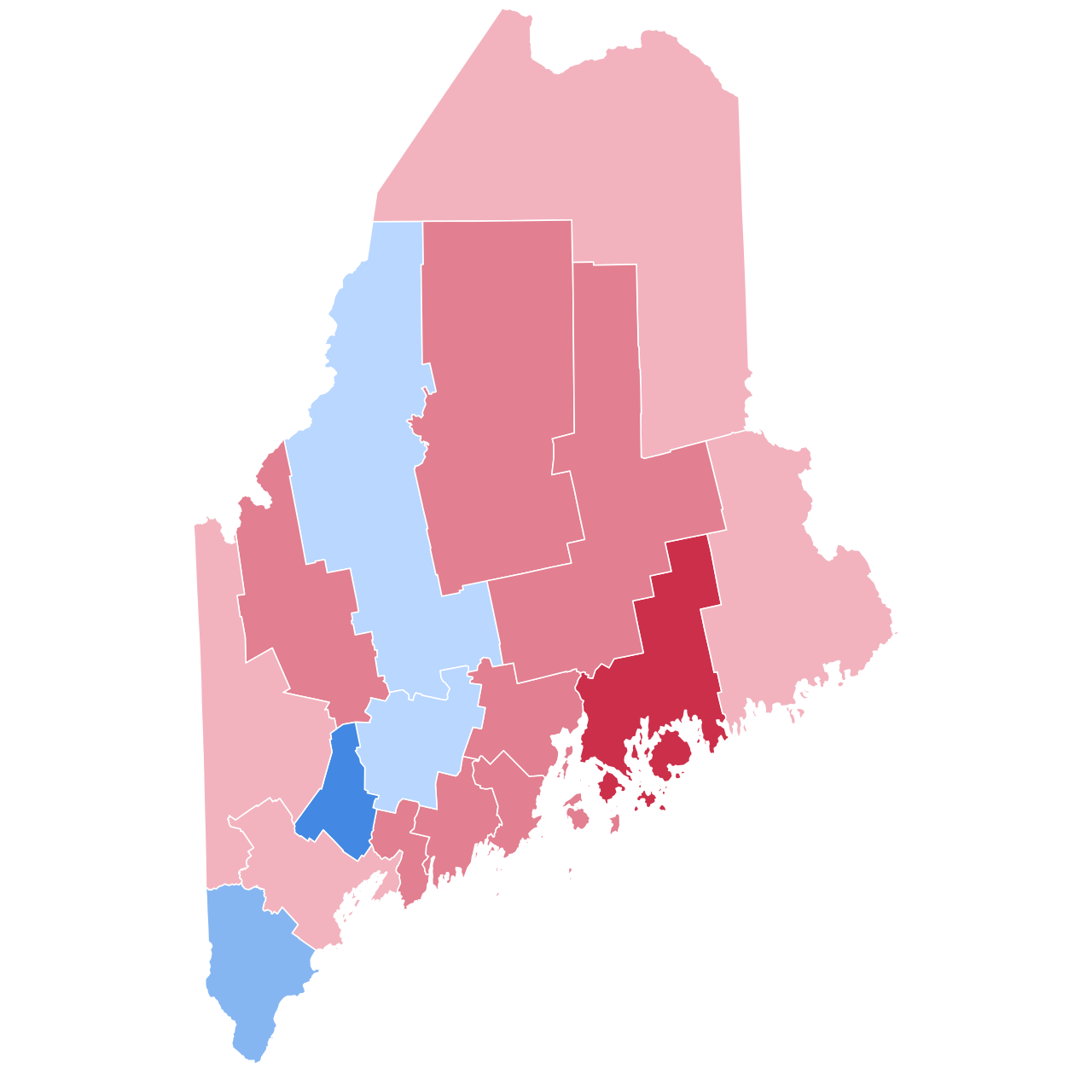
Kamala Harris carried Maine's at-large electoral votes by roughly 6.9 percent, a margin that fell short of Biden's 2020 performance yet exceeded Clinton's 2016 showing. More remarkably, her total represented the largest raw vote count ever recorded for any presidential candidate in the state's history—a distinction no other state could claim for her. She was also one of only six candidates nationwide to outdraw Biden's 2020 raw total, and Maine was the sole one of those six that she actually won. The state's shift was among the smallest in the nation, moving just two points to the right. In the congressional districts, the expected split materialized: Harris took the 1st District while Trump captured the 2nd, both by clear majorities. Trump's showing in the 2nd District marked the strongest Republican percentage since George H. W. Bush carried the state in 1988. Kennebec County, which Trump had won in 2016 on a plurality but narrowly lost in 2020, flipped back to Republican hands, becoming the first time since 2012 that the county was decided by a majority.
A Rural State's Steady Blue Identity
Maine is a sparsely populated, deeply rural corner of New England, and its political character reflects that isolation. The state is generally regarded as moderately blue, with its at-large electoral votes last carried by a Republican in 1988. In 2016, Hillary Clinton edged out Trump by fewer than three percentage points and a margin of just over 22,000 votes. Four years later, Biden widened that gap to just over nine percent and 74,302 votes, though Trump still held the 2nd congressional district. By 2024, every state in the union shifted toward Trump, yet Maine experienced one of the smallest such movements, remaining non-competitively blue even as neighboring New Hampshire was decided more narrowly. The state trended 3.9 points toward the Democrats relative to the national popular vote. The November 5 election also featured five referendum questions—including a proposal to redesign the state flag—alongside a U.S. Senate race, House contests for both congressional districts, and a slate of state, county, and local races, making it a broad cross-section of Maine's civic life.
Gallery
Frequently Asked Questions
Who is Maine?
Maine is a U.S. state in the New England region that holds the title of the northeasternmost state in the contiguous United States. As of the 2024 estimate, it is home to roughly 1.4 million residents.
What makes Maine stand out among its New England peers?
Maine is by far the largest New England state by area, covering nearly as much land as the other five New England states put together. Despite that dominance in size, it still ranks as the 12th-smallest state in the entire country.
Who does Maine share borders with?
Within the United States, Maine's only land neighbor is New Hampshire to the west. Its other boundaries are international: New Brunswick and Quebec lie to the northeast and northwest, while a maritime border with Nova Scotia sits to the southeast.
How does Maine's geography unfold?
Maine stretches from the Gulf of Maine along its southeastern shore all the way up to the Canadian border in the north. It occupies the far northeastern tip of the contiguous U.S., making it the last state you encounter when heading in that direction.
Why is Maine important to the New England region?
As the largest of the six New England states, Maine anchors the region's northeastern corner and contributes the longest stretch of Atlantic coastline in the group. Its position gives New England a significant maritime presence in the Gulf of Maine.
More in U.S. States 1-24
Spotted an error? Know more?
Reader corrections go straight into our review queue. Suggest an edit · How this site is sourced