Mississippi
State in the Southeastern and Deep South regions of the United States.

TylerKutschbach · CC BY-SA 4.0
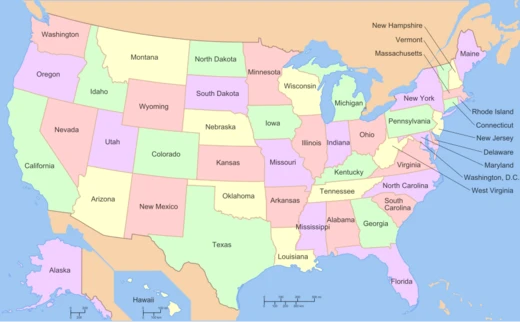
Mississippi is a state located in the Southeastern and Deep South parts of the United States. Its neighbors are Tennessee to the north, Alabama to the east, the Gulf of Mexico to the south, Louisiana to the southwest, and Arkansas to the northwest. The Mississippi River, or its historic path, forms most of the state’s western border. In terms of size, Mississippi ranks 32nd among the 50 states, and it is the 35th most populous. It often ranks among the lowest in per-capita income in the country, though this distinction can vary by year and data source. The capital and largest city is Jackson, and its metropolitan area, Greater Jackson, had about 619,968 people in 2020. Other significant cities include Gulfport, Southaven, Hattiesburg, Biloxi, Olive Branch, Tupelo, Meridian, and Greenville.
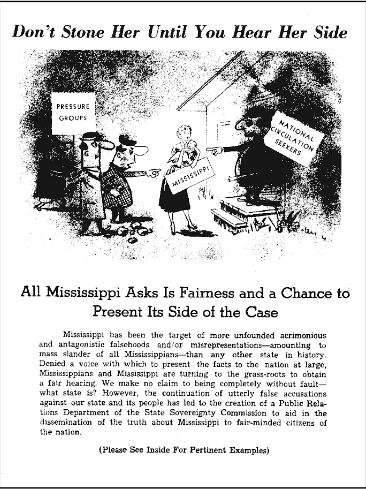
Mississippi joined the Union as the 20th state on December 10, 1817. By 1860, it was the nation’s top producer of cotton, and enslaved people made up 55% of its population. The state seceded from the Union on January 9, 1861, becoming one of the seven original Confederate states—those that held the largest number of enslaved people. After the Civil War, it was readmitted to the Union on February 23, 1870. From Reconstruction through the 1960s, socially conservative and segregationist Southern Democrats, committed to upholding white supremacy, dominated the state.
Mississippi ranks very high among U.S. states in religiosity and very low in measures of health, education, development, and income. Its main industries include agriculture and forestry. The state produces more than half of the nation’s farm-raised catfish and is a leading producer of sweet potatoes, cotton, and pulpwood. Other important sectors are advanced manufacturing, utilities, transportation, and health services. Almost all of Mississippi lies within the east Gulf Coastal Plain, featuring lowland plains and low hills. The northwestern part of the state is the Mississippi Delta. The highest point is Woodall Mountain, at 807 feet above sea level near the Cumberland Plateau; the lowest is the Gulf of Mexico. The climate is humid subtropical.
The state’s name comes from the Mississippi River, which flows along its western boundary. European-American settlers took the name from the Ojibwe word *misi-ziibi*, meaning “great river.”
Around 9500 BC, Paleo-Indians arrived in what is now the American South.
Quick Facts
- Flag Link
- Flag of Mississippi
- Flag Alt
- Flag
- Seal Link
- Seal of Mississippi
- Nickname
- The Magnolia State (official) · The Hospitality State · The Sipp · "Birthplace of America's Music"
- Motto
- la · Virtute et armis / (en · "By valor and arms")
- Anthem
- "One Mississippi"
- Seat
- Jackson
- Largestcity
- capital
- Largestmetro
- Greater Jackson
- Largestcounty
- Hinds
- Area Rank
- 32nd
- Area Total Sq Mi
- 48,430
Facts from the source article.
Lore & Background
Mississippi's western boundary is largely defined by the Mississippi River, from which the state derives its name via the Ojibwe word misi-ziibi (great river). The first major European expedition into the territory was that of Spanish explorer Hernando de Soto in 1540. French colonists established the first European settlement at Fort Maurepas in April 1699, near present-day Ocean Springs. The French founded Natchez in 1716, which became the dominant town and trading post. After the French and Indian War, Great Britain took control, and later the area became part of the United States following the American Revolution. The Mississippi Territory was organized on April 7, 1798.
Reader's Guide
Mississippi's history is marked by its role as the nation's top cotton-producing state by 1860, with slaves accounting for 55% of the state population. It was a central state in the Confederacy during the Civil War. From Reconstruction to the 1960s, Mississippi was dominated by socially conservative and segregationist Southern Democrats dedicated to upholding white supremacy. The state's economy relies heavily on agriculture and forestry, producing more than half of the country's farm-raised catfish and being a top producer of sweet potatoes, cotton, and pulpwood. Mississippi is almost entirely within the east Gulf Coastal Plain, with a humid subtropical climate. The Mississippi Band of Choctaw Indians, descendants of those who remained after the Treaty of Dancing Rabbit Creek (1830), is a federally recognized tribe living in several counties.
Did You Know?
- Mississippi is the 32nd largest by area and 35th-most populous of the 50 U.S. states.
- Greater Jackson is the state's most populous metropolitan area, with a population of 619,968 in 2020.
- The state's highest point is Woodall Mountain at 807 feet (246 m) above sea level.
Party Realignment and the Long Arc of Mississippi's Voting Identity
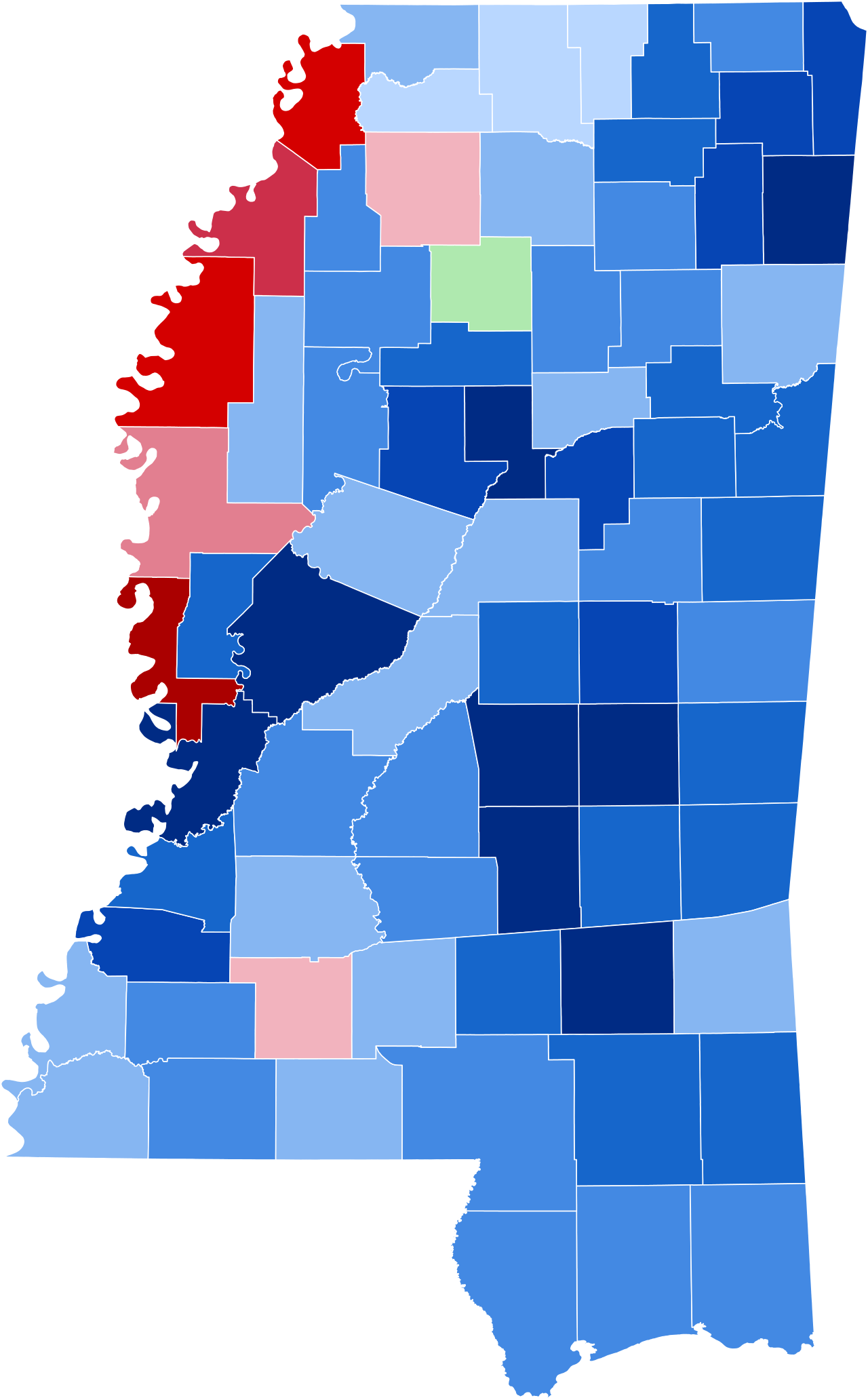
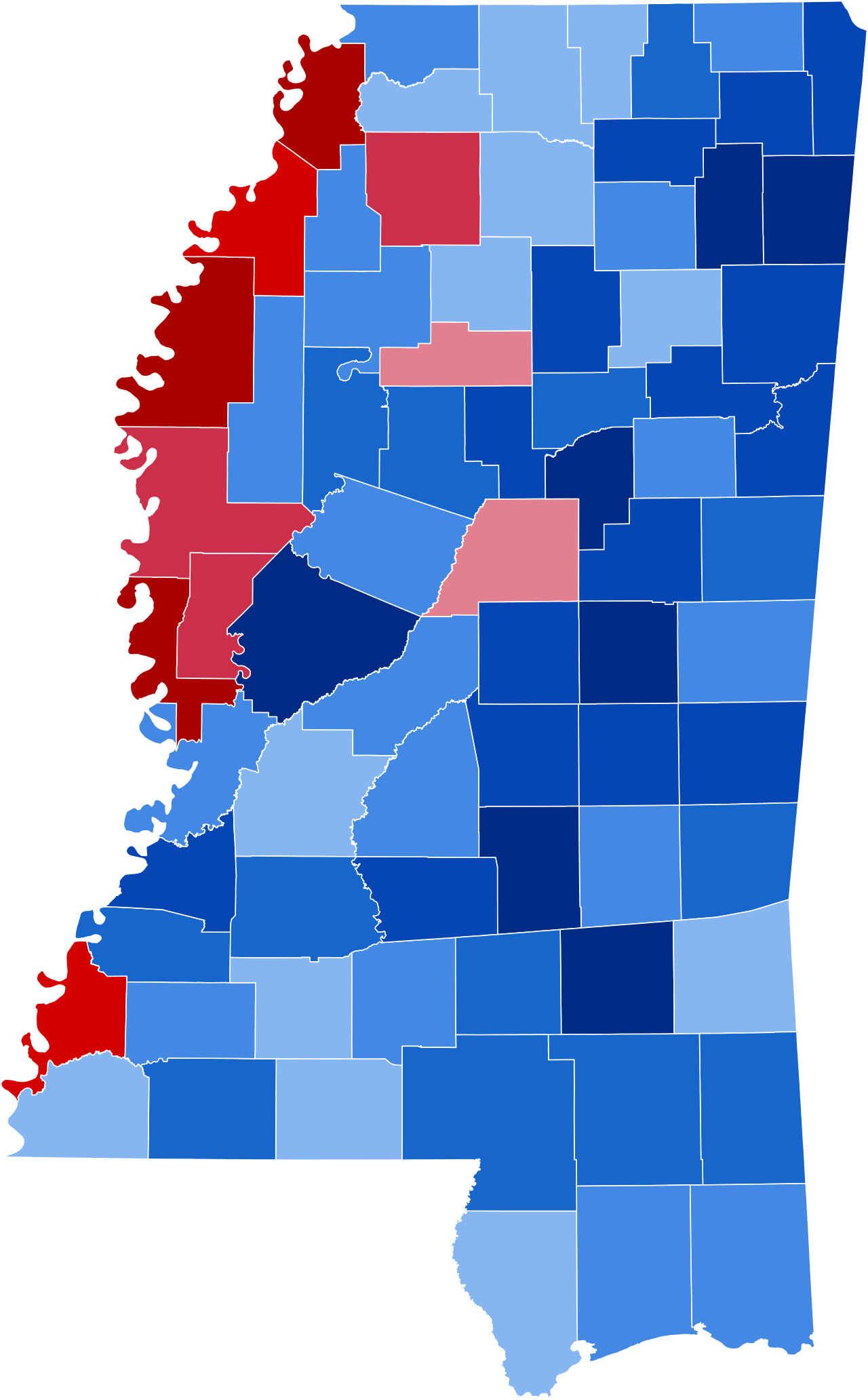
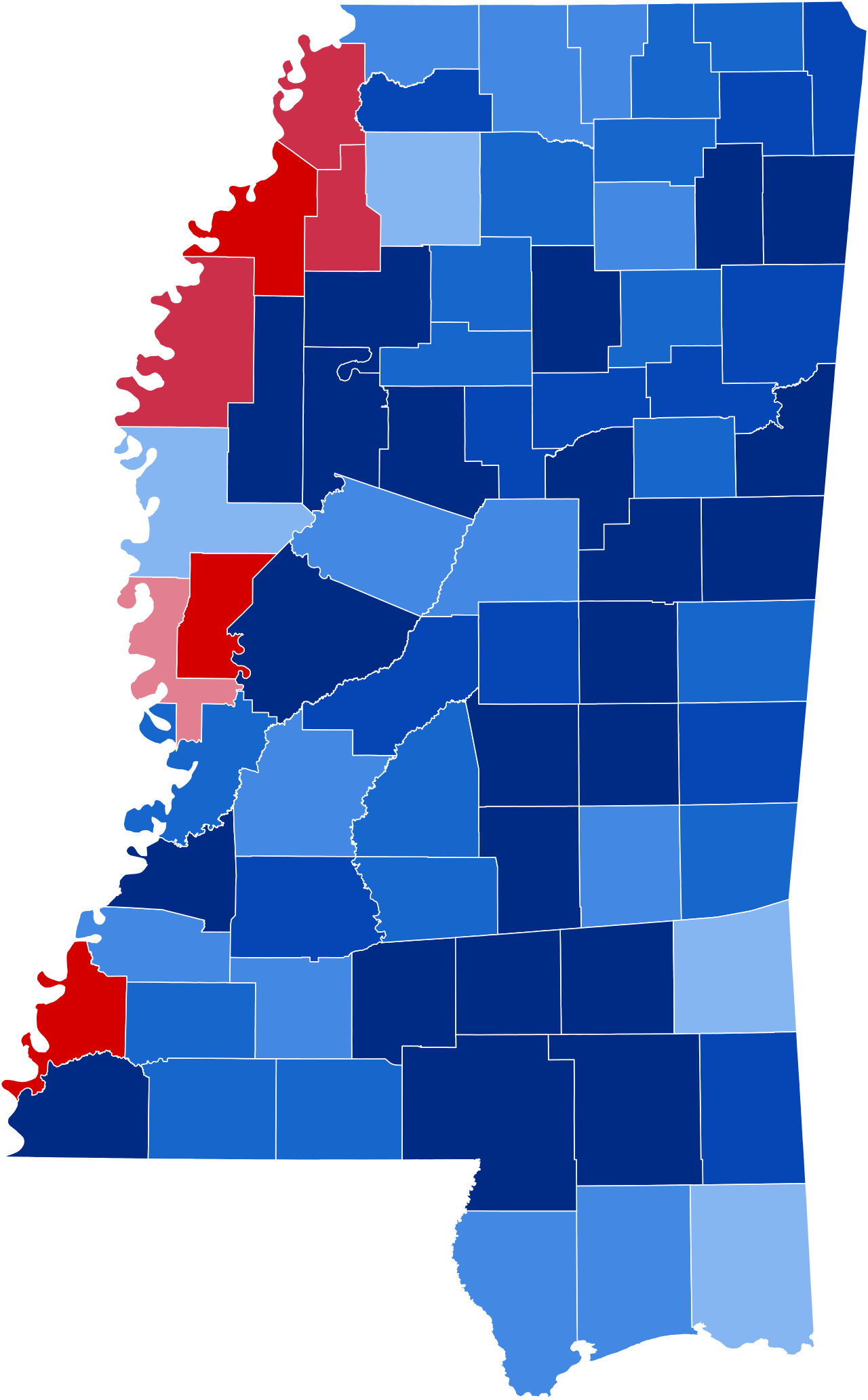
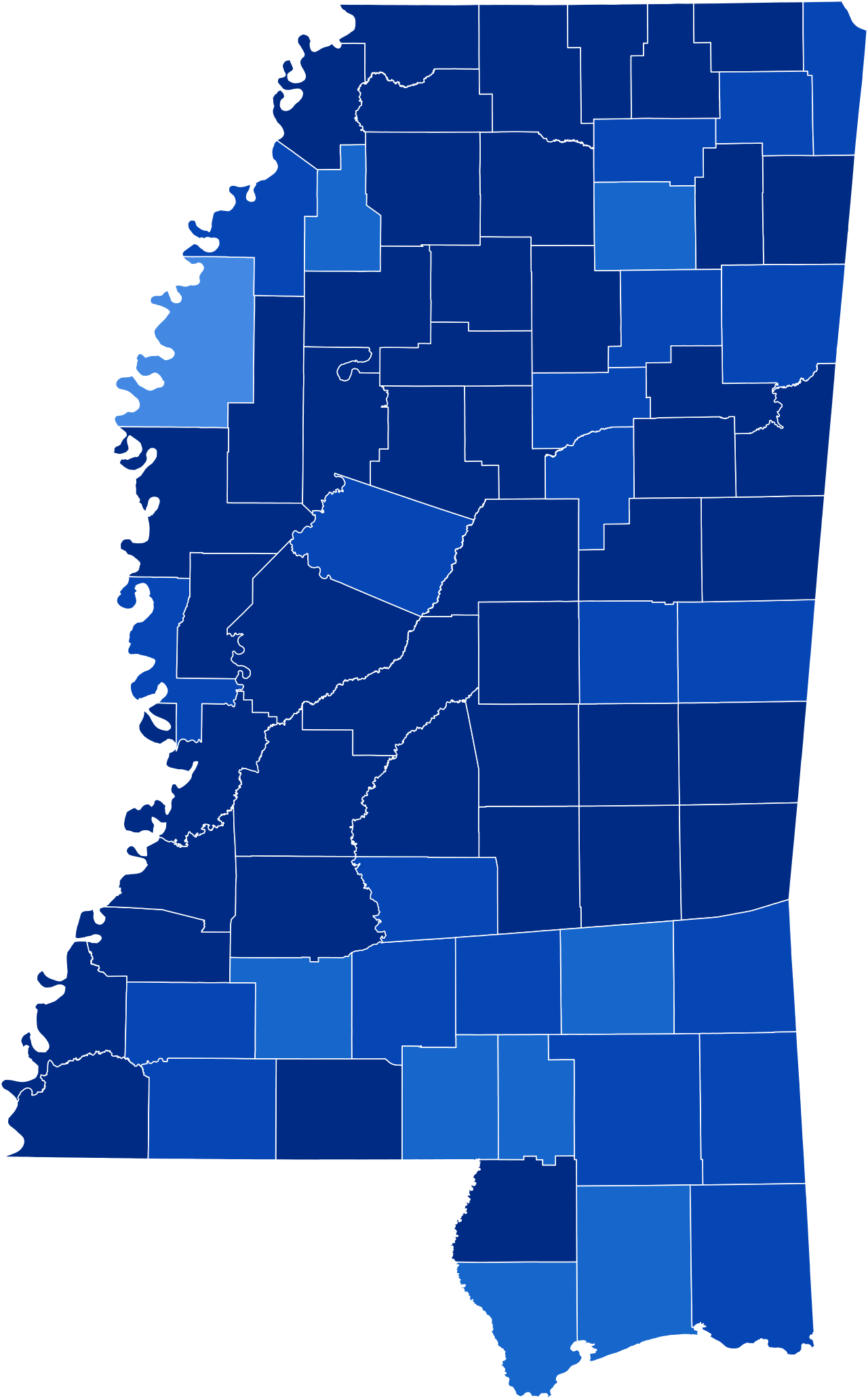
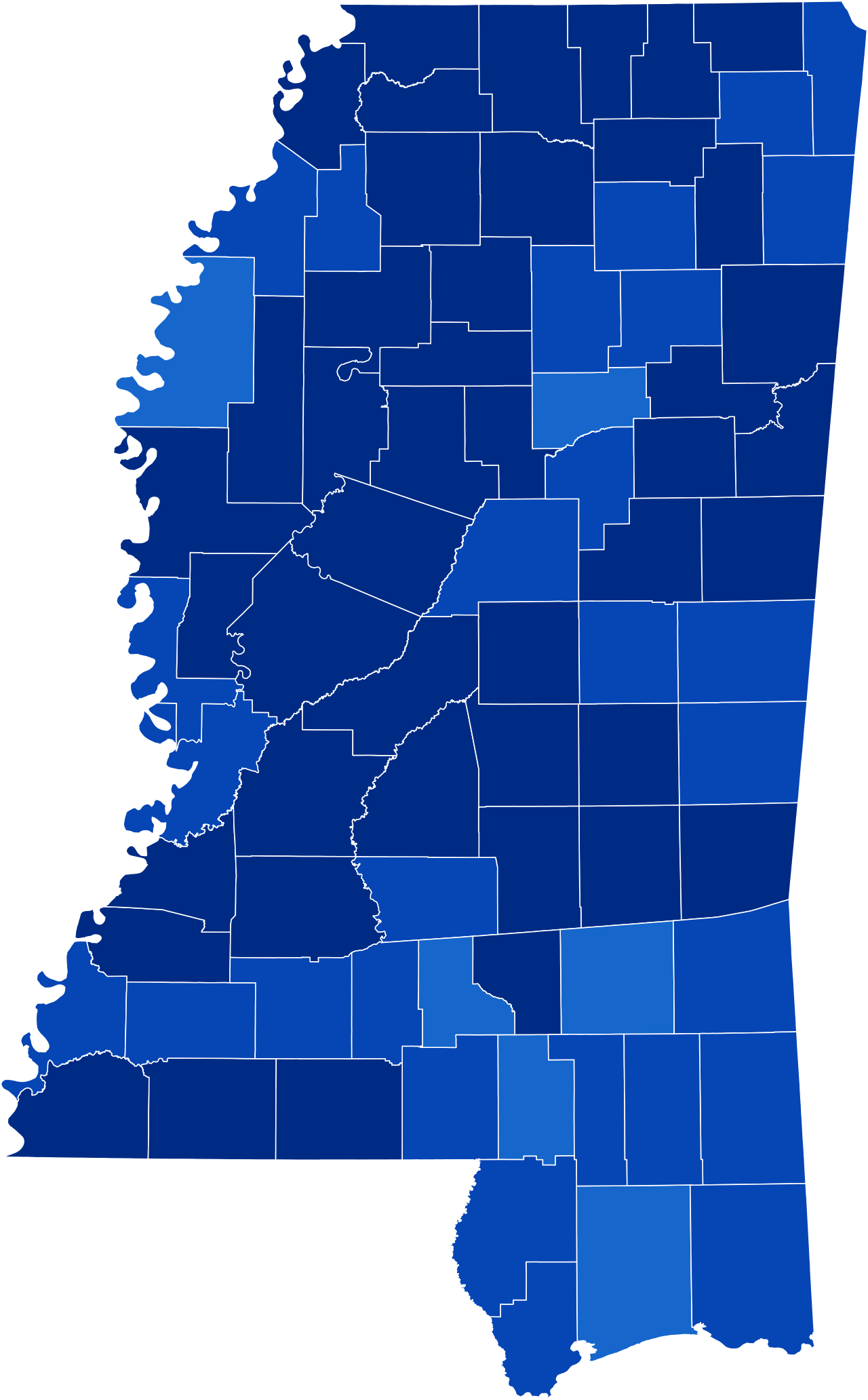
Mississippi's presidential voting history tells a story of deep political transformation. From the 1820s, when the Democratic Party was first founded, through the mid-twentieth century, the state was a near-unanimous Democratic stronghold. This loyalty persisted for roughly 140 years, anchored in the state's identity as a socially conservative Deep South state. The Civil Rights Movement of the 1960s served as the great rupture, breaking the old alignment that had held for generations. By the 1980s, Mississippi had completed its migration to the Republican column, joining the broader southern realignment that reshaped American politics. What had been a one-party state for generations became a reliable Republican bastion within a single generation, a shift that mirrors the broader transformation of the American South but was particularly dramatic in a state that had voted almost exclusively for one party for so long a continuous period.
The Alabama Synchrony: Two States, One Vote
One of the most striking patterns in Mississippi's electoral record is its near-perfect alignment with neighboring Alabama. Across more than two hundred years of presidential elections, the two states have chosen the same candidate in every single contest with one exception. That lone divergence came in 1840, when Mississippi backed William Henry Harrison while Alabama cast its votes for Martin Van Buren. The 1868 election, in which only Alabama participated because Mississippi had not yet been readmitted to the Union, does not count as a split. This extraordinary consistency spans every major realignment in American history, from the Democratic dominance of the antebellum and postbellum eras through the Republican era that followed the 1960s. Mississippi and Alabama have moved in lockstep across the entire arc of the nation's party system, making their combined electoral record a remarkable testament to shared political identity in the Deep South.
The Civil War Wound: Two Elections Never Held
Mississippi's presidential voting record is marked by two notable absences, both rooted in the trauma of the Civil War and its aftermath. In 1864, the state did not vote because it had seceded from the Union to join the Confederacy following the 1860 election, in which the victory of an ardent opponent of slavery triggered the departure of eleven states and the outbreak of war. The 1860 contest itself was a complex realigning election, the culmination of the breakdown of the previous two-party system, with four parties competing for influence across different regions. Four years later, in 1868, Mississippi was still undergoing Reconstruction and had not yet been readmitted to the Union, so it once again sat out the national contest. These two missing elections bracket the most violent and transformative period in the state's political life, and their absence from the record underscores how profoundly the war interrupted the normal rhythms of American democracy in the Deep South.
Early Votes and the Corrupt Bargain of 1824
Mississippi's presidential voting record stretches back to its admission to statehood in 1817, and the early elections reveal a young state finding its political footing. In 1820, incumbent President James Monroe ran effectively unopposed, sweeping all electoral votes including Mississippi's two, with only a single dissenting vote in New Hampshire; the popular vote in that year was primarily directed at selecting the vice president. The 1824 election proved far more contentious. Following the collapse of the Democratic-Republican Party, four candidates each claimed the party's banner and competed in different regions. No candidate secured an electoral majority, sending the decision to the House of Representatives under the Twelfth Amendment. Andrew Jackson won a plurality of electoral votes but did not become president, a result that generated enormous bitterness among his supporters, who denounced the outcome as a corrupt bargain. Mississippi, with its small delegation, was part of this formative era when the modern two-party system was still taking shape.
Gallery
Frequently Asked Questions
Who is Mississippi?
Mississippi is a U.S. state nestled in the Southeastern and Deep South regions, flanked by Tennessee, Alabama, Louisiana, Arkansas, and the Gulf of Mexico. It entered the Union as the 20th state on December 10, 1817.
Where is Mississippi located?
Mississippi sits in the southeastern portion of the country, with the Mississippi River or its historic channel tracing most of its western boundary. Its neighbors are Tennessee to the north, Alabama to the east, Louisiana to the southwest, and Arkansas to the northwest.
When did Mississippi join the Union, and what happened during the Civil War?
Mississippi was admitted as the 20th state on December 10, 1817. It seceded from the Union on January 9, 1861, and was formally readmitted on February 23, 1870.
What is Mississippi's capital and largest city?
Jackson holds both titles, serving simultaneously as the state capital and the most populous city in Mississippi.
What is Mississippi's highest point?
Woodall Mountain, at 807 feet (246 m) above sea level, is the highest elevation in the state.
More in U.S. States 1-24
Spotted an error? Know more?
Reader corrections go straight into our review queue. Suggest an edit · How this site is sourced