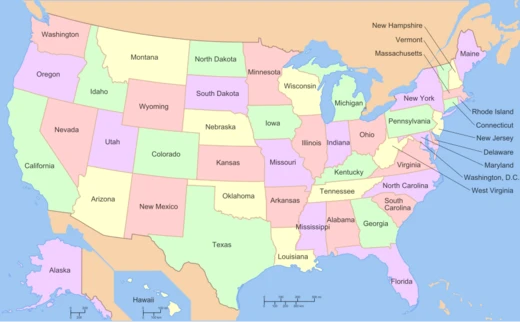
Delaware
First state to ratify the U.S. Constitution.

TylerKutschbach · CC BY-SA 4.0
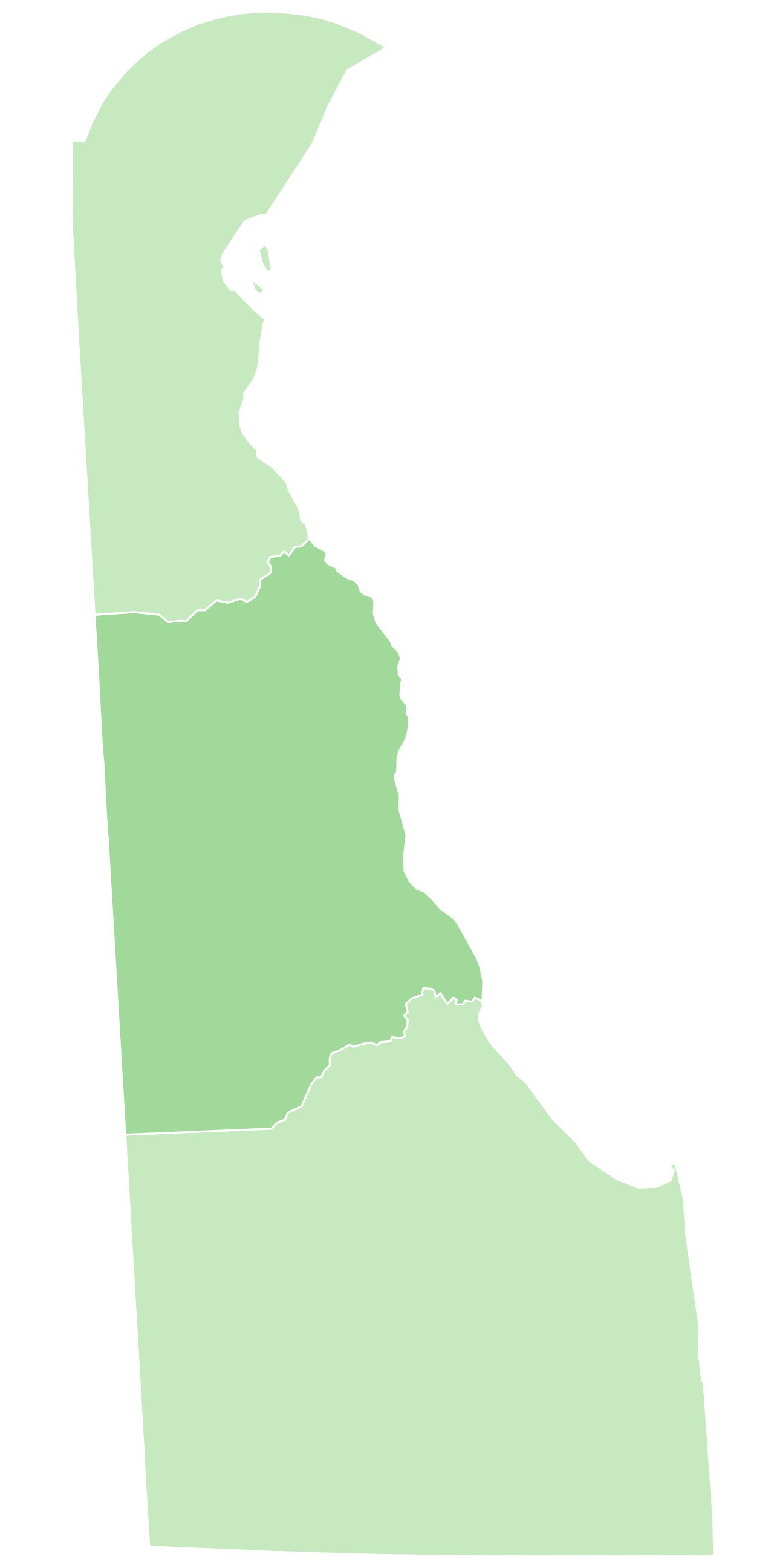
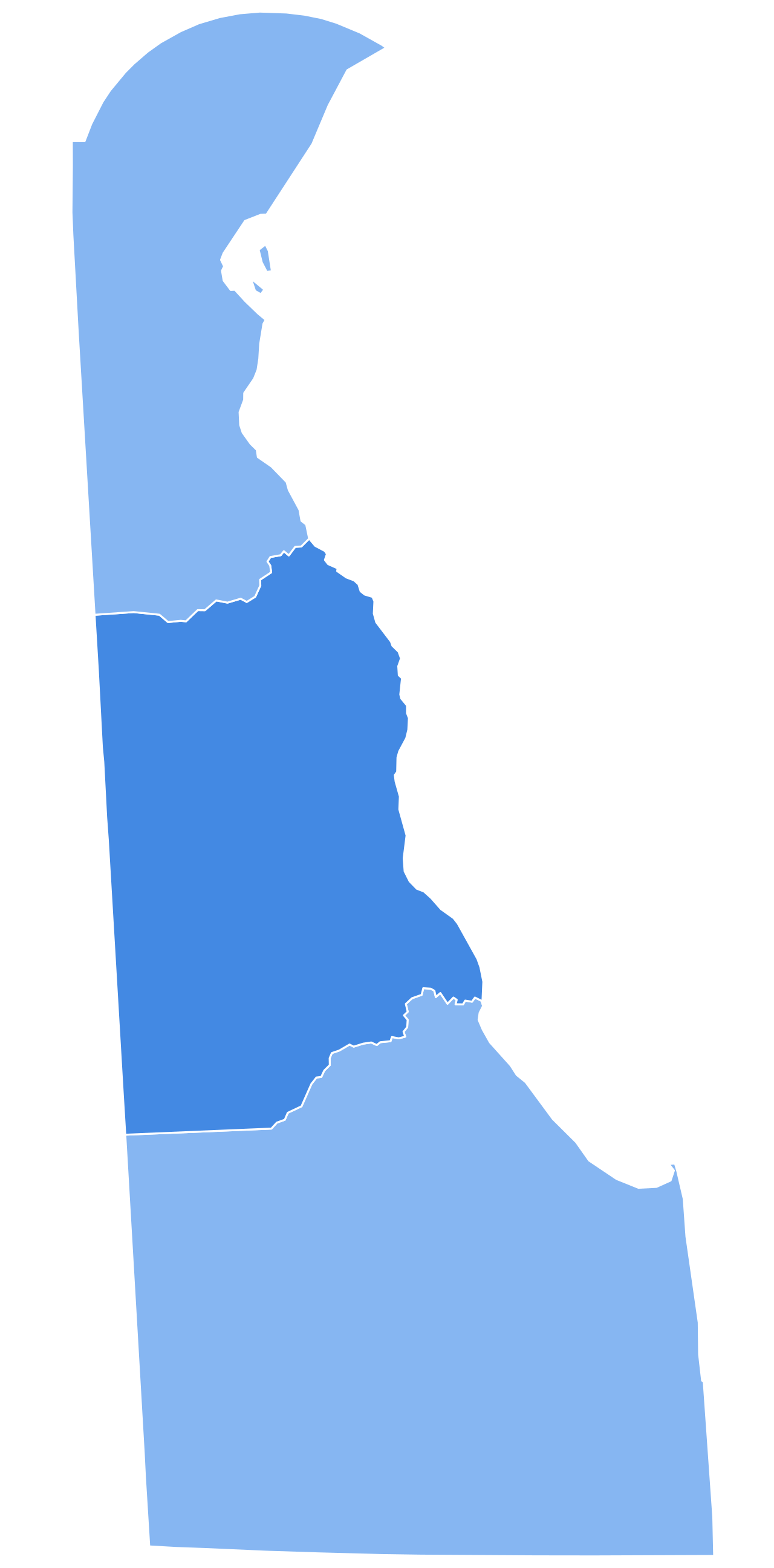
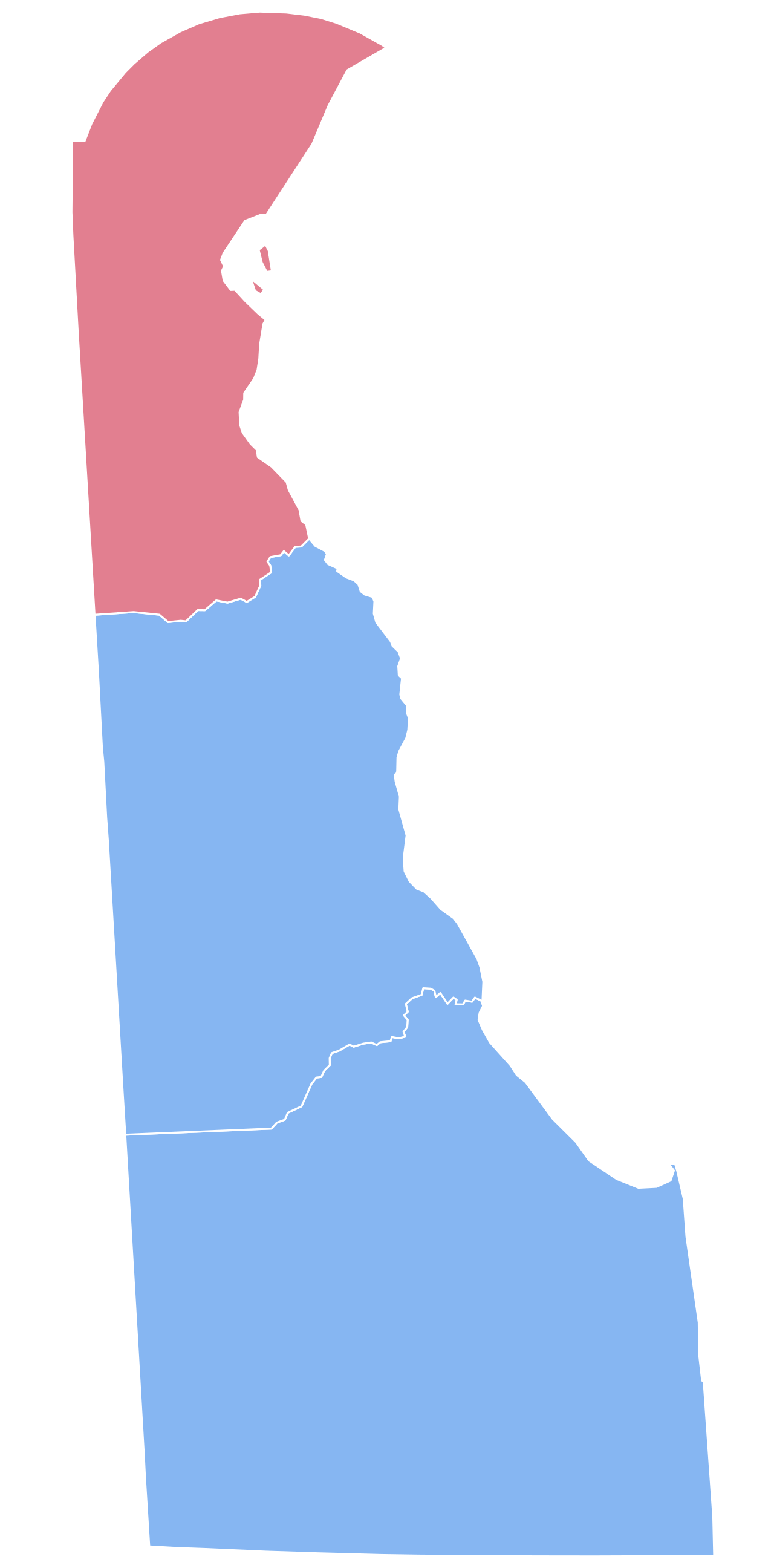
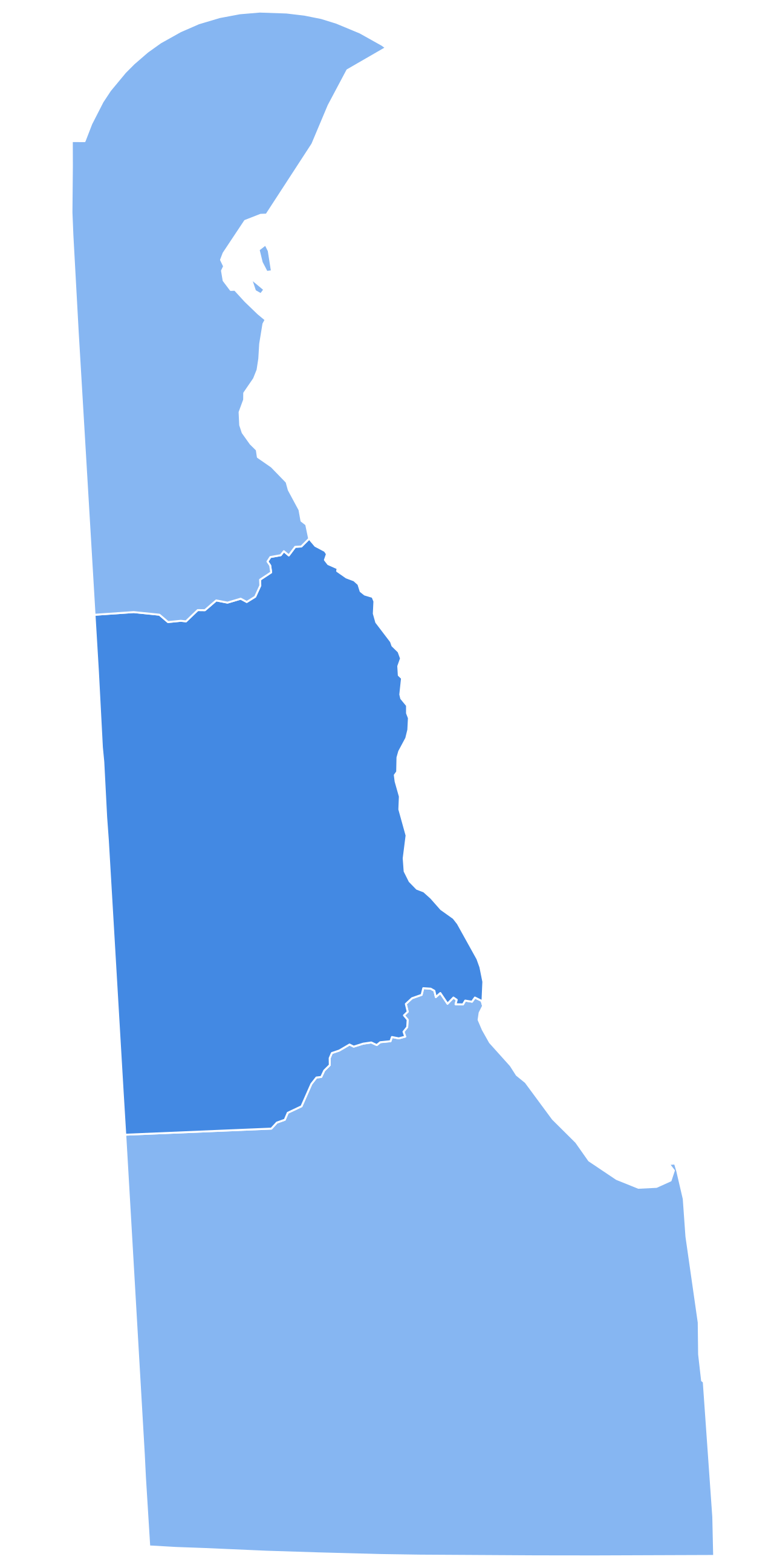
Delaware is a state located in the Mid-Atlantic and South Atlantic regions of the United States. It shares borders with Maryland to the south and west, Pennsylvania to the north, New Jersey to the east, and the Atlantic Ocean to the east. Its name comes from the nearby Delaware Bay, which was itself named for Thomas West, the 3rd Baron De La Warr, an English nobleman who served as a colonial governor of the Colony of Virginia. The state sits on the northeastern part of the Delmarva Peninsula, along with a few islands and areas within the Delaware River. It ranks as the second-smallest state by area and the sixth-least populous, yet it is the sixth-most densely populated. Wilmington is the largest city, while Dover serves as the capital and is the second-largest city. Delaware has only three counties—the fewest of any U.S. state—arranged from north to south: New Castle, Kent, and Sussex. The southern two counties, Kent and Sussex, have traditionally relied on agriculture, whereas New Castle is more urban and forms part of the Philadelphia metropolitan area. The U.S. Census Bureau classifies Delaware as part of the Southern United States, but its geography, culture, and history blend Mid-Atlantic, Northeastern, and Southern influences.
Before European exploration in the 1600s, the area was home to Native American tribes, including the Lenape in the north and the Nanticoke in the south. The first European settlement was a Dutch trading post called Zwaanendael, established near present-day Lewes in 1631. Delaware was one of the original Thirteen Colonies that fought in the American Revolution against Great Britain. On December 7, 1787, it became the first state to ratify the U.S. Constitution, earning the nickname "The First State." Since the early 1900s, Delaware has developed into a major onshore corporate haven, with corporate laws that attract businesses. More than half of all companies listed on the New York Stock Exchange and over three-fifths of the Fortune 500 are legally incorporated there. In 2021, over 90% of all U.S.-based companies that went public chose to incorporate in Delaware.
Quick Facts
- Flag Link
- Flag of Delaware
- Motto
- "Liberty and Independence"
- Anthem
- "Our Delaware"
- Population Demonym
- Delawarean
- Officiallang
- None
- Nicknames
- The First State; The Small Wonder; Blue Hen State; The Diamond State
- Former
- Province of Pennsylvania (Lower Counties on the Delaware)
- Seat
- Dover
- Largestcity
- Wilmington
- Largestcounty
- New Castle
- Largestmetro
- Philadelphia
- Governor
- Matt Meyer (D)
Facts from the source article.
Lore & Background
During the American Revolution, Delaware initially showed little enthusiasm for a break with Britain. Patriot leaders Thomas McKean and Caesar Rodney convinced the Colonial Assembly to declare separation from British rule on June 15, 1776. Caesar Rodney's dramatic overnight ride allowed Delaware to cast its vote for independence. Delaware provided the 'Delaware Blues' regiment in the Continental Army. The only real engagement on Delaware soil was the Battle of Cooch's Bridge on September 3, 1777. Following the Revolution, Delaware statesmen were among the leading proponents of a strong central United States with equal representation for each state.
Reader's Guide
Delaware's significance lies in its role as the first state to ratify the U.S. Constitution on December 7, 1787, earning it the enduring nickname 'The First State'. This act cemented its place in the founding of the United States. The state's colonial history reflects the competing interests of Dutch, Swedish, and English powers, and its eventual incorporation into William Penn's holdings shaped its early governance. Delaware's unique status as a corporate haven since the turn of the 20th century has had a profound economic impact: over half of all New York Stock Exchange-listed corporations and over three-fifths of the Fortune 500 are legally incorporated in Delaware, and over 90% of U.S. companies that went public in 2021 incorporated there. This has made Delaware a central player in American corporate law and finance. The state's hybrid geography, culture, and history—blending Mid-Atlantic, Northeastern, and Southern characteristics—reflect its position as a border region. Its three-county structure, the fewest of any state, and its agrarian southern counties versus urbanized New Castle County illustrate internal diversity.
Did You Know?
- Delaware is the second-smallest and sixth-least populous state, but also the sixth-most densely populated.
- The state's name derives from the Delaware Bay, named after Thomas West, 3rd Baron De La Warr, a colonial governor of the Colony of Virginia.
A State of Contradictions: Geography and Identity
Delaware occupies the northeastern tip of the Delmarva Peninsula, a narrow strip of land bordered by Maryland to the south and west, Pennsylvania to the north, New Jersey to the northeast, and the open Atlantic to the east. Despite its compact footprint, it ranks as the second-smallest state by area and the sixth-least populous, yet it punches well above its weight in density, placing sixth among all fifty states. The state is divided into just three counties—New Castle, Kent, and Sussex—the fewest of any U.S. state. New Castle, home to Wilmington (the most populous city), is urbanized and functions as part of the Philadelphia metro area, while Kent and Sussex have long relied on agrarian economies. Dover, the capital, is the second-largest city. The U.S. Census Bureau classifies Delaware as part of the South, but the state's culture, geography, and history blend Mid-Atlantic, Northeastern, and Southern influences into something genuinely hybrid.
From Trading Posts to The First State
The colonial story of Delaware is one of rapid succession and contested ownership. In 1631, Dutch traders established a post called Zwaanendael near present-day Lewes, but within a year every settler was killed in a dispute with local Native Americans. Seven years later, Peter Minuit founded New Sweden at Fort Christina in what is now Wilmington, a colony that endured for seventeen years before the Dutch, under Peter Stuyvesant, seized it in 1655. The English then overran the Dutch in 1664, and by 1682 William Penn had leased the Lower Counties on the Delaware from the Duke of York, seeking sea access for Pennsylvania. Penn briefly unified both territories under one General Assembly, but by 1704 the two legislatures met separately. Delaware's most celebrated moment came on December 7, 1787, when it became the first of the Thirteen Colonies to ratify the U.S. Constitution, earning the enduring nickname The First State.
The Corporate Capital of America
Since the early twentieth century, Delaware has evolved into what is perhaps the most consequential corporate jurisdiction in the United States. Its corporate laws are widely regarded as attractive to businesses, and the numbers tell a staggering story: more than half of the companies trading on the New York Stock Exchange and well over three-fifths of the Fortune 500 carry a Delaware incorporation. The trend has only intensified in recent years—over ninety percent of U.S.-based companies that went public in 2021 chose Delaware as their state of incorporation. For a state that is the second-smallest by area and sixth-least populous, this corporate dominance represents a remarkable economic identity. Delaware's influence on American business law and corporate governance far exceeds what its population or geography would suggest, making it a quiet but indispensable player in the national economic landscape.
The People Before the Colony
Long before any European ship reached the Delaware coastline, the land was home to several distinct Native American communities. The Unami Lenape, an Eastern Algonquian people, settled along the coast and the Delaware River, maintaining a society built on hunting and agriculture. To the south, the Nanticoke occupied much of the Delmarva Peninsula, while two Iroquoian groups—the Kuskarawock and Tockwogh—held territory north of the Nanticoke, possibly in the western part of the state before migrating across the Chesapeake. The Lenape became middlemen in a fur trade with the Minqua, their ancient rivals. That trade network collapsed in the 1670s when the Iroquois of the Five Nations destroyed the Minqua, and the Lenape lost their river lands. By the mid-eighteenth century, the remnants who still identified as Lenape had moved over the Allegheny Mountains, leaving the region they had inhabited for generations.
Gallery
Frequently Asked Questions
Who is Delaware?
Delaware is a compact Mid-Atlantic state perched on the northeastern Delmarva Peninsula, touching Maryland, Pennsylvania, New Jersey, and the Atlantic Ocean. It holds the distinction of being the second-smallest state in the nation, with Dover serving as its capital and Wilmington as its biggest city.
What are Delaware's powers or role?
Delaware earned the nickname 'The First State' by being the very first colony to ratify the U.S. Constitution on December 7, 1787. It also wields outsized influence in American business law, since a huge share of U.S. corporations choose to incorporate under its statutes.
Why is Delaware important?
Beyond the symbolic 'first ratification' moment, Delaware's corporate legal framework shapes how a vast number of American companies are organized and litigated. Its strategic position on the Delmarva Peninsula also makes it a key geographic link between the Mid-Atlantic and South Atlantic regions.
Where does Delaware get its name?
The state is named after Delaware Bay, which itself was christened for Thomas West, the 3rd Baron De La Warr, an English nobleman who once governed the Colony of Virginia. The name therefore traces back to early colonial-era honors rather than to any Native American term.
More in U.S. States 1-24
Spotted an error? Know more?
Reader corrections go straight into our review queue. Suggest an edit · How this site is sourced