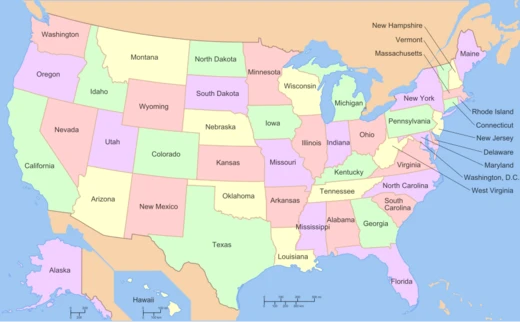
Minnesota
Land of 10,000 Lakes, 32nd state, Twin Cities hub.

Myotus · CC BY-SA 4.0
Minnesota is a state in the Upper Midwestern region of the United States, known as the 'Land of 10,000 Lakes' and home to about 5.8 million residents. It became the 32nd state in 1858 and is notable for its diverse economy, strong tradition of labor and social activism, and its status as a reliable base for the Democratic Party in presidential elections since 1976.
Quick Facts
- Flag Link
- Flag of Minnesota
- Seal Link
- Seal of Minnesota
- Nicknames
- North Star State; Gopher State; Land of 10,000 Lakes; Land of Sky Blue Waters
- Motto
- fr · L'Étoile du Nord (French: The Star of the North)
- Anthem
- "Hail! Minnesota"
- Officiallang
- none
- Languages
- English 88.9% / Spanish / Somali / Hmong
- Population Demonym
- Minnesotan
- Largestcity
- Minneapolis
- Largestcounty
- Hennepin
- Seat
- Saint Paul
- Largestmetro
- Minneapolis–Saint Paul
Facts from the source article.
Lore & Background
Minnesota derives its name from the Dakota language, either from 'mní sóta' (clear blue water) or 'Mníssota' (cloudy water). The region was inhabited by various Native Americans since the Woodland period of the 11th century BCE, with the Hopewell tradition emerging between roughly 200 and 500 CE, and the Upper Mississippian culture around 1000 CE. French explorers and missionaries were the earliest Europeans, encountering Dakota, Ojibwe, and Anishinaabe tribes. Much of what is now Minnesota was part of French Louisiana, purchased by the United States in 1803. After several territorial reorganizations, the Minnesota Territory was admitted to the Union in 1858.
Reader's Guide
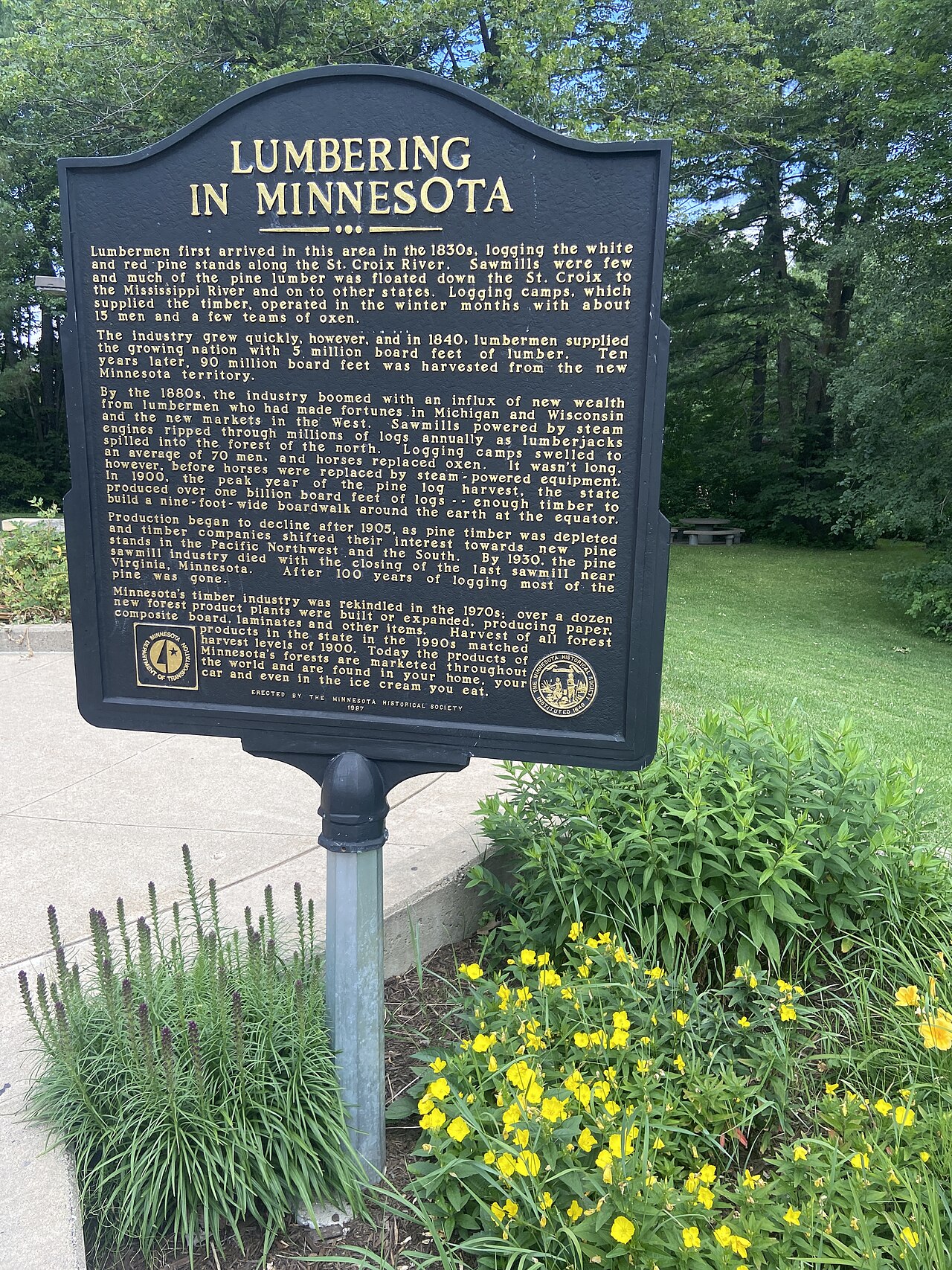
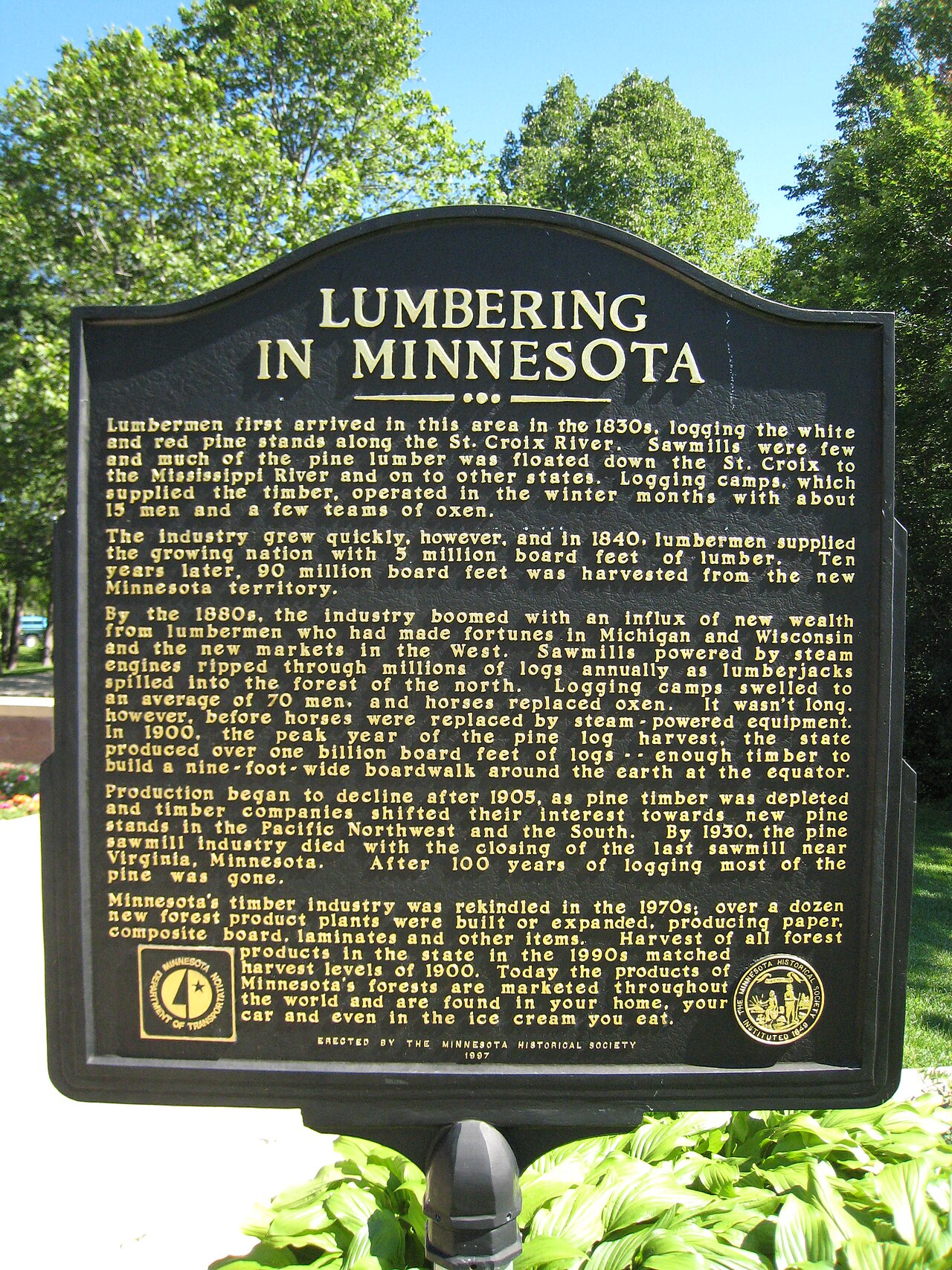
Minnesota's significance lies in its role as a frontier state that attracted settlers and homesteaders, with growth initially based on timber, agriculture, and railroad construction. European immigrants, particularly from Scandinavia, Germany, and Central Europe, arrived in significant numbers into the early 20th century, many linked to the failed revolutions of 1848, influencing the state's development as a center of labor and social activism. Minnesota was at the forefront of labor rights, women's suffrage, and political reform. Since the late 20th century, its economy has diversified to services, finance, and health care, and it ranks highly in life expectancy, healthcare standards, education, and income per capita. The state is home to 11 federally recognized Native American reservations and has become more multicultural in recent decades, with the nation's largest population of Somali Americans and the second-largest Hmong community.
Did You Know?
- Minnesota's official motto, L'Étoile du Nord, is one of several state mottos in French; Vermont's motto also appears in French on its coat of arms.
- The state has 14,420 bodies of fresh water covering at least ten acres each.
- More than 60% of Minnesotans live in the Minneapolis–Saint Paul metropolitan area.
- Among U.S. states, Minnesota has voted for every Democratic presidential nominee since 1976, longer than any other state.
A Landscape Defined by Water and Wood
Minnesota sits in the Upper Midwest, bordered by Manitoba and Ontario to the north and east, Wisconsin to the east, Iowa to the south, and the Dakotas to the west. Its northeast corner shares a water boundary with Michigan across Lake Superior. As the 12th-largest state in area, it carries the nickname "Land of 10,000 Lakes" — though the actual count runs to 14,420 bodies of fresh water each covering at least ten acres. Roughly a third of the state's terrain is forested, while the remainder is dominated by prairie and farmland. About 5.8 million people call it home, making it the 22nd-most populous state. More than 60% of residents — approximately 3.71 million — cluster in the Minneapolis–Saint Paul metropolitan area, the "Twin Cities," which serves as the state's political, economic, and cultural center and ranks as the 16th-largest metro in the nation. Smaller hubs like Duluth, Mankato, Moorhead, Rochester, and St. Cloud round out the urban landscape.
Dakota Roots and the Name That Endures
The word Minnesota traces back to the Dakota language, referring to the Minnesota River. Early settlers were shown the name by Dakota people who dropped milk into water and called it mní sóta — "clear blue water" — though another reading, Mníssota, means "cloudy water." Four spellings were debated before "Minnesota" was fixed in 1849. That Dakota linguistic fingerprint runs deep across the state's map: Minnehaha Falls means "curling water," Minnetonka means "big water," Minneota means "much water," and Minneapolis itself is a hybrid of Dakota mní ("water") and Greek -polis ("city"). The state seal bears Mni Sóta Makoce, "the land where the water reflects the skies." Indigenous presence stretches back to the Woodland period of the 11th century BCE, with the Hopewell tradition's Laurel complex and Trempealeau Hopewell emerging between 200 and 500 CE, followed by the Upper Mississippian culture around 1000 CE. Today, eleven federally recognized reservations — seven Ojibwe and four Dakota — remain within state borders.
A Reformist Political Tradition
Minnesota's political character was shaped in part by waves of European immigrants who arrived in the early 20th century, many from Scandinavia, Germany, and Central Europe. A significant number of these newcomers were connected to the failed revolutions of 1848, and that radical tradition helped position the state as a center of labor advocacy and social activism. During its rapid industrialization in the late 19th and early 20th centuries, Minnesota stood at the forefront of labor rights, women's suffrage, and broader political reform — a trajectory that set it apart from neighboring Midwestern states. That reformist streak persists: Minnesota has backed every Democratic presidential nominee since 1976, a longer unbroken streak than any other state in the union. Even the state motto, L'Étoile du Nord — "The Star of the North" — is unique as the only French-language state motto, adopted shortly after 1858 statehood to honor both the French explorers who first mapped the region and Minnesota's position as the northernmost state in the contiguous United States.
From Heritage to Multiculturalism
For generations, Minnesota's cultural identity was defined by its Scandinavian and German heritage, a legacy that made it one of the nation's least racially diverse states. Yet that picture has shifted markedly in recent decades. Domestic migration and immigration from Latin America, Asia, the Horn of Africa, and the Middle East have made the state increasingly multicultural. Minnesota now holds the largest Somali American population in the country and the second-largest Hmong community. Economically, the state has pivoted away from its timber, agriculture, and resource-extraction roots toward services, finance, and health care. The results show up in national rankings: Minnesota consistently scores at or above the national average in life expectancy, healthcare standards, education quality, and income per capita. The Twin Cities metro anchors this modern economy as the state's primary political, economic, and cultural engine, while smaller centers like Duluth, Rochester, and St. Cloud maintain their own regional identities.
Gallery

Frequently Asked Questions
Who is Minnesota?
Minnesota is the 32nd state admitted to the Union in 1858, sitting in the Upper Midwest and widely nicknamed the 'Land of 10,000 Lakes.' It carries the French motto L'Étoile du Nord ('The Star of the North') and is home to roughly 5.8 million residents.
What are Minnesota's powers/role?
Minnesota operates as a major Midwestern economic and cultural engine, anchored by the Minneapolis–Saint Paul Twin Cities metro, the 16th-largest in the country. It is also known for a deep tradition of labor organizing and social activism, alongside a diverse economy spanning manufacturing, agriculture, and technology.
Why is Minnesota important?
As the 12th-largest state by area and 22nd by population, Minnesota wields outsized influence in Midwestern politics, culture, and industry. Its lake country, agricultural output, and Twin Cities innovation ecosystem give it a profile well beyond what its raw numbers suggest.
What is Minnesota's origin story?
Minnesota achieved statehood on May 11, 1858, becoming the 32nd member of the United States. Its name traces back to a Dakota phrase meaning 'sky-blue water,' a nod to the thousands of lakes that define its landscape.
More in U.S. States 1-24
Spotted an error? Know more?
Reader corrections go straight into our review queue. Suggest an edit · How this site is sourced