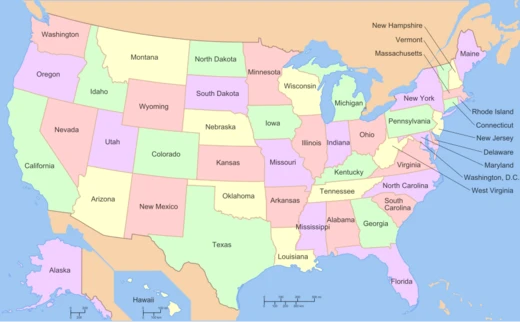
Massachusetts
A New England state with a rich colonial and revolutionary history.

TylerKutschbach · CC BY-SA 4.0
Massachusetts, officially the Commonwealth of Massachusetts, is a state in the New England region of the Northeastern United States. It is the most populous state in New England, with an estimated population of over 7.1 million, and is known for its early English colonization, role in the American Revolution, and modern leadership in biotechnology, higher education, and innovation.
Quick Facts
- Official Name
- Commonwealth of Massachusetts
- Flag Link
- Flag of Massachusetts
- Nicknames
- The Bay State (official) / The Pilgrim State; The Puritan State / The Old Colony State / The Baked Bean State / The Spirit of America
- Motto
- la · Ense petit placidam sub libertate quietem (Latin) / By the sword we seek peace, but peace only under liberty
- Anthem
- "All Hail to Massachusetts"
- Population Demonym
- Bay Stater (official) / Masshole (colloquial) · Massachusettsan (recommended by the U.S. GPO) · Massachusite (traditional)
- Seat
- Boston
- Largestcity
- capital
- Largestcounty
- Middlesex
- Largestmetro
- Greater Boston
- Governor
- Maura Healey (D)
- Lieutenant Governor
- Kim Driscoll (D)
Facts from the source article.
Lore & Background
Massachusetts was a site of early English colonization. The Plymouth Colony was founded in 1620 by the Pilgrims of the Mayflower, and in 1630 the Massachusetts Bay Colony established settlements in Boston and Salem. In 1692, Salem experienced the Salem witch trials, one of America's most infamous cases of mass hysteria. The American Revolution originated in Massachusetts, with Boston becoming known as the 'Cradle of Liberty' for its political agitation. Shays' Rebellion in 1786 influenced the United States Constitutional Convention.
Reader's Guide
Massachusetts transformed from an agricultural and fishing economy into a manufacturing hub during the Industrial Revolution. Before the American Civil War, it was a center for abolitionist, temperance, and transcendentalist movements. In the 20th century, its economy shifted from manufacturing to services, and in the 21st century it became a global leader in biotechnology, artificial intelligence, engineering, higher education, finance, and maritime trade. The state is the most educated in the U.S., ranks first in innovation, and has the highest health insurance coverage rate. However, it faces high income inequality, cost of living, and homelessness rates, driving domestic out-migration.
Did You Know?
- Massachusetts is the only U.S. state with a right to shelter law.
- It was the first U.S. state to legally recognize same-sex marriage.
- Harvard University in Cambridge has the largest financial endowment of any university in the world.
- The name 'Massachusetts' likely derives from a Wôpanâak word meaning 'near the great hill' or 'at the range of hills.'
From Statehouse Ballots to the People's Vote
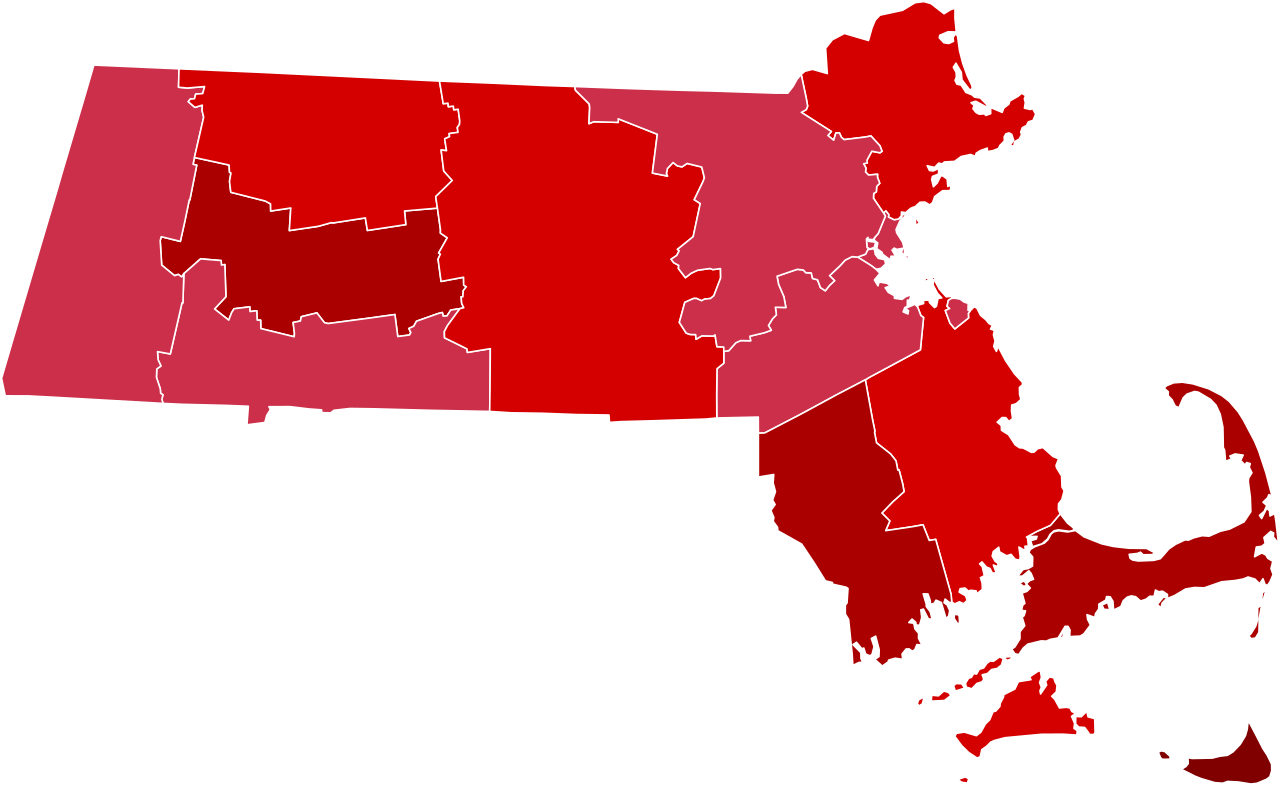
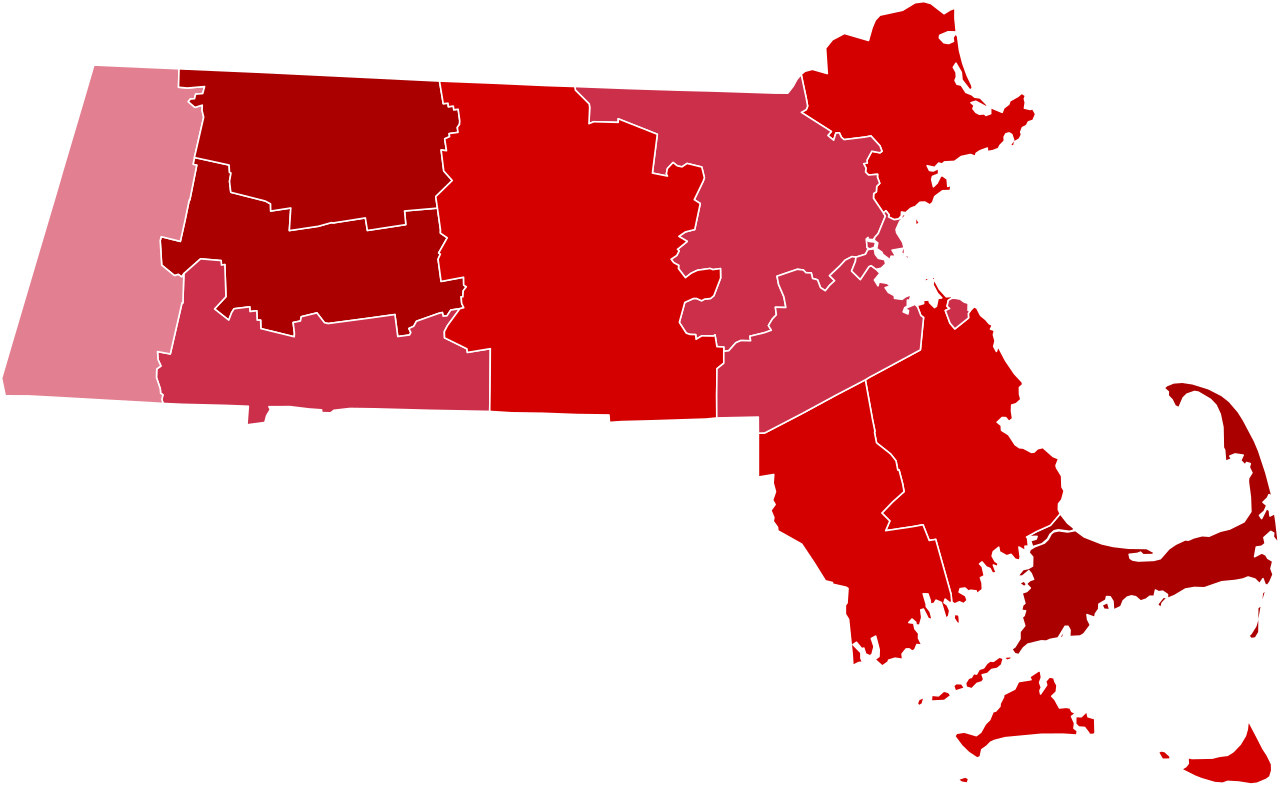
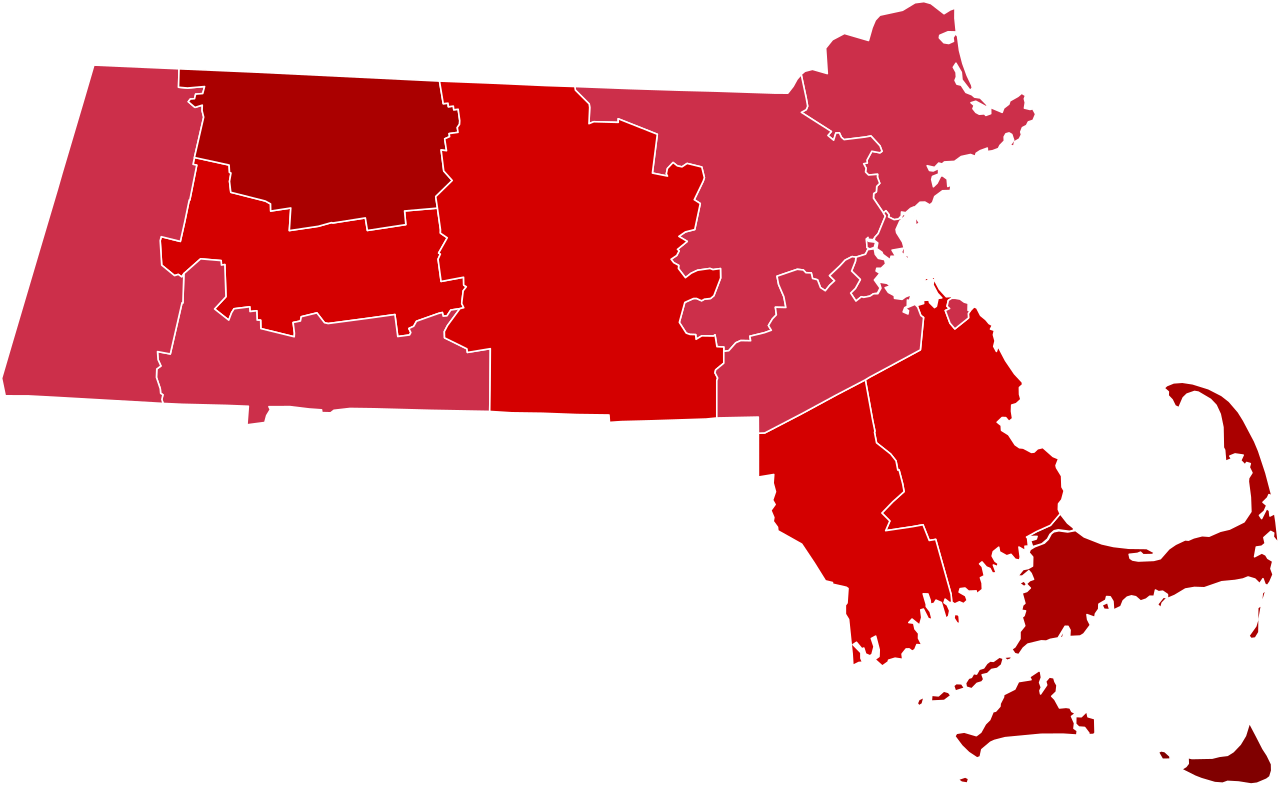
Before the Seventeenth Amendment took effect in 1913, Massachusetts senators were never chosen by voters at all. Instead, the state's General Court — the legislature — selected them in closed-door proceedings. The amendment fundamentally reshaped that dynamic, placing the choice squarely in the hands of the public for six-year terms. Elections now fall on the first Tuesday after November 1, and terms kick off on January 3, roughly two months after ballots are cast. That January 3 start date is itself a relatively modern convention; prior to 1935, newly elected senators did not take their seats until March 4. The shift from legislative appointment to direct popular election transformed the relationship between Massachusetts citizens and their federal representatives, turning the Senate seat into a genuine contest of public will rather than a backroom decision made among state legislators.
Ted Kennedy's Enduring Shadow
Few names in American politics carry the weight of Ted Kennedy in Massachusetts. From 1962 until his death in 2009, he held the state's Senate seat, making him the longest-serving senator the Commonwealth has ever produced. His passing left a vacancy that became a moment of unusual legislative action. While battling terminal brain cancer, Kennedy personally asked the state legislature to amend the vacancy-filling statute so that an interim appointment could be made. He died before that request was fully realized, but the legislature moved swiftly. On September 24, 2009, Governor Deval Patrick signed the bill, and Paul G. Kirk — a former Kennedy congressional aide and later chairman of the Democratic National Committee — was named to fill the seat temporarily. The episode underscored how deeply Kennedy's influence permeated even the procedural machinery of Massachusetts politics.
The 2004 Veto Override and the Special Election Mandate
In 2004, a tense political standoff produced one of the more dramatic legislative actions in Massachusetts Senate history. The Democratic-controlled General Court passed a law requiring that any mid-term Senate vacancy be filled through a special election rather than a gubernatorial appointment. The measure was enacted over the veto of Republican Governor Mitt Romney. The driving concern, as expressed by legislative leadership at the time, was that Romney might install a Republican in the Senate if Democratic Senator John Kerry won the 2004 presidential election. The new statute set a window of 145 to 160 days from the filing of a resignation for the special election to take place, with provisions allowing resignations to become effective at a later date so long as the election followed that effective date. This replaced the earlier 20th-century practice, in which the governor's appointee simply served until the next biennial state election.
A State of Unusual Seniority
Massachusetts currently sends two Democrats to the U.S. Senate: Elizabeth Warren and Ed Markey. Yet the state holds a peculiar distinction among the fifty. It is one of only eighteen states — alongside California, Colorado, Delaware, Georgia, Hawaii, Idaho, Louisiana, Maine, Minnesota, Missouri, Nevada, Oklahoma, Pennsylvania, South Carolina, South Dakota, Utah, and West Virginia — where the senior senator is younger than the junior senator. That inversion of the expected age hierarchy means the state's seniority ranking does not align with the intuitive assumption that the older member holds the senior seat. In a chamber where seniority often dictates committee assignments and institutional influence, Massachusetts's unusual configuration reminds observers that the formal ranking of its two Senate seats can diverge sharply from what age or party tenure might suggest.
Gallery
Frequently Asked Questions
Who is Massachusetts?
Massachusetts is a New England state officially styled the Commonwealth of Massachusetts, with Boston serving as both its capital and largest city. It holds the title of most populous state in New England at over 7.1 million residents.
What are Massachusetts's powers/role?
The state is widely recognized as a hub for biotechnology, higher education (home to Harvard), and cutting-edge innovation. It also carries a storied legacy tied to early English colonization and the American Revolution.
Why is Massachusetts important?
As one of the original thirteen colonies, it played a pivotal role in sparking the American Revolution and shaping early American identity. Its cultural footprint extends to landmark events like the Salem witch trials and institutions like Harvard University.
Where does Massachusetts live?
It occupies a compact stretch of the Northeastern United States in the New England region, ranking seventh-smallest by land area among all states. Its geographic footprint is small relative to its outsized influence.
More in U.S. States 1-24
Spotted an error? Know more?
Reader corrections go straight into our review queue. Suggest an edit · How this site is sourced