Vermont
Second-least populated U.S. state, known for progressivism and maple syrup.

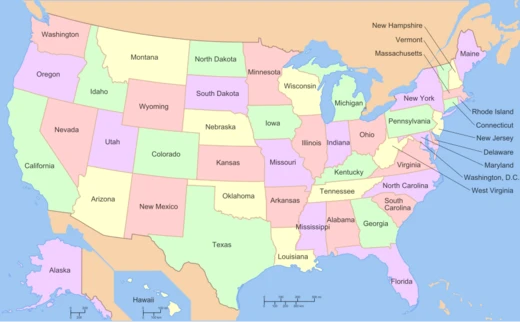
Vermont is a landlocked state in New England, part of the northeastern United States. To its south lies Massachusetts, New Hampshire sits to the east, New York is on the western side, and the Canadian province of Quebec borders it to the north. Recent U.S. census estimates place the state’s population at 644,663, making it the second-least populated state in the country. It also ranks as the sixth-smallest state by total area. Montpelier, the capital, holds the distinction of being the least populous U.S. state capital, and no other state has a most populous city with fewer residents than Vermont’s largest city, Burlington.
Human presence in the area dates back about 12,000 years. At the time of European contact, the Algonquian-speaking Abenaki and Iroquoian-speaking Mohawk—competing tribes—were active here. French colonists claimed the territory as part of New France in the 17th century. Tensions grew as Great Britain began settling colonies to the south along the Atlantic coast. France lost the Seven Years’ War in 1763, ceding its land east of the Mississippi River to Britain. After that, the nearby British Thirteen Colonies argued over the extent of the New Hampshire Grants, an area west of the Connecticut River that now forms Vermont. New York’s provincial government sold land grants in the region that conflicted with earlier grants from New Hampshire. The Green Mountain Boys militia defended the interests of settlers who held New Hampshire titles. During the American Revolutionary War, a group of these settlers established the Vermont Republic in 1777 as an independent state. That republic abolished slavery before any other U.S. state. Vermont joined the Union in 1791 as the 14th state.
The state’s geography is defined by the Green Mountains, which run north-south through its center. This range separates Lake Champlain and other western valley terrain from the Connecticut River Valley, which forms much of the eastern border. Most of the land is forested with hardwoods and conifers. Summers are warm and humid; winters are cold and snowy.
In 2022, Vermont’s economic output was $40.6 billion, the lowest among U.S. states and territories by GDP, though it ranks 21st in GDP per capita.
Quick Facts
- Flag Link
- Flag of Vermont
- Nickname
- The Green Mountain State
- Motto
- Freedom and Unity and la · Stella quarta decima fulgeat (May the fourteenth star shine bright)
- Anthem
- These Green Mountains
- Former
- Vermont Republic
- Seat
- Montpelier
- Largestcity
- Burlington
- Largestcounty
- Chittenden
- Officiallang
- None
- Population Demonym
- Vermonter
- Governor
- Phil Scott (R)
- Lieutenant Governor
- John S. Rodgers (R)
Facts from the source article.
Lore & Background
Native Americans have inhabited the area for about 12,000 years. The competitive tribes of the Algonquian-speaking Abenaki and Iroquoian-speaking Mohawk were active at the time of European encounter. During the 17th century, French colonists claimed the territory as part of New France. France was defeated in 1763 in the Seven Years' War, ceding its territory east of the Mississippi River to Britain. Thereafter, the British Thirteen Colonies disputed the extent of the area called the New Hampshire Grants, encompassing present-day Vermont. The provincial government of New York sold land grants to settlers, conflicting with earlier grants from New Hampshire. The Green Mountain Boys militia protected the interests of the established New Hampshire land grant settlers. A group of settlers with New Hampshire land grant titles established the Vermont Republic in 1777 as an independent state during the American Revolutionary War.
Reader's Guide
Vermont's significance lies in its early abolition of slavery through the Vermont Republic, its role as the 14th state admitted to the Union, and its distinctive progressive policies. The state has the highest proportion of renewable electricity generation at 99.9% and was among the first to recognize same-sex civil unions and marriage. Its economy, though ranking last among U.S. states by GDP at $40.6 billion in 2022, is notable for dairy, forestry, maple syrup, and wine production, supplying approximately 50% of the nation's maple syrup. The geography is marked by the Green Mountains, which run north–south up the middle of the state, separating Lake Champlain and other valley terrain on the west from the Connecticut River Valley on the east. Vermont's capital, Montpelier, is the least populous U.S. state capital, and no other state has a most populous city with fewer residents than Burlington. The state's name, adopted in 1777 for the Vermont Republic, is a French translation of Green Mountain(s), the name of the mountain range that bisects the state.
More in U.S. States 1-24
Spotted an error? Know more?
Reader corrections go straight into our review queue. Suggest an edit · How this site is sourced