Ohio
Midwestern U.S. state, birthplace of seven presidents and aviation.

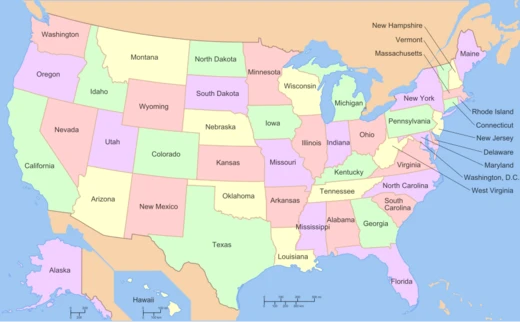
Ohio is a state in the Midwestern region of the United States, bordered by Lake Erie and the Canadian province of Ontario to the north, Pennsylvania to the east, West Virginia to the southeast, Kentucky to the southwest, Indiana to the west, and Michigan to the northwest. It is the 34th-largest state by area and the seventh-most populous, with nearly 11.9 million residents. Its capital and most populous city is Columbus, with other major cities including Cleveland, Cincinnati, Dayton, Akron, and Toledo. Ohio derives its name from the Ohio River, which comes from the Seneca word meaning 'good river' or 'great river.' Historically known as the heart of American industry, Ohio has the third-largest manufacturing sector and second-largest automobile production in the U.S., and it has shifted to a more information and service-based economy in the 21st century. It is nicknamed the 'Buckeye State,' the 'Mother of Presidents,' and the 'Birthplace of Aviation.'
Quick Facts
- Flag Border
- no
- Flag Link
- Flag of Ohio
- Seal Link
- Seal of Ohio
- Nicknames
- The Buckeye State; / Birthplace of Aviation; The Heart of It All
- Motto
- "With God, all things are possible"
- Anthem
- "Beautiful Ohio"
- Seat
- Columbus
- Largestcity
- capital
- Languages
- English 93.3% / Spanish 2.2% / Other 4.5%
- Population Demonym
- Ohioan; Buckeye (colloq.)
- Governor
- Mike DeWine (R)
- Lieutenant Governor
- Jim Tressel (R)
Facts from the source article.
Lore & Background
Ohio's geography is varied, with rolling glaciated plains across most of the state, rugged unglaciated hills in the southeastern Allegheny Plateau, and Lake Erie coastline to the north. At the time of European contact, the area known as the Ohio Country was inhabited by Algonquian and Iroquoian nations, and was contested among Native American tribes, Britain, and France. Following American independence, Ohio was organized as part of the Northwest Territory and achieved statehood in 1803, becoming the first state admitted under the Northwest Ordinance. (Vermont, admitted in 1791, was the first post-colonial free state, prohibiting slavery in its constitution.) Archaeological evidence indicates the Ohio Valley was inhabited by nomadic people as early as 13,000 BC, followed by the Adena culture (1000–800 BC) and the Hopewell tradition (around 100 BC to 600 AD), known for complex earthworks and extensive trade networks. The Great Serpent Mound, however, dates to around 1070 AD and is associated with the Fort Ancient culture, not the Adena. Later cultures included the Mississippian, Fort Ancient, Whittlesey, and Monongahela, all of which disappeared by the 17th century. After the Beaver Wars, the Iroquois claimed much of the Ohio country, and by the 18th century, European entry into the fur trade affected Indigenous nations. Some of the Indigenous nations that historically inhabited Ohio include the Iroquoian, Algonquian, and Siouan. The region was also the site of Indian massacres, such as the Yellow Creek massacre and the Gnadenhutten massacre. After the War of 1812 and the Indian Removal Act of 1830, most Native tribes were forced out of Ohio by the early 1830s, with major removals largely completed by that time.
Reader's Guide
Ohio's significance lies in its role as a pivotal region in early American history and as a major industrial and agricultural center. It was the first state admitted under the Northwest Ordinance, which prohibited slavery, making it the first post-colonial free state. Its varied geography includes glaciated plains, unglaciated hills, and Lake Erie coastline. The state is historically known as the heart of American industry, with the third-largest manufacturing sector and second-largest automobile production in the U.S., and it has a large agriculture sector. In the 21st century, Ohio has shifted to a more information and service-based economy, ranking seventh in GDP as of 2025. Tourism is driven by attractions such as Cedar Point, the National Museum of the United States Air Force, the Rock and Roll Hall of Fame, Cuyahoga Valley National Park, and 76 state parks. Ohio is nicknamed the 'Buckeye State' after its Ohio buckeye trees, the 'Mother of Presidents' as the birthplace of seven U.S. presidents, and the 'Birthplace of Aviation' because the Wright brothers designed and built the world's first successful airplane in Ohio before its first flight in North Carolina. Its legacy includes the Adena and Hopewell cultures' earthworks, and its history of Indigenous displacement and conflict.
Did You Know?
- Ohio derives its name from the Seneca word 'ohiːyo',' meaning 'good river,' 'great river,' or 'large creek.'
- By the early 1830s, most remaining Native tribes were forced out of Ohio, with major removals completed after the Indian Removal Act of 1830.
More in U.S. States 1-24
Spotted an error? Know more?
Reader corrections go straight into our review queue. Suggest an edit · How this site is sourced