Renault Laguna
Renault's large family car produced across three generations from 1994 to 2015.
The Renault Laguna is a large family car produced by Renault over 21 years, available as a hatchback, coupé, and estate. The first generation debuted in 1994, the second in 2000, and the third ran from October 2007 to 2015. The Laguna name had earlier been used by Chevrolet from 1973 to 1976 for a top-tier Chevelle model, and also appeared as a concept car—a two-seater roadster shown at the 1990 Paris Motor Show—which bore no relation to the production vehicles.
Development of the first generation (X56) began in 1987, with design work under Patrick Le Quément starting in 1988. A final design was approved in March 1989, and the design was frozen by early 1990. Road testing ran from 1991 through 1993. The car was unveiled in November 1993 and launched in January 1994, replacing the Renault 21. Initially, only a hatchback was offered. An estate version, called the Laguna Sports Tourer in some markets, debuted at the Frankfurt Motor Show in September 1995, replacing the Renault 21 Nevada/Savanna. It launched with 1.8 RN/RT, 2.0 RT/RXE, and 3.0 V6 engines. A sports pack—including a deep front spoiler, rear spoiler, and alloy wheels—was available on 2.0 versions.
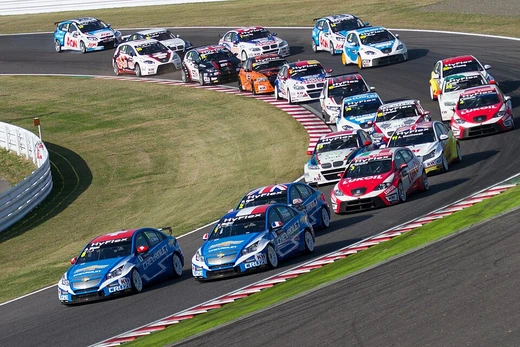
In 1996, a limited run of 500 1.8 RT Sport models was produced, with 100 cars in each of five colors, including a metallic blue normally reserved for 2.0 models. These sold out quickly, so the RT Sport was added to the standard range at a lower price, now with ABS, air conditioning, a CD/radio, and a high-level brake light as standard—features that had been optional on the original 500. This coincided with Renault’s entry into the British Touring Car Championship. Equipment levels were generally higher than the Renault 21. From launch, all models had power steering, electric front windows, and remote central locking. Most had a driver’s airbag; later, twin airbags, ABS, air conditioning, and a CD player became optional or standard. In September 1996, minor updates included a new Laguna nameplate at the rear.
A moderate facelift arrived in April 1998, restyling the hatchback and estate, with a redesigned front and taillights featuring circular fog lights. Engines were updated, and equipment levels were enhanced in some markets.
Quick Facts
- Manufacturer
- Renault
- Production
- January 1994 – March 2015 (LHD) / January 1994 – February 2012 (RHD) (except Australia)
- Class
- Large family car (D) / Coupe
- Predecessor
- Renault 21
- Successor
- Renault Latitude / (Australia) · Renault Talisman
- Layout
- FF layout
Facts from the source article.
Lore & Background
Development of the first generation (X56) began in 1987, with design work under Patrick Le Quément starting in 1988, final design approval in March 1989, and a design freeze by early 1990. Road testing ran from 1991 through 1993. The car was unveiled in November 1993 and launched in January 1994 as a replacement for the Renault 21, initially only as a hatchback. An estate version, known in some markets as the Laguna Sports Tourer, was introduced at the Frankfurt Motor Show in September 1995. A limited edition of 500 1.8 RT Sport models was made available in 1996, coinciding with Renault's participation in the British Touring Car Championship. The Laguna received a moderate facelift in April 1998, including restyled front and taillights and updated engines. The final edition of the first generation, the Laguna Concorde, was introduced for 2000, featuring semi-leather seats and a voice synthesizer warning system.
The second generation (X74) was introduced in December 2000 for the 2001 model year. It was the first vehicle available in Europe to achieve five stars in Euro NCAP crash test results. It featured a 'keyless' entry and ignition system using a credit card style device developed by Valeo, though initial unreliability of this system hurt the car's reputation. The Laguna II was facelifted in March 2005, with a redesigned front air intake and the introduction of an electronic handbrake. The third generation (X91) was announced in June 2007, unveiled at the Frankfurt Motor Show in September, and went on sale in October 2007 for the 2008 model year. It was offered as a five-door hatchback, five-door estate, and for the first time a two-door coupé. The coupé was first presented as a concept car at the 2007 Frankfurt Motor Show, with the production version revealed at the 2008 Cannes Film Festival. A facelifted version (Phase 2) debuted at the 2010 Paris Motor Show, with sales beginning in November 2010.
Reader's Guide
The Renault Laguna spanned three generations over 21 years, evolving from a hatchback-only model into a range including estate and coupé variants. Its first generation marked a significant step up in equipment levels from the Renault 21, with power steering, electric front windows, and remote central locking as standard from launch. The second generation achieved a notable safety milestone as the first European car to earn five stars in Euro NCAP testing, a result Renault heavily promoted. However, the innovative keyless entry system's early reliability issues damaged the Laguna's reputation. The third generation introduced a coupé body style for the first time and shared its platform with Nissan models including the Altima, Teana, and Murano. The Laguna name itself had prior automotive use by Chevrolet for a Chevelle model from 1973 to 1976, and as a concept roadster at the 1990 Paris Motor Show unrelated to the production cars. The Laguna II won the Semperit Irish Car of the Year in November 2001. The final facelift in 2010 brought a more aggressive front end and six trim levels, with production continuing until 2015.
Did You Know?
- The first generation Laguna was the replacement for the Renault 21.
- The second generation Laguna was the first European car to achieve five stars in Euro NCAP crash tests.
- The Laguna name was previously used by Chevrolet for a Chevelle model from 1973 to 1976.
- The third generation introduced a two-door coupé body style for the first time.
More in Touring Cars 1-24
Spotted an error? Know more?
Reader corrections go straight into our review queue. Suggest an edit · How this site is sourced