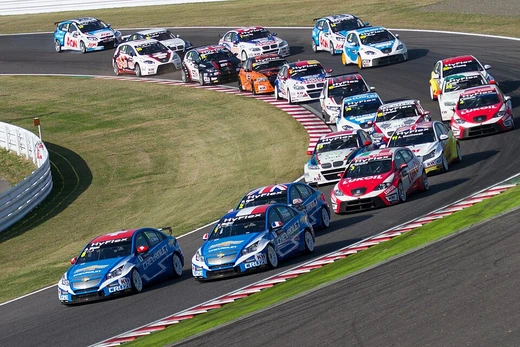
Ford Focus
Ford's global compact car, produced from 1998 to 2025.

Calreyn88 · CC BY-SA 4.0
The Ford Focus, a compact car (classified as a small family car or C-segment in Europe), was built by Ford from 1998 through 2025. It came about as part of Alexander Trotman’s Ford 2000 strategy, which sought to unify model development globally and produce a single compact vehicle for worldwide markets. The original Focus was largely shaped by Ford of Europe’s design teams in Germany and Britain. That first generation won the 1999 European Car of the Year award.
The name "Focus" was chosen in early 1998, even though Ford’s senior management had intended to keep the "Escort" nameplate for its new small family car. A legal snag arose in July 1998 when a Cologne court, acting on a complaint from the publisher Burda, ordered Ford to avoid using "Focus" in Germany because the name was already trademarked for one of Burda’s magazines. This last-minute dispute was settled, and the car launched under the Focus name.
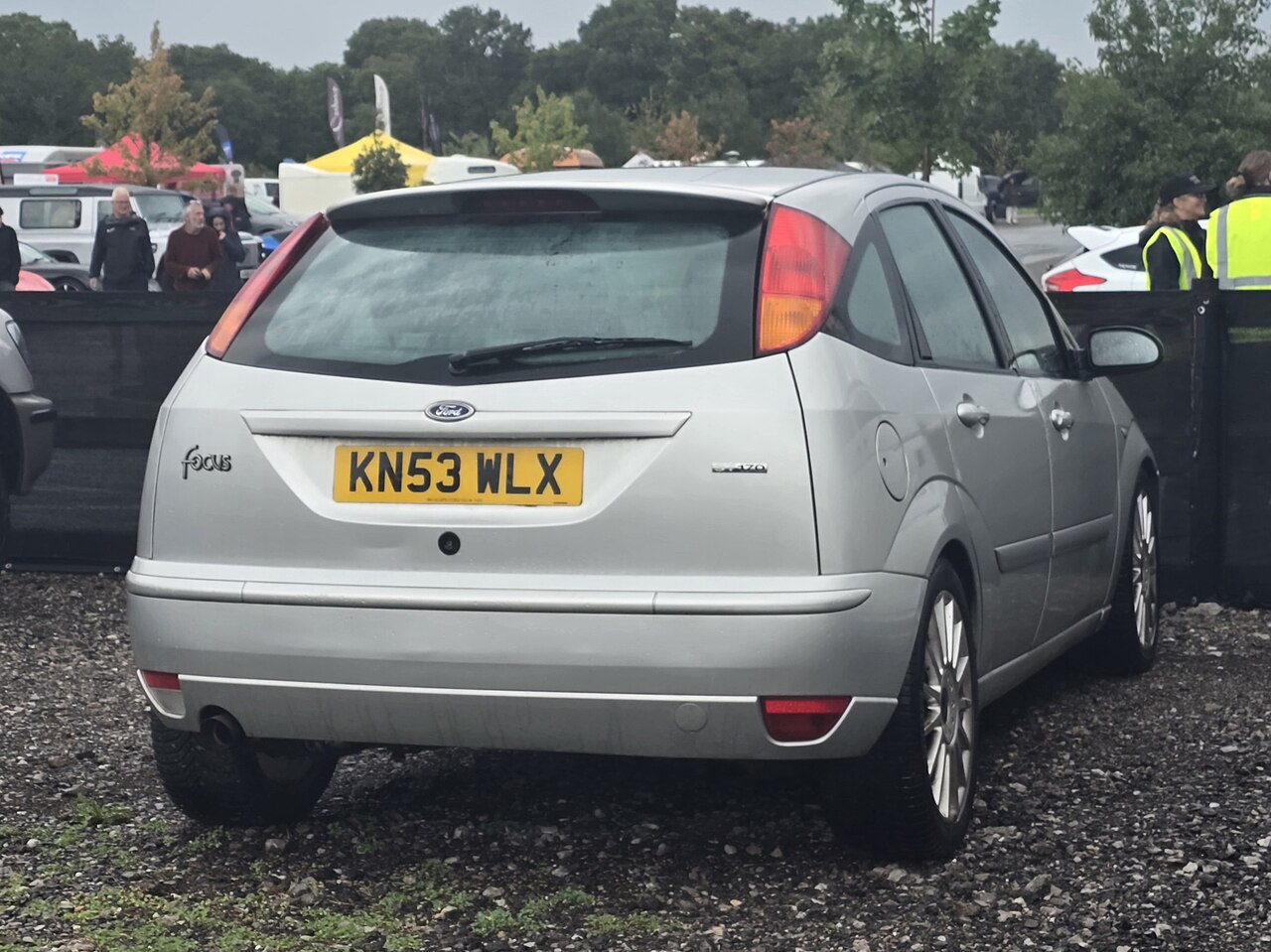
The first generation (C170) debuted in Europe in 1998, replacing the Ford Escort. The project manager at Dunton was Rose Mary Farenden. In North America, the Focus went on sale in September 1999 for the 2000 model year, with some differences from the European version. It was initially offered as a three-door hatchback, four-door sedan, and five-door wagon; a five-door hatchback followed in 2001.
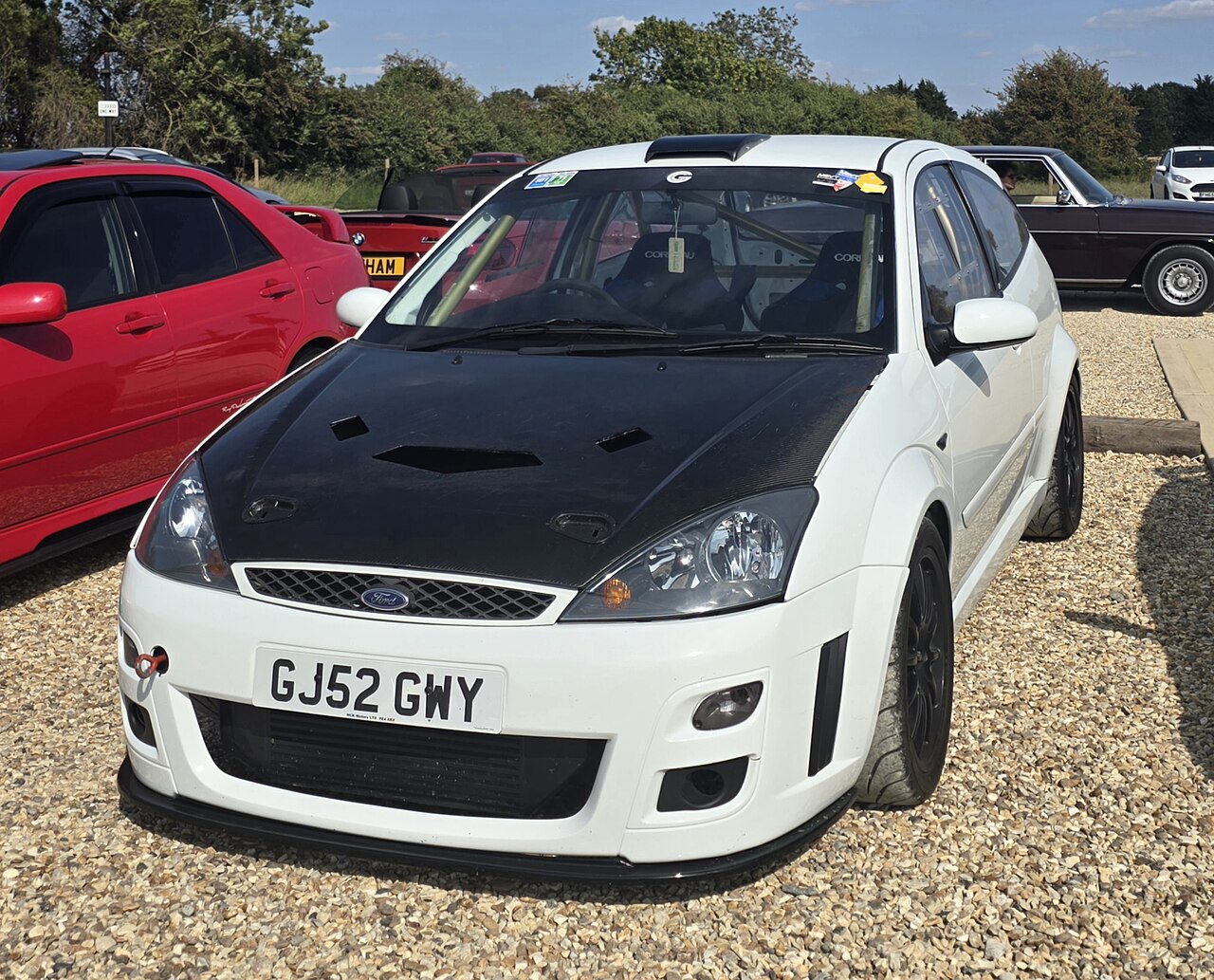
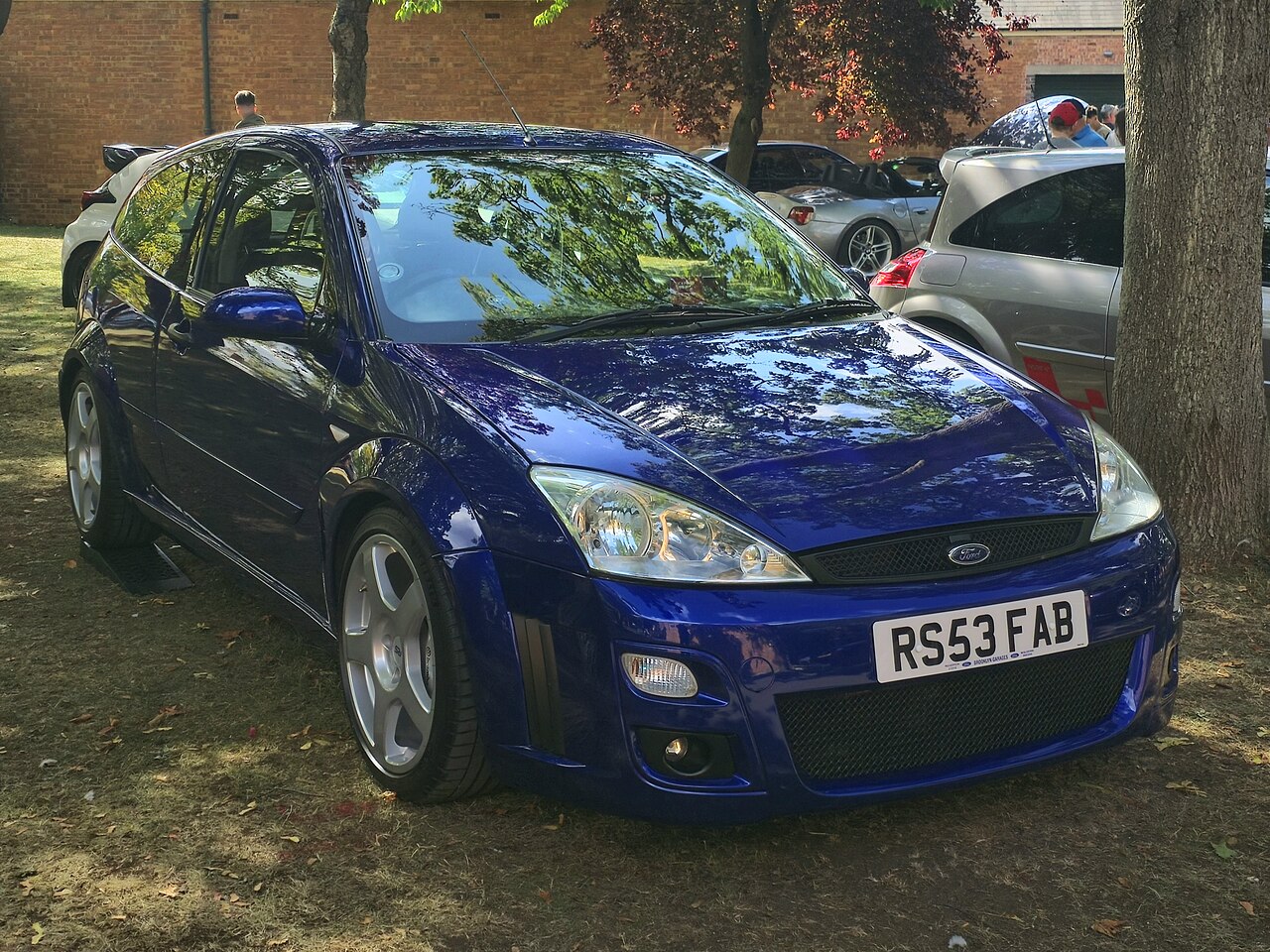
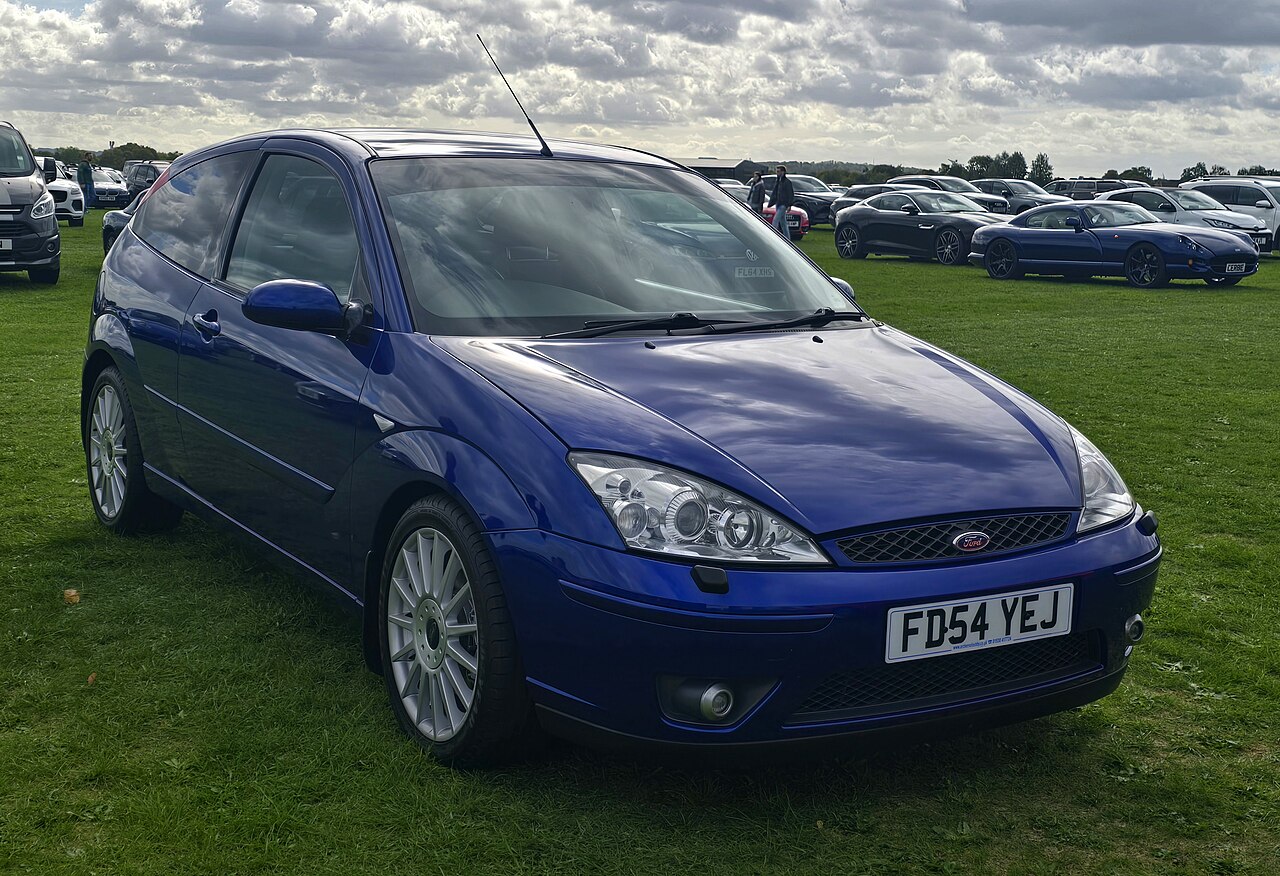
In 2002, Ford released the highest-performance variant, the Focus RS. It featured a 2.0-litre turbocharged Duratec RS engine, a Quaife ATB limited-slip differential, an AP Racing clutch, a unique front suspension strut system called "Revo-knuckle," Sachs Racing dampers, Brembo brakes, 18-inch O.Z Racing alloy wheels, Michelin Pilot Sport tires, and a more aggressive exterior. It came only in Ford’s Imperial blue. Tickford Engineering won the contract for research, development, and production oversight of the Mk 1 Focus RS, modifying up to 70% of the base components. Despite development in the UK, production took place at Ford’s Saarlouis plant in Germany from 2002 to 2003, with a limited run of 4,501 cars. This original RS was sold only in Europe; just under half (2,147) went to the UK.
For decades in the U.S., small cars like the Focus were viewed as a way to attract younger buyers seeking cheap basic transportation and to help automakers meet federal fuel-economy standards.
Quick Facts
- Manufacturer
- Ford
- Production
- 1998–2025
- Class
- Small family car/Compact car (C)
- Layout
- Front-engine, front-wheel drive / Front-engine, four-wheel-drive (Mk 3 RS Only)
- Predecessor
- Ford Escort (Europe, North America and Argentina) / Ford Laser (Asia and Oceania)
- Successor
- Ford Kuga (indirect)
- Model Years
- 2000–2018 (North America)
Facts from the source article.
Lore & Background
The Ford Focus was introduced in 1998 to the European market as a replacement for the Ford Escort. The decision to name the car 'Focus' was made in early 1998, though a last-minute dispute arose in July 1998 when a Cologne court, responding to a case brought by the publisher Burda, ordered Ford to avoid the name 'Focus' in Germany because the name was already taken by one of its magazines. The dispute was resolved, and the car launched with the name 'Focus'. Ford of North America began marketing the Focus in September 1999 for the 2000 model year, with some changes from the European version.
In 2002, Ford launched the highest performance version of the first generation, the Focus RS, with a 2.0-litre turbocharged Duratec RS engine, a Quaife ATB limited-slip differential, and a revolutionary front suspension strut system called 'Revo-knuckle'. Tickford Engineering won the engineering contract for research, development and production oversight of the Mk 1 Focus RS. Ford produced the Focus RS in the Saarlouis plant in Germany between 2002 and 2003, making a limited run of 4501 cars, available only in Europe; just under half (2147) were sold in the UK.
The second generation was launched at the Paris Motor Show on September 25, 2004. The Focus Mk 2 is larger and heavier than its predecessor, with a 25 mm increase in wheelbase, and is 168 mm longer, 8 mm taller, and 138 mm wider. In 2005, Ford released the Focus ST with a 2.5-litre, five-cylinder turbocharged engine originating from Volvo. The third generation reunited international and North American models, launching simultaneously in both markets in early 2011. The fourth generation was unveiled on April 10, 2018, to mark the brand's 20th anniversary. In 2025, Ford announced that the Focus will no longer be built, in line with an announcement made in 2022.
Reader's Guide
The Ford Focus was notable as a global model developed under Ford's 2000 plan, designed to replace the Escort and sell worldwide. Its first generation won the 1999 European Car of the Year award, and the car's suspension design contributed to its success. The Focus RS, produced in limited numbers in Germany, became a performance benchmark, with Tickford Engineering modifying up to 70% of base components. In North America, small cars like the Focus were seen as tools to draw younger buyers and improve fleet average fuel economies to meet U.S. federal standards; Ford was said not to be concerned about losing money on the Focus so the company could sell gas guzzlers for big profits. Many industry insiders viewed cars like the Focus as 'compliance cars' because of their role in helping to bring up corporate fleet average fuel economy. The Focus was produced for 27 years, ending in 2025, and its fourth generation was the last.
Did You Know?
- The first generation Focus was awarded the 1999 European Car of the Year award.
- The original Focus RS was produced in a limited run of 4501 cars, all in Imperial blue.
- The name 'Focus' faced a last-minute legal dispute in Germany in July 1998 over a magazine's trademark.
- The fourth generation Focus was unveiled on April 10, 2018, marking the brand's 20th anniversary.
Origins & the Ford 2000 Vision
The Ford Focus was born from a bold strategic ambition. Under Alexander Trotman's Ford 2000 plan, the company set out to streamline its global lineup by developing a single compact vehicle capable of selling across every major market. Rather than creating region-specific small cars, Ford wanted one unified product. The design work fell primarily to Ford of Europe's German and British engineering teams, and the car was positioned as the successor to the long-running Escort. When Ford of Europe unveiled it in 1998, the result was immediately recognized: the first-generation Focus collected the 1999 European Car of the Year title. North America followed a year later, with the Focus arriving for the 2000 model year in September 1999, offered initially as a three-door hatchback, four-door sedan, and five-door wagon before a five-door hatchback joined the range in 2001. The project manager overseeing development at Dunton was Rose Mary Farenden.
A Name Almost Lost to a Magazine
The name "Focus" nearly never stuck. In early 1998, Ford's senior leadership had actually intended to carry the "Escort" nameplate forward onto the new small family car. But a last-minute legal crisis derailed those plans. In July 1998, just months before the car's public debut, a court in Cologne ruled in favor of Burda, a German publisher, who had brought a case arguing that the word "Focus" was already in use by one of its magazines. The court ordered Ford to drop the name for the German market. This eleventh-hour dispute threatened to split the global rollout, but Ford ultimately resolved the matter and proceeded with the launch under the "Focus" name everywhere. The episode underscores how a single trademark collision, decided in a single European courtroom, could have rewritten the identity of a car that would go on to span nearly three decades of production.
The 2002 Focus RS: A Limited-Run Legend
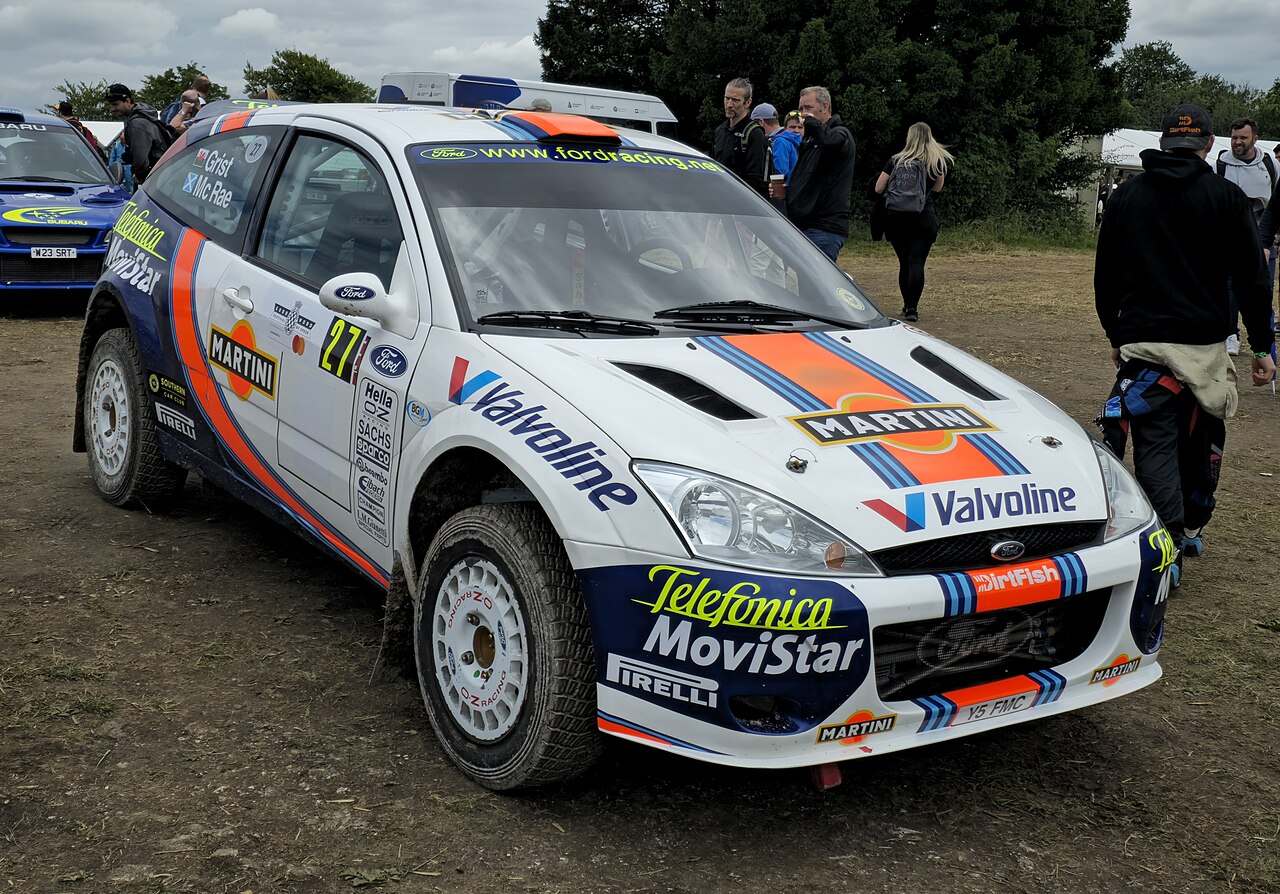
In 2002, Ford pushed the compact Focus into performance territory with the first Focus RS, a limited-run hot hatch that became a cult favorite. The engineering contract went to Tickford Engineering in the United Kingdom, which undertook research, development, and production oversight. Tickford's team made such extensive modifications that up to seventy percent of the base components were either updated, re-engineered, or completely redesigned. The result was a car powered by a 2.0-litre turbocharged Duratec RS engine, paired with a Quaife ATB limited-slip differential, an AP Racing clutch, Sachs Racing dampers, Brembo brakes, 18-inch O.Z Racing alloy wheels, and Michelin Pilot Sport tyres. Ford also introduced a front suspension strut system it marketed as the "Revo-knuckle." Despite British development, production took place at the Saarlouis plant in Germany between 2002 and 2003, yielding a strictly limited run of 4,501 units. The car was sold exclusively in Europe, with just under half—2,147 units—finding buyers in the UK. Every one was finished in Ford's Imperial blue.
Generational Shifts and the Long Goodbye
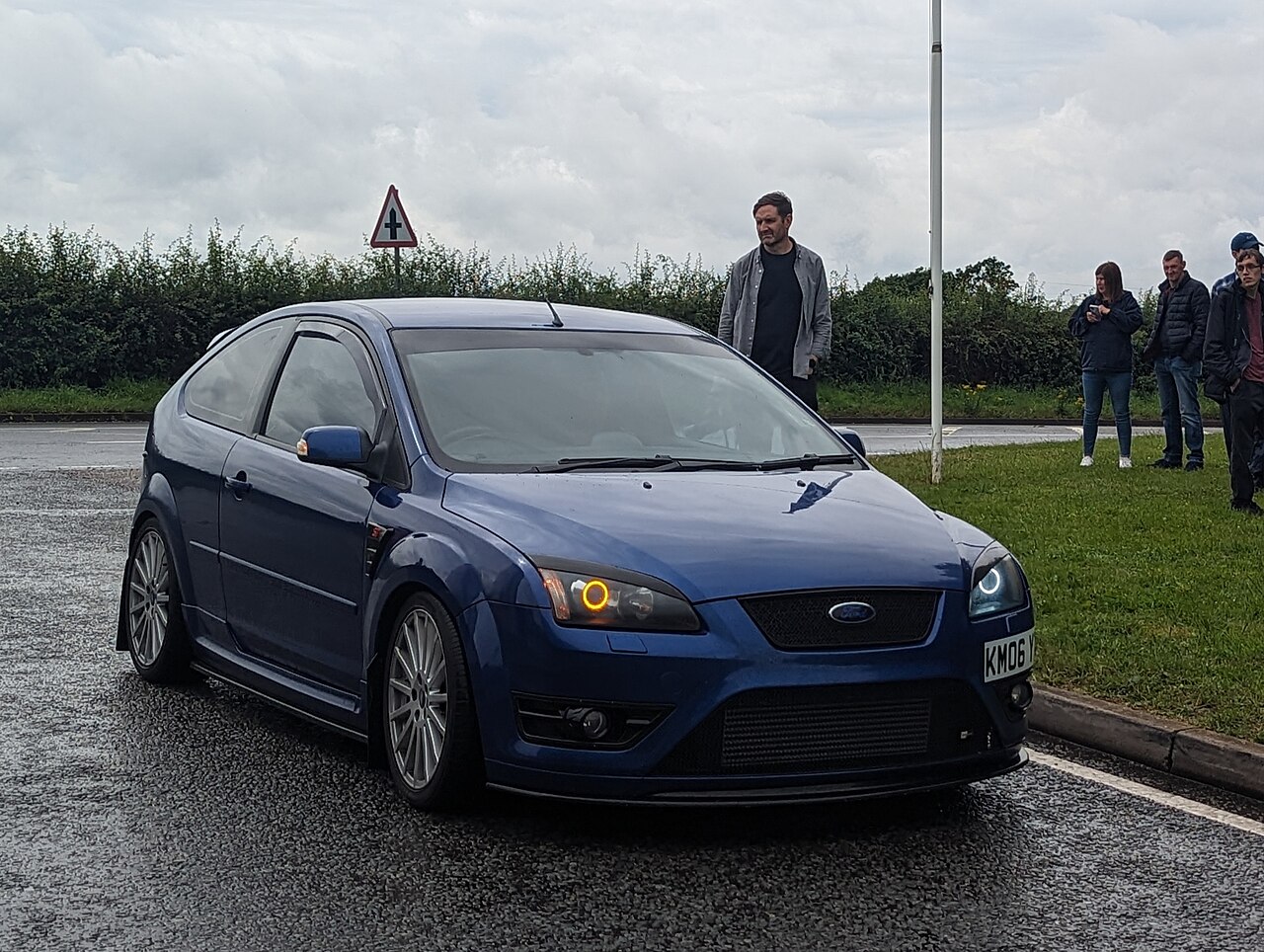
The Focus evolved significantly across its generations. The second-generation European model, unveiled at the Paris Motor Show in September 2004, was larger and heavier than its predecessor, gaining 25 mm in wheelbase, 168 mm in length, and 138 mm in width. Ford carried over the Mk 1's suspension design largely unchanged while stiffening the bodyshell by ten percent. New technology included a KeyFree entry system, a solar-reflect windshield, adaptive front lighting, and Bluetooth voice control. In 2005, the Focus ST arrived with a 2.5-litre five-cylinder turbocharged engine of Volvo origin, producing 225 bhp and a 0–60 mph time of 6.4 seconds. North America took a separate path: the C170 platform debuted at the 2007 North American International Auto Show, offered only as a two-door coupe and four-door sedan, with hatchbacks and wagon discontinued. In 2025, Ford confirmed the Focus would no longer be built, fulfilling an announcement first made in 2022 and bringing a 27-year run to a close.
Gallery
More in Touring Cars 1-24
Spotted an error? Know more?
Reader corrections go straight into our review queue. Suggest an edit · How this site is sourced