Daewoo Lacetti
A compact car with global nameplates and Pininfarina styling.

Benespit · CC BY-SA 4.0
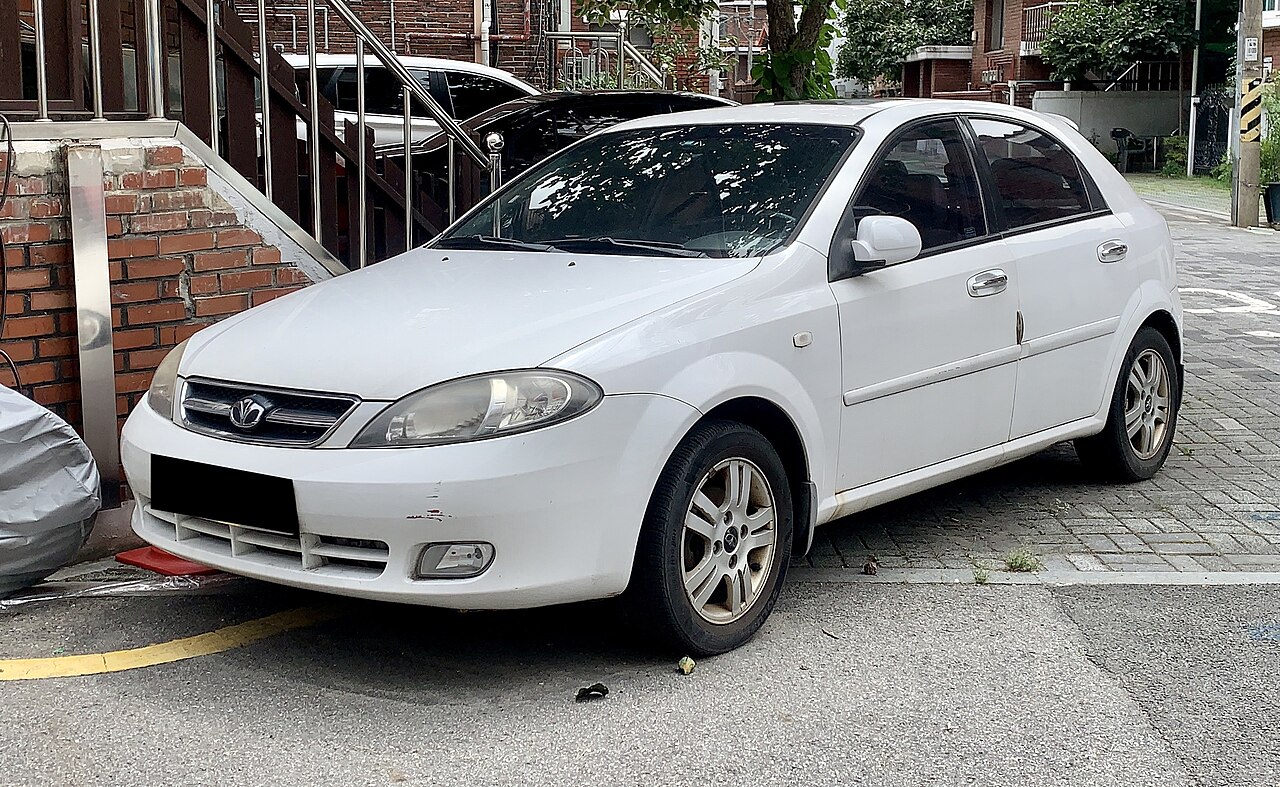
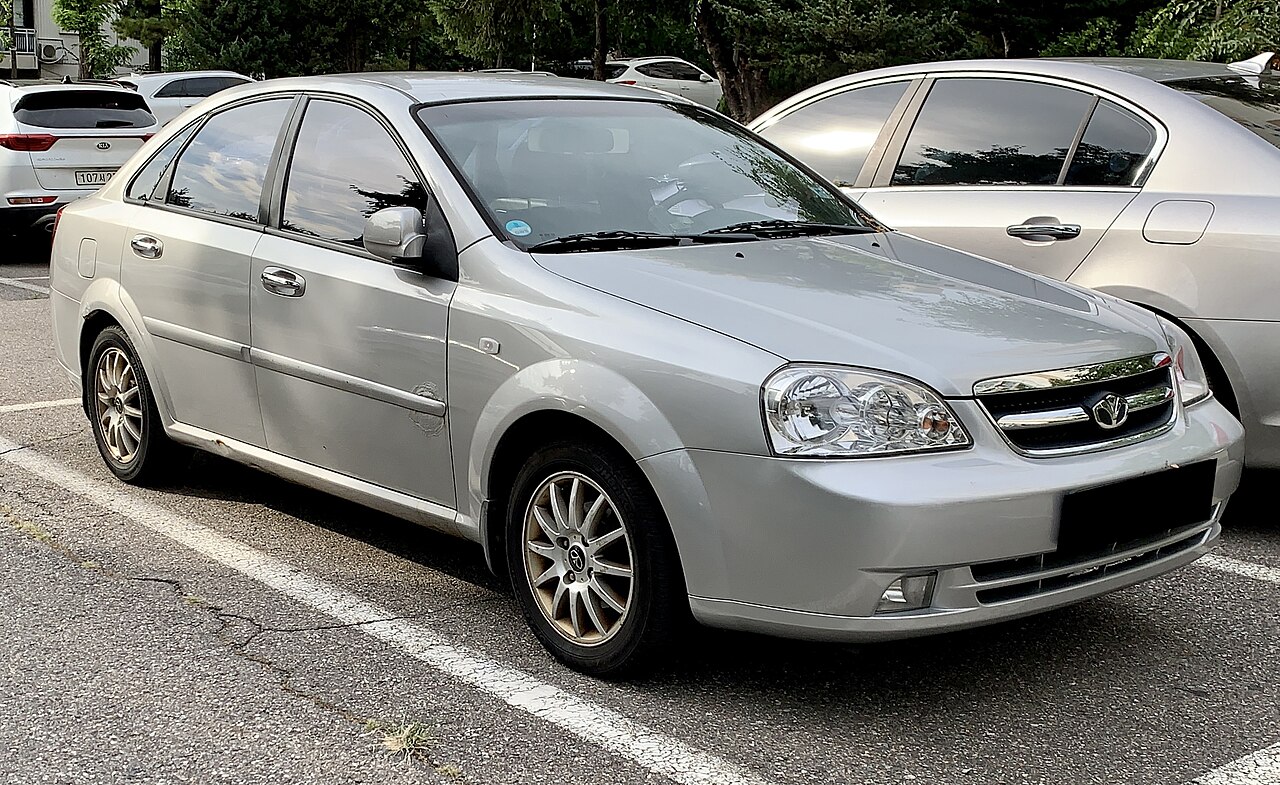
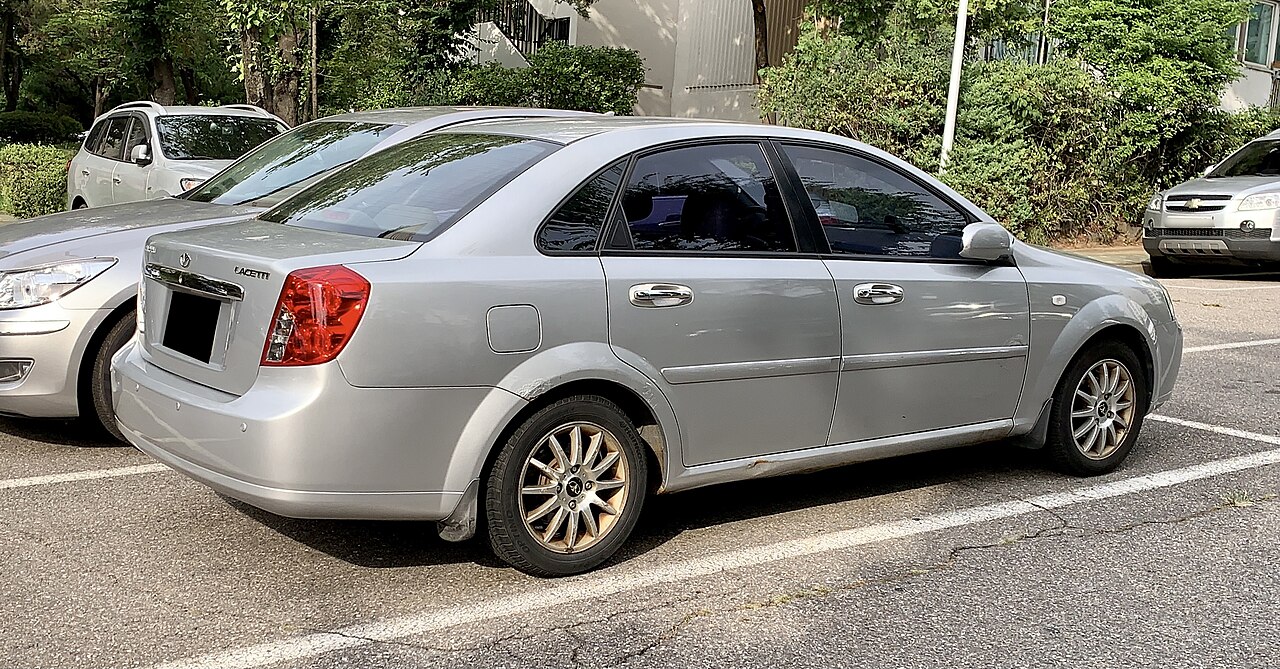
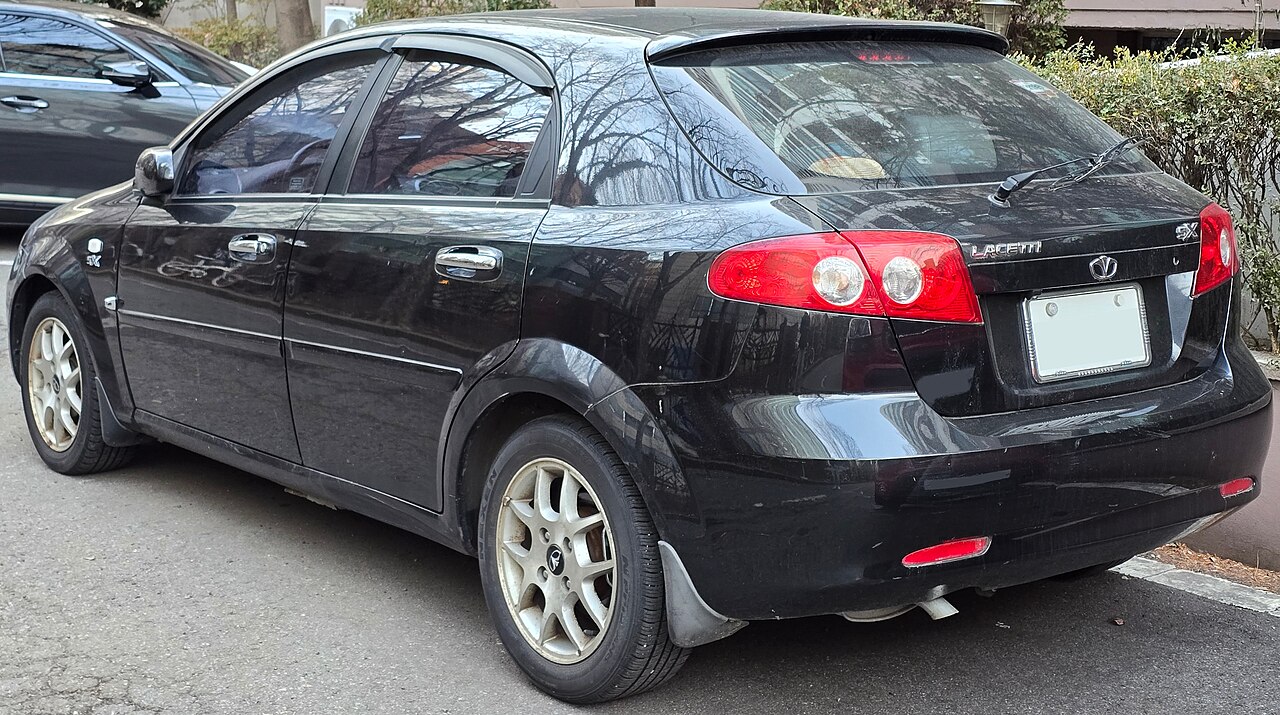
The Daewoo Lacetti, a compact car from GM Korea, has been in production since 2002. Its first generation came in three body styles: a four-door sedan and a five-door station wagon, both designed by Pininfarina, plus a five-door hatchback styled by Giorgetto Giugiaro. The hatchback, launched in 2004, had a distinct look inside and out compared to the sedan. The sedan and wagon were sold as the Daewoo Nubira in parts of Europe and as the Suzuki Forenza in North America. The hatchback was called the Daewoo Lacetti5 in South Korea and the Suzuki Reno in the United States. After 2004, the car was rebadged as the Chevrolet Nubira and Lacetti in Europe, the Chevrolet Optra in Canada, Latin America, Africa, the Middle East, India, Pakistan, Japan, and Southeast Asia, and the Holden Viva in Australia and New Zealand.
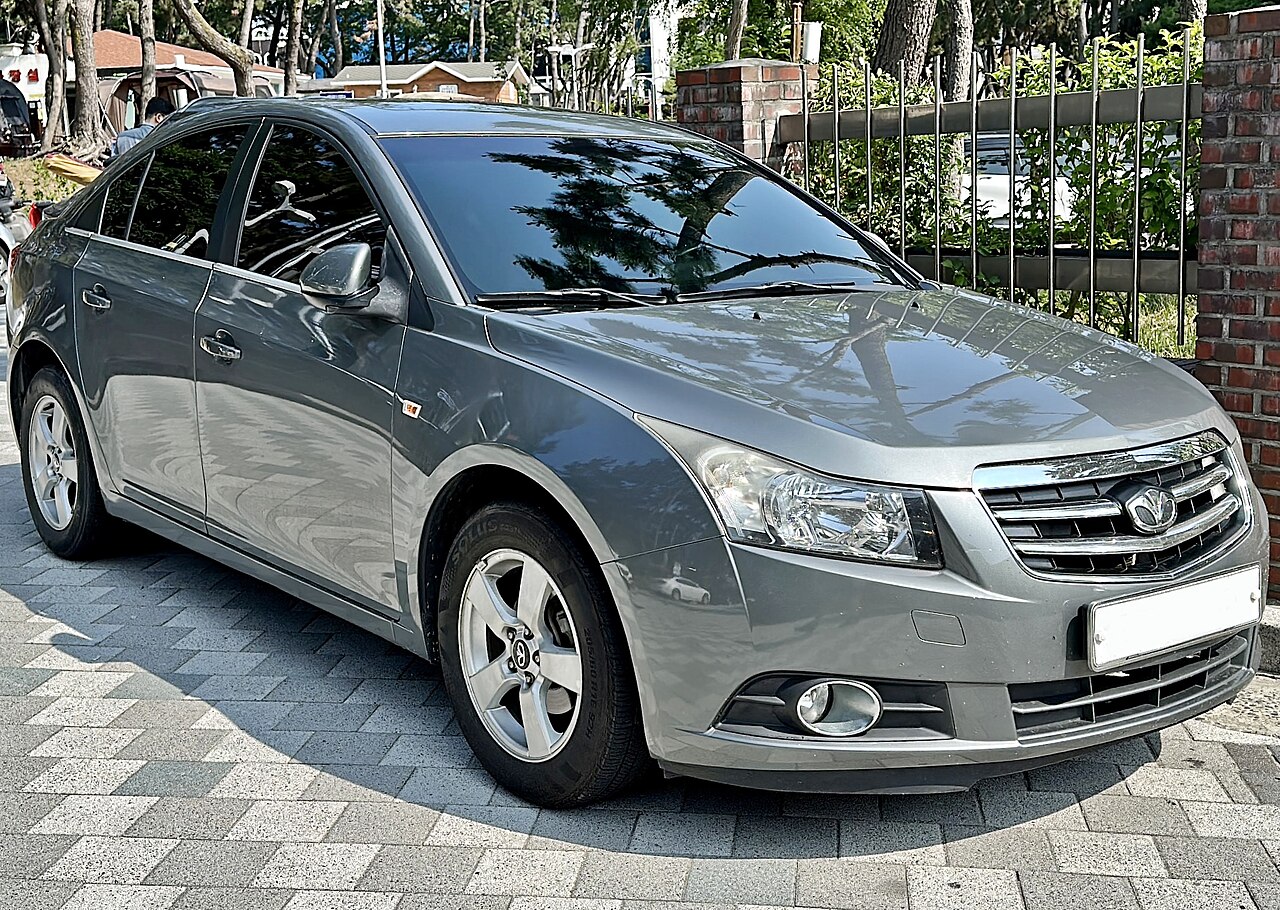
The second-generation Lacetti arrived in 2008 as the Daewoo Lacetti Premiere. It was essentially a rebadged Chevrolet Cruze, co-developed by GM Daewoo, Holden, and General Motors. It wore the Daewoo badge until early 2011, when that brand was phased out, and then sold under Chevrolet and Holden names. The name "Lacetti" comes from the Latin word "Lacertus," meaning "youthful."
The first-generation model (J200) was built on the platform of its predecessor, the Nubira, and developed before GM acquired Daewoo. The sedan, styled by Pininfarina, went on sale in South Korea on November 25, 2002, after two and a half years of development. A pre-production hatchback prototype, designed by Giorgetto Giugiaro, appeared at the Frankfurt Motor Show in September 2003, with production starting that December. At the Geneva Motor Show in March 2004, Daewoo showed the station wagon, also by Pininfarina, which used the hatchback’s updated interior and a revised front end based on the sedan. This facelift swapped the three-slot grille for a single, full-width grille with a bold horizontal bar and the company logo in the center. The wagon also got pull-out door handles instead of the lift-up type used on the sedan and hatchback. A facelift for the sedan followed on March 25, 2004, incorporating those new handles, the updated front end, and interior changes. The hatchback got the new handles around the same time.
Quick Facts
- Manufacturer
- Daewoo (General Motors)
- Production
- 2002–2011 (South Korea) / 2003–2024 (GM Uzbekistan)
- Class
- Compact car (C)
- Layout
- Front-engine, front-wheel-drive
- Predecessor
- Daewoo Nubira
- Successor
- Daewoo Lacetti Premiere / Chevrolet Cruze / Buick Excelle (second generation) (China)
Facts from the source article.
Lore & Background
The first-generation Lacetti (J200) was developed based on its predecessor Nubira under Daewoo before it was acquired by GM. The four-door sedan, designed by Pininfarina, was launched in South Korea on 25 November 2002, following a development period of two years and six months. A pre-production prototype of the five-door hatchback, styled by Giorgetto Giugiaro, was shown at the Frankfurt Motor Show in September 2003 with production starting in December. At the Geneva Motor Show in March 2004, Daewoo revealed the station wagon body variant penned by Pininfarina with the hatchback's updated interior and a facelifted derivative of the sedan's frontal styling.
The Lacetti was marketed under numerous nameplates worldwide. In some European markets, the sedan and wagon were sold as the Daewoo Nubira, while the hatchback was marketed as Daewoo Lacetti5 in South Korea and Suzuki Reno in the United States. After the 2004 model year, it became the Chevrolet Nubira and Lacetti in Europe, the Chevrolet Optra in Canada and other regions, and the Holden Viva in Australia and New Zealand. In China, the cars were marketed as the Buick Excelle sedan or wagon and Excelle HRV (hatchback). In 2008, the second-generation Lacetti was launched as the Daewoo Lacetti Premiere, a badge-engineered version of the Chevrolet Cruze.
Reader's Guide
The Daewoo Lacetti's significance lies in its global reach and multiple brand identities, serving as a budget-friendly compact car across continents. In Canada, the Chevrolet Optra was positioned as a versatile and fun-to-drive but affordable budget compact family car, slotting between the Cobalt and the Aveo, and replacing the Daewoo Nubira. Despite its compact size and 2.0-liter engine, fuel economy was poor, rated at 10.7 and 7.4 L/100km for city and highway driving, worse than mid-size cars like the Toyota Camry or Honda Accord. The main selling point was its low price at $12,000 MSRP. In Australia, the Holden Viva was meant to be below the premium Holden Astra as a budget alternative, though the Astra continued to outsell the Viva by a factor of about two-to-one. The Lacetti-based first-generation Buick Excelle sedan continued to be produced for the Chinese market until 2016, demonstrating its longevity in emerging markets. The car's legacy is that of a widely distributed, badge-engineered compact that provided affordable transportation under many marques.
Did You Know?
- The name Lacetti derives from the Latin 'Lacertus', meaning 'youthful'.
- The sedan and wagon were styled by Pininfarina, while the hatchback was styled by Giorgetto Giugiaro.
- In Canada, the Chevrolet Optra was rated as an Ultra Low Emissions Vehicle.
- The Lacetti-based first-generation Buick Excelle sedan was produced in China until 2016.
Design & Development
The first-generation Lacetti (J200) emerged from a two-and-a-half-year development cycle rooted in the predecessor Nubira platform, with the sedan debuting in South Korea on November 25, 2002. What made the design process remarkable was the involvement of two legendary Italian studios: Pininfarina shaped the four-door sedan and later the station wagon, while Giorgetto Giugiaro crafted the five-door hatchback that appeared as a pre-production prototype at the September 2003 Frankfurt Motor Show. The hatchback carried its own distinct exterior and interior language, setting it apart from the sedan. By March 2004 at the Geneva Motor Show, Pininfarina unveiled the wagon variant, which borrowed the hatchback's updated cabin and received a facelifted front end. That facelift swapped the original three-slot grille for a single bold horizontal bar centered by the corporate logo, and replaced the sedan's lift-up door handles with pullout versions—a change that rolled across all body styles by mid-2004. In some emerging markets, a later sedan facelift from 2007 adopted the hatchback's front-end treatment, and in Uzbekistan the nameplate lived on as the Daewoo Gentra through 2016.
Global Branding Complexity
Few compact cars have navigated as bewildering a web of names and badges as the Lacetti. In its home market it carried the Daewoo name, but across Europe it was simultaneously sold as the Daewoo Nubira, and in North America the sedan and wagon wore the Suzuki Forenza badge while the hatchback became the Suzuki Reno in the United States. After the 2004 model year, the Chevrolet marque took over in most regions: Europe received the Chevrolet Nubira and Lacetti, Canada and a wide swath of Latin America, Africa, the Middle East, India, Pakistan, Japan, and Southeast Asia got the Chevrolet Optra, and Australia and New Zealand marketed it as the Holden Viva. The hatchback in South Korea was simply called the Lacetti5. This patchwork of identities meant that a single underlying vehicle could appear under at least six different brand names depending on where it was parked. The strategy reflected GM's post-acquisition effort to slot the car into existing dealer networks and brand hierarchies in each territory, but it also made the Lacetti one of the most identity-shifting compact cars of its era.
The Daewoo-to-Chevrolet Transition
The second generation marked both a creative and a corporate turning point. Launched in November 2008 as the Daewoo Lacetti Premiere, it was essentially a badge-engineered variant of the Chevrolet Cruze, co-developed by GM Daewoo, Holden, and General Motors as a unified global platform. The Premiere carried the Daewoo nameplate for roughly two years, until the brand was formally discontinued in early 2011, after which the car was absorbed into the Chevrolet and Holden lineups. In South Korea, the transition was abrupt: when the Premiere arrived, the first-generation sedan and wagon sales were immediately discontinued, leaving only the hatchback, which was renamed the Lacetti EX. That final hatchback variant was itself discontinued by October 2009, meaning the original J200 platform had a remarkably compressed end-of-life in its home market. The Premiere's brief tenure under the Daewoo badge thus represented the last gasp of a marque that had defined Korean automotive identity for decades, while simultaneously signaling that the car's future belonged entirely to Chevrolet and Holden.
Market Reception & Positioning
The Lacetti's commercial story varied sharply by region. In Australia, the Daewoo-branded sedan enjoyed only a brief window from September 2003 to December 2004 before the brand withdrew entirely; the single SX trim offered a 1.8-liter engine producing 90 kW with either a five-speed manual or four-speed automatic. When the car returned in 2005 as the Holden Viva, it was deliberately positioned below the premium Astra as a budget alternative, priced at A$17,990 against the Astra's A$21,990. Yet the Astra still outsold the Viva by roughly two to one, and the Viva's run ended with the Cruze's arrival in mid-2009. In Canada, the Chevrolet Optra leaned on a $12,000 MSRP as its primary appeal, sitting between the Cobalt and Aveo. However, its 2.0-liter D-TEC engine, while producing 119 hp, delivered fuel economy of 10.7 L/100 km in the city—worse than mid-size rivals like the Camry or Accord—undermining the value proposition for some buyers.
Gallery

More in Touring Cars 1-24
Spotted an error? Know more?
Reader corrections go straight into our review queue. Suggest an edit · How this site is sourced