Alfa Romeo 156
Compact executive car that won European Car of the Year in 1998.

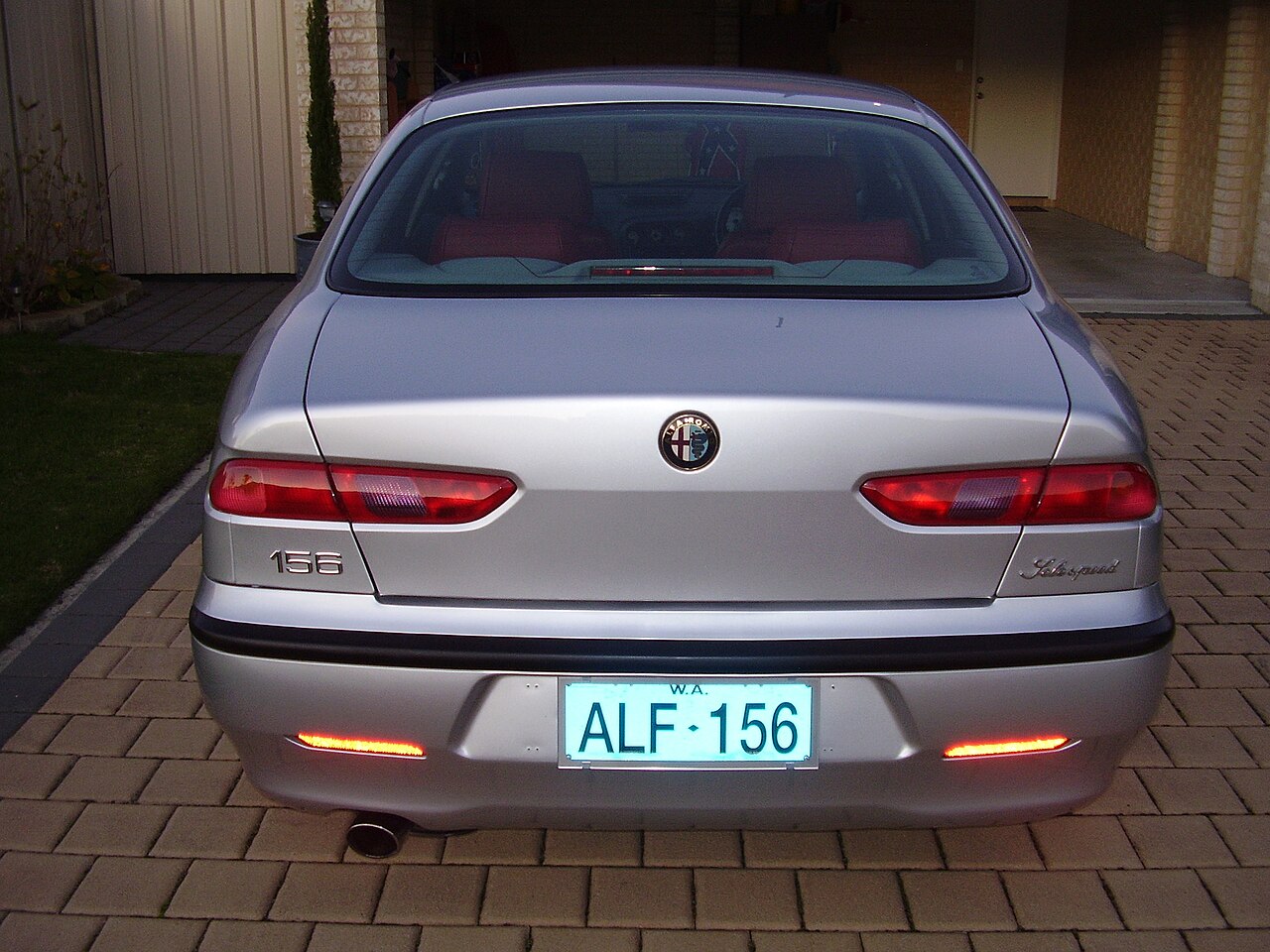
Michael1952 · CC BY-SA 3.0
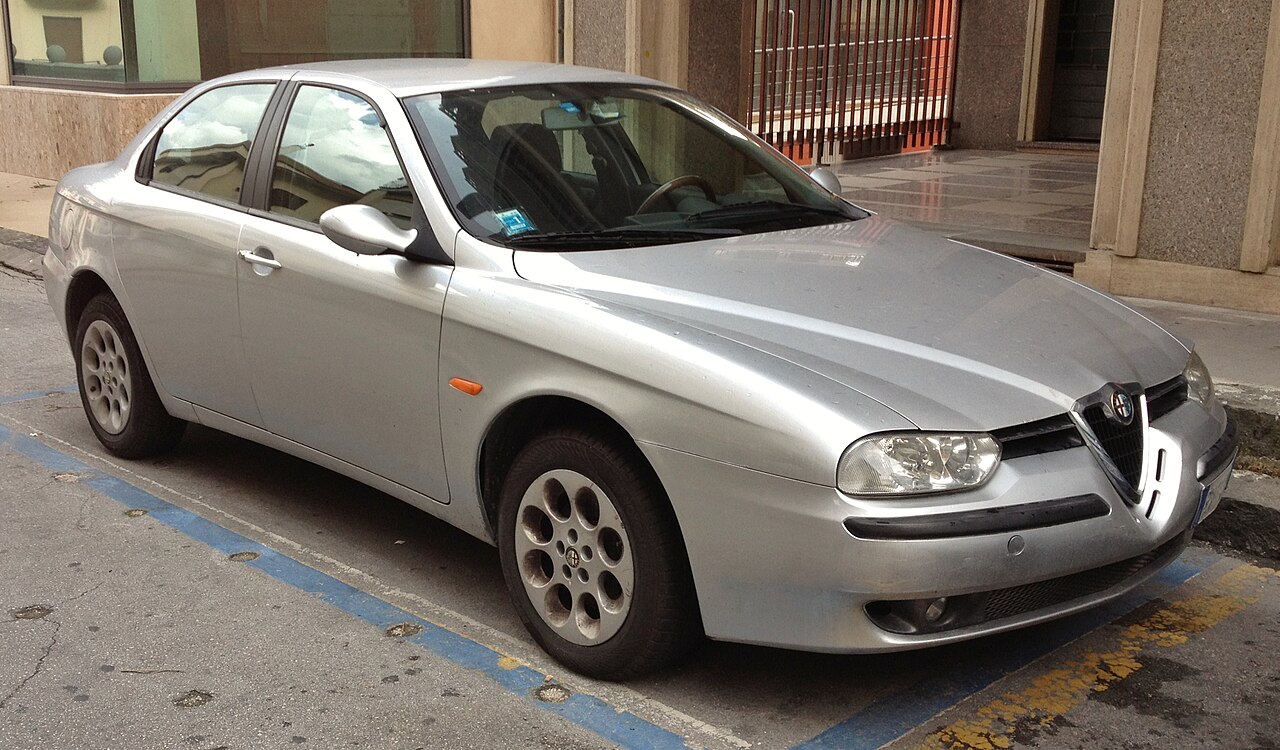
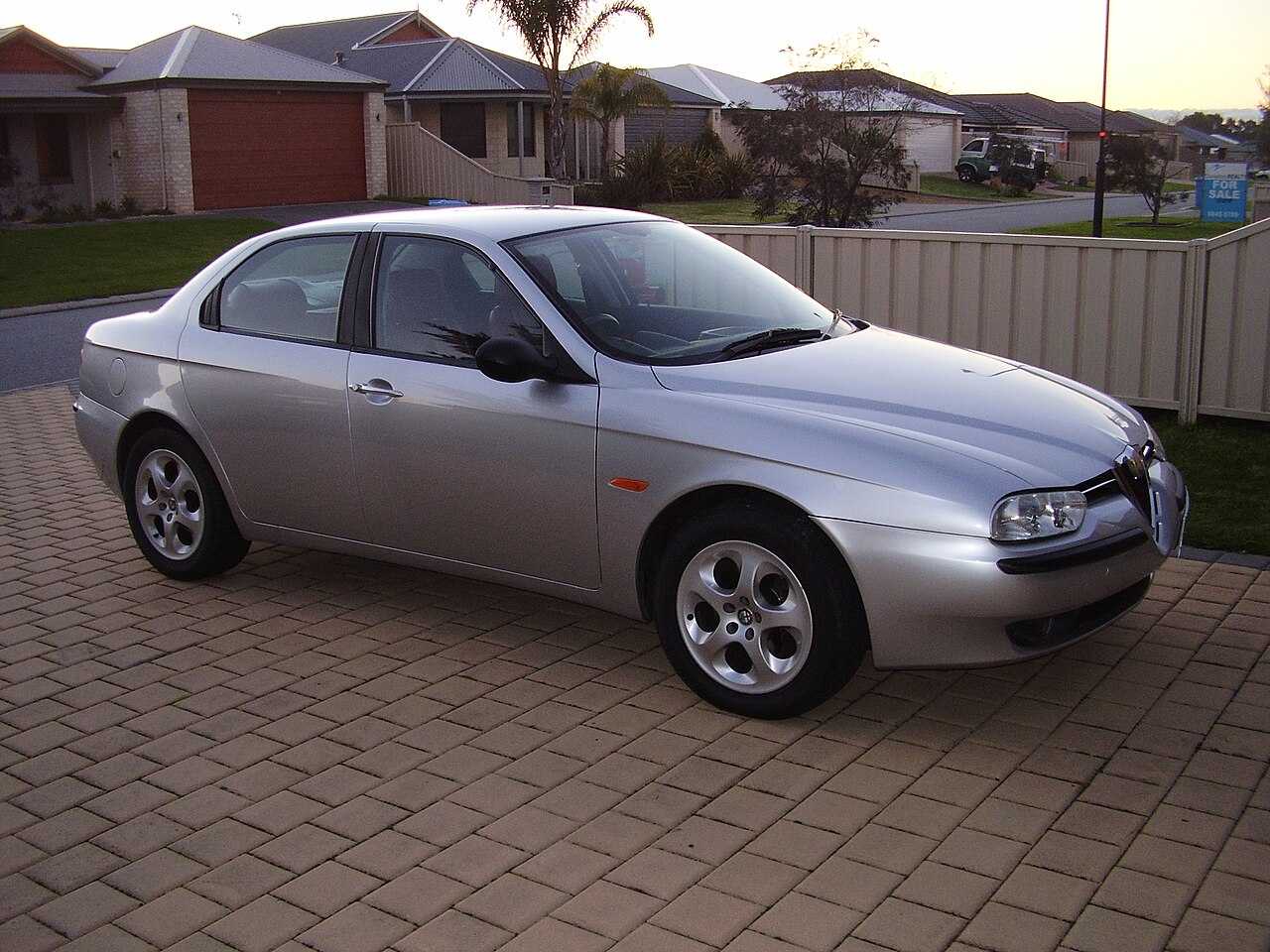
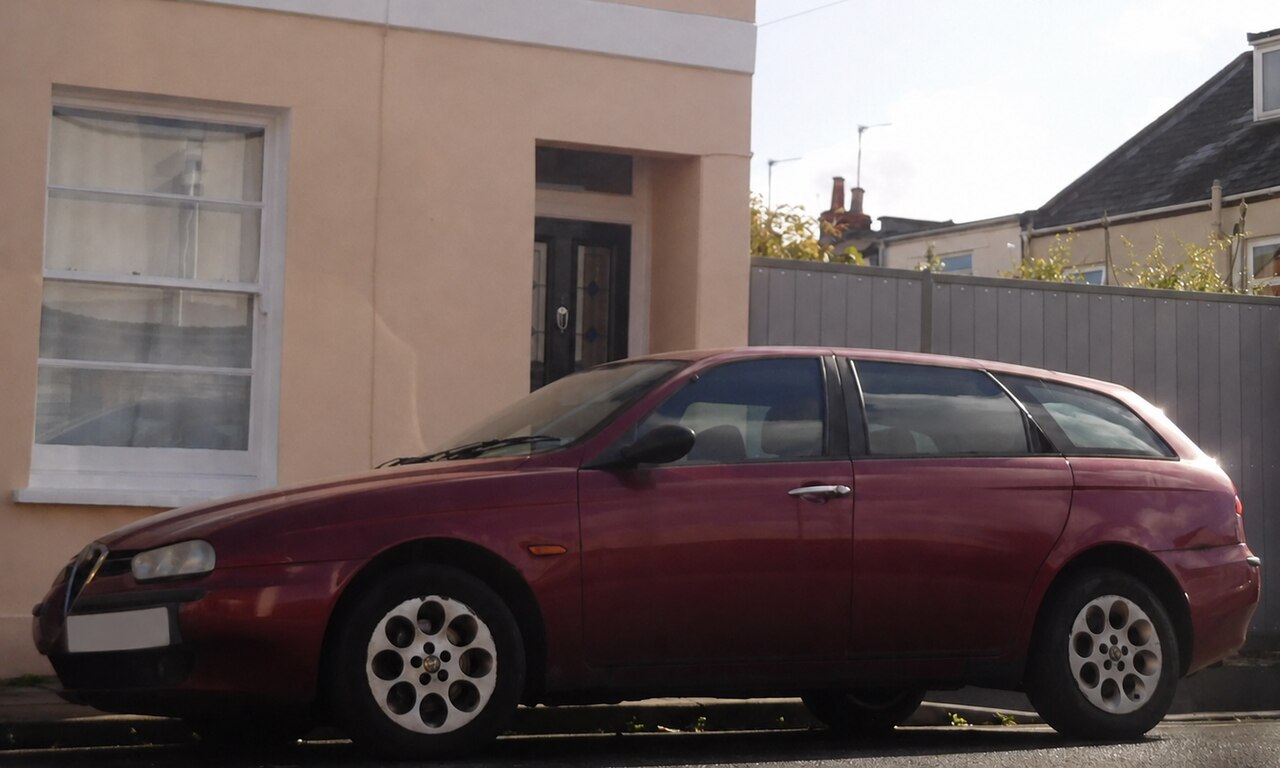
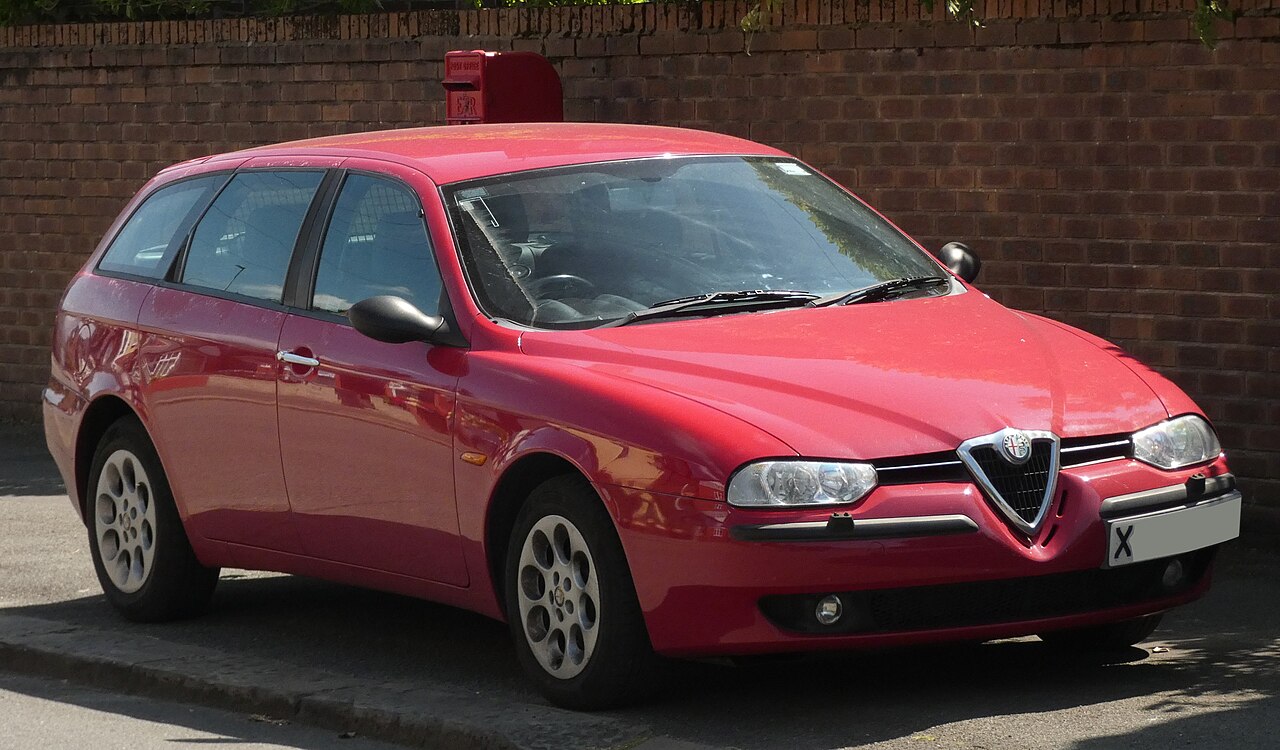
The Alfa Romeo 156, known internally as the Type 932, is a compact executive car from the Italian maker Alfa Romeo. It debuted at the 1997 Frankfurt Motor Show, taking over from the Alfa Romeo 155. The car was well-received and earned the 1998 European Car of the Year award. Production of the saloon ended in Europe in late 2005, though the Q4 Crosswagon variant continued until the end of 2007. Assembly took place at the Fiat Group plant in Pomigliano d’Arco, Italy, and at a General Motors facility in Rayong, Thailand, where output began in March 2002 and lasted only a couple of years, targeting Asia-Pacific markets. Between 1996 and 2007, 673,435 units of the 156 were produced. The 156 came as a saloon, Sportwagon estate, and Crosswagon crossover, with seven engine choices. It received two facelifts, one in 2002 and another in 2003. An advertising campaign for the Sportwagon featured actress Catherine Zeta-Jones. The 156 was succeeded by the 159 in 2005. From its launch, four-cylinder engine options included the Twin Spark units—1.6 L (120 PS), 1.8 L (144 PS), and 2.0 L (155 PS)—all 16-valve with variable valve timing, plus a 1.9-litre straight-4 8-valve diesel making 105 PS. A straight-5 2.4-litre 10-valve 136 PS JTD common-rail turbodiesel was also offered. Until January 2002, the top engine was the 2.5-litre 24-valve Busso V6, now with double overhead camshafts and four-valve heads, rated at 190 PS. Initially, buyers could choose option packs. A sport pack included Blitz clothing, Momo leather interior, Recaro seats, 16-inch wheels, lowered suspension, and a leather-trimmed steering wheel and gear knob. The Lusso pack added a Momo mahogany steering wheel and gear knob. For Nordic countries, a winter pack offered fog lights, headlight washers, and heated seats. From 1999, a five-speed Selespeed automated manual transmission was optional on the 2.0-litre Twin Spark, and a four-speed automatic Q-System was available on the 2.5-litre V6. The Q-System allowed normal automatic operation or manual shifting with an H-pattern, plus three automatic modes: city, sport, and ice. A major addition came in 2000 with the Sportwagon estate, unveiled at the Geneva Motor Show. Stola developed it from 1998 under project code '932 AF', with the initial name "Powerwagon" considered.
Quick Facts
- Manufacturer
- Fiat Auto
- Production
- 1996–2007
- Assembly
- Italy: Pomigliano d'Arco (Pomigliano d'Arco plant) · Thailand: Rayong (GM Thailand)
- Designer
- Walter de Silva at Centro Stile Alfa Romeo · Giorgetto Giugiaro at Italdesign (2003 facelift)
- Class
- Compact executive car (D)
- Layout
- Front-engine, front-wheel-drive · Front-engine, four-wheel-drive
- Related
- Alfa Romeo 147 · Alfa Romeo GT · Fiat Bravo/Brava · Fiat Marea · Lancia Lybra · Alfa Romeo Dardo
- Transmission
- 5-speed manual · 6-speed manual · 5-speed Selespeed automated manual · 6-speed Selespeed automated manual (GTA) · 4-speed Aisin Q-System automatic
- Wheelbase
- 2595 mm
- Length
- 4430 mm · 4441 mm (Sportwagon Q4) · 4441 mm (Crosswagon Q4)
- Height
- 1415 mm · 1430 mm (Sportwagon) · 1458 mm (Sportwagon Q4) · 1497 mm (Crosswagon Q4)
- Weight
- 1230 –
Facts from the source article.
Lore & Background
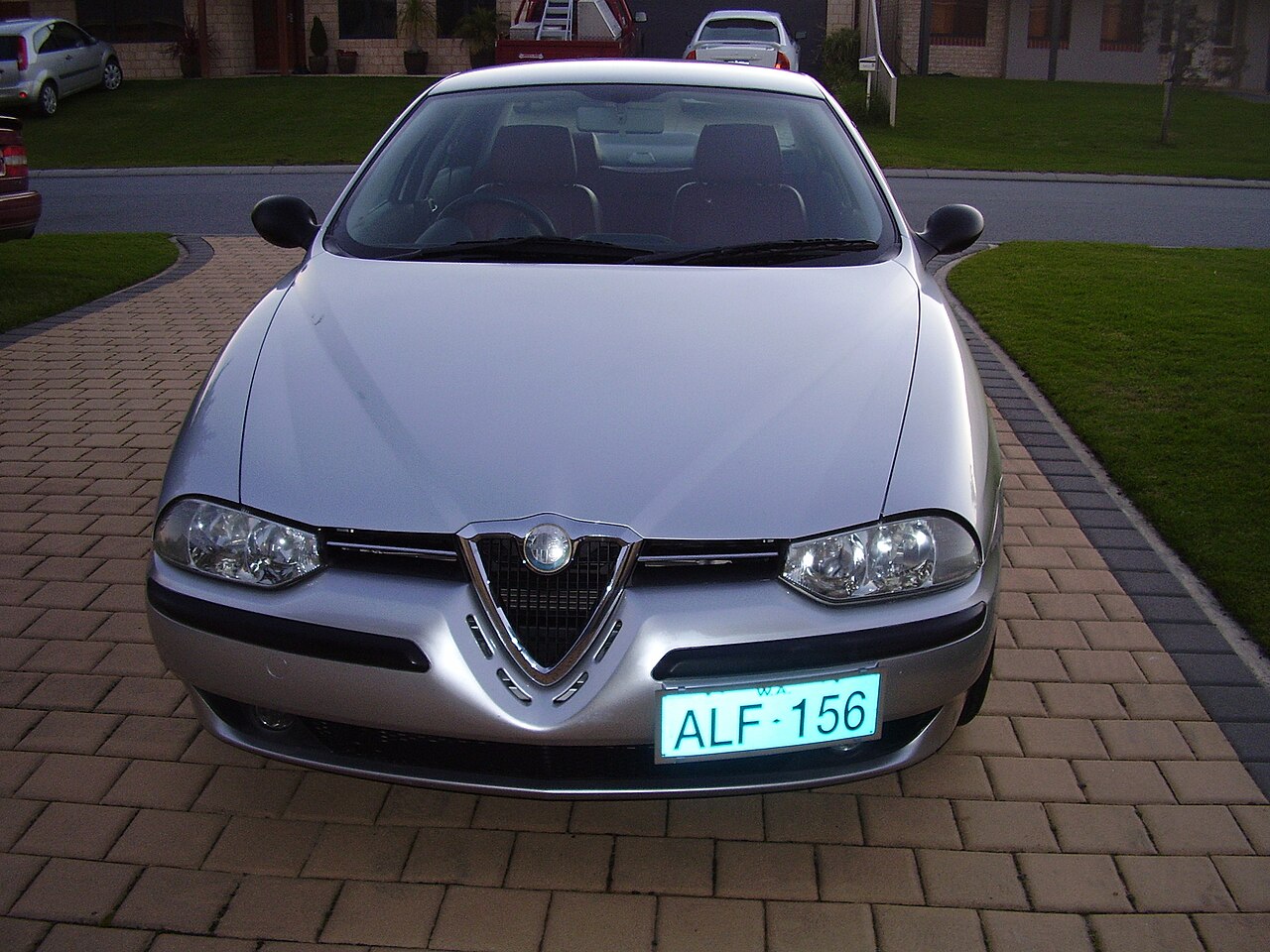
The 156's design, led by Walter de'Silva at Alfa Centro Stile, featured high curved flanks, retro front door handles, recessed rear handles, and a deep grille requiring an off-centre licence plate holder. The styling visually de-emphasized the rear doors to create a coupé-like profile, influenced by the Alfa Romeo 1900, Giulietta and Giulia. The drag coefficient was 0.31. The interior originally used a scalloped upper dashboard and a centre console angled toward the driver, lacking cup holders.
Reader's Guide
The Alfa Romeo 156 is significant for its distinctive design language that revived classic Alfa Romeo styling cues while achieving a low drag coefficient. Its European Car of the Year award in 1998 underscored its impact at launch. The model expanded Alfa Romeo's reach with the Sportwagon estate, filling a gap left since the 33 SportWagon of the 1980s, and the Crosswagon crossover. The GTA variant, with its 3.2-litre 'Bussone' V6 engine, became a collector's item due to limited production—2,973 berlinas and 1,678 Sportwagons built until October 2005. The 156's two facelifts and engine upgrades, including the introduction of direct injection (JTS) and improved diesel engines, kept it competitive. Production in Thailand from March 2002 targeted Asia-Pacific markets. The 156 was succeeded by the 159 in 2005, but its legacy endures as a design benchmark and a model that re-established Alfa Romeo's identity in the compact executive segment.
Did You Know?
- The Sportwagon advertising campaign featured actress Catherine Zeta-Jones.
- The GTA's 3.2-litre V6 engine was the largest iteration of the Busso engine family.
- The first GTA was sold via online auction during the 2001 Frankfurt Motor Show, with the winning bid of €48,691.26 donated to the Telethon charity.
Design Philosophy & Engineering
The Alfa Romeo 155 marked a pivotal shift in the brand's engineering identity. Built on Fiat Group's Tipo Tre platform to succeed the 75, it represented the first model developed under Fiat's ownership, a fact that would later weigh heavily on its reception. The Italian design studio I.DE.A Institute shaped the bodywork, achieving an impressive drag coefficient of just 0.29 while still delivering a generous 525-litre boot. The most consequential technical departure from the 75 was the move to a front-wheel-drive layout, a change that would become the 155's most frequently criticized aspect. At the performance end of the range, the Q4 borrowed its entire powertrain from the Lancia Delta Integrale, pairing a 190-horsepower turbocharged four-cylinder with a permanent four-wheel-drive system featuring three distinct differentials. Buyers could choose between the Sport trim, with its lowered ride height and firmer damping, or the more luxurious Super, which offered wood inlays and electronically adjustable dampers.
Racing Pedigree & the Silverstone Controversy
Although the 155's road-car reception was muted, its touring car racing program proved transformative for the model's reputation. Alfa Romeo entered the 155 in major touring car championships and achieved consistent success, gradually rehabilitating the car's image among enthusiasts. The most dramatic chapter came in the 1994 British Touring Car Championship, where the Silverstone edition, marketed as Formula in continental Europe, was created to homologate a bolt-on aerodynamic pack for the race car. The kit, stored in the boot, included an adjustable rear spoiler and an extendable front splitter. Rival teams protested the arrangement as an unfair advantage, and after Alfa Romeo missed one round, the manufacturer was compelled to run the remainder of the season with the aero set to its lowest downforce configuration. A curious technical detail: the road car used a lighter 1.8-litre engine rather than the 2.0-litre unit in the racer, because the narrower bore allowed a longer stroke while remaining within the 2.0-litre displacement cap. The Silverstone was offered exclusively in Alfa red or black, with plain unpainted bumpers.
The 1995 Widebody Transformation
By 1995, Alfa Romeo recognized the 155 needed a substantial refresh to remain competitive. The result was the widebody Series 2, which introduced wider front and rear tracks, subtly enlarged wheel arches, and a quicker steering rack delivering just 2.2 turns lock-to-lock. Initially restricted to the 2.0-litre model, the sharper steering was later extended to the 1.8-litre variant. Under the bonnet, the aging eight-valve, chain-driven camshaft engines gave way to new sixteen-valve cylinder heads with belt-driven camshafts, designed by Alfa Romeo but still built on Fiat-origin engine blocks. In European markets, the 1.7-litre Twin Spark was swapped for a 1.6-litre sixteen-valve Twin Spark. The 2.5-litre V6, derived from the larger 164's 3.0-litre unit, continued in the widebody form, though the Q4 was dropped from the range. Interior materials and equipment levels were also revised to keep the car competitive. Visually, Series 2 cars are distinguished by their flared front arches and smooth rear arches, replacing the earlier lip detail.
Reception, the Shadow of the 75, and Final Chapter
The 155's launch in January 1992 in Barcelona, followed by its public debut at the Geneva Motor Show in March, was met with broadly lukewarm response. A central reason was the lingering prestige of the 75, the last car Alfa Romeo had designed entirely independently before Fiat's acquisition. Enthusiasts and journalists frequently pointed to the abandonment of rear-wheel drive as the defining disappointment, a loss that colored much of the early criticism. It was only through sustained success in touring car racing that the 155's standing gradually improved. Despite these headwinds, the model found a steady market, with 195,526 units produced over its six-year run. Notably, Alfa Romeo never offered the 155 in its Sportwagon estate format, though a proposal from Sbarro in 1994 for such a variant never progressed to production. Production ended in 1998, with the 156 stepping in as the successor and bringing the 155's story to a close.
Gallery
More in Touring Cars 1-24
Spotted an error? Know more?
Reader corrections go straight into our review queue. Suggest an edit · How this site is sourced