
Audi TT
Audi's sports coupé and roadster named after the Isle of Man TT race.

Chris Woodrich · CC BY-SA 4.0
The Audi TT was a sports car produced by Audi between 1998 and 2023, spanning three generations. It was available as a 2+2 coupé or a two-seat roadster. Its name comes from the Isle of Man TT (Tourist Trophy) motorcycle race, a competition where NSU—one of Audi’s corporate predecessors—achieved notable success. The nameplate has also been linked to the slogan "Technology & Tradition."
Each generation of the TT was built on a successive version of Volkswagen’s "Group A" platform, starting with the fourth-generation PQ34. It shared its powertrain and suspension with other models on those platforms, such as the Audi A3. This meant a transversely mounted front engine, driving either the front wheels or all four wheels, and fully independent suspension with MacPherson struts at the front.
The first two generations were assembled by Audi’s Hungarian subsidiary—one of the world’s largest engine plants—using bodyshells made and painted at Audi’s Ingolstadt facility. For the third generation, the Hungarian factory produced all parts itself. A total of 662,762 Audi TTs were built, with the final car rolling off the line in November 2023.
Design work on the TT began in spring 1994 at the Volkswagen Group Design Center in California. It debuted as a concept at the 1995 Frankfurt Motor Show. The exterior design is credited to J Mays and Freeman Thomas, while Hartmut Warkuss, Peter Schreyer, Martin Smith, and Romulus Rost contributed to the interior. A laser beam welding technique, which allowed for seamless body panels, delayed the first-generation model’s launch.
Audi did not offer an automatic transmission for the TT until 2003, when it introduced a six-speed dual-clutch Direct-Shift Gearbox (DSG). The right-hand-drive version sold in the United Kingdom became the world’s first market for a dual-clutch transmission in a right-hand-drive car, though the overall first road car with a dual-clutch gearbox was the left-hand-drive Volkswagen Golf Mk4 R32.
**Mk1 (Type 8N, 1998–2006)** The production coupé arrived in September 1998, followed by a roadster in August 1999. It used the Volkswagen Group A4 (PQ34) platform, shared with the Golf Mk4, original Audi A3, and Škoda Octavia. The styling closely followed the concept, with slightly revised bumpers and added rear quarterlight windows. Factory production began in October 1998.
Quick Facts
- Manufacturer
- Audi AG
- Production
- February 1998 – November 2023
- Model Years
- 1999–2023
- Assembly
- Hungary: Győr (engines and final assembly)
- Class
- Sports car (S)
- Layout
- Front-engine, front-wheel-drive · Front-engine, all-wheel-drive (quattro)
- Platform
- Volkswagen Group A / Volkswagen Group MQB
- Sp
- uk
Facts from the source article.
Lore & Background
Styling of the Audi TT began in the spring of 1994 at the Volkswagen Group Design Center in California. The TT was first shown as a concept car at the 1995 Frankfurt Motor Show. The design is credited to J Mays and Freeman Thomas, with Hartmut Warkuss, Peter Schreyer, Martin Smith and Romulus Rost contributing to the interior design. A laser beam welding technique, which enabled seamless design features on the first-generation TT, delayed its introduction.
The production model (internal designation Type 8N) was launched as a coupé in September 1998, followed by a roadster in August 1999. It is based on the Volkswagen Group A4 (PQ34) platform. Early TTs were cited in a series of fatalities from accidents involving speeds over 180 km/h, abrupt lane changes or sharp turns. Both variants were recalled in late 1999/early 2000 to improve handling predictability at very high speeds. Audi's Electronic Stability Programme (ESP) or Anti Slip Regulation (ASR) were added, as well as a rear spoiler, along with modifications to the suspension system.
The TT shared powertrain and suspension layouts with other models made on these platforms, including the Audi A3, like a transversely mounted front-engine, powering front-wheel drive or four-wheel drive, and fully independent suspension using MacPherson struts in the front. The first generation was available with a 1.8-litre inline four-cylinder 20-valve turbocharged engine in two states of power output (180 PS and 225 PS), and later a 3.2-litre VR6 engine rated at 250 PS. In 2003, Audi offered a dual clutch six-speed Direct-Shift Gearbox (DSG), with the United Kingdom TT variants becoming the world's first market for a dual clutch transmission configured for a right-hand drive vehicle.
Reader's Guide
The Audi TT's significance lies in its distinctive design and its role as a halo model for the Audi brand. The first generation's styling, inspired by Bauhaus according to Audi Head of Design Marc Lichte, was unusual at the time for its curved outline and rounded bodywork. The TT was nominated for the North American Car of the Year award for 2000 and made Car and Driver magazine's Ten Best list for 2000 and 2001. Its production spanned 25 years and three generations, with a total of 662,762 units built, the last manufactured in November 2023.
The TT's legacy includes technical innovations such as the early adoption of a dual clutch transmission in a right-hand drive configuration. The model also faced challenges, including high-speed accidents that led to the addition of stability control and a rear spoiler, as well as class action lawsuits regarding timing belt failures and defective instrument clusters. The limited-edition TT quattro Sport, built by Audi's high-performance subsidiary quattro GmbH, demonstrated the model's performance potential with a weight reduction of 75 kg and increased power to 240 PS. The TT nameplate continues the tradition of NSU and DKW racing success at the Isle of Man TT, linking the car to Audi's motor racing heritage.
Did You Know?
- The Audi TT takes its name from the Isle of Man TT motorcycle race, where NSU and DKW, Audi's predecessors, had enjoyed considerable motor racing success.
- The first-generation TT was recalled in late 1999/early 2000 to improve handling predictability after a series of high-speed fatalities.
- Only 1,165 units of the limited-edition TT quattro Sport were produced, with 800 having right-hand drive and 365 left-hand drive.
Design Philosophy & Engineering Innovation
The Audi TT's visual identity was born in the spring of 1994 at Volkswagen Group's Design Center in California, with J Mays and Freeman Thomas leading the styling effort. The car debuted as a concept at the 1995 Frankfurt Motor Show before reaching production. Audi's head of design Marc Lichte later explained that the first generation's rounded, curvaceous silhouette drew inspiration from the Bauhaus movement — a bold choice in an era when angular lines dominated. The production coupé launched in September 1998, with only minor departures from the concept: slightly reprofiled bumpers and the addition of rear quarterlight windows. A laser beam welding technique allowed the seamless body panels that became the TT's signature, though this very innovation delayed the car's market introduction. The drag coefficient settled at 0.35, competitive with rivals like the BMW Z4 and Mazda MX-5. The interior design was a collaborative effort involving Hartmut Warkuss, Peter Schreyer, Martin Smith, and Romulus Rost.
A Name Rooted in Racing Heritage
The TT designation traces directly to the Isle of Man Tourist Trophy motorcycle race, a competition where Audi's predecessor NSU achieved notable success. NSU first entered the TT in 1907, with UK manager Martin Geiger finishing fifth in the single-cylinder class. A more celebrated moment came in 1938, when Ewald Kluge claimed victory in the Lightweight TT aboard a 250 cc supercharged DKW motorcycle. DKW and NSU would eventually merge into the company that became Audi, carrying that racing pedigree forward. The 1960s saw NSU field the 1000TT, 1200TT, and TTS automobiles, all borrowing the race's name. The modern TT continues this unbroken lineage. Audi has also suggested the letters stand for Technology and Tradition, a duality that captures the car's character: a design language steeped in mid-century modernism paired with contemporary engineering. The name thus serves as both a tribute to decades of two-wheeled competition and a statement of brand philosophy.
Powertrain Architecture & Transmission Milestones
Mechanically, the TT shared its fundamental layout with other Volkswagen Group A-platform vehicles, including the Audi A3 and Golf Mk4: a transversely mounted front engine driving either the front wheels or, via Haldex Traction, all four through the Quattro system, with MacPherson strut independent suspension up front. The first generation offered a 1.8-litre inline-four turbocharged engine in two outputs — 180 PS and 225 PS — the latter distinguished by a larger K04 turbocharger, an additional intercooler, larger wrist-pins, and a higher peak boost of roughly 15 psi versus 10. In early 2003, a 3.2-litre VR6 rated at 250 PS joined the range, standard with quattro. That same year, Audi introduced a six-speed dual-clutch Direct-Shift Gearbox. The UK market became the first to receive a right-hand-drive car equipped with this transmission, though the outright world first for a road car with a DSG was the left-hand-drive Golf Mk4 R32.
Production, Safety, and Final Chapter
The TT's first two generations were assembled at Audi's Hungarian subsidiary, one of the world's largest engine manufacturing plants, using bodyshells built and painted at the Ingolstadt headquarters. The third generation marked a shift, with the Hungarian factory producing all parts. Across its entire run, 662,762 TTs were manufactured, the final one rolling off the line in November 2023. The car's early life was marred by a series of fatal accidents at speeds above 112 mph, attributed to aerodynamic instability during abrupt lane changes or sharp turns. Audi responded with a recall in late 1999 and early 2000, fitting ESP or ASR systems, a rear spoiler, and revised suspension components including modified control arms and firmer shock absorbers. The TT earned recognition as a 2000 North American Car of the Year nominee and appeared on Car and Driver's Ten Best list in both 2000 and 2001. In 2005, a coupé-only limited edition, the TT quattro Sport, was produced in just 1,165 units.
Gallery
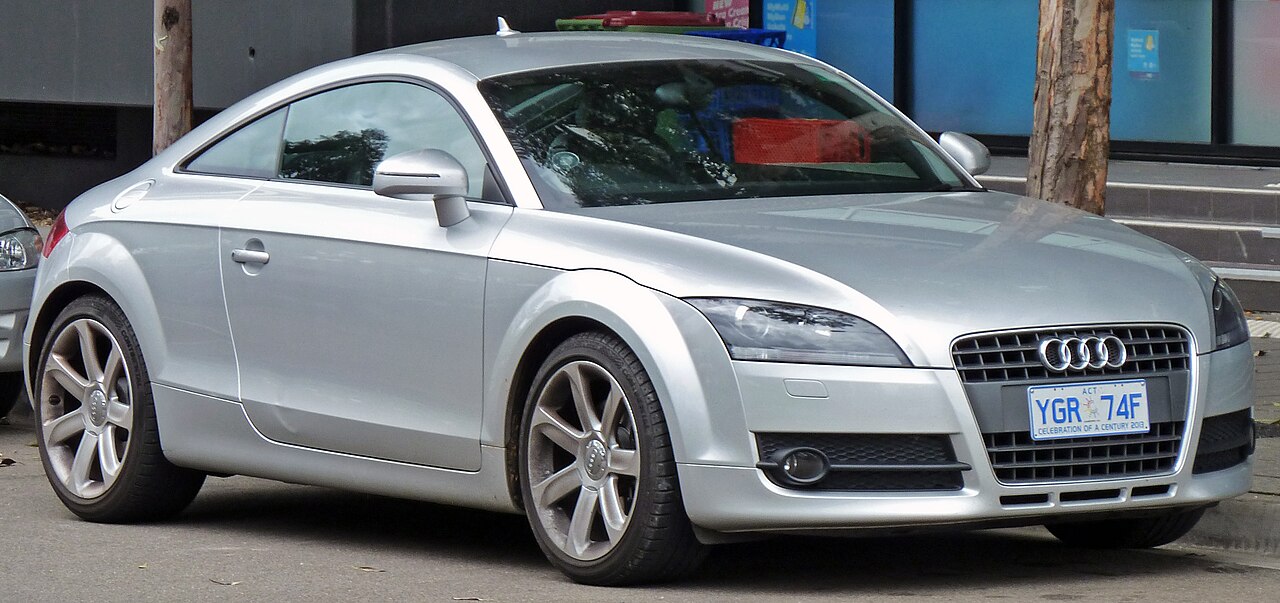
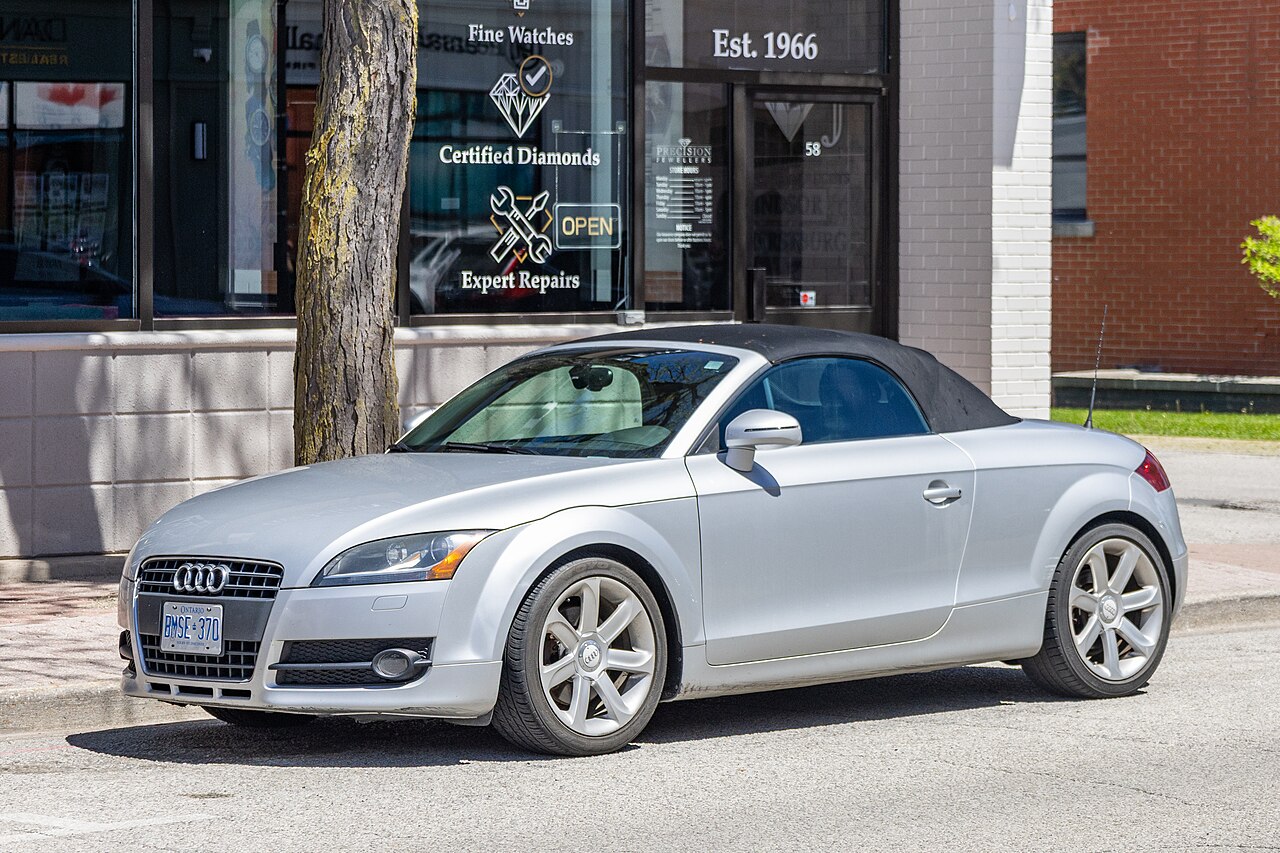
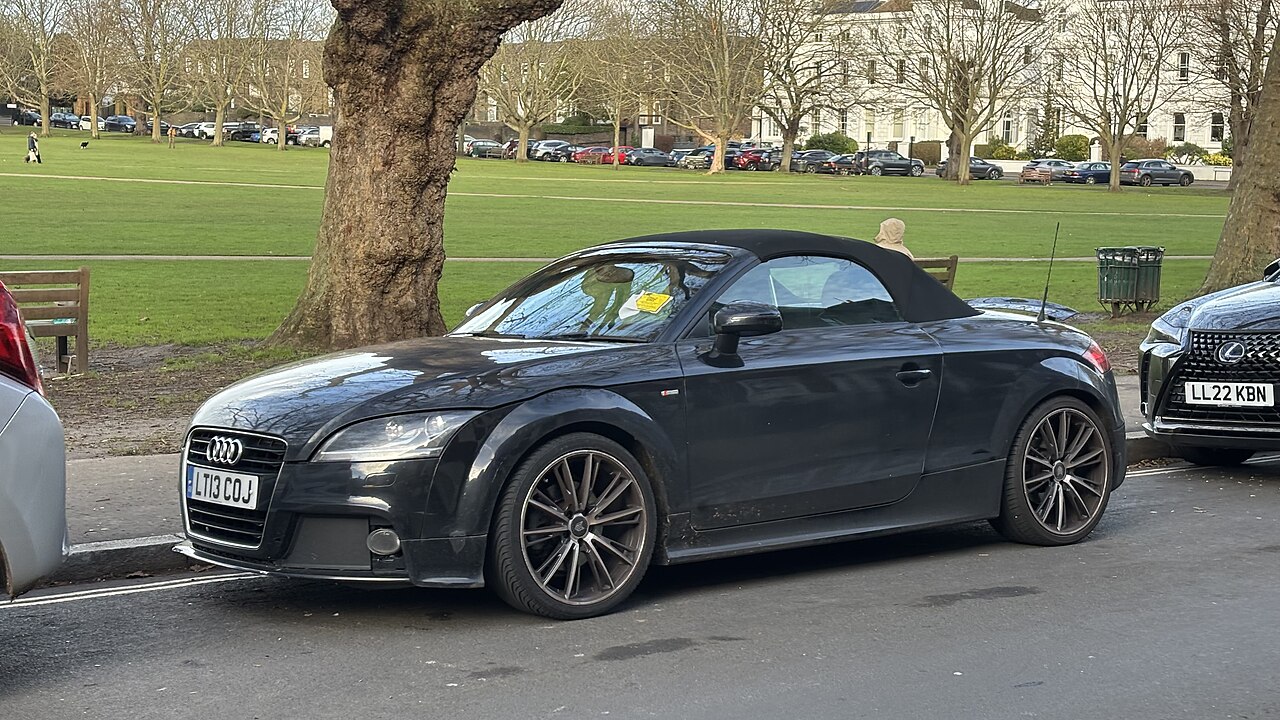
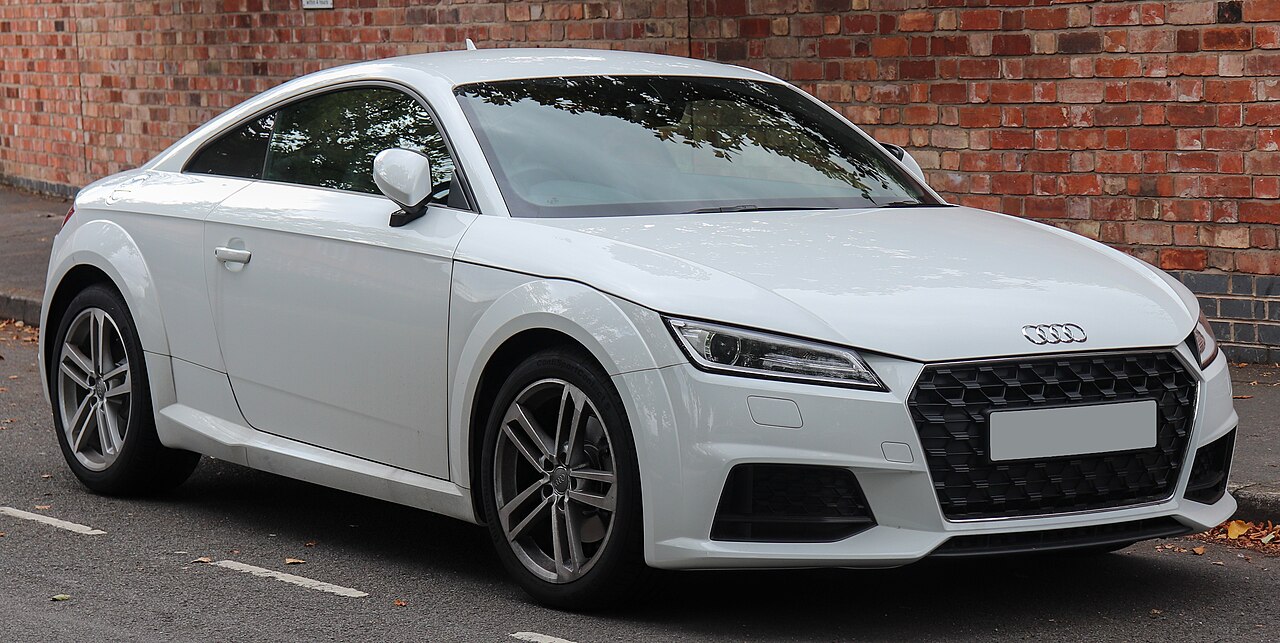
More in Touring Cars 1-24
Spotted an error? Know more?
Reader corrections go straight into our review queue. Suggest an edit · How this site is sourced