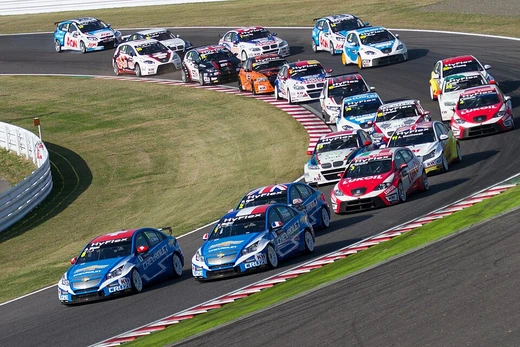
Audi A4
Audi's compact executive car spanning five generations from 1994 to 2025.

Calreyn88 · CC BY-SA 4.0
The Audi A4 is a line of luxury compact executive cars produced from 1994 to 2025 by the German car manufacturer Audi, a subsidiary of the Volkswagen Group. Built in five generations, it succeeded the Audi 80 and is based on the Volkswagen Group B platform, with the automaker's internal numbering treating the A4 as a continuation of the Audi 80 lineage. The A4 is available as a sedan and station wagon, with front-wheel drive or quattro all-wheel drive, and has been manufactured in Ingolstadt since its beginning, in Changchun China by FAW-VW since 2003, and in Aurangabad India by Audi India since 2007.
Quick Facts
- Manufacturer
- Audi AG
- Production
- 1994–2025
- Class
- Compact executive car (D)
- Platform
- Volkswagen Group B platform (1994–2008) / Volkswagen Group MLB platform (2007–2024)
- Layout
- Front-engine, front-wheel-drive or quattro permanent four-wheel-drive
- Sp
- uk
- Predecessor
- Audi 80
- Successor
- Audi A5 (B10)
Facts from the source article.
Lore & Background
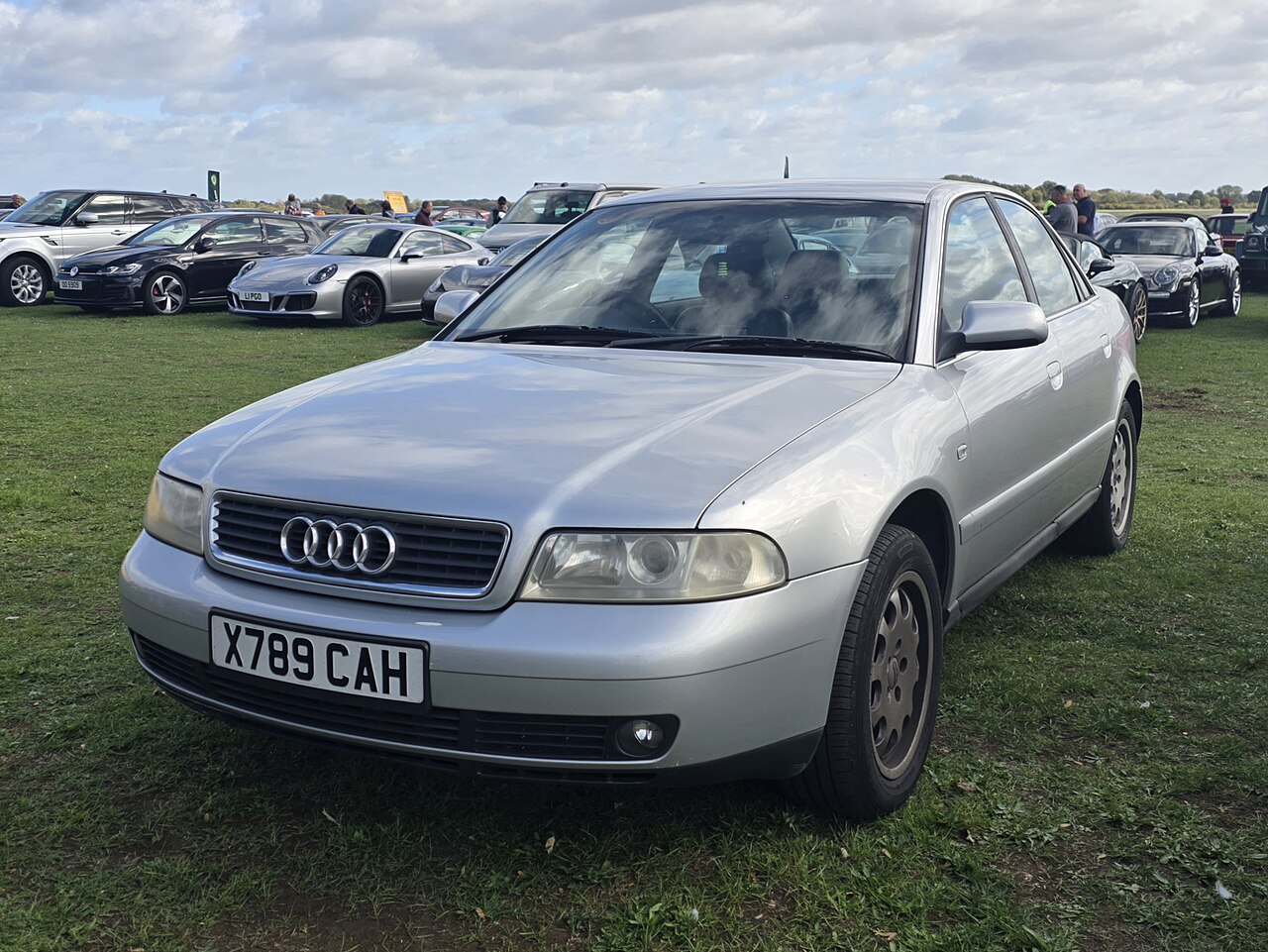
The first generation A4 (B5, Typ 8D) debuted in October 1994, with production starting November 1994 and European sales in January 1995. Development began in 1988, with an exterior design by Imre Hasanic chosen by 1991 and frozen for production by 1992. It was built on the Volkswagen Group B5 platform shared with the fourth generation Volkswagen Passat. The B5 introduced the 1.8-litre 20v engine with five valves per cylinder and the tiptronic automatic transmission based on the unit Porsche developed for the 964-generation 911. A significant facelift in 1998 brought a 2.8-litre 30-valve V6 engine and a 2.5-litre V6 TDI diesel, with cosmetic updates including new rear lights, headlights, and door handles. A further facelift in February 1999 as a 1999.5 model affected bumpers, lights, center console, and door handles, with no two body panels directly interchangeable between pre- and post-facelift models. The B5 also saw the debut of the high-performance RS4 Avant in 1999.
Reader's Guide
The Audi A4 B5 marked Audi's continued move into the midsize luxury car segment, having started this trajectory with later model years of the preceding Audi 80/90 B4. Despite initial mechanical problems, overall build and assembly quality were lauded both by the automotive press and within Audi and Volkswagen, and parent company Volkswagen declared the B5 the company-wide build quality benchmark for all its other models. The B5 was the first European car manufacturer to put a hybrid vehicle into mass production in 1997, the third generation Audi duo based on the A4 Avant. The B6 generation (Typ 8E) debuted in October 2000 on the Volkswagen Group B6 platform, with styling developed under Peter Schreyer between 1996 and 1998, inspired by the Bauhaus design language of the C5 Audi A6. It introduced a 3.0-litre V6 engine and a 1.9 TDI with Pumpe Düse technology. The B8 and B9 versions moved to the Volkswagen Group MLB platform, and the convertible, coupé, and 5-door liftback variants were spun off into the Audi A5 nameplate. The B9 generation A4 and A5 will be replaced by the B10 version of the A5 as part of Audi's new naming convention.
Did You Know?
- The first generation A4 (B5) was the first Volkswagen Group model to feature a 1.8-litre 20v engine with five valves per cylinder.
- Audi debuted the tiptronic automatic transmission on the B5 platform, based on the unit Porsche developed for the 964-generation 911.
- In 1997, Audi became the first European car manufacturer to mass-produce a hybrid vehicle, the third generation Audi duo based on the A4 Avant.
- The B5 A4 received 3 stars in Euro NCAP safety tests, with a flagged risk of chest injury in side impact.
Lineage & the B-Series Identity
The Audi A4 carries a fascinating internal identity. Rather than being treated as an entirely new model, Audi's own numbering system positions it as the direct successor to the Audi 80. The first A4, introduced in 1994, was designated the B5 series, and each subsequent generation followed in sequence: B6, B7, B8, and B9. This continuity underscores how deeply the A4 is woven into Audi's heritage. The model ran from 1994 through 2025, spanning five generations. A notable shift in product architecture occurred with the B8 and B9 generations: the convertible, coupé, and 5-door liftback variants that had previously lived under the A4 name were spun off into a separate nameplate, the Audi A5. Looking ahead, the B9 A4 and A5 are set to be replaced by a B10-generation A5 under Audi's revised naming convention, signaling another chapter in this long-running lineage.
Platform Architecture & Drivetrain Layout
The A4's mechanical foundation has evolved alongside the broader Volkswagen Group. The first three generations (B5, B6, B7) were built on the VW Group B platform, with the B5 sharing its underpinnings with the fourth-generation Volkswagen Passat. The B8 and B9 moved to the MLB platform, a structure shared across multiple VW Group brands. Every A4 uses a front-mounted longitudinal engine paired with a transaxle-type transmission at the rear of the engine bay. Standard drivetrain is front-wheel drive, though many models offered Audi's quattro all-wheel-drive system. Body styles included sedan and station wagon (Avant) across all generations, while the B6 and B7 also offered a convertible. One of the B5's engineering highlights was the tiptronic automatic transmission, derived from a unit Porsche had developed for the 964-generation 911, giving drivers full automatic operation or manual gear selection through a torque-converter gearbox.
Powertrain Evolution & Performance Ladder
The A4's engine lineup tells a story of steady technological advancement. The B5 was the first VW Group model to feature the 1.8-litre 20-valve engine with five valves per cylinder, a design rooted in Audi Sport's work. Its turbocharged 1.8T variant delivered 150 PS, later raised to 170 PS outside Europe, while a quattro GmbH special edition pushed output to 180 PS. The V6 family was reengineered in 1997 with five-valve technology, starting with a 2.8-litre 30-valve unit producing 193 PS. A 2.4-litre variant was developed specifically for Thailand, where import duties jumped from 60 to 100 percent on engines exceeding 2,400 cc. Diesel options included a 1.9-litre unit with VE technology and, by the facelift, a 2.5-litre V6 TDI producing 150 PS. The performance ladder was topped by the S4 and, in 1999, the RS4 Avant, a RennSport model representing Audi's highest-performance A4 offering.
Global Manufacturing & Market-Specific Engineering
From its inception, the A4 has been a genuinely global product. Production has been anchored in Ingolstadt, Germany, since 1994, but manufacturing expanded to Changchun, China, through FAW-VW starting in 2003, and to Aurangabad, India, via Audi India from 2007. Market-specific engineering was no less important: the B5's engine range varied by region, with European buyers choosing from petrol engines between 1.6 and 2.8 litres plus a 1.9-litre diesel, while North American customers initially received only the 2.8-litre V6 until 1997. The Thai market received a dedicated 2.4-litre engine to stay under a punitive 100-percent import duty threshold. The A4's build quality was so well regarded that Volkswagen itself declared the B5 the company-wide benchmark for assembly across all its brands, a testament to the Ingolstadt plant's standards.
Gallery
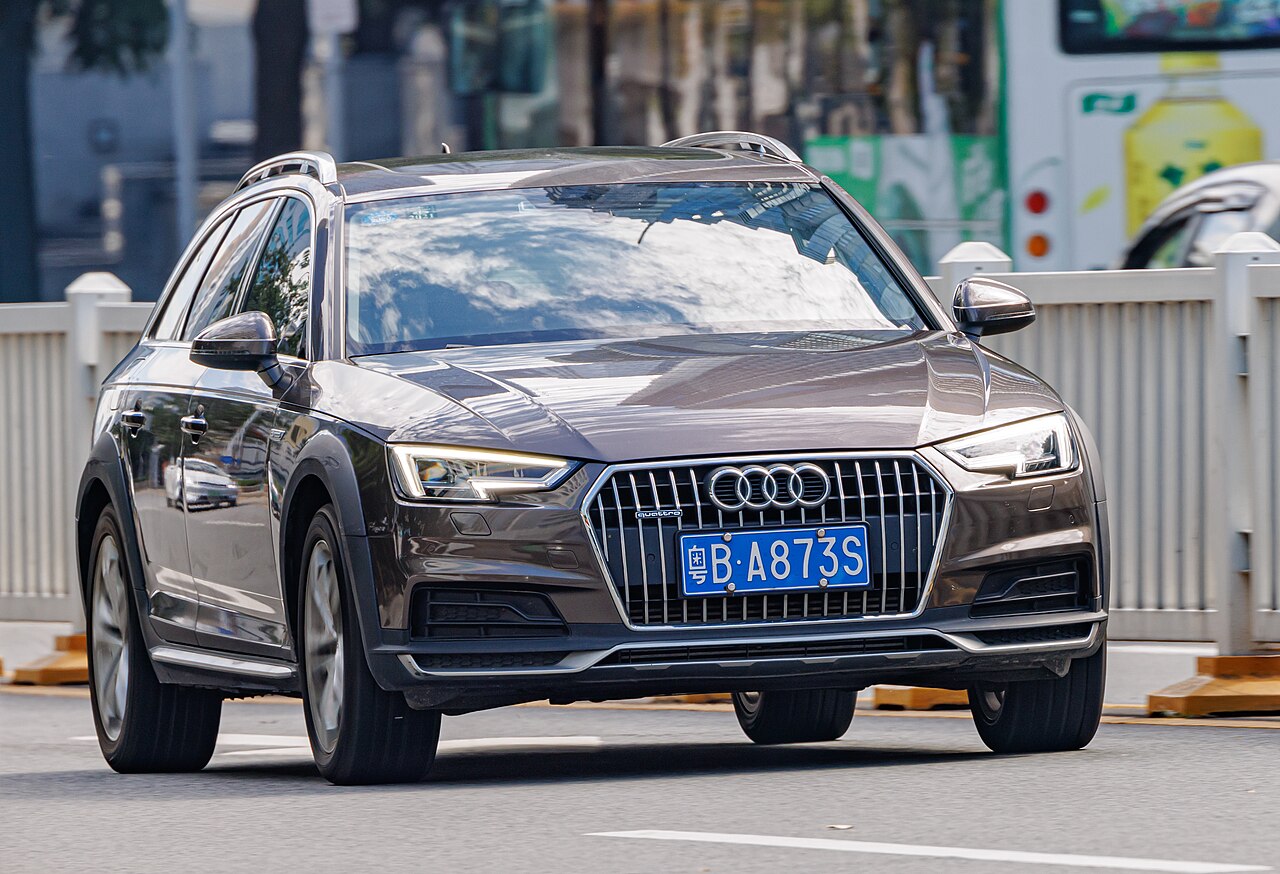
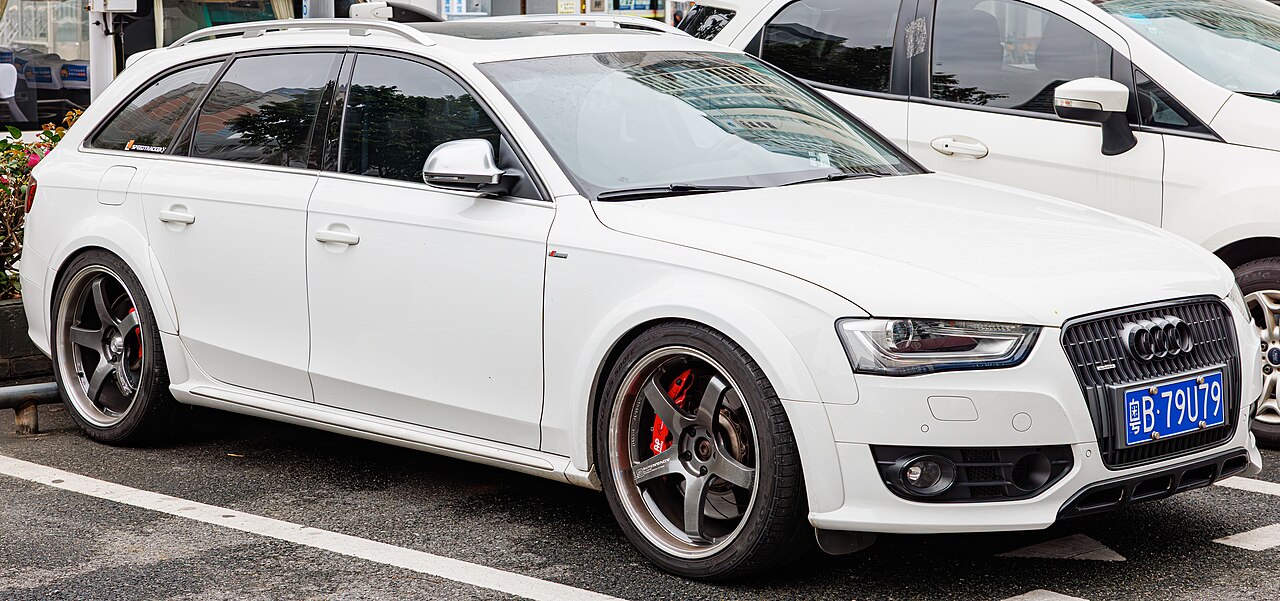

More in Touring Cars 1-24
Spotted an error? Know more?
Reader corrections go straight into our review queue. Suggest an edit · How this site is sourced