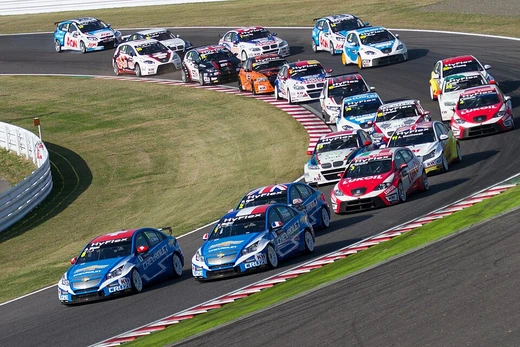
Audi A3
Audi's return to small cars after 19 years.

Alexander Migl · CC BY-SA 4.0
The Audi A3 is a compact family car in the C-segment, produced by the German manufacturer Audi AG. It first went on sale in September 1996. The first two generations were built on the Volkswagen Group A platform, while the third and fourth generations shifted to the Volkswagen Group MQB platform.
The first generation, known as the Typ 8L, was announced in June 1995 and launched in Europe in September 1996. This marked Audi’s return to the small car market after a 19-year gap, following the end of the Audi 50 in 1978. The A3 was the first Volkswagen Group model to use the PQ34 (or "A4") platform, which closely resembled the platform of the Volkswagen Golf Mk4, introduced a year later. Within three years, seven different vehicles used this platform. Initially, only a three-door hatchback was offered to give the car a sportier image and set it apart from the Golf. The A3 came with transversely mounted inline four-cylinder engines, available in front-wheel drive or quattro four-wheel drive. It was Audi’s eighth model to feature five valves per cylinder. The dashboard design was later shared with the first-generation SEAT León and second-generation SEAT Toledo. The UK market received the A3 in November 1996.
In 1999, Audi expanded the range with a five-door hatchback and two new engines: a 1.8-liter turbocharged inline four-cylinder producing 180 PS, and a 1.9-liter TDI diesel with unit injector ("Pumpe Düse") technology and a variable geometry turbocharger. The four-wheel-drive A3 1.8T Quattro used either the 150 PS or 180 PS engine, paired with the same Haldex Traction-based quattro system found in the Audi S3 and Audi TT. In late 2000, the A3 received updated headlights and taillights, an improved interior, and minor cosmetic changes. A six-speed manual gearbox was introduced for the 180 PS 1.8T and the new 130 PS 1.9 TDI. Electronic stability control, traction control, and brake force distribution became standard in some countries after this update. Although the first generation was replaced in Europe in 2003, it continued to be sold in select markets, with Brazilian production lasting until 2006.
The first-generation A3 earned a Euro NCAP rating of 4 out of 5 stars. The evaluation noted that the column lock, adjuster lever, and bracket posed knee-impact hazards for the driver, potentially causing high loads on the upper legs and knee damage.
Quick Facts
- Manufacturer
- Audi AG
- Production
- 1996–present
- Class
- Small family car (C)
- Layout
- Front-engine, front-wheel-drive/all-wheel-drive (quattro)
- Sp
- uk
Facts from the source article.
Lore & Background
Audi announced the first generation A3 (Typ 8L) in June 1995, launching for the European market in September 1996. It marked Audi's return to small cars after 19 years, following the demise of the Audi 50 in 1978. The A3 was the first Volkswagen Group model to use the PQ34 platform, bearing close resemblance to the Volkswagen Golf Mk4. Initially only available as a three-door hatchback to give it a sportier image, it offered transversely mounted inline four-cylinder engines in both front and quattro four-wheel drive. The United Kingdom received the Audi A3 in November 1996. In 1999, a five-door hatch and new engine options were introduced, including a 1.8 L turbocharged inline four-cylinder rated at 180 PS and a 1.9 L TDI diesel with unit injector technology. The four-wheel drive A3 1.8T Quattro used the Haldex Traction-based quattro system. In late 2000, the range was updated with new headlights and taillights, an improved interior, and a six-speed manual gearbox on the 180 PS 1.8T. Although replaced in Europe in 2003, Brazilian production of the Typ 8L continued until 2006.
The second generation (Typ 8P) launched at the 2003 Geneva Motor Show, designed by Gary Telaak. Originally a three-door hatchback with four-cylinder engines, it featured the PQ35 platform, new petrol engines with Fuel Stratified Injection (FSI), and standard six-speed manual gearboxes. In mid-2003, a 2.0 Turbo-FSI version rated 200 PS and a 3.2 L VR6 engine with 250 PS were added. Haldex Traction-based quattro and S-Tronic semi-auto gearbox were introduced as options. The five-door Sportback model arrived in June 2004, being 80 mm longer with improved rear cabin space. The second generation S3, introduced in August 2006, was powered by a modified 2.0-litre turbocharged FSI petrol engine with 195 kW, achieving 0-100 km/h in 5.7 seconds. A 2008 facelift brought revised styling, common rail 2.0 TDI engines, seven-speed S tronic transmission, and optional magnetic ride adaptive shock absorbers.
Reader's Guide
The Audi A3 established itself as a significant model in the C-segment, marking Audi's return to small cars after nearly two decades. Its first generation pioneered the PQ34 platform, which was later used by seven different Volkswagen Group vehicles within three years. The A3's introduction of the Haldex Traction-based quattro system in a transverse-engine layout became a defining characteristic for the S3 and other performance variants. The second generation expanded the model's global reach, entering the North American market for the first time in 2005 with the Sportback body. The S3 variants, with their turbocharged engines and quattro systems, demonstrated Audi's ability to produce high-performance small cars. The A3's evolution through multiple platforms and body styles—three-door, five-door Sportback, and cabriolet—reflected changing market demands. Safety assessments by Euro NCAP showed mixed results: the first generation received 4 out of 5 stars, while the second generation improved driver and passenger protection but saw pedestrian safety decrease to one star. The A3 TDI Clubsport quattro concept of 2008 highlighted Audi's approach to combining performance with diesel efficiency, featuring a 224 hp 2.0-litre diesel engine and magnetic ride suspension.
Did You Know?
- The S3 was the first Audi S-series car to utilise a smaller four-cylinder engine.
- The second generation A3 was the first to be sold in the North American market, exclusively as a Sportback.
- The A3 TDI Clubsport quattro concept produced 224 hp from a 2.0-litre diesel engine.
A New Chapter for Audi's Compact Heritage
The launch of the first-generation Audi A3 in September 1996 represented a bold strategic pivot for the German marque. After the Audi 50 was discontinued in 1978, the brand had been absent from the small-car segment for nearly two decades. The Typ 8L, announced in June 1995 and reaching European roads the following autumn, signaled that Audi intended to compete in the C-segment with the same engineering rigor it applied to its larger models. To carve out a distinct identity from its Volkswagen Group sibling, the Golf Mk4, Audi initially offered the A3 exclusively as a three-door hatchback, a deliberate choice to project a sportier character. Under the hood, the range featured transversely mounted inline four-cylinder engines, with the option of quattro four-wheel drive. Notably, the A3 became Audi's eighth model to employ a five-valves-per-cylinder design, underscoring the brand's commitment to advanced engine architecture even at the compact end of its lineup. The dashboard design was also shared with the first-generation SEAT León and second-generation SEAT Toledo, illustrating the cross-brand collaboration that defined the era.
Engineering the Shared Platform Era
The Audi A3 played a foundational role in one of the most consequential engineering strategies in modern automotive history. As the first Volkswagen Group vehicle built on the PQ34 architecture, the 1996 model helped validate a shared-platform approach that would reshape the industry. Within just three years of the A3's European debut, the PQ34 underpinned seven different vehicles across the group, demonstrating the scalability and cost-efficiency of a common structural foundation. The second-generation Typ 8P, unveiled at the 2003 Geneva Motor Show, moved to the next iteration, the PQ35 platform, which supported a redesigned, more spacious cabin and new Fuel Stratified Injection petrol engines. This generation also introduced the S-Tronic semi-automatic gearbox and Haldex Traction-based on-demand quattro as options on higher-output models. The platform strategy evolved further with the third and fourth generations, which shifted to the Volkswagen Group MQB architecture, continuing the A3's role as a technology showcase. Even the powertrains themselves were not exclusive to Audi; the engines used across the Typ 8L range appeared in a wide array of other Volkswagen Group vehicles, reinforcing the collaborative engineering philosophy that made the A3 a linchpin of the group's product portfolio.
The S3: Redefining Performance in a Compact
When Audi introduced the S3 in 1999, it made a statement that would challenge long-held assumptions about performance in the compact segment. For the first time in the brand's S-series history, the model was powered by a smaller four-cylinder engine rather than a larger six. The turbocharged 1.8-litre 20-valve inline four delivered 210 PS in its initial form, rising to 225 PS after variable valve timing was added in 2001, with peak torque reaching 280 newton-metres. The quattro system, built around a Haldex Traction coupling, dynamically shifted torque between axles based on grip demands, meaning the car typically operated as a front-wheel-drive in everyday conditions but could redistribute power to the rear when traction was needed. Standard equipment reflected Audi's premium positioning: xenon HID headlamps with high-pressure washers and auto-leveling, 17-inch Avus alloy wheels shod with 225/45R17 tyres, and electrically adjustable Recaro leather seats. Buyers could further customize with a Bose sound system, 18-inch nine-spoke RSTT wheels, a glass sunroof, heated front seats, and part-leather Alcantara seat coverings in blue, silver, or yellow. The S3 was sold across Europe, Japan, Mexico, South Africa, Australia, and New Zealand.
From Three Doors to Global Reach
The body-style evolution of the Audi A3 mirrors the model's expanding commercial ambitions. The original 1996 offering was limited to a three-door hatchback, a deliberate restriction to reinforce a sporty identity. By 1999, Audi responded to customer demand with a five-door hatch, broadening the appeal without diluting the brand's performance credentials. The second generation deepened this philosophy: the Sportback, introduced in June 2004, added 80 millimetres of length over the three-door, delivered improved rear-cabin room, and offered a 370-litre luggage compartment. It also carried the distinctive single-frame front grille first seen on the A8 W12, a design cue that was subsequently adopted across the entire A3 range. Market expansion accelerated during this period. The United Kingdom received the A3 in November 1996, and by 2005 the model entered North America for the first time, exclusively in Sportback form with a 2.0 FSI base engine, followed by the 3.2 VR6 Quattro. Meanwhile, Brazilian production of the first-generation Typ 8L continued until 2006, ensuring the model remained available in select markets well after its European replacement.
Gallery
More in Touring Cars 1-24
Spotted an error? Know more?
Reader corrections go straight into our review queue. Suggest an edit · How this site is sourced