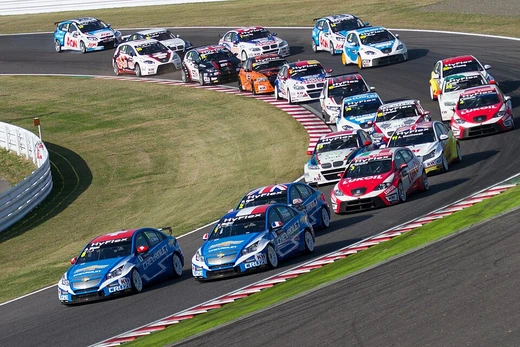
Alfa Romeo 75
The last Alfa Romeo developed before Fiat acquisition, with a transaxle layout.

Corvettec6r · CC BY-SA 4.0
The Alfa Romeo 75 (Type 161, 162B) is a compact executive car produced by the Italian automaker Alfa Romeo between 1985 and 1992. Sold in North America as the Milano, it was the last model released before Alfa Romeo was acquired by Fiat. The 75 was commercially successful, with around 386,767 built by the end of production.
Quick Facts
- Manufacturer
- Alfa Romeo Auto (1985–1986) · Alfa-Lancia Industriale (1987–1991) · Fiat Auto (1991–1992)
- Aka
- Alfa Romeo Milano (North America)
- Production
- 1985–1992
- Assembly
- Italy: Arese Plant, Lombardy
- Predecessor
- Alfa Romeo Giulietta (116)
- Successor
- Alfa Romeo 155
- Class
- Compact executive car (D)
- Layout
- Front-engine, rear-wheel-drive
- Transmission
- 5-speed manual / 3-speed automatic
- Wheelbase
- 2510 mm
- Length
- 4331 mm
- Height
- 1349 mm
Facts from the source article.
Lore & Background
Introduced in May 1985 to replace the Giulietta, the 75 was named for Alfa Romeo's 75th anniversary. Its wedge-shaped body was designed by Ermanno Cressoni, head of Centro Stile Alfa Romeo, with square headlights and a matching grille. The car featured a transaxle configuration—gearbox and clutch mounted at the rear with the differential—giving near-perfect front-to-rear balance. Front suspension used torsion bars and shock absorbers; the rear employed a de Dion tube. The engine's crankshaft bolted directly to a two-segment driveshaft running the car's length, joined with elastomeric 'doughnuts' to damp vibration. A dashboard-mounted diagnostic computer, Alfa Romeo Control, monitored engine systems.
At the 1986 Turin Auto Show, a prototype estate bodystyle (the 75 Turbo Wagon) was presented by coachbuilder Rayton Fissore, but it never entered production after Fiat took control. Two estate concepts appeared at the 1987 Geneva Motor Show: the Turbo Wagon and a 2.0-litre Sportwagon. The 75 Turbo was introduced in 1986 with a fuel-injected 1.8-litre twin-cam engine and Garrett T3 turbocharger. In 1987, a 3.0-litre V6 was added, and the 2.0-litre engine gained two spark plugs per cylinder (Twin Spark) with variable valve timing. North American Milanos used only 2.5 and 3.0-litre V6 engines from 1987 to 1989, with unique bumpers, a 67-litre fuel tank behind the rear seats, and other modifications for federal regulations.
In spring 1987, 500 examples of the Turbo Evoluzione were produced to homologate aerodynamic changes for Group A racing. Its engine was de-bored from 80 mm to 79.6 mm (1,762 cc) to avoid Class 1 competition. All were left-hand drive, and many sold in Italy.
Reader's Guide
The Alfa Romeo 75 holds significance as the last model developed independently by Alfa Romeo before Fiat's acquisition. Its transaxle layout, with the gearbox at the rear, was unusual for a compact executive car and contributed to balanced handling. The car's technical features—including the de Dion rear axle, torsion bar front suspension, and dashboard diagnostic computer—reflected Alfa Romeo's engineering ambitions. The 75 was commercially successful, with nearly 387,000 units built over seven years. Its racing involvement included the 75 Turbo Group A in the 1987 World Touring Car Championship, with six official entries run by Alfa Corse, Brixia Corse, Albatech, and Q-Racing. Drivers included Formula One veterans Jacques Laffite and Mario Andretti, as well as future touring car champions Nicola Larini and Gabriele Tarquini. The car produced approximately 320 bhp in Class 2 trim, matching the BMW M3, but Alfa Romeo withdrew before overseas races amid political disputes. The 75's legacy includes its role as the basis for the later 156 Sportwagon's estate concept, though the 75 estate itself never reached production.
Did You Know?
- The Alfa Romeo 75 was named to celebrate the company's 75th anniversary.
- The 75 used a transaxle layout, with the gearbox and clutch mounted at the rear alongside the differential.
- Only 500 Turbo Evoluzione models were built, with a de-bored engine to meet Group A regulations.
- North American Milanos had a 67-litre fuel tank behind the rear seats, reducing boot capacity from 500 L to 390 L.
Wedge-Shaped Design and the Unbuilt Wagons
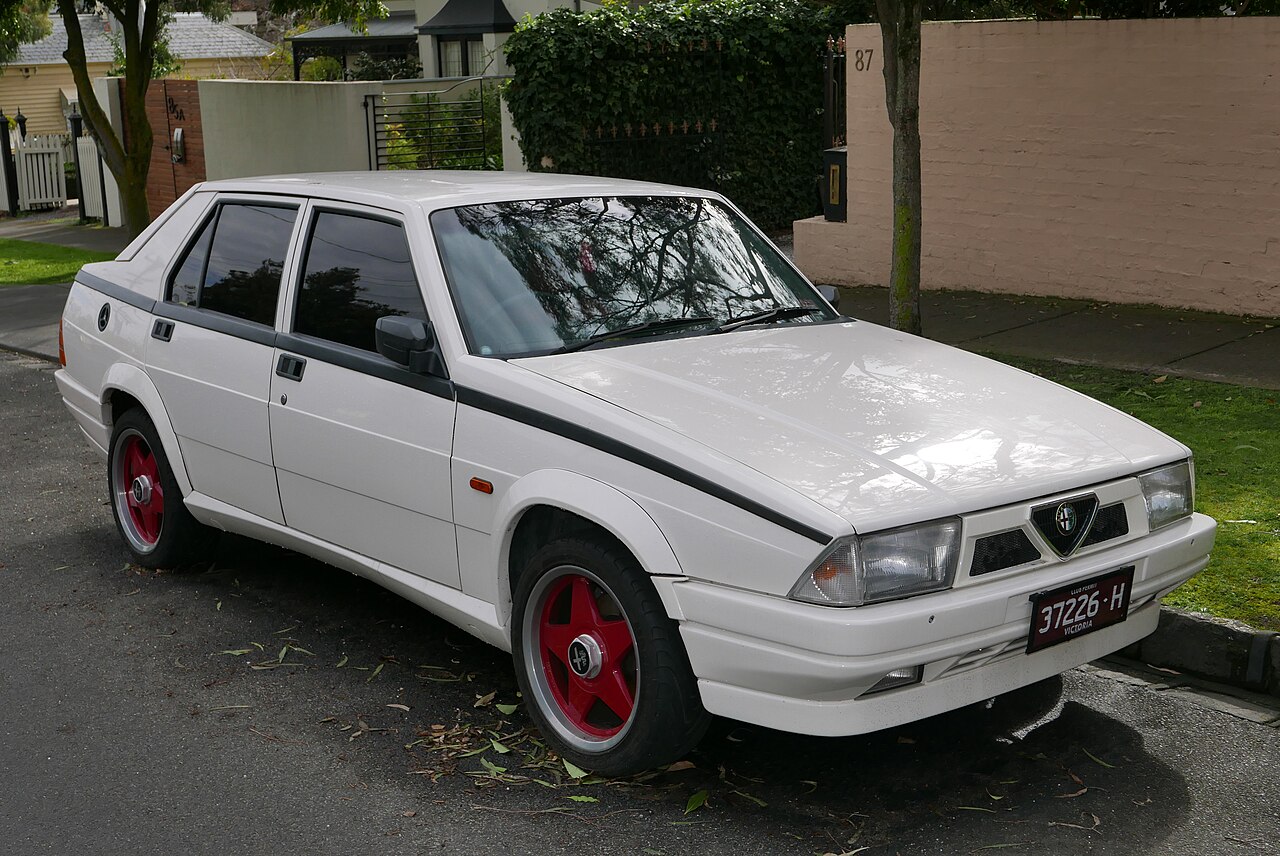
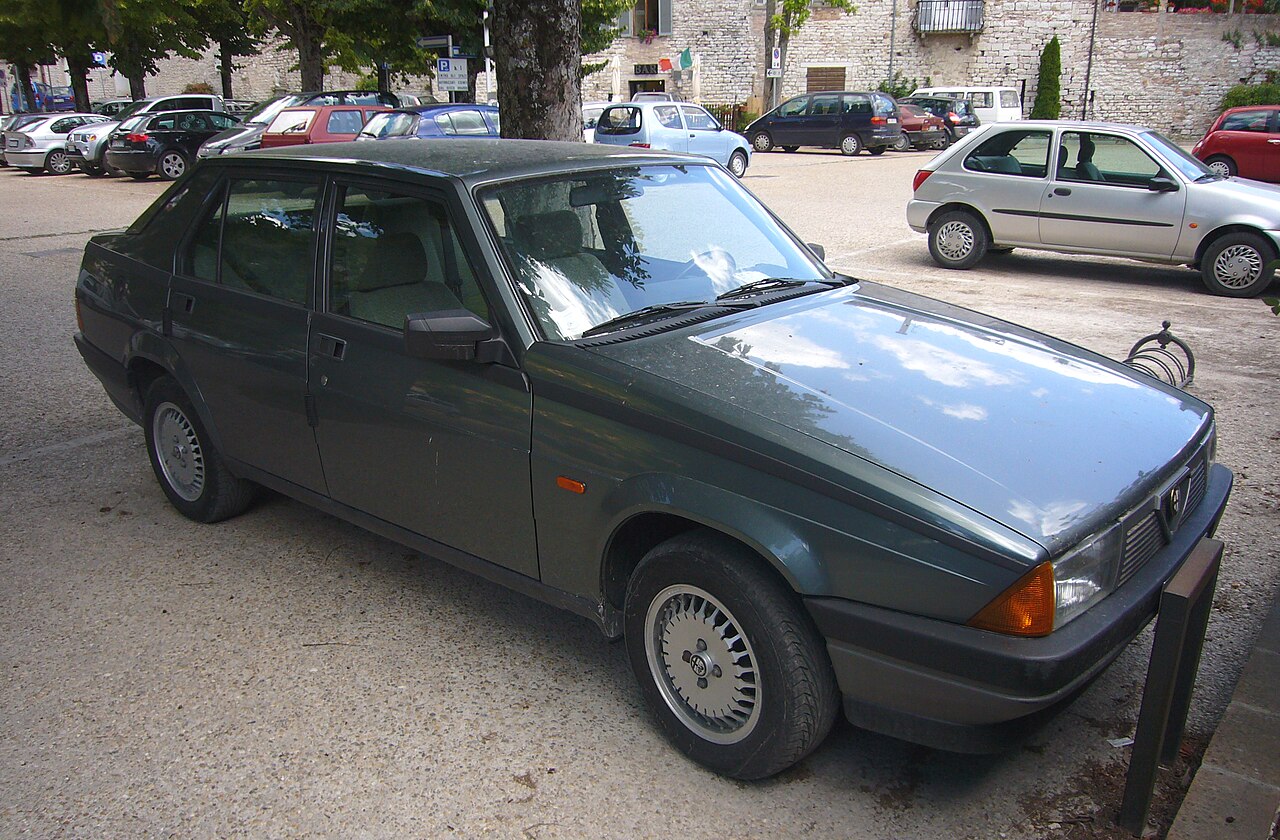
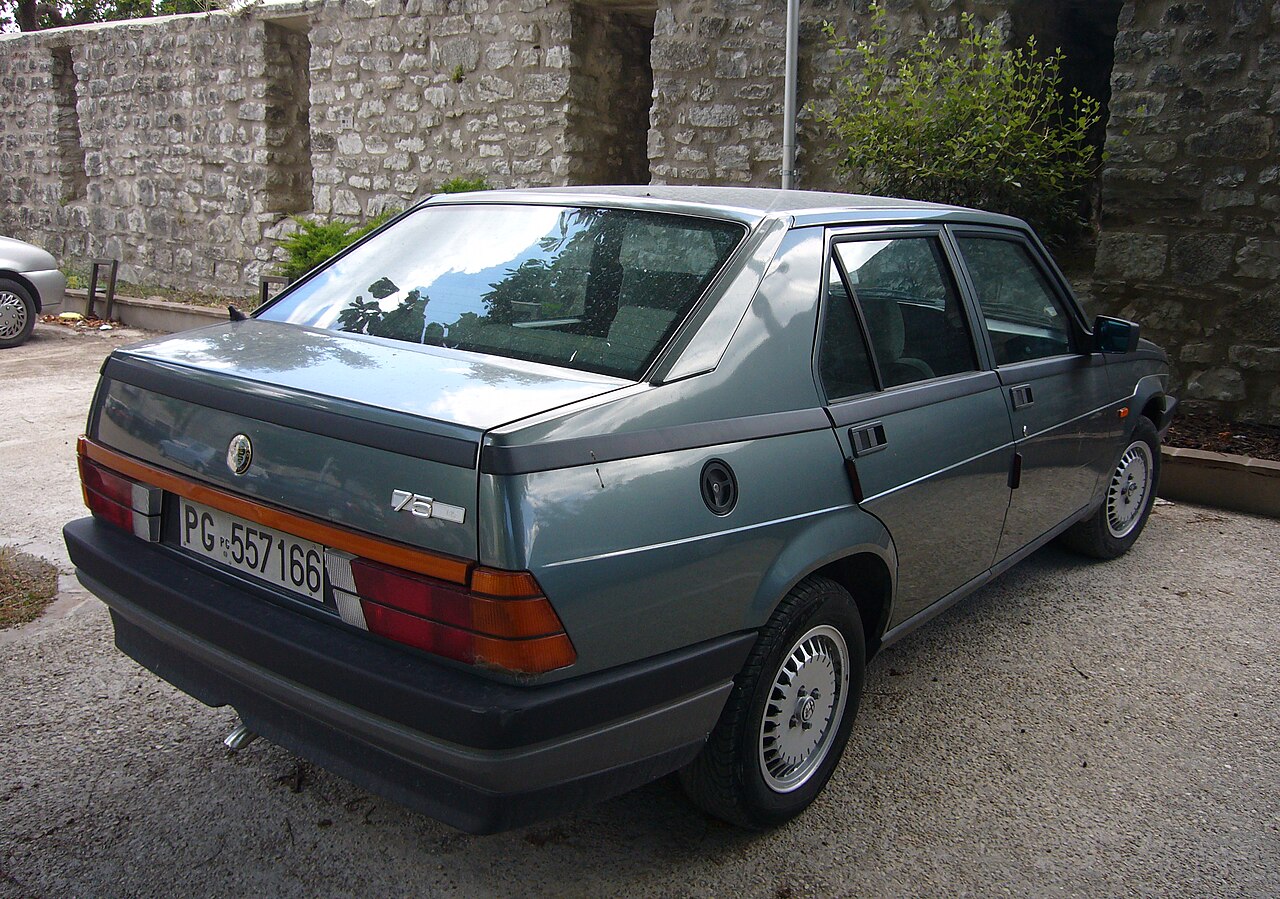
The Alfa Romeo 75 arrived in May 1985 to mark the marque's 75th anniversary, stepping in as the Giulietta's successor while sharing a good deal of its underlying components. The exterior was the handiwork of Ermanno Cressoni, who led Centro Stile Alfa Romeo, and it carried a bold, angular wedge profile that narrowed sharply toward the nose. Square-set headlights framed a grille of matching geometry, a visual motif Cressoni had also employed on the 33. The car's look felt deliberate and modern, a clear break from the softer curves dominating its class at the time. The estate variants deserve special mention. A 75 Turbo Wagon, coachbuilt by Rayton Fissore on a 75 Turbo donor car, was displayed at the 1986 Turin Auto Show, and a 2.0-litre Sportwagon followed at the 1987 Geneva Motor Show. Both were handsome, but neither reached the production line. Fiat's assumption of control over Alfa Romeo led directly to their cancellation, leaving them as attractive forerunners to the 156 Sportwagon that would come years later.
Transaxle Engineering and Forward-Looking Electronics
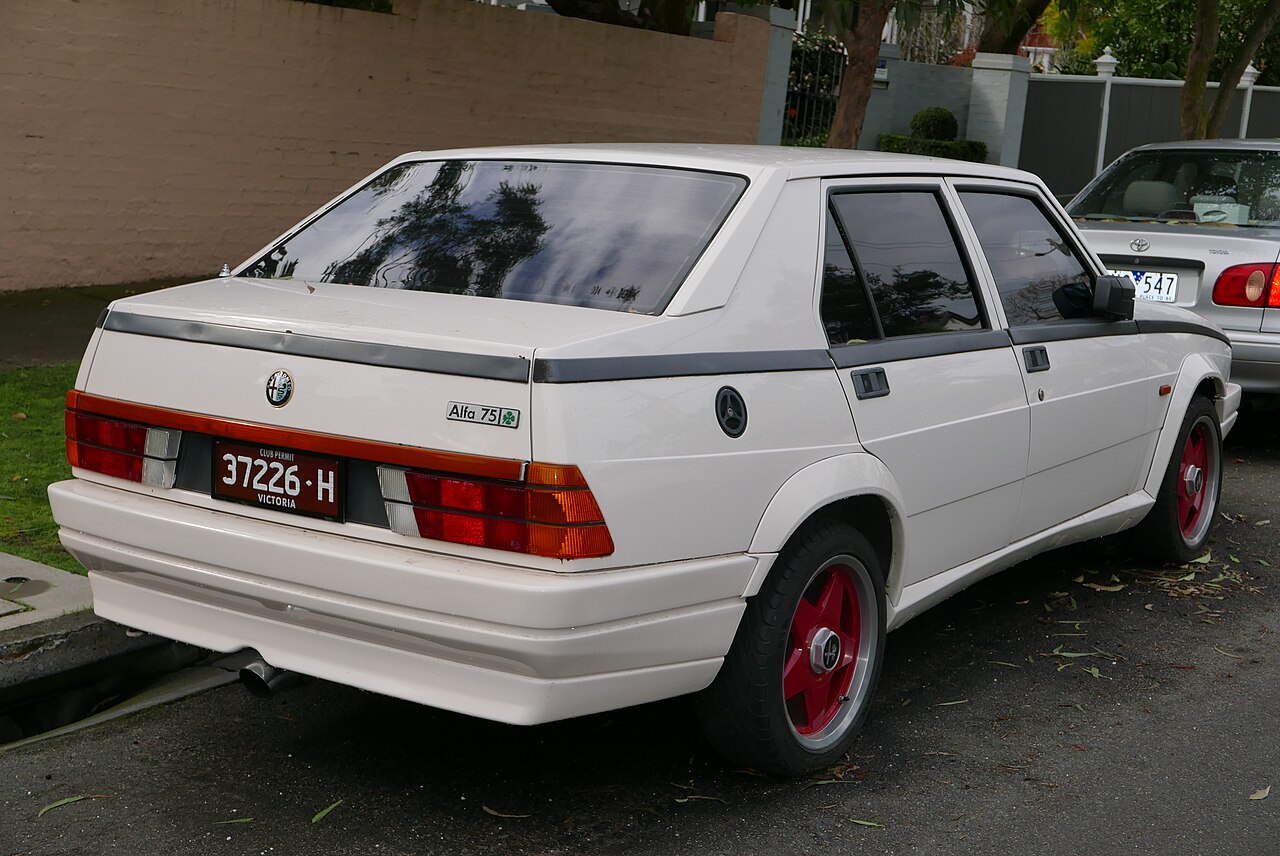
Under the skin, the 75 was engineered around a near-perfect front-to-rear balance. The five-speed gearbox, clutch, and rear differential were bundled together at the back in a transaxle arrangement, while the front suspension paired torsion bars with shock absorbers and the rear used a costlier de Dion tube assembly, both chosen to sharpen the car's handling response. Rear brake discs sat at the axle centre, close to the gearbox-differential cluster. A two-segment driveshaft, bolted straight to the crankshaft, ran the full length of the car's underside at engine speed; elastomeric couplings between the segments damped vibration and shielded both powertrain ends. The 2.0 Twin Spark and 3.0 V6 received limited-slip differentials. Perhaps the most progressive feature was Alfa Romeo Control, a dashboard-mounted diagnostic computer that continuously monitored engine systems and flagged developing faults to the driver — a genuinely advanced touch for the mid-1980s.
The Milano: A North American Reinterpretation
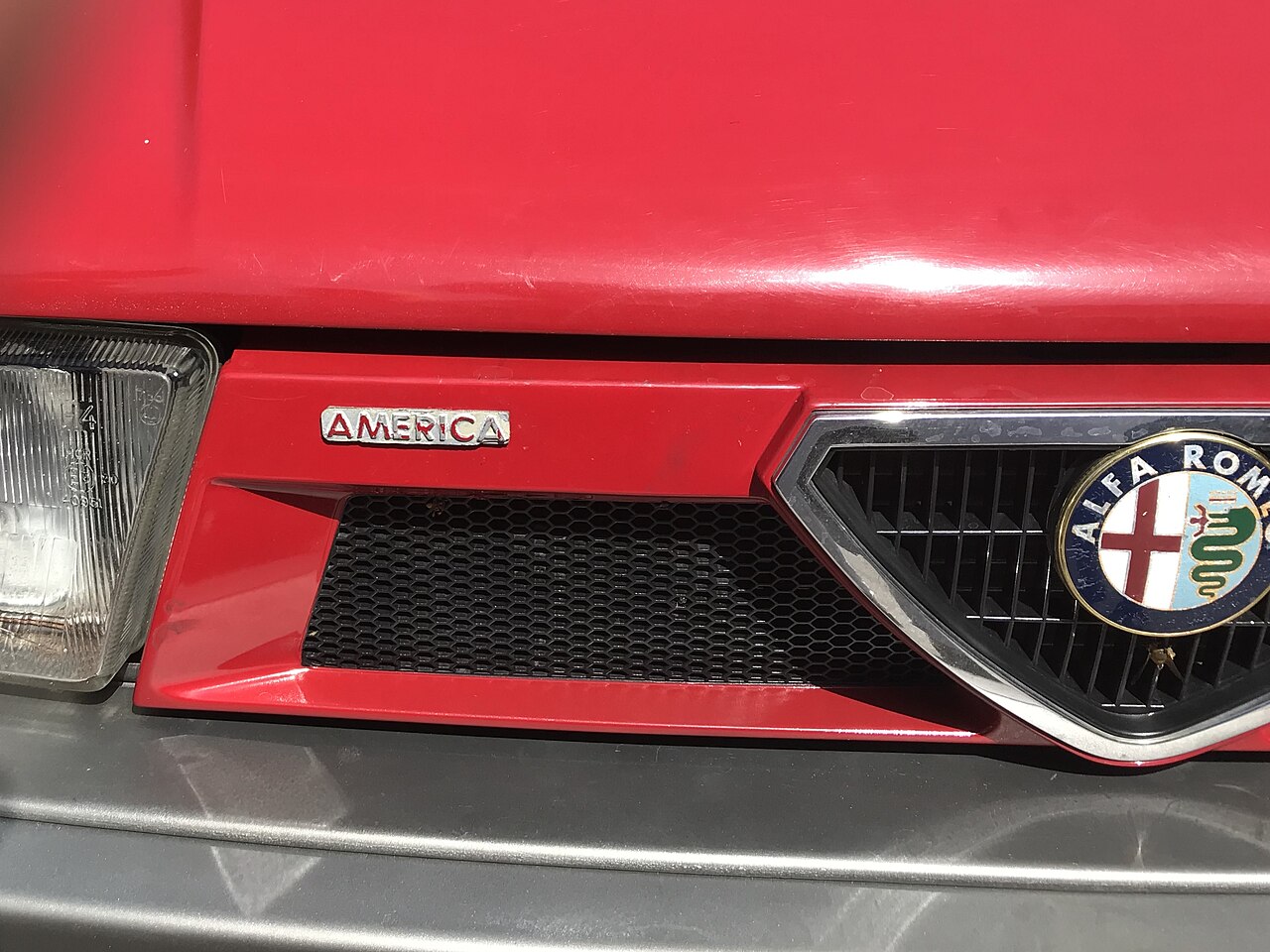
In North America the 75 was rebadged as the Milano, and the specification diverged sharply from the European car. Only the 2.5-litre and 3.0-litre V6 engines were offered, between 1987 and 1989. Federal crash rules demanded heavy rubber-accordion bumpers mounted on shock absorbers, which in turn required slightly altered body panels. A 67-litre fuel tank was tucked behind the rear seats, cutting boot space from 500 litres to 390. Side markers, a right-side exhaust outlet, reinforced door and boot-lid structures, and bonnet-retention hooks all set the American car apart. Equipment was tiered into Silver, Gold, Platinum, and Verde grades; features that were optional in Europe, such as electrically adjustable mirrors, reclining seats, and cruise control, were more commonly standard in the US. The dash read speed in miles per hour, oil pressure in psi, and coolant temperature in Fahrenheit, and the AR Control unit added a seat-belt warning light. A three-speed ZF automatic was available for the 2.5 V6, and some North American-spec Milanos even reached Swiss dealers once catalytic converters became compulsory in 1987.
Strong Sales, Evolving Engines, and the Fiat Transition
The 75 was a commercial hit: 236,907 units were built within just three years of its 1985 debut, and the total climbed to roughly 386,767 by the time production wound down in 1992. The engine line-up kept evolving. The 1.8 Turbo, with its Garrett T3 charger and intercooler, arrived in 1986; the 3.0 V6 and the Twin Spark — two spark plugs per cylinder plus variable valve timing, good for 148 PS — followed in 1987. By 1988 the carbureted 1.8 gave way to a fuel-injected version and a larger diesel joined the range. The 2.5 V6, officially sold only from 1985 to 1987, moved relatively few units, around 2,800, partly because the lower-displacement 1.8 Turbo was cheaper to tax in several markets. The 75 occupies a bittersweet place in Alfa Romeo's story: it was the final model released before Fiat acquired the company. The 164 would be the last car developed wholly under Alfa's own roof, making the 75 the last true independent Alfa Romeo.
Gallery
More in Touring Cars 1-24
Spotted an error? Know more?
Reader corrections go straight into our review queue. Suggest an edit · How this site is sourced