Alfa Romeo 155
A front-wheel-drive Alfa that found racing glory.

Calreyn88 · CC0
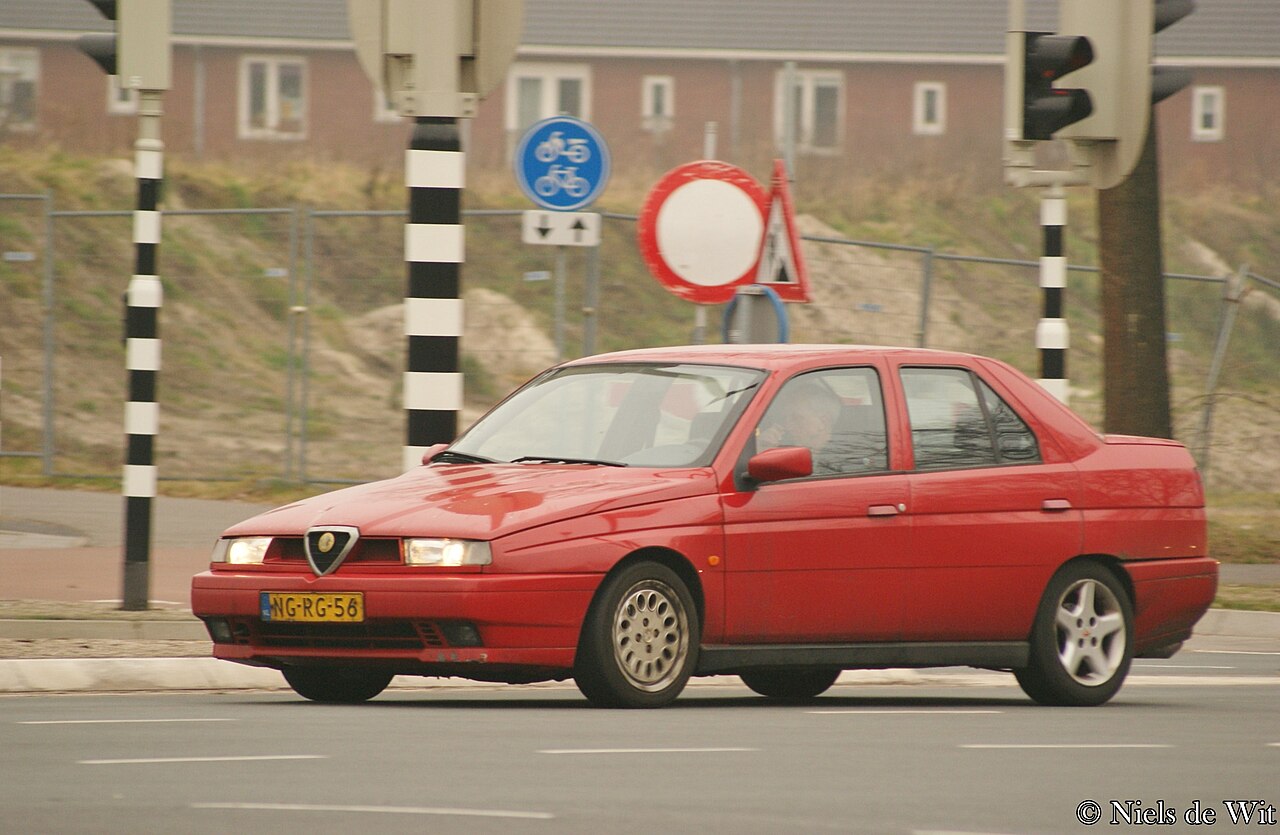
The Alfa Romeo 155 (Type 167) was a compact executive car built by the Italian manufacturer from 1992 to 1998. It debuted in Barcelona in January 1992 and had its first public showing at the Geneva Motor Show that March. Production totaled 195,526 units before the 156 replaced it.
Designed by I.DE.A Institute, the 155 replaced the 75 and rode on the Fiat Group’s Tipo Tre platform. It was larger than its predecessor and switched from rear-wheel drive to front-wheel drive—a major technical change. A four-wheel-drive version, the 155 Q4, used a 2.0-litre turbocharged engine and permanent all-wheel drive borrowed from the Lancia Delta Integrale, essentially making it that car with a different body. The boxy shape gave a drag coefficient of 0.29 and a 525-litre boot.
The 155 came in Sport and Super trims. Sport had a lower ride height and stiffer dampers; Super offered wood trim, electronic damper control, and power seats. Reception was lukewarm: the 75, the last Alfa developed before Fiat’s takeover, cast a long shadow, and losing rear-wheel drive disappointed many. However, the 155 excelled in Touring Car racing, winning major championships and gradually improving its public image.
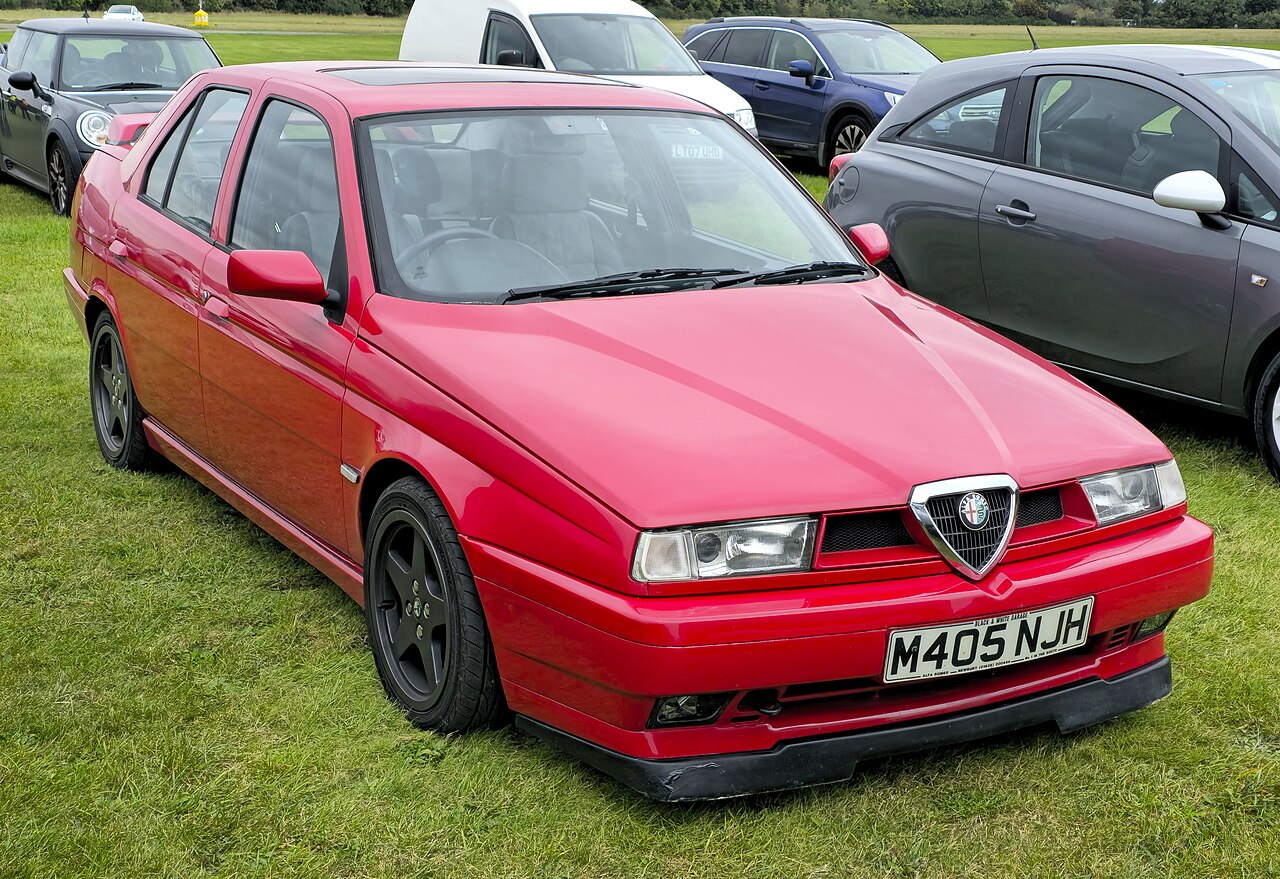
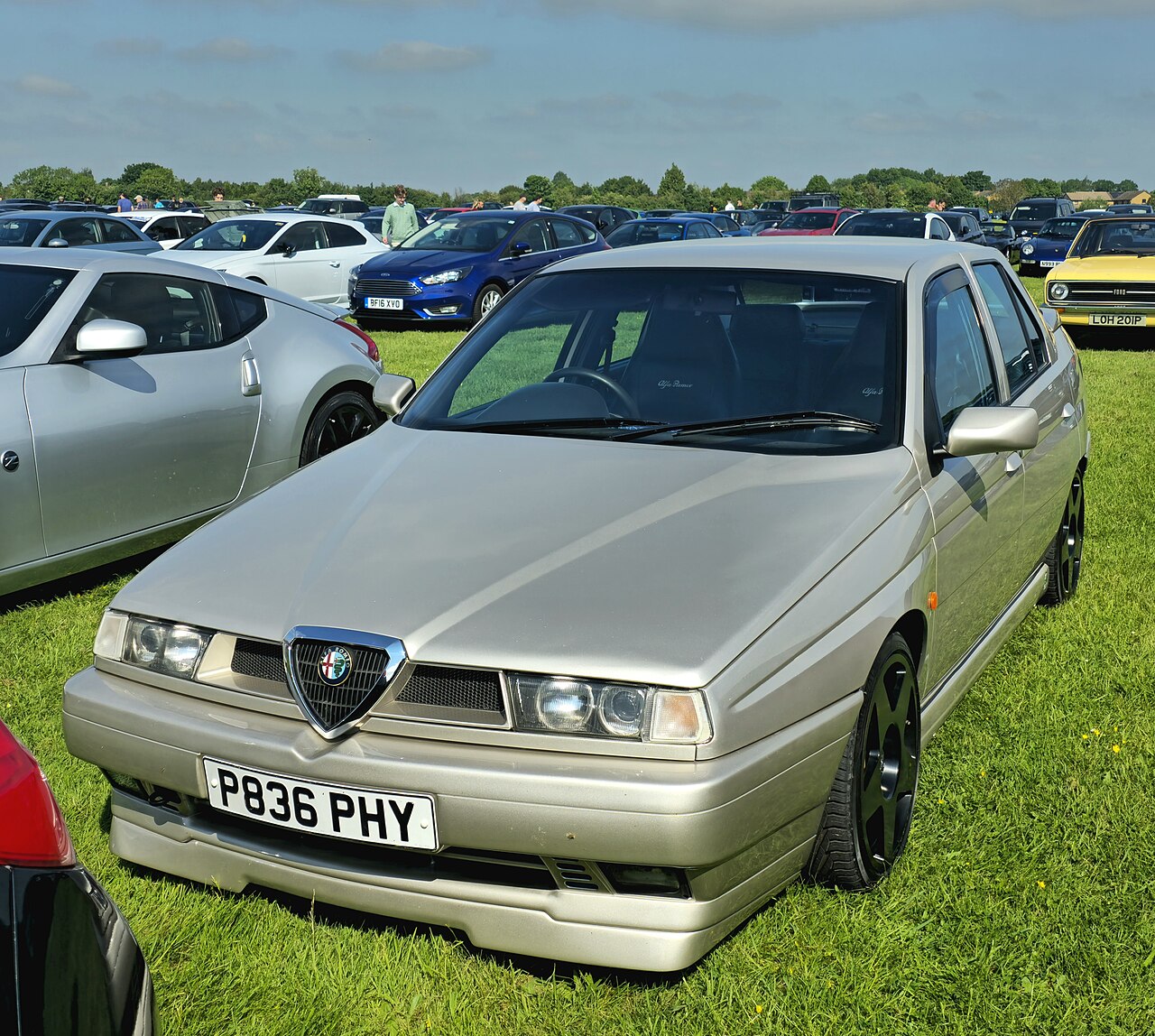
A 1995 facelift brought a wider body and track, revised steering from racing experience, and new 16-valve engines for the 1.8 and 2.0-litre models. The 2.5-litre V6 remained, and cabin materials and build quality improved. Sport Packs included a race-inspired body kit with a spoiler and side skirts, plus 16-inch Speedline wheels. Super trim added wood interior inserts and silver alloy wheels. No Sportwagon estate was ever produced, though Sbarro proposed one in 1994.
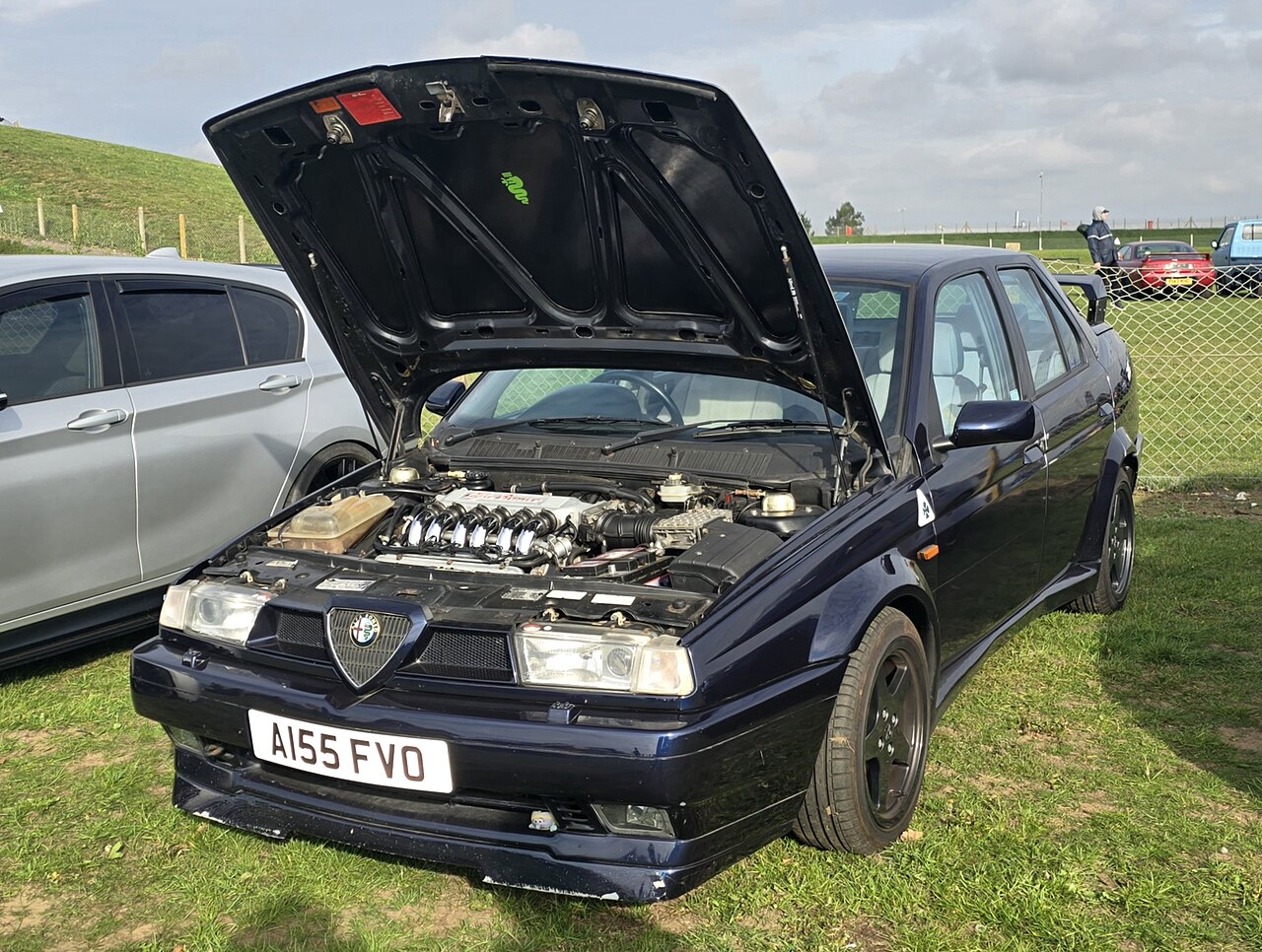
Initial engines were 1.7, 1.8, and 2.0-litre Twin Spark petrol units, the latter two with variable valve timing. The 1.7 was not sold in the UK. Two diesel options—a Fiat 1.9-litre (92 PS) and a VM Motori 2.5-litre (125 PS)—were available in some markets, but not the UK. The top models were the 2.5-litre V6 (166 PS, derived from the 164’s 3.0-litre) and the Q4 (190 PS, 2.0-litre turbo, permanent four-wheel drive with three differentials: front, epicyclic centre with Ferguson viscous coupling, and Torsen self-locking rear). Both could have electronically adjustable suspension with automatic and sport damper settings.
Quick Facts
- Manufacturer
- Alfa Romeo
- Production
- 1992–1998 / 195,526 produced
- Assembly
- Italy: Pomigliano d'Arco plant, Campania
- Class
- Compact executive car (D)
- Layout
- Front-engine, front-wheel-drive / four-wheel-drive
- Platform
- Type Three (Tipo Tre)
- Wheelbase
- 2540 mm
- Length
- 4443 mm
- Height
- 1440 mm
- Weight
- 1195 –
- Predecessor
- Alfa Romeo 75
- Successor
- Alfa Romeo 156
Facts from the source article.
Lore & Background
Developed to replace the 75 and based on the parent company Fiat Group's Tipo Tre platform, the 155 was somewhat larger in dimension than the 75 and had evolved styling from that of its predecessor. The 155 was designed by Italian design house I.DE.A Institute. An exceptional drag coefficient of 0.29 was achieved with the body design. The boxy design of the 155 allowed for a big boot space of 525 L. The most significant technical change from the 75 was the switch to a front-wheel drive layout. A four-wheel-drive model called the 155 Q4 was also available, which had a 2.0 litre turbocharged engine and a permanent four-wheel drive powertrain, both derived from the Lancia Delta Integrale; it was essentially considered to be a Lancia Delta Integrale with a different body.
The new model came in 'Sport' and 'Super' trims. The Sport had a slightly lowered ride height and more aggressive dampers while the Super had the option of wood trim and electronically controlled dampers and seat controls. The reception of the 155 was generally lukewarm. The 75 had been conceived prior to Fiat's acquisition of Alfa Romeo, so as the last automobile independently developed by Alfa Romeo made it cast a shadow over the 155; the loss of rear-wheel drive was frequently cited as the main cause of disappointment. The 155 received a facelift in 1995 and changes included a wider body as well as a wider track and revised steering based on Alfa Romeo's racing experience. The facelift also brought in new 16 valve engines for the 1.8 and 2.0 litre models, whilst retaining the 2.5 litre V6 and making some improvements to cabin materials and build quality.
Reader's Guide
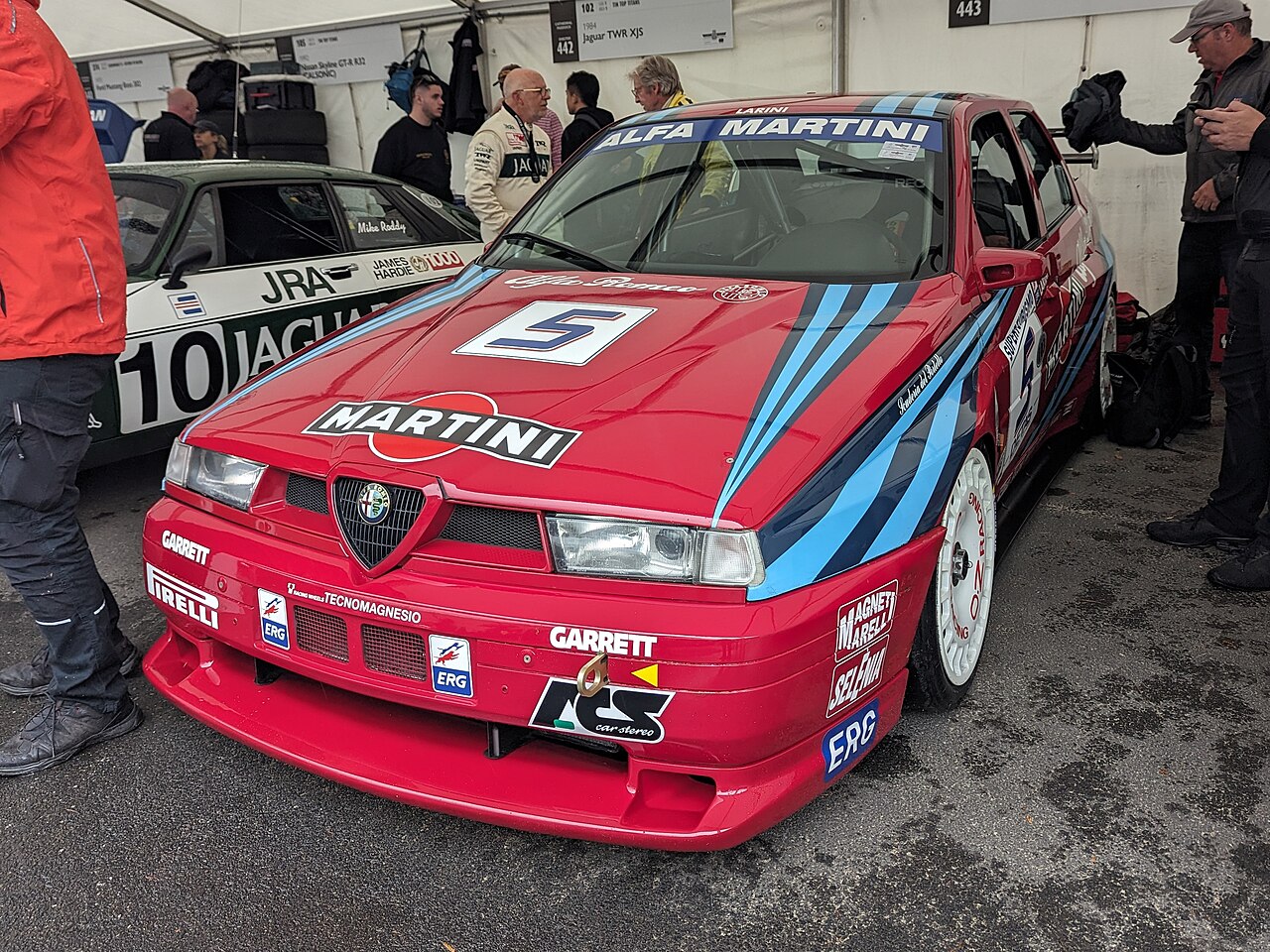
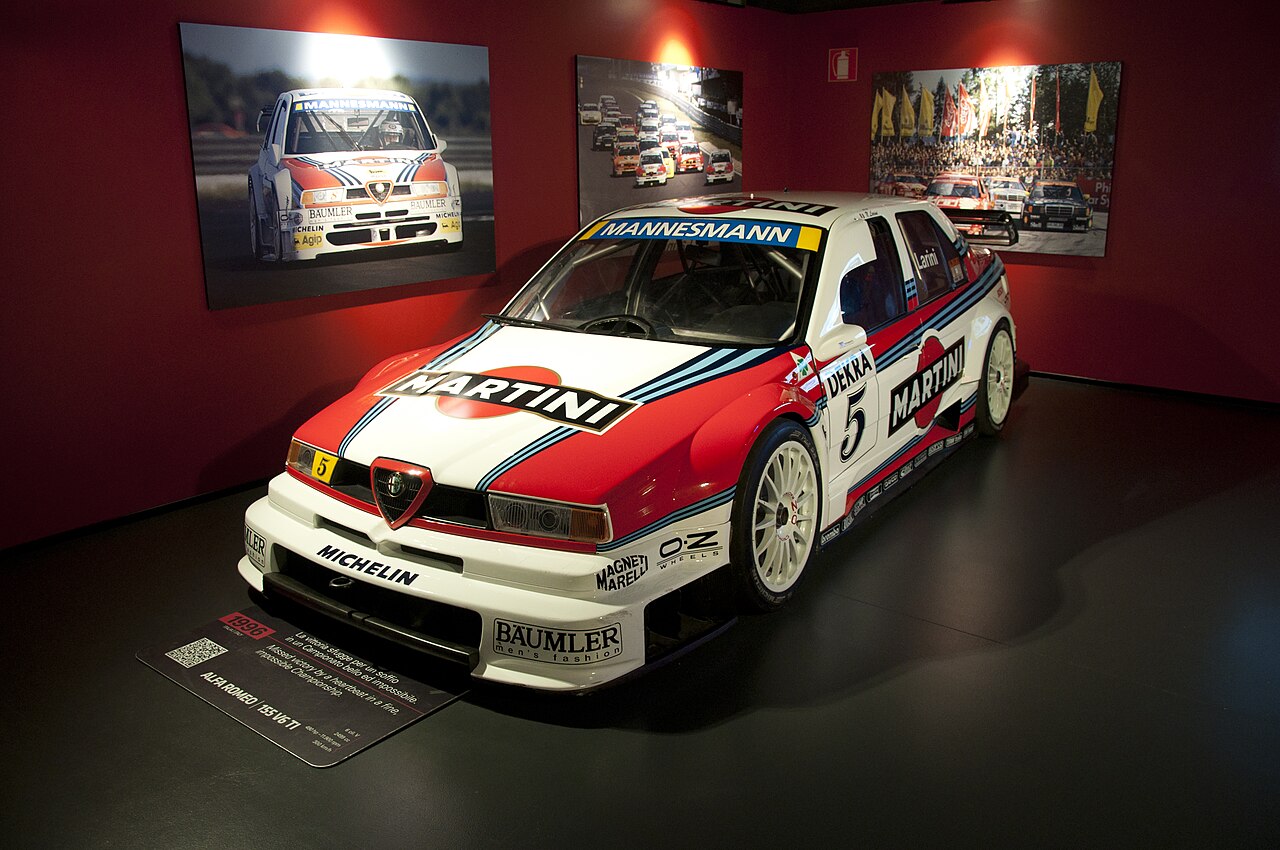
The Alfa Romeo 155 is notable primarily for its motorsport success, which gradually improved its initially lukewarm reception. Between 1992 and 1994, the 155 managed to take the Italian Superturismo Championship, the German DTM championship (both with Nicola Larini at the wheel), the Spanish Touring Car Championship (with Adrián Campos), and the British Touring Car Championship (with Gabriele Tarquini). The 155 remained competitive until it was replaced with the 156, finishing third in the DTM (then known as the International Touring Car Championship, or ITC) in 1996 with Alessandro Nannini and winning the Spanish championship again in 1997 with Fabrizio Giovanardi. In 1993, Larini in an Alfa 155 placed second in the FIA Touring Car Challenge behind Paul Radisich in a Ford Mondeo. The 156 was to continue the high standard set by the 155, winning the European Touring Car Championship multiple times.
The most notable special edition was the 'Silverstone' edition released in the United Kingdom which was known as the 'Formula' in Europe: this was intended to homologate an aero pack for Alfa Romeo in the British Touring Car Championship race series. The pack was included in the boot as bolt on aero kit, consisting of an adjustable rear spoiler and extendable front air splitter. These changes caused controversy during the 1994 BTCC as it was seen as an unfair advantage by the other teams and after missing 1 race, Alfa Romeo were forced to run with aero in its lowest downforce form to finish the championship.
Did You Know?
- The 155 achieved a drag coefficient of 0.29.
- The Q4 model used a drivetrain derived from the Lancia Delta Integrale.
- The 155 Silverstone edition was lighter but no more powerful than the standard 1.8 L, even though the race car it homologated had a 2.0 L engine.
- Only one unit of the 155 GTA Stradale was made before the project was abandoned.
Design Philosophy & Engineering
The 155 represented a fundamental philosophical shift for Alfa Romeo. Built on Fiat Group's Tipo Tre platform to succeed the 75, it marked the brand's departure from its traditional rear-wheel-drive architecture in favor of front-wheel drive — a decision that would haunt its reception for years. The I.DE.A Institute shaped the bodywork into a deliberately boxy silhouette, prioritizing practicality with a generous 525-liter boot while still achieving an impressive 0.29 drag coefficient. The car sat slightly larger than its predecessor, signaling Alfa's intent to compete in the compact executive segment with more space and modernity. At the top of the mechanical tree, the 2.5-liter V6 borrowed its displacement from the larger 164's 3.0-liter unit, while the Q4 variant essentially transplanted the Lancia Delta Integrale's turbocharged 2.0-liter engine and permanent four-wheel-drive system — complete with three differentials including a Ferguson viscous coupling and a Torsen self-locking rear unit — into an Alfa body. The result was a car that blended Italian design sensibility with Fiat Group engineering pragmatism.
Racing Heritage & the Silverstone Controversy
The 155's most dramatic chapter unfolded on the British Touring Car Championship circuit. To homologate a bolt-on aerodynamic kit — an adjustable rear spoiler and extendable front air splitter — Alfa Romeo released the "Silverstone" edition in the UK, marketed as "Formula" in continental Europe. The pack was stored in the boot, and the production car was a lighter, less powerful 1.8-liter variant, a curious compromise born from the fact that the narrower-bore 1.8 block allowed a longer stroke on the race car while staying within the 2.0-liter capacity ceiling. The aero package caused immediate controversy in the 1994 BTCC season. Rival teams viewed the additional downforce as an unfair advantage, and after Alfa missed a single race, the series forced the team to run with the aero in its lowest downforce configuration for the remainder of the championship. Despite this, the 155 proved extraordinarily competitive, winning in every major touring car championship it entered and gradually redeeming the model's reputation among enthusiasts who had been disappointed by the loss of rear-wheel drive.
The 1995 Widebody Facelift
By 1995, Alfa Romeo recognized the 155 needed a substantial refresh to remain competitive. The "Series 2" or widebody revision widened both the front and rear tracks, with subtly enlarged wheel arches — flared at the front and smoothed at the rear, replacing the original's lip — to accommodate the broader stance. A quicker steering rack, requiring just 2.2 turns lock-to-lock, was introduced, drawing directly from Alfa's touring car racing experience; initially fitted to the 2.0-liter model before extending to the 1.8. Under the bonnet, the aging eight-valve, chain-driven camshaft engines gave way to Alfa-designed 16-valve cylinder heads with belt-driven camshafts, though the underlying blocks remained of Fiat design. The 2.5-liter V6 continued in widebody form, while the Q4 was discontinued. In European markets, the 1.7-liter Twin Spark was replaced by a 1.6-liter 16-valve unit. Revised interior materials and updated equipment levels rounded out the package, and the wider body became available across the 1.6 and 1.8 ranges by mid-1996.
Legacy & the Shadow of the 75
The 155 occupies a peculiar place in Alfa Romeo's history as the last model conceived and developed independently before Fiat Group's full integration reshaped the brand's engineering culture. The 75, born before Fiat's acquisition, cast a long shadow over its successor, and the switch from rear-wheel drive to front-wheel drive became the defining grievance among enthusiasts who felt the car had lost its soul. Reception was, by all accounts, lukewarm upon the January 1992 Barcelona unveiling and the March Geneva Motor Show debut. Yet the 155 still found its audience: 195,526 units were built over six years before production ceased in 1998 and the 156 took its place. The car was never offered in Alfa's Sportwagon estate format, though Sbarro proposed such a variant in 1994 — a proposal that never reached production. The 155's story is ultimately one of compromise: a car that traded pure driving character for practicality and platform sharing, yet whose racing pedigree and the passionate debates it provoked ensure it remains a footnote that enthusiasts refuse to forget.
Gallery
More in Touring Cars 1-24
Spotted an error? Know more?
Reader corrections go straight into our review queue. Suggest an edit · How this site is sourced