BMW Z3
First mass-produced Z Series, built solely in the United States.

Calreyn88 · CC BY-SA 4.0
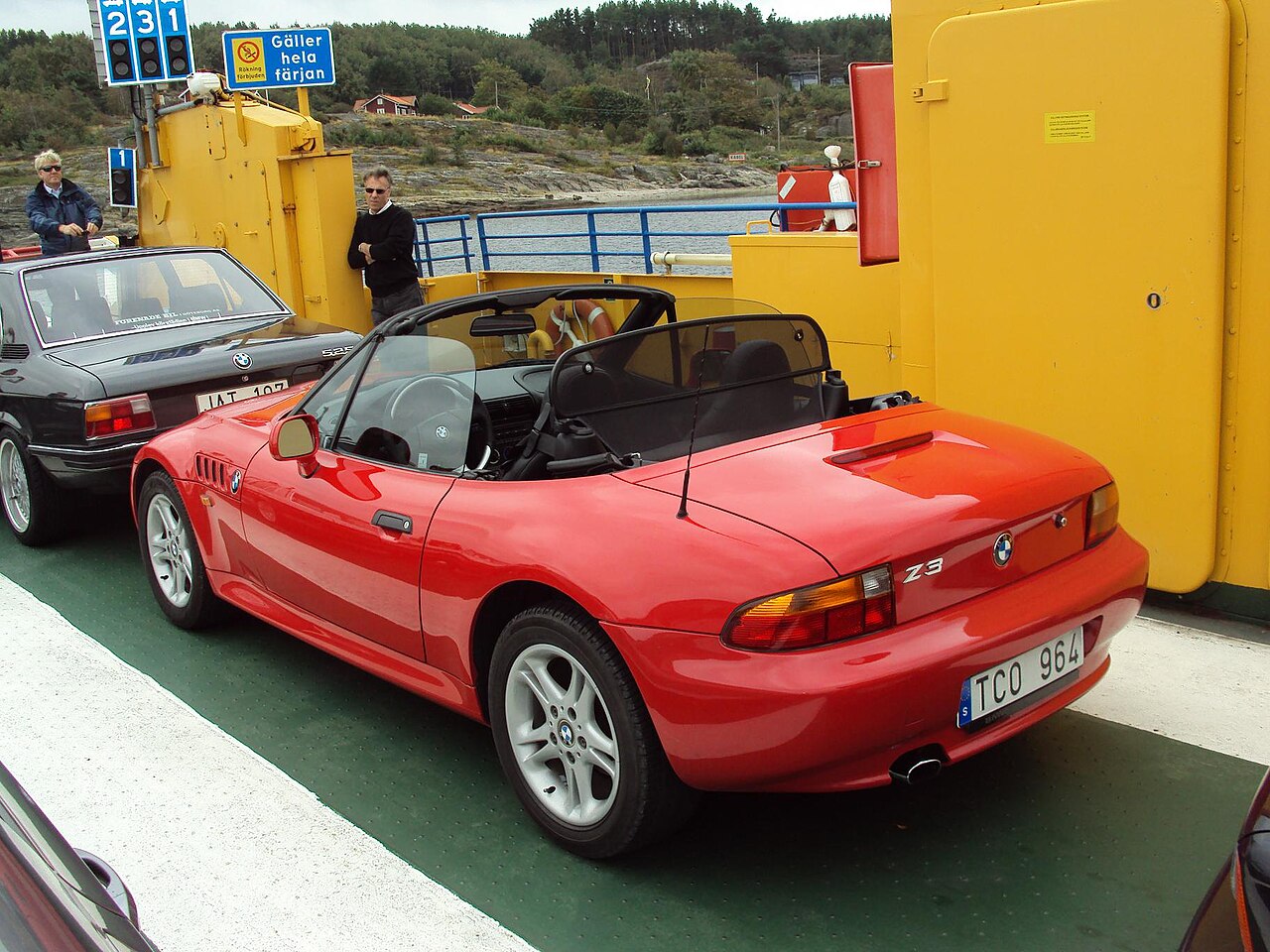
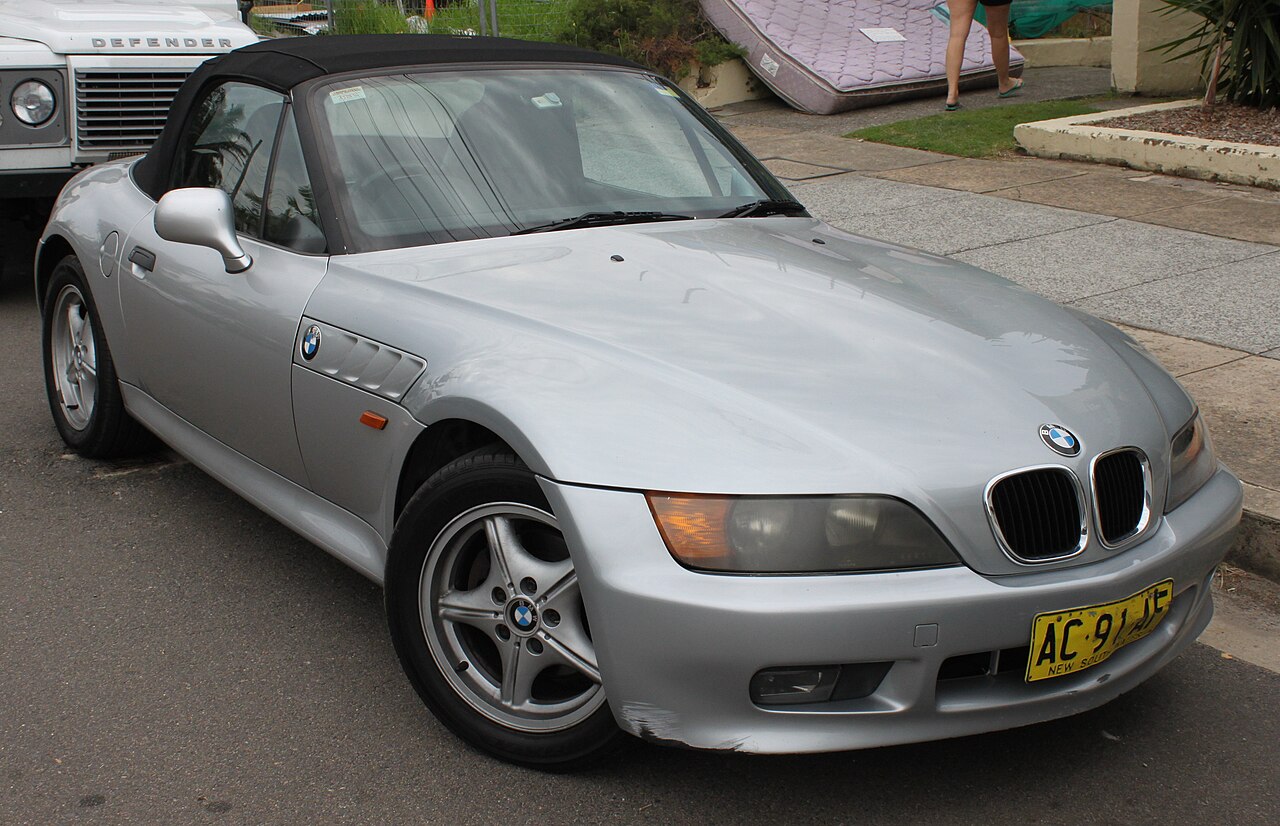
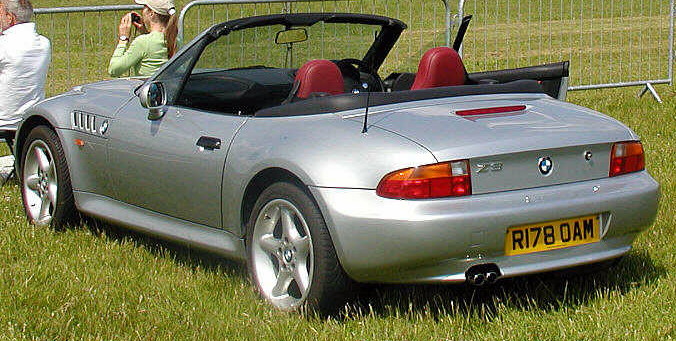
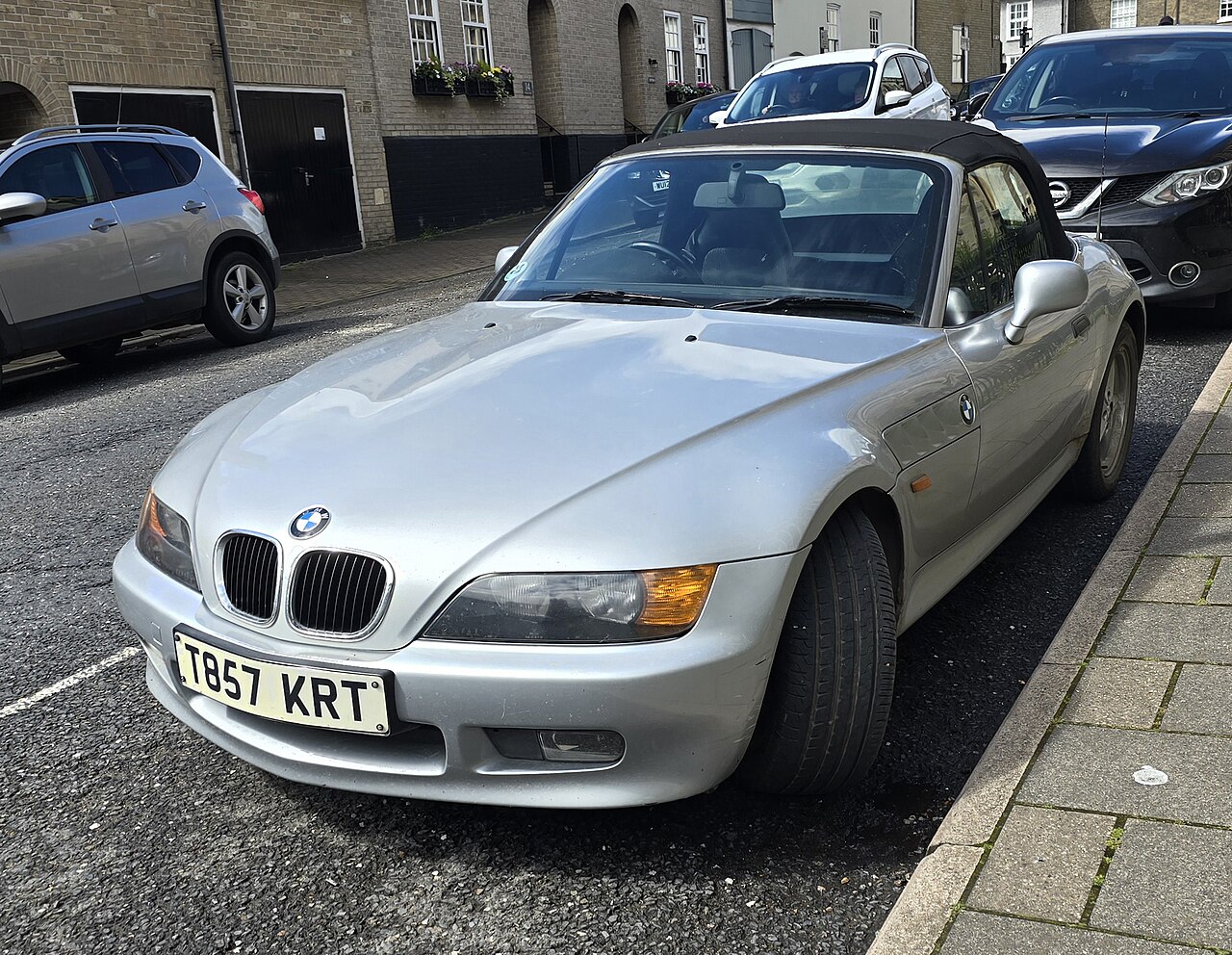
The BMW Z3 is a range of two-seater sports cars produced from 1995 to 2002. It was the first mass-produced Z Series car and the first BMW model manufactured solely outside Germany, built in Greer, South Carolina. The range includes a 2-door roadster (E36/7) and a 2-door coupé (E36/8), based on the E36/5 compact platform with rear semi-trailing arm suspension from the E30 3 Series.
Quick Facts
- Production
- September 1995 – June 2002
- Model Code
- E36/7 (roadster) / E36/8 (coupe)
- Assembly
- United States: Greer, South Carolina (Plant Spartanburg)
- Class
- Sports car (S)
- Related
- BMW 3 Series (E36)
- Layout
- Front-engine, rear-wheel drive
- Engine
- Gasoline: · 1.8–1.9 L M43/M44 I4 · 2.0–3.0 L M52/M54 I6 · 3.2 L S50/S52/S54 I6
- Transmission
- 5-speed GETRAG 250/ZF S5-31 manual · 4-speed GM Hydra-matic 4L30E automatic · 5-speed GM 5L40-E/ZF 5HP automatic
- Wheelbase
- 2446 mm
- Length
- 4025 mm
- Height
- 1293 -
- Weight
- 1160-1400 kg
Facts from the source article.
Lore & Background
Development of the roadster began in 1991 under Burkhard Göschel, with exterior design by Joji Nagashima completed in mid-1992. The design was frozen in 1993, and design patents were filed in Germany on April 2, 1994, and in the US on September 27, 1994. The Z3 was introduced via video press release by BMW North America on June 12, 1995, with production starting September 20, 1995. The coupé was developed by a group of BMW engineers outside of work in their own time, sharing the roadster's platform but with a chassis-stiffening hatch area making it 2.7 times stiffer. It was unveiled at the 1997 Frankfurt Motor Show.
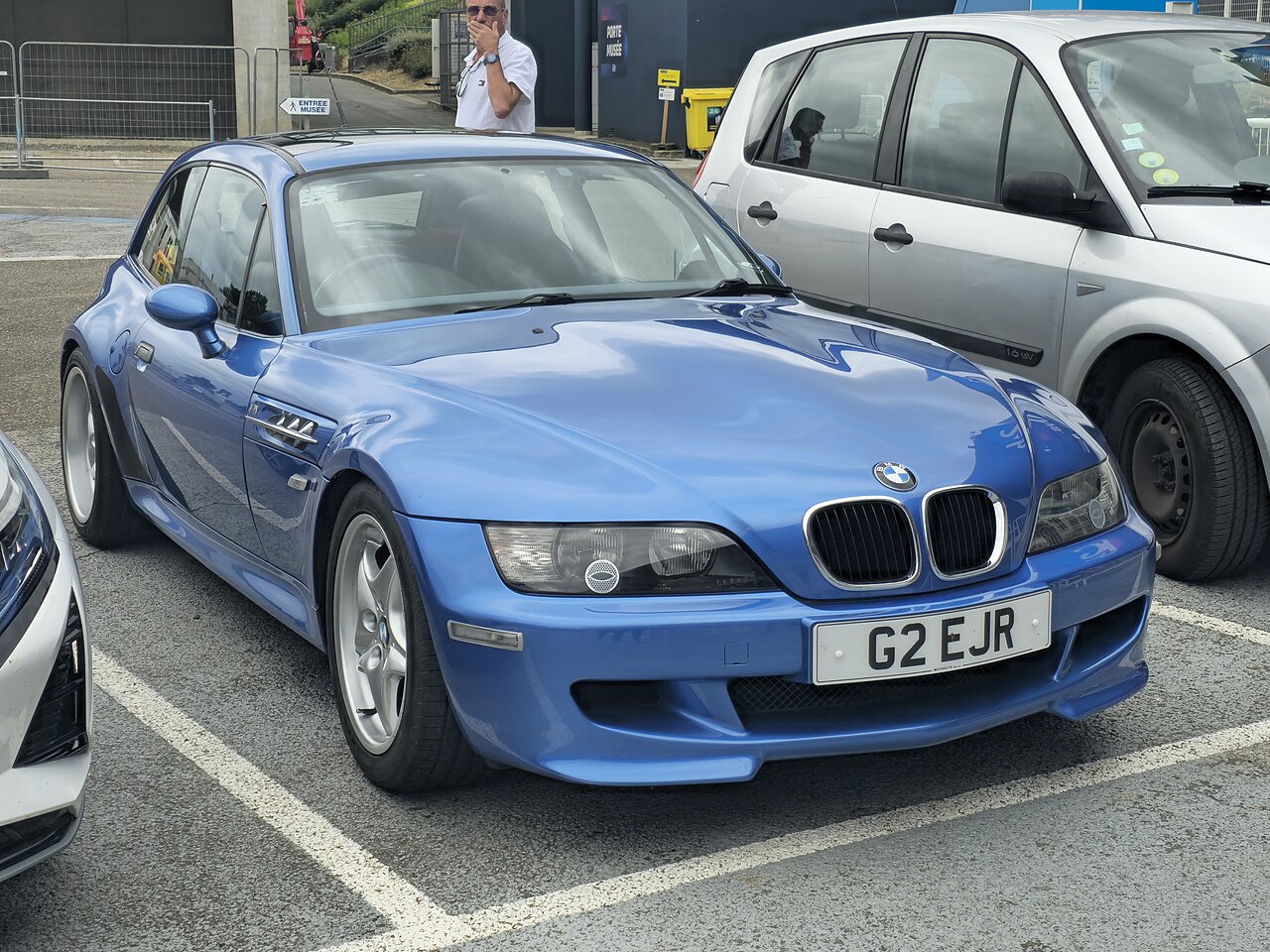
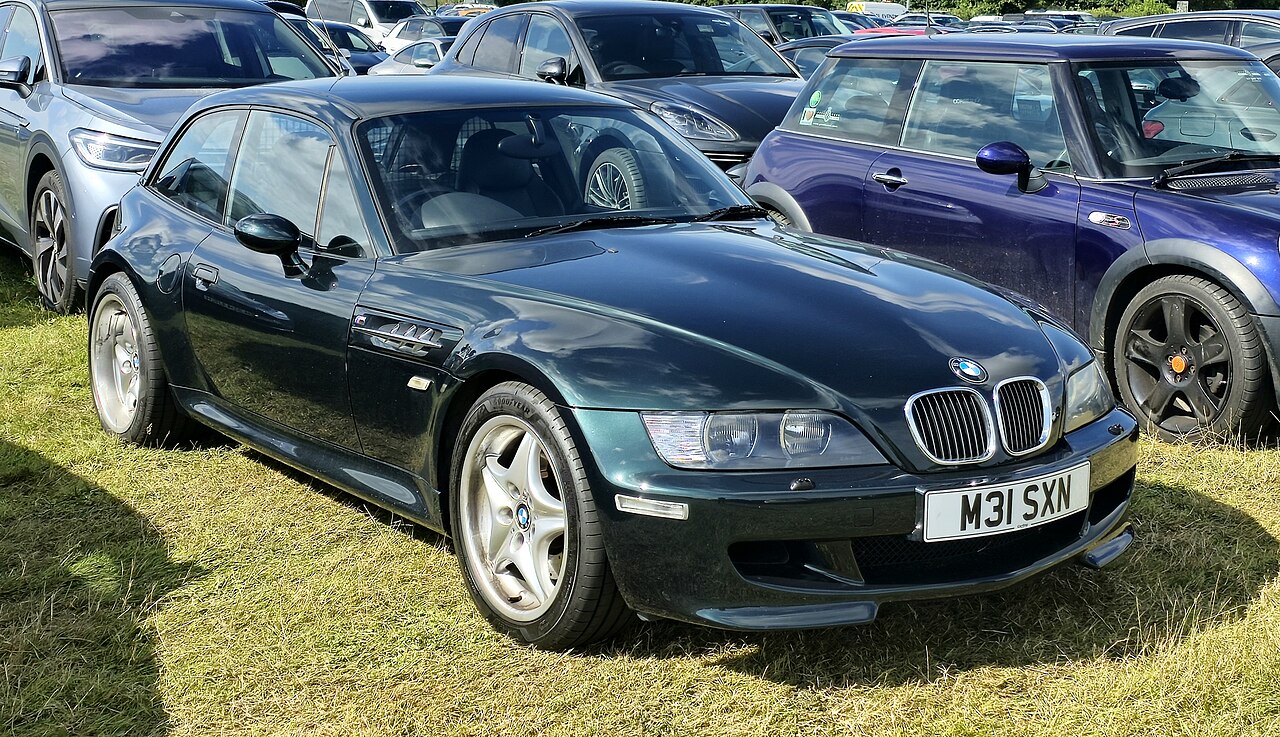
Roadster models entered production in September 1995 with 4-cylinder engines; six-cylinder engines arrived in 1996. Coupé production began in January 1998, with orders from spring 1998 and deliveries starting September 1998. The coupé's unusual side profile earned nicknames such as "clown shoe" and "bread van" in English, and "turnschuh" (sports shoe) in German. The coupé was only available with engines matching the 2.8, 3.0i, and M model roadsters, with outputs peaking at 325 horsepower in the facelift M Coupé. Very few coupés were made, making the M Coupé especially rare.
M models were introduced in 1997 in roadster and coupé forms, powered by the S50 (Europe) or S52 (North America) straight-six, switching to the S54 in 2001. They featured a limited slip differential, wider rear track, larger brakes shared with the E36 M3, unique bumpers, side mirrors, quad exhaust pipes, and interior gauges (voltmeter, clock, oil temperature). Unlike the rest of the Z3 range, M models did not receive cosmetic changes during the 2000 facelift.
Reader's Guide
The BMW Z3 is significant as the first mass-produced Z Series car and the first BMW built entirely outside Germany, marking a shift in the company's global manufacturing strategy. Its platform, derived from the E36/5 compact, used the older E30's rear semi-trailing arm suspension, a cost-saving measure that nonetheless gave the car a distinctive character. The Z3's appearance in the 1995 James Bond film GoldenEye—one of few non-British cars driven by Bond—boosted its cultural profile, leading to a limited James Bond Edition of 100 units sold through the Neiman Marcus Christmas catalog. The coupé body style, developed informally by engineers, became a collector's item due to low production numbers and its polarizing "clown shoe" silhouette. The M versions, with their high-output engines and track-focused hardware, cemented the Z3's reputation as a serious performance car. The Z3 line was replaced by the E85 Z4 in 2002, but its legacy endures as a uniquely American-built BMW that blended affordability, style, and driving fun.
Did You Know?
- The Z3 Coupé was developed by BMW engineers in their own time outside of work.
- A single prototype Z3 was built in 1999 with a 5.4 L V12 engine, tested by Autozeitung magazine.
- The James Bond Edition Z3, limited to 100 units, was sold through the Neiman Marcus Christmas catalog in 1996.
From Sketch to South Carolina
The Z3's journey from concept to showroom stretched across more than four years. Development kicked off in 1991 under the direction of Burkhard Göschel, with exterior styling handled by Joji Nagashima. The design was locked in by 1993, and patent applications followed in both Germany and the United States during 1994. BMW North America made the global debut on June 12, 1995, using a video press release rather than a traditional unveiling, and the first cars rolled off the line on September 20 of that year. Mechanically, the Z3 sat on the E36/5 compact platform, a shortened derivative of the standard E36 architecture that borrowed the rear semi-trailing arm suspension layout from the older E30 3 Series. This smaller, more economical underpinning made the car lighter and cheaper to build while preserving the rear-wheel-drive character BMW customers expected. Perhaps the most consequential production decision was geographic: the Z3 became the first BMW model built entirely outside Germany, with all units assembled in Greer, South Carolina. That single choice signaled a new era for the brand's manufacturing footprint and made the Z3 the first mass-produced car in the Z Series.
The M Division's First Z
When BMW's M division applied its badge to the Z3, the result pushed the platform to its limits while introducing several firsts for the performance arm. European M Roadsters and M Coupés initially received the S50 inline-six, while North American buyers got the slightly less potent S52. In 2001, both markets moved to the newer S54, with the facelift M Coupé reaching a peak output of 325 horsepower. Every M model was restricted to a five-speed manual gearbox, a deliberate choice to keep the driving experience raw and engaged. Under the bodywork, M cars gained a limited-slip differential, a wider rear track, and larger brakes shared with the E36 M3. Visually, the M division made its first use of a quad-exhaust pipe arrangement, paired with redesigned front and rear bumpers, more aerodynamic side mirrors, revised side gills, and bespoke "Roadstar" Style 40 wheels. Inside, the center console housed a voltmeter, a clock, and an oil temperature gauge, while M-styled seats and exclusive color options set the cabin apart. Notably, unlike the rest of the Z3 range, the M Roadster and M Coupé never received the 2000 cosmetic facelift, preserving their original appearance for the life of the model.
The Coupé and Its "Clown Shoe" Reputation
The Z3 Coupé (E36/8) arrived as something of a passion project. A group of BMW engineers developed it in their spare time, outside of regular working hours, and the result shared its platform and parts with the roadster but added a chassis-stiffening hatch area that made the body 2.7 times stiffer. Unveiled at the 1997 Frankfurt Motor Show, production began in January 1998, orders opened in spring, and deliveries finally started in September of that year. The coupé's unconventional side profile earned it a string of unflattering nicknames. Critics called it a "clown shoe" and a "bread van," while German enthusiasts dubbed it a "turnschuh," meaning sports shoe. Despite the mockery, the car was mechanically serious: it was rear-wheel drive only, offered in automatic or manual, and could be ordered with the 2.8, 3.0i, or M model engines spanning three generations of architecture. Production volumes were extremely low, making the coupé rarer than most BMWs of the era, with the M Coupé being the rarest of all. That scarcity, combined with its polarizing shape, has cemented the Z3 Coupé as one of the most talked-about and collected BMWs of the late 1990s.
Bond, V12, and the Final Chapter
The Z3's cultural footprint extended well beyond the showroom. In 1996, BMW capitalized on the car's appearance in the James Bond film GoldenEye by releasing a special "James Bond Edition" through the Neiman Marcus Christmas catalog. Priced at US$35,000, the edition was based on the Z3 1.9i and featured a 007 dash plaque, 007 floor mats, unique wheels, and chrome exterior trim in "Atlanta blue" with a beige leather interior. BMW and Neiman Marcus initially targeted just 20 units, but strong customer interest pushed the run to 100. Each car's VIN carried the code 007, with the final two digits identifying its place in the series, and exactly half were built with manual transmissions while the other half received automatics. In 1999, the M division built a single orange-painted prototype Z3 roadster powered by the 5.4-liter M73 V12 engine, rated at 322 horsepower and 361 lb-ft of torque, mated to a six-speed manual. The car weighed 1,400 kg with a 70/30 front-rear split and was fully functional, tested on German roads. Production of the entire Z3 line ended on June 28, 2002, succeeded by the E85 Z4.
Gallery
More in Touring Cars 1-24
Spotted an error? Know more?
Reader corrections go straight into our review queue. Suggest an edit · How this site is sourced