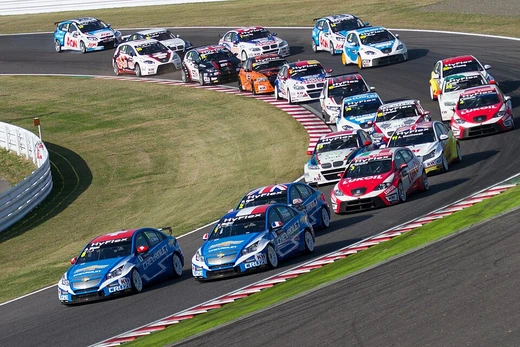
Chevrolet Cruze
Global compact car replacing multiple models across markets.

Dinkun Chen · CC BY-SA 4.0
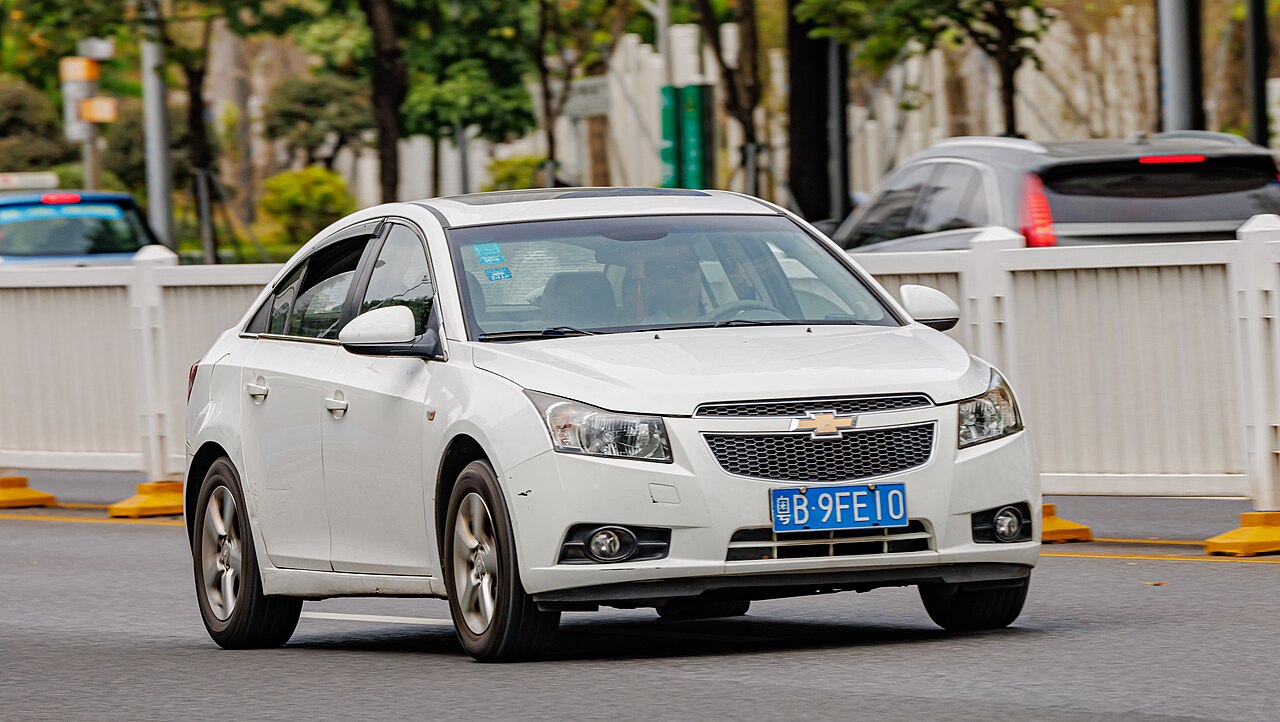
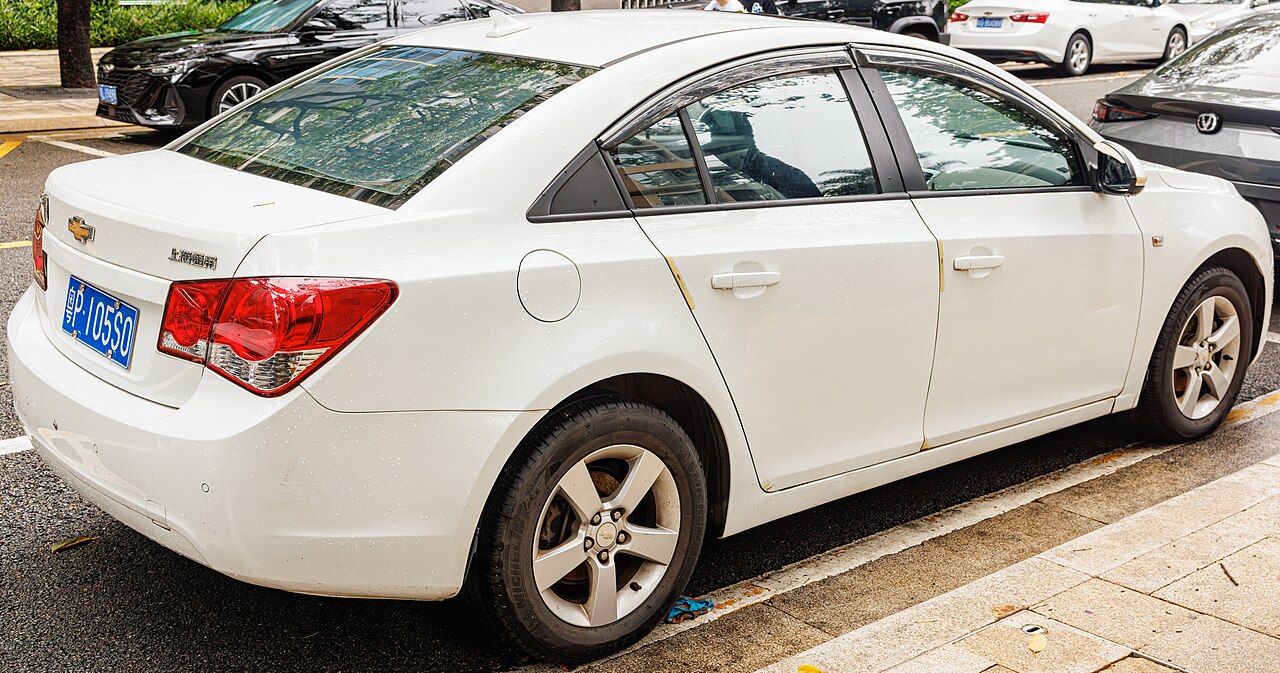
The Chevrolet Cruze was a compact car built by General Motors between 2008 and 2023. It was engineered and manufactured as a global model, initially a four-door sedan, with a five-door hatchback added in 2011 and a station wagon arriving in 2012. This model took over from several earlier compacts: the Chevrolet Optra (sold under various names worldwide), the North America-only Chevrolet Cobalt, and the Holden Astra.
The Cruze first launched in South Korea in 2008 as the Daewoo Lacetti Premiere, before switching to the Chevrolet name in 2011 when Daewoo was phased out. In Australia, it was sold as the Holden Cruze from 2009 to 2016. After that, the sedan was restyled and rebadged as the Holden Astra Sedan, complementing the hatchback Astra family.
As consumer demand shifted toward SUVs and sales dropped, GM gradually wound down production. South Korean manufacturing ended in 2018 during GM Korea’s restructuring, which also cut off supply of the Holden Astra Sedan to Australia. Production in the United States and Mexico stopped in 2019, and in China it ended in 2020. Argentina kept building the Cruze until 2023. In China, it was replaced by the Monza, while in Mexico that same car is called the Cavalier.
Before this global Cruze, GM had already used the name from 2001 to 2008 in Japan, Australia (as the Holden Cruze), and New Zealand. That earlier model started as the Chevrolet YGM1 concept at the 1999 Tokyo Motor Show, based on the Suzuki Ignis hatchback (known as the Suzuki Swift in Japan). Despite the Chevrolet badge, Holden handled most of the engineering and came up with the Cruze name. It offered 1.3- or 1.5-liter engines, paired with a five-speed manual or four-speed automatic. Suzuki built it in Japan, and GM revealed the production version in October 2001, with Japanese sales starting the next month. From 2002 to 2006, it sold in Australia as a Holden and in New Zealand as a Chevrolet. It came with standard front-wheel drive and optional all-wheel drive. Chevrolet marketed it as a light-duty SUV, unlike Suzuki’s conventional approach with the Ignis. From 2003, Suzuki of Europe sold a facelifted version as the Suzuki Ignis.
The first generation of the global Cruze, internally code-named J300, arrived in 2008. GM Korea led its development, replacing the Chevrolet Cobalt, Daewoo Lacetti, and Holden Astra.
Quick Facts
- Manufacturer
- General Motors
- Aka
- Daewoo Lacetti Premiere (2008–2011) · Holden Cruze (2009–2016) · Holden Astra Sedan (2016–2019)
- Production
- 2008–2023
- Model Years
- 2011–2019 (North America)
- Class
- Compact car (C)
- Layout
- Front-engine, front-wheel drive
- Successor
- Holden Astra (Australasia) · Chevrolet Monza/Cavalier (China and Mexico)
Facts from the source article.
Lore & Background
Before the global Chevrolet Cruze, GM used the name 'Cruze' between 2001 and 2008 in Japan, Australia (as Holden Cruze), and New Zealand. Announced as the Chevrolet YGM1 concept at the 1999 Tokyo Motor Show, the original Cruze was derived from the Suzuki Ignis five-door hatchback. Manufactured by Suzuki in Japan, GM revealed the production Chevrolet Cruze in October 2001, with Japanese sales commencing the following month. From 2002 through 2006 this generation was sold in Australia (as Holden) and New Zealand (as Chevrolet).
The first generation (J300) was introduced in 2008, mainly developed by GM Korea. The first renderings were revealed on July 15, 2008, with official images released on August 21, 2008. Underpinned by the front-wheel drive GM Delta II platform, the development program spanned 27 months at a cost of US$4 billion. A total of 221 prototypes were tested in Australia, Canada, China, South Korea, Sweden, the United Kingdom and the United States. The body structure is 65 percent high-strength steel, with MacPherson struts in front and a solid torsion beam axle in the rear.
The Cruze was released in 2008 for the South Korean market as the Daewoo Lacetti Premiere before adopting its international name in 2011. In Australia, the model was sold between 2009 and 2016 as the Holden Cruze. In 2016, the Cruze sedan was restyled and renamed for the Australian market as the Holden Astra Sedan. Production ended in South Korea in 2018, in the United States and Mexico in 2019, in China in 2020, and continued in Argentina until 2023.
Reader's Guide
The Chevrolet Cruze represented General Motors' most significant new vehicle introduction into North America since its Chapter 11 reorganization in 2009, and was GM's latest attempt to build a small car that North American consumers would buy because they liked it, not simply because it was cheap. The Cruze achieved top safety ratings from multiple agencies: ANCAP awarded five stars in May 2009, C-NCAP awarded five stars in July 2009, Euro NCAP graded it five stars with 96 percent for adult protection, and the IIHS listed it as a 2011 Top Safety Pick. The NHTSA gave the Cruze its highest five-star safety rating. However, the Cruze also faced reliability issues: Consumer Reports scored it lowest in reliability among compact sedans during its first year. GM issued recalls in April 2011 for 2,100 Cruzes due to steering wheel separation risk, and in June 2012 for 413,418 Cruzes due to engine compartment fire risk. Due to the market shift towards SUVs and decreasing sales, the Cruze was gradually phased out across global markets, replaced by the Monza in China and the Cavalier in Mexico.
Did You Know?
- The original Cruze nameplate (2001–2008) was derived from the Suzuki Ignis and sold as a Holden in Australia.
- The Cruze development program cost US$4 billion and spanned 27 months.
- GM recalled 413,418 Cruzes in 2012 due to risk of engine compartment fires.
A Billion-Dollar Global Bet
The Chevrolet Cruze was not simply sketched in one office and shipped worldwide. General Motors committed roughly four billion dollars and more than two and a half years to a development programme that crossed continents. GM Daewoo in South Korea took the lead on design and engineering, working closely with Opel in Germany, while a global team coordinated the overall effort. The finished car sat on the front-wheel-drive Delta II platform, with a body structure composed of sixty-five percent high-strength steel. Engineers made deliberate cost-conscious choices, pairing MacPherson strut front suspension with a solid torsion beam at the rear rather than the pricier multi-link setups found in some rivals. To keep the cabin quiet, the team fitted an isolated four-point engine mount, layered sound-damping material across the dashboard, doors, carpet, and headlining, and sealed the door assemblies with a triple-layer system. In all, 221 prototypes were road-tested across Australia, Canada, China, South Korea, Sweden, the United Kingdom, and the United States before a single production unit left the factory.
One Name, Many Lives
The word "Cruze" carries a surprisingly layered history inside General Motors. Before the 2008 global sedan, the nameplate belonged to a small, high-riding hatchback derived from the Suzuki Ignis, engineered and named by Holden in Australia. Chevrolet marketed that 2001-to-2008 model in Japan, Australia, and New Zealand as a light-duty sport utility vehicle, a positioning quite different from Suzuki's own treatment of the Ignis as a conventional passenger car. When the Daewoo brand was retired in 2011, the Korean-market Cruze had already been sold since 2008 under the name Daewoo Lacetti Premiere. In Australasia, the sedan wore the Holden badge from 2009 until 2016, when it was restyled and rebranded as the Holden Astra Sedan to sit alongside the wider Astra family. Meanwhile, the vehicle quietly replaced the Chevrolet Cobalt in North America, the Daewoo Lacetti in Asia, and the Holden Astra in Australasia, consolidating three separate compact sedans into a single global product.
Built on Five Continents
The Cruze's manufacturing footprint was among the broadest in General Motors' compact-car stable. Assembly plants operated in Gunsan in South Korea's Jeonbuk province, Saint Petersburg in Russia, Shenyang in China, and Halol in India. Beyond fully built vehicles, the car was also assembled in complete knock-down form in Hanoi, Vietnam, beginning in April 2010, and in Ust-Kamenogorsk, Kazakhstan, from May of the same year. A production line in Rayong, Thailand, added yet another regional hub. This geographic spread let GM serve local markets with locally assembled cars while trimming shipping costs and tariff exposure. The five-door hatchback variant, which Holden in Australia helped design and develop and which debuted as a concept at the 2010 Paris Motor Show, and the station wagon unveiled at the 2012 Geneva Motor Show with cargo capacity stretching from roughly 500 litres to nearly 1,500 litres with the rear seats folded, further broadened the model's global appeal across body styles.
The Long Goodbye
The Cruze's end was neither sudden nor uniform. As consumer preference shifted decisively toward SUVs and crossovers, compact-sedan sales eroded, and General Motors began a measured wind-down across its production sites. In South Korea, manufacturing at the Gunsan plant ceased in 2018 as part of a broader restructuring of GM Korea, which simultaneously cut off supply of the Holden Astra Sedan to Australasia. North American and Mexican production followed in 2019, and Chinese assembly wrapped up in 2020. Argentina held out the longest, keeping the Cruze on the line until 2023. In China the model was succeeded by the Monza, while in Mexico the replacement carried the Cavalier name. Looking back, the Cruze occupied a singular place in GM's corporate memory: Mark Reuss, then president of North American operations, called the Ohio production start "everything for us," and the company described it as its most significant new vehicle introduction since the 2009 Chapter 11 reorganization.
Gallery
More in Touring Cars 1-24
Spotted an error? Know more?
Reader corrections go straight into our review queue. Suggest an edit · How this site is sourced